Table of Contents
- What Professional Gutter Cleaning Actually Includes
- How Often to Clean Gutters in Different Climates and Seasons
- Signs of Clogged Gutters You Should Never Ignore
- The Dangers of DIY Gutter Cleaning
- How Professional Gutter Cleaning Protects Your Foundation and Roof
- Cost-Benefit Analysis: Professional Service vs. DIY
- Gutter Guards and Other Preventative Maintenance Options
- Frequently Asked Questions
Last Updated: September 17, 2026
What Professional Gutter Cleaning Actually Includes
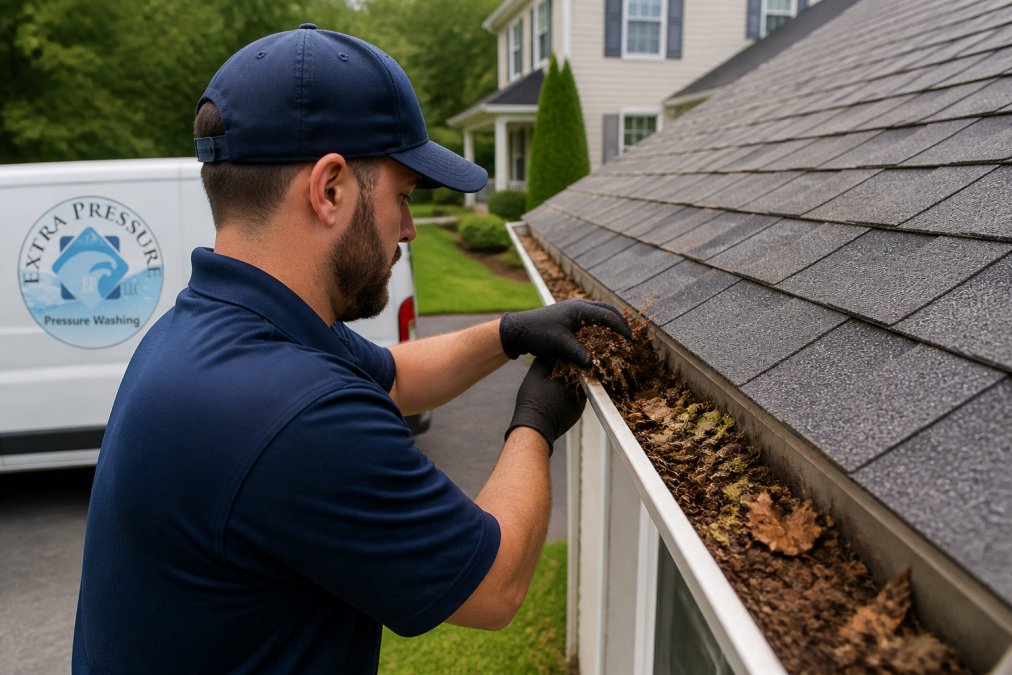
Professional gutter cleaning is the process of removing leaves, shingle grit, and organic debris from your gutters and downspouts using commercial-grade tools, then flushing the entire system to confirm water flows away from the house.
A proper service covers more than scooping leaves. Here is what a complete visit involves:
- Debris removal by hand from gutters and valleys
- Downspout flushing to clear blockages
- Roof-to-ground water flow testing
- Inspection of fascia board, soffit protection, and hangers
- Photo documentation of problem areas
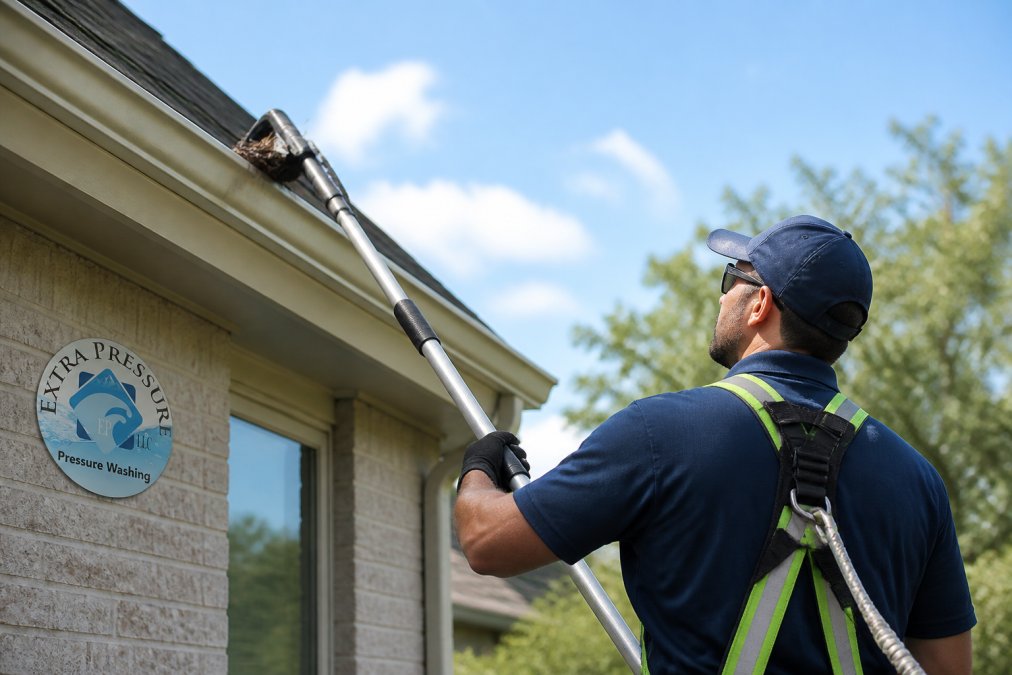
The EPA guidance on managing stormwater runoff around the home explains why this matters: water diverted away from the foundation prevents soil erosion and water pooling that lead to structural damage.
How Often to Clean Gutters in Different Climates and Seasons
Most homes need gutters cleaned twice a year, but climate changes that schedule. Heavily wooded lots, pine needles, and shingle grit shorten the interval.
Seasonal maintenance looks different depending on where you live:
| Climate Condition | Cleaning Frequency | Biggest Risk |
|---|---|---|
| Heavy tree cover | 3-4 times per year | Clogged gutters year-round |
| Pine needles nearby | 3 times per year | Matting that blocks downspouts |
| Open exposure, few trees | 2 times per year | Spring and fall debris |
| Frequent storms | After major weather events | Water overflow and pooling |
Spring and fall remain the two non-negotiable visits for nearly every property. If you have ever wondered how often to clean gutters on a wooded lot, the honest answer is more often than the calendar suggests.
Signs of Clogged Gutters You Should Never Ignore
Signs of clogged gutters show up long before water reaches your basement. The earlier you catch them, the cheaper the fix.
Watch for these warning signs:
- Water cascading over the gutter edge during rain
- Sagging or pulling-away gutter sections
- Staining or mildew streaks on the fascia board
- Plants or moss growing inside the gutter channel
- Birds, insects, or rodents nesting near the roofline
- Water pooling at the foundation after storms
A common mistake is waiting for visible overflow. By then, water has usually been sitting against the fascia board for weeks, and rot has already started. If you spot two or more of these signs, schedule an inspection rather than waiting for the next season.
The Dangers of DIY Gutter Cleaning
The dangers of DIY gutter cleaning are real and underrated. Ladder falls, electrical contact, and hidden structural damage send thousands of homeowners to emergency rooms every year, and the Consumer Product Safety Commission has long identified falls from ladders as one of the leading causes of home-maintenance injuries. The risk is not the height alone, it is the combination of height, unstable footing, wet debris, and a tool you are holding with one hand.
The specific risks break down into four categories:
1. Fall and ladder hazards. A ladder set on soft ground, mulch, or a sloped grade can kick out the moment you shift weight. Reaching sideways to clear a far section, instead of climbing down and repositioning, is the single most common way homeowners lose balance. Aluminum extension ladders also conduct electricity, so any contact with overhead service drops or mast wiring near the roofline is a shock hazard, not just a fall hazard.
2. Structural failure you cannot see. Fascia boards and gutter hangers rot from the back side, where water sits against the wood. A section that looks solid from the ground can give way under a person’s weight. Without a harness anchored to the roof, there is nothing to catch that failure.
3. Incomplete downspout clearing. This is the hidden failure most homeowners never notice. A gutter can look spotless from the ground while a downspout holds a compacted plug of shingle grit and decomposing leaves twenty feet down the pipe. The only reliable way to confirm flow is to flush the system and watch water exit at the ground, something a bucket-and-gloves approach rarely does.
4. Hidden cost of the DIY route. The sticker price of DIY looks like zero, but the real cost includes:
- Ladder, harness, and stabilizer purchase or rental
- Telescoping pole, gutter scoop, and hose attachments
- Several hours of labor, often repeated because the job is done incompletely
- Disposal of wet, heavy debris
- Out-of-pocket medical costs and lost wages if a fall occurs (most homeowner policies treat ladder falls as a homeowner’s own negligence)
- Repair bills for bent gutter sections, pulled hangers, or crushed downspouts
A common pattern is a homeowner who saves a few hundred dollars on cleaning, then pays far more to replace a bent gutter run or repair a fascia board that was damaged during the attempt. Professional crews carry the ladders, standoffs, harnesses, and inspection cameras that make the job safe and complete, and their work is insured, so damage to the gutter system is their liability, not yours.
Never lean a ladder directly against a gutter. The aluminum bends under load, and once a section is bent, it no longer drains correctly and often needs full replacement.
The real question is not whether you can reach the gutter, it is whether you can clear the downspout, inspect the fascia, and get down safely without creating a repair bill larger than the cleaning itself.
How Professional Gutter Cleaning Protects Your Foundation and Roof
Professional gutter cleaning protects your home by keeping water moving away from the structure instead of into it. When gutters fail, water runoff lands at the base of the house and starts working against your foundation.
The chain reaction is predictable. Clogged gutters overflow, water pools against the foundation, soil erodes, and hydrostatic pressure builds. Over time that leads to foundation cracks, basement moisture, and mold growth. The FEMA guidance on protecting homes from water damage notes that water is one of the most destructive forces on a home’s structure, and drainage is the first line of defense.
Roof integrity suffers too. Standing water in a clogged gutter backs up under shingles, rots the fascia board, and can reach the roof deck. Keeping the gutter system clear is preventative maintenance that protects two of the most expensive parts of your home at once.
Cost-Benefit Analysis: Professional Service vs. DIY
Most gutter articles mention safety and stop there. The honest comparison is a full cost-benefit analysis that counts the hidden costs of DIY, equipment, time, medical risk, and repair exposure, against the predictable price of a professional visit. Once you tally both sides, the gap is smaller than the sticker price suggests.
What professional service typically costs. Pricing depends on home size, roof height, gutter linear footage, and debris volume. As a general range, single-story homes with light debris sit at the low end, while two- and three-story homes with heavy tree cover or compacted downspouts sit at the high end. Most companies quote per linear foot or as a flat rate by home size, and many add a surcharge for steep roofs or heavy debris. The best move is to request a same-day estimate rather than guess, because the variables change the number significantly.
What DIY actually costs. The “free” version is rarely free:
| Hidden DIY Cost | What It Looks Like |
|---|---|
| Equipment | Ladder, standoff, harness, telescoping pole, gutter scoop, hose attachments, gloves, eye protection |
| Time | Two to four hours per visit for an average home, often repeated when the job is done incompletely |
| Disposal | Bagging and hauling wet, heavy debris |
| Medical risk | Ladder falls are a leading home-injury cause; out-of-pocket costs and lost wages are rarely covered |
| Repair exposure | Bent gutters, pulled hangers, crushed downspouts, scratched siding |
| Redo cost | Paying a professional anyway after a failed attempt |
The comparison that matters. A professional visit bundles debris removal, downspout flushing, a flow test, and an inspection into one predictable price.
Compare the full cost of DIY, equipment, time, injury risk, and repair exposure, against a predictable professional price. For most two-story homes with trees nearby, the professional visit offers significant benefits on total cost, not just on safety.
Gutter Guards and Other Preventative Maintenance Options
Gutter guards reduce debris buildup but do not eliminate maintenance. They are a supplement to cleaning, not a replacement for it.
Preventative options worth considering:
- Gutter guards: Keep large leaves out but still allow shingle grit through
- Downspout screens: Catch debris at the outlet before it blocks the pipe
- Splash blocks and extensions: Direct water diversion away from the foundation
- Scheduled seasonal maintenance: The single most reliable protection
Gutters with guards still need a yearly check of the downspouts. Guards stop leaves, but grit and granules still settle and compact over time.
Frequently Asked Questions
What does professional gutter cleaning include?
Professional gutter cleaning covers more than scooping out leaves. A full service includes removing debris from gutters and downspouts, flushing the system to check water flow, inspecting for leaks or sagging sections, checking fascia boards for rot, and confirming that water diverts properly away from your foundation.
How often should gutters be professionally cleaned?
Most homes need professional gutter cleaning at least twice a year, typically in spring and fall. If you have pine trees, oak trees, or other heavy-shedding species nearby, quarterly service is safer. Homes in regions with frequent storms or heavy leaf drop may need monthly attention during peak season. A professional can assess your specific tree coverage and roof design to recommend a schedule.
Do gutter guards eliminate the need for professional cleaning?
Gutter guards reduce debris buildup but do not eliminate maintenance entirely. Small seeds, shingle grit, and pollen still pass through most guard systems and accumulate over time. Guards also need periodic inspection to confirm they remain properly seated. Professional cleaning every one to two years is still recommended even with guards installed, though the frequency may drop compared to unprotected gutters.
What are the dangers of DIY gutter cleaning?
Ladder falls are the primary risk, causing thousands of injuries each year. Beyond falls, DIY cleaning exposes you to electrical hazards from nearby power lines, cuts from sharp metal edges, and potential contact with pests like wasps or rodents nesting in debris. Without proper safety equipment and training, homeowners also risk damaging gutters by leaning heavy ladders against them or using incorrect tools.
Leave a Reply