Table of Contents
- What Makes a Chemical Safe for Your Home’s Exterior
- Soft Washing vs Pressure Washing Chemicals: Which Approach Fits Your Surface
- How to Remove Mildew from Siding Safely
- Best Practices for Protecting Plants During House Washing
- Matching Chemicals to Vinyl, Stucco, Wood, and Brick
- DIY vs Professional Exterior Cleaning: Cost and Safety Trade-Offs
- Frequently Asked Questions
Last Updated: September 15, 2026
What Makes a Chemical Safe for Your Home’s Exterior
Safe chemicals for exterior house cleaning are formulations that remove organic growth and grime without damaging the surface underneath, and the key markers are a balanced pH, biodegradable ingredients, and a dilution ratio matched to the material being cleaned. This guide from Extra Pressure LLC. breaks down what actually belongs on your siding, and what does not.
A common mistake is assuming “stronger equals cleaner.” In practice, the opposite holds. A diluted sodium hypochlorite mix with a surfactant lifts mildew off vinyl in minutes, while a harsh solvent can strip paint, pit aluminum, and kill the landscaping below.
The cleaning solution matters less than how you apply it. Dwell time, rinse cycle, and surface compatibility decide whether you get siding restoration or an expensive repair.
Three things separate a safe exterior house cleaning job from a risky one:
- The chemical is matched to the surface (vinyl, stucco, wood, brick)
- The dilution ratio and dwell time are controlled
- Plants, pets, and runoff are managed before the first drop lands
Get those right and you clean effectively without collateral damage. Get them wrong and you are repainting.
Safety is not about using weak chemicals. It is about using the right chemical at the right dilution for the right surface, then rinsing it off before it does damage.
Soft Washing vs Pressure Washing Chemicals: Which Approach Fits Your Surface
Soft washing and pressure washing use different tools and different chemistry, and choosing the wrong one is the fastest way to damage a home. Soft washing relies on low pressure (under 500 PSI) plus a cleaning solution to kill organic growth at the root. Pressure washing relies on high-pressure water, sometimes with no chemicals at all.
When Soft Washing Chemicals Are the Right Call
Soft washing is the correct approach for vinyl siding, stucco, painted wood, shingle roofs, and anything aged or delicate. The cleaning solution does the work while low pressure rinses it away. This is why soft washing is the standard for shingle preservation and stucco maintenance: high pressure forces water behind the surface, and trapped moisture feeds the mold you were trying to remove.
When Pressure Washing Alone Is Enough
Bare concrete driveways, sidewalks, brick patios, and stone walkways handle high pressure without chemicals. These are hard, non-porous surfaces where water alone lifts dirt. The moment you move to siding, fascia, or a roof, switch to a soft wash approach.
Blasting vinyl siding with high pressure forces water behind the panels. That trapped moisture creates the mold and rot you were trying to eliminate, and it can void your siding warranty.
How to Remove Mildew from Siding Safely
Removing mildew from siding safely means killing the mold spores, not just scrubbing the stain off the surface. Mildew is a living organism. Scrub it and it grows back in weeks. Kill it at the root and it stays gone.
Choosing the Right Cleaning Solution for Mildew
The workhorse is sodium hypochlorite, the same active ingredient as household bleach, diluted to a controlled ratio and boosted with a surfactant so it clings to vertical surfaces instead of running off. Oxygen bleach is the gentler alternative for painted wood and sensitive surfaces, though it works slower and needs more dwell time. For a deeper look at the soft wash method, see the EPA’s guidance on mold cleanup.
Application Steps and Dwell Time
- Wet down surrounding plants and landscaping first.
- Apply the cleaning solution from the bottom up so streaks do not form.
- Let it dwell (typically 10 to 15 minutes) so the chemical kills the spores.
- Rinse from the top down with low pressure.
- Re-wet plants immediately after to dilute any overspray.
| Step | What You Do | Why It Matters |
|---|---|---|
| Pre-wet plants | Soak beds before you start | Dilutes any drift before it burns |
| Apply bottom-up | Start low, work up | Prevents streaking |
| Dwell | Wait 10-15 minutes | Kills spores, not just stains |
| Rinse top-down | Low pressure, high volume | Clears residue cleanly |
| Re-wet plants | Flush beds after | Neutralizes overspray |
Dwell time is where most DIY jobs fail. Rinse too soon and the mildew returns. Let it dry on the surface and you risk etching.
Best Practices for Protecting Plants During House Washing
Protecting plants during house washing comes down to three moves: pre-wet, cover, and rinse. Landscaping damage is the number-one complaint homeowners have about exterior cleaning, and it is almost always preventable. But plants are only half the story. Pets, wildlife, and soil health are the other half, and most guides skip them entirely.
The Pre-Wet, Cover, Rinse Protocol
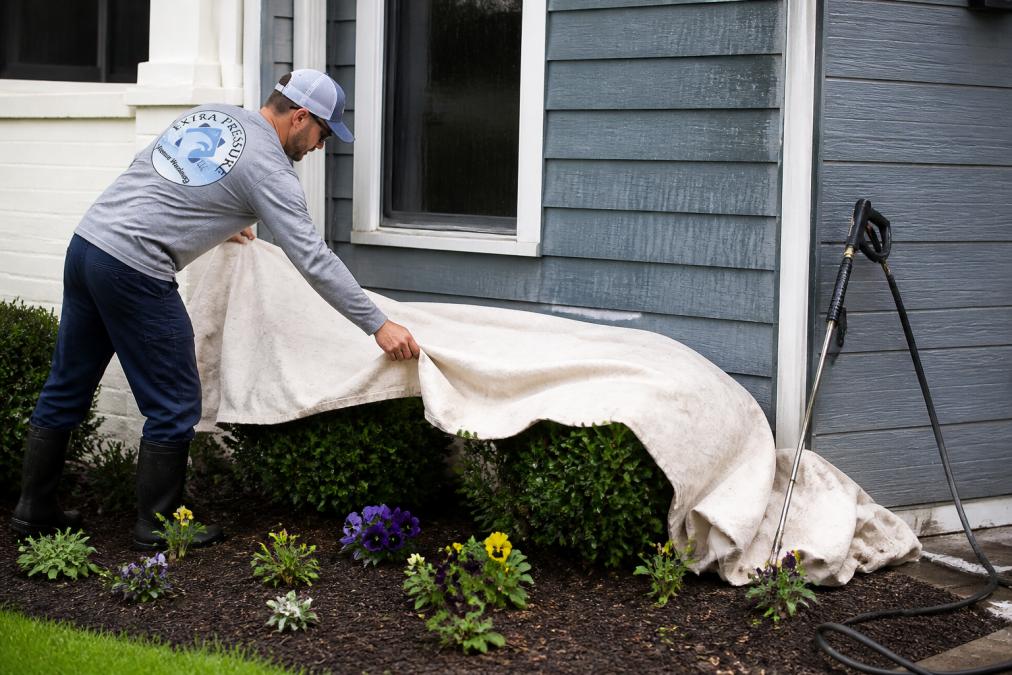
Before any chemical touches the house, saturate the soil and foliage around the perimeter. Wet plants absorb far less chemical than dry ones. The mechanism is simple: dry soil and dry leaf surfaces wick liquid in through capillary action, while saturated surfaces force the solution to bead and run off. Drape tarps or plastic sheeting over delicate shrubs and flower beds directly beneath the work area. After the job, rinse everything again to flush residual runoff.
A common pattern among experienced soft washers is to pre-wet, apply, and rinse in a single continuous cycle rather than letting the job stretch across a hot afternoon. Direct sun and wind accelerate evaporation, which concentrates the chemical on the leaf surface and raises the burn risk.
Pet and Wildlife Safety Protocols
Pet safety follows the same logic as plant safety, but the stakes are higher because animals groom themselves and drink from surfaces you may not think to cover. Keep pets indoors during application and until surfaces are completely dry, not just until the spray stops. A surface that looks dry can still hold enough residue to irritate paws or cause stomach upset if licked.
Cover water bowls, bird baths, and any standing water source before you start. Never let runoff pool where animals drink. Chemical runoff is the real risk, not the spray itself, and it concentrates in low spots, gutter downspout outlets, and the base of foundation plantings.
A dog that walks across a just-treated patio and then licks its paws can ingest more chemical than a plant ever absorbs. Treat every hard surface as contaminated until it has been rinsed and dried.
Runoff and Soil Health
Runoff is where most DIY jobs quietly do damage. Sodium hypochlorite and other cleaning agents that pool at the base of a foundation can shift soil pH and harm beneficial microbes. The fix is to direct runoff away from beds, flush the area with fresh water after the job, and avoid applying more chemical than the surface can hold.
If you are cleaning near a vegetable garden, cover the beds and rinse the soil afterward. Root vegetables and leafy greens take up what is in the soil, and no amount of washing later removes it.
Water your plants the day before, not just the day of. Saturated soil and foliage take up far less chemical, and the buffer buys you time if a gust pushes overspray where you did not plan.
A Quick Pre-Job Checklist
Matching Chemicals to Vinyl, Stucco, Wood, and Brick
| Surface | Best Chemical | Pressure | Watch Out For |
|---|---|---|---|
| Vinyl siding | Diluted sodium hypochlorite | Low (soft wash) | Oxidation and chalking |
| Stucco | Mild mix, low pressure | Low | Cracking, water intrusion |
| Painted wood | Oxygen bleach | Low | Paint stripping, raised grain |
| Brick and stone | Stronger mix OK | Medium-high | Soft mortar, sealed surfaces |
DIY vs Professional Exterior Cleaning: Cost and Safety Trade-Offs
What DIY Actually Costs
What Professional Cleaning Actually Costs
A Simple Decision Framework
Use these questions to decide:
The Safety-First Rule
Frequently Asked Questions
What is a non-toxic outdoor cleaner for siding?
A simple mix of oxygen bleach and water works well for most siding types. Unlike chlorine bleach, oxygen bleach breaks down into oxygen and water without releasing harsh fumes. For vinyl and stucco, a diluted sodium hypochlorite solution applied through a soft wash system is another common option when used with proper rinsing. Always test a small area first and follow the label directions for dilution ratio and dwell time.
Is it safe to use household detergents for exterior house cleaning?
Some household detergents can work for light exterior house cleaning, but they are not formulated for outdoor surfaces. Dish soaps and laundry detergents may leave residue that attracts dirt or damage plant life when runoff reaches landscaping. They also lack the surfactants needed to break down mildew and algae. Purpose-made exterior cleaning solutions are a safer bet because they are designed for the surfaces and conditions outside your home.
How do I choose between soft washing and pressure washing chemicals?
Match the method to the surface, not the other way around. Soft washing uses low pressure and cleaning solutions to treat vinyl, stucco, painted wood, and shingles without forcing water behind siding. Pressure washing relies on high-pressure water, sometimes with a downstream-injected detergent, for concrete driveways and brick. If your exterior has delicate surfaces, soft washing chemicals are the safer choice. For hard, unpainted masonry, pressure washing alone often handles the job.
What should I do if cleaning chemicals accidentally reach my plants?
Rinse the affected area with plain water immediately and thoroughly. Most plant damage from exterior cleaning comes from prolonged contact with cleaning solution, so speed matters. Before any wash, wet down surrounding plants and soil, cover sensitive shrubs with tarps, and avoid spraying on windy days. If you are using a professional service, ask about their plant protection process before work begins.
Exterior cleaning rewards patience and the right chemistry more than brute force. If you want safe chemicals for exterior house cleaning applied by a team that matches the solution to your surface, Extra Pressure LLC. brings licensed and insured service, specialized soft washing for delicate surfaces, and a 100% satisfaction guarantee. Schedule an appointment and get your curb appeal back without the risk.
Leave a Reply