Table of Contents
- What Drives the Average Cost for Residential Pressure Washing
- Factors Affecting Pressure Washing Estimates Beyond Size
- Soft Washing vs Pressure Washing Cost: Which Is Right for Your Home
- Average Time to Pressure Wash a Driveway (and What It Means for Cost)
- DIY Pressure Washing vs. Hiring a Professional
- How to Vet a Residential Pressure Washing Contractor
- How to Get an Accurate Residential Pressure Washing Estimate
- Conclusion
Last Updated: August 28, 2026
What Drives the Average Cost for Residential Pressure Washing
Homeowners searching for the average cost for residential pressure washing quickly discover that quotes vary widely, reflecting well-defined variables that every reputable contractor prices differently. Residential pressure washing uses high-pressure water (measured in PSI, pounds per square inch) and controlled flow rates (measured in GPM, gallons per minute) to remove dirt, mold, algae, and grime from home surfaces. The right combination of PSI and GPM determines whether a job is safe and effective.
Pricing depends primarily on square footage, surface type, and local labor costs. The severity of staining, number of stories, and add-on services will also affect the total. Below, we break down each factor so you can walk into any service estimate with a clear picture of what you’re paying for.
House Size, Story Count, and Square Footage
Square footage is the most straightforward pricing variable. Most contractors calculate estimates by the square foot of cleanable exterior surface, not interior square footage. A 2,000-square-foot ranch and a 2000-square-foot two-story home have very different exterior surface areas.
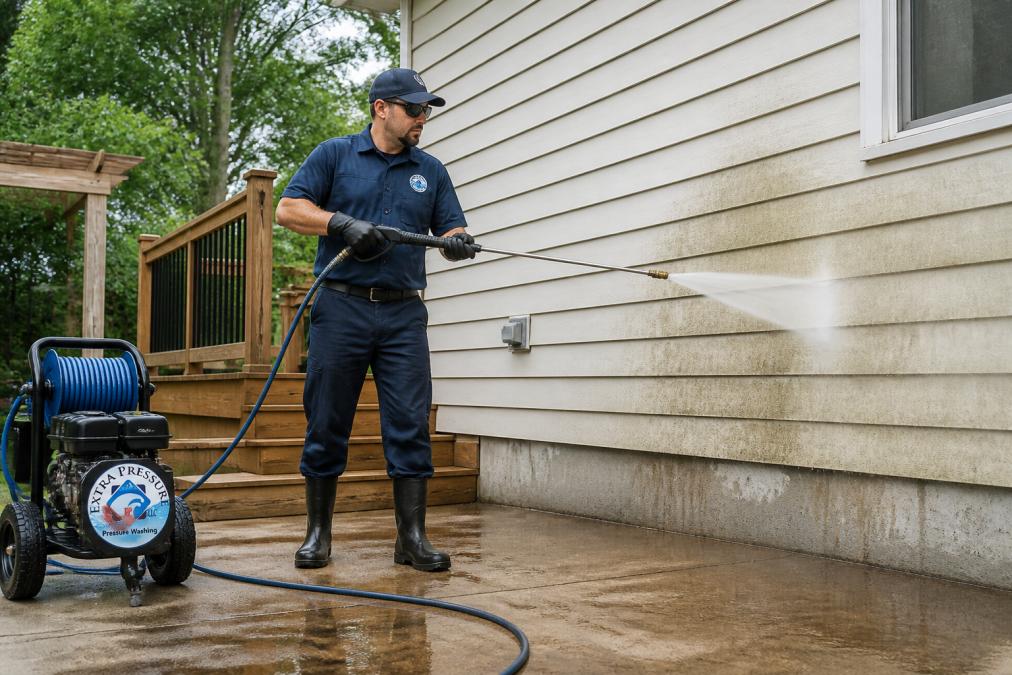
Story count matters for access and safety. A two-story home requires extension wands, ladders, or lift equipment to reach upper siding and fascia, adding labor costs. Single-story homes are faster to work and carry less risk, typically costing less per square foot.
Surface Type: Siding, Brick, Wood, and Concrete
Surface material significantly affects your estimate. Not every surface tolerates the same pressure settings, and the wrong approach causes damage.
| Surface Type | Pressure Setting | Cleaning Method | Key Consideration |
|---|---|---|---|
| Vinyl siding | Low-medium PSI | Soft wash or pressure wash | Prone to water intrusion at seams |
| Brick and masonry | Medium PSI | Pressure wash | Mortar joints need care |
| Wood siding or decking | Low PSI | Soft wash preferred | High pressure strips paint and grain |
| Concrete driveways | High PSI | Pressure wash | Handles aggressive cleaning well |
| Stucco | Very low PSI | Soft wash only | Extremely damage-prone |
Wood surfaces and stucco require the most care and often cost more per square foot because the process is slower and the margin for error is smaller.
Factors Affecting Pressure Washing Estimates Beyond Size
Size and surface type set the baseline. Situational variables can change a quote significantly before any work starts.
Geographic Location and Regional Labor Costs
Labor is the single largest cost component in any service estimate, and rates vary considerably by region. Areas with higher costs of living or stronger contractor demand tend to see higher pricing. According to Bureau of Labor Statistics occupational wage data, labor costs for building and grounds cleaning occupations vary by as much as 30-40% between the lowest and highest-wage states.
Seasonal pricing also plays a role. Spring and early summer are peak demand periods, while late fall or winter can yield better pricing.
Mold, Algae, and Stain Severity
A house neglected for several seasons costs more to clean than one receiving regular maintenance. Heavy algae treatment, black streaks from roof runoff, and embedded mold require longer dwell times with chemical detergents, multiple passes, and sometimes pre-treatment.
Site conditions should always be assessed before a final price is set. A contractor who quotes without seeing the property is giving you a guess, not an estimate.
Never accept a firm quote over the phone without a site visit or photo review. Contractors who price without seeing your home’s condition often tack on “severity surcharges” after the job starts.
Add-On Services: Gutters, Driveways, and Decks
Most homeowners bundle additional services into a single visit to save on mobilization costs. Common add-ons include gutter cleaning, driveway and walkway cleaning, deck and patio cleaning, and fence cleaning. Bundling these services typically costs less than scheduling each separately.
Soft Washing vs Pressure Washing Cost: Which Is Right for Your Home
Soft washing vs. pressure washing cost is one of the most searched questions in exterior cleaning. Soft washing is a low-pressure cleaning method (typically under 500 PSI) that relies on biodegradable chemical detergents to kill and remove organic matter. Pressure washing uses high-pressure water flow (often 1,500-3,000+ PSI) to physically remove dirt and grime through force.
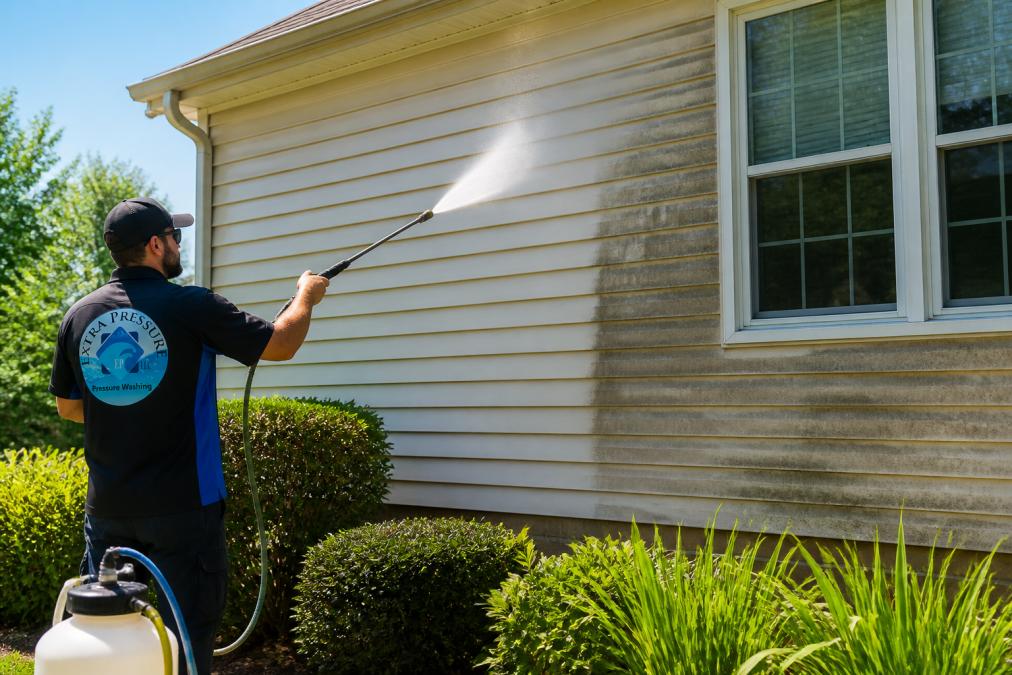
Soft washing typically costs more per square foot than standard pressure washing, reflecting the expense of professional-grade chemical detergents and the expertise required. However, soft washing is the correct method for roof surfaces, older or painted wood siding, stucco exteriors, and screens. Using high-pressure washing on these surfaces is a false economy, surface damage and stripped paint cost far more to repair.
According to EPA guidance on cleaning product safety and environmental impact, biodegradable cleaning solutions used in soft washing pose significantly lower environmental risk than solvent-based alternatives when applied correctly.
Ask your contractor specifically whether they use soft washing or pressure washing for your siding type before agreeing to any service. A professional who defaults to high pressure on everything is cutting corners.
Average Time to Pressure Wash a Driveway (and What It Means for Cost)
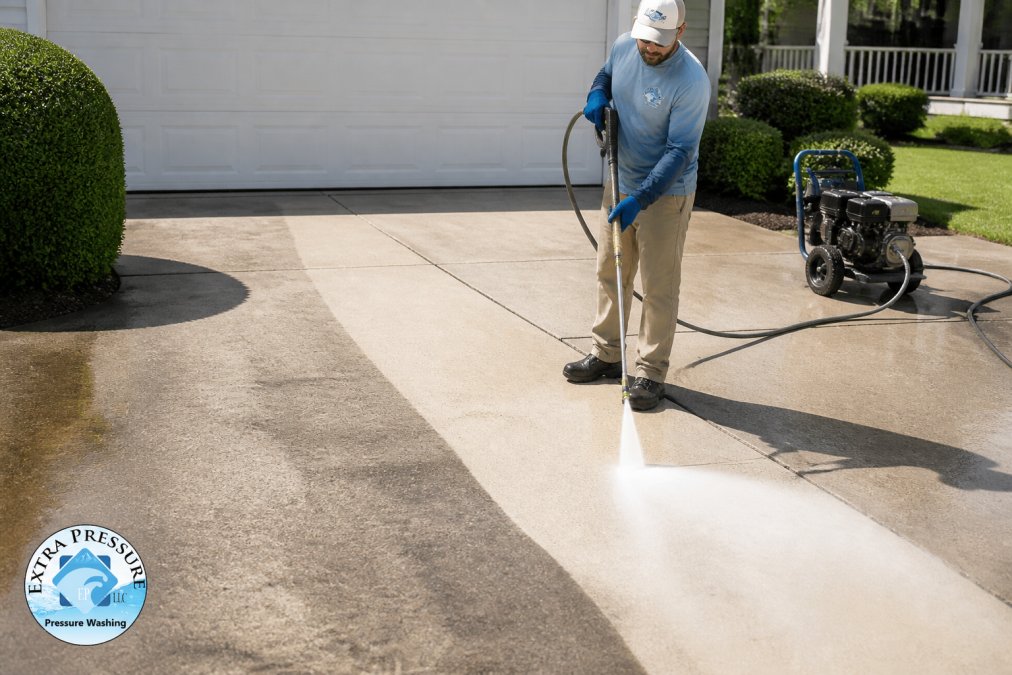
The average time to pressure wash a driveway runs between one and three hours for a standard residential driveway. A two-car concrete driveway in average condition typically takes a trained crew about 90 minutes with commercial-grade equipment.
Labor time is the underlying driver of pricing. A contractor with high-GPM commercial equipment can clean faster than someone using a homeowner-grade machine, resulting in lower labor cost and more competitive pricing. Heavily stained driveways with oil spots or years of algae growth take longer and may require pre-treatment, adding time and material cost.
DIY Pressure Washing vs. Hiring a Professional
Pressure washer rental typically runs between $50 and $100 per day. Add cleaning solution, fuel, and your time, and the gap between DIY and professional pricing narrows quickly. Rental equipment often lacks the PSI and GPM output of commercial units, meaning you spend more time for a less thorough result.
Hidden Costs of DIY Pressure Washing
Hidden costs shift the math significantly:
- Surface damage: Incorrect pressure settings can cause permanent damage to siding, wood, or brick. Repairs are expensive.
- Injury risk: The Consumer Product Safety Commission data on pressure washer injuries documents thousands of pressure washer-related injuries annually, with a significant share among first-time users.
- Incomplete results: Consumer machines often can’t generate the PSI needed to fully remove embedded mold and algae.
- Water consumption: DIY jobs tend to run longer and use more water than professional jobs.
- Voided warranties: Some siding manufacturers specify professional cleaning methods in their warranty terms.
For whole-home exterior cleaning, the risk-adjusted cost of hiring a professional is almost always lower.
How to Vet a Residential Pressure Washing Contractor
A low quote from an uninsured, inexperienced crew can cost far more in damage repairs than you saved. Here’s what to verify:
- License and insurance: Ask for proof of general liability insurance and, where required, a state contractor’s license.
- Soft washing capability: A contractor who only offers high-pressure washing for every surface doesn’t have the full toolkit.
- Written estimate: Any reputable contractor provides a written service estimate that itemizes surfaces, square footage, method, and total cost.
- References or reviews: Ask for references from recent residential jobs or check verified review platforms.
- Chemical disclosure: Ask what cleaning solutions they use and whether they’re safe for landscaping.
The single best filter for vetting a pressure washing contractor is simple: ask to see their certificate of insurance before scheduling. Any legitimate operator will send it immediately.
How to Get an Accurate Residential Pressure Washing Estimate
An accurate estimate requires more than a square footage calculation. Here’s a practical checklist:
- Measure your home’s approximate exterior perimeter and note the number of stories
- Identify all surfaces to be cleaned (siding type, driveway, deck, fencing, gutters)
- Document visible staining, mold, or algae growth with photos
- Note any landscaping, obstacles, or access limitations
- List any add-on services you want bundled
- Ask each contractor to specify the cleaning method for each surface
- Request a written, itemized estimate
Getting at least two or three written estimates from licensed contractors gives you a realistic picture of the local market rate. According to Angi’s homeowner services research, homeowners who collect multiple quotes report higher satisfaction with both price and outcome.
The goal is to find the best value from a contractor who clearly understands your property’s specific needs and can explain their process before the job starts. A professional site assessment produces a far more reliable number than any online calculator.
Exterior cleaning decisions come down to one real tension: the temptation to cut costs versus the risk of paying far more to fix what a cheap or DIY job damaged. Extra Pressure LLC. offers licensed and insured residential pressure washing and soft washing services, with same-day estimates and a process tailored to your specific surface types. Schedule an appointment with Extra Pressure LLC. and get a written estimate based on your actual property, not a national average.
=== FAQ ANSWERS (audit these too, same rules) ===
[1] Q: Does house size affect the total cost of pressure washing?
A: Yes, square footage is one of the biggest factors in any service estimate. A small single-story home requires far less time, water, and labor than a two-story home with 3,000 or more square feet of exterior surface. Contractors typically price residential pressure washing per square foot or by the job, so larger homes with more siding, decks, or driveways naturally carry higher totals. Site conditions like landscaping, accessibility, and surface material also factor into the final quote.
[2] Q: What is the difference between pressure washing and soft washing?
A: Pressure washing uses high PSI (pounds per square inch) and GPM (gallons per minute) to blast away dirt and debris with water force alone. Soft washing uses lower pressure combined with chemical detergents to dissolve mold, mildew, and algae at the source. Soft washing is safer for older siding, painted wood, and roofing materials where high-pressure nozzles could cause surface damage. For delicate surfaces, soft washing can produce longer-lasting results because it kills organic matter rather than just removing it visually.
[3] Q: Is it worth it to power wash your house?
A: For most homeowners, professional exterior cleaning is a cost-effective form of preventative maintenance. Removing mold, mildew, and algae buildup protects siding, wood, and concrete from long-term deterioration. It also improves curb appeal, which matters especially when preparing a property for sale. DIY pressure washer rentals seem cheaper upfront, but factor in equipment costs, chemical detergents, time, and the risk of surface damage, and hiring a licensed, insured professional often delivers better value and results.
[4] Q: How long does it take to pressure wash a 2,000 square foot house?
A: A professional crew can typically complete a 2,000 square foot single-story home in two to four hours, depending on surface type, the level of mold and mildew buildup, and site conditions. Two-story homes take longer due to the additional square footage and equipment setup required for safe high-reach cleaning. Add-on services like driveway cleaning or gutter maintenance extend the total job time. Requesting a same-day estimate helps you understand the full scope before scheduling.
Frequently Asked Questions
Does house size affect the total cost of pressure washing?
Yes, square footage is one of the biggest factors in any service estimate. A small single-story home requires far less time, water, and labor than a two-story home with 3,000 or more square feet of exterior surface. Contractors typically price residential pressure washing per square foot or by the job, so larger homes with more siding, decks, or driveways naturally carry higher totals. Site conditions like landscaping, accessibility, and surface material also factor into the final quote.
What is the difference between pressure washing and soft washing?
Pressure washing uses high PSI (pounds per square inch) and GPM (gallons per minute) to blast away dirt and debris with water force alone. Soft washing uses lower pressure combined with chemical detergents to dissolve mold, mildew, and algae at the source. Soft washing is safer for older siding, painted wood, and roofing materials where high-pressure nozzles could cause surface damage. For delicate surfaces, soft washing can produce longer-lasting results because it kills organic matter rather than just removing it visually.
Is it worth it to power wash your house?
For most homeowners, professional exterior cleaning is a cost-effective form of preventative maintenance. Removing mold, mildew, and algae buildup protects siding, wood, and concrete from long-term deterioration. It also improves curb appeal, which matters especially when preparing a property for sale. DIY pressure washer rentals seem cheaper upfront, but factor in equipment costs, chemical detergents, time, and the risk of surface damage, and hiring a licensed, insured professional often delivers better value and results.
How long does it take to pressure wash a 2,000 square foot house?
A professional crew can typically complete a 2,000 square foot single-story home in two to four hours, depending on surface type, the level of mold and mildew buildup, and site conditions. Two-story homes take longer due to the additional square footage and equipment setup required for safe high-reach cleaning. Add-on services like driveway cleaning or gutter maintenance extend the total job time. Requesting a same-day estimate helps you understand the full scope before scheduling.
This article was written using GrandRanker
Leave a Reply