Table of Contents
- Why Vinyl Siding Requires Careful Pressure Washing
- Best Pressure Washer Settings for Vinyl Siding
- Soft Washing vs Pressure Washing Vinyl Siding
- How to Remove Mildew from Siding
- Step-by-Step Vinyl Siding Cleaning Process
- Preventing Water Intrusion and Damage Behind Siding
- Safety Precautions and Protective Gear
- When to Hire a Professional
Last Updated: August 30, 2026
Why Vinyl Siding Requires Careful Pressure Washing
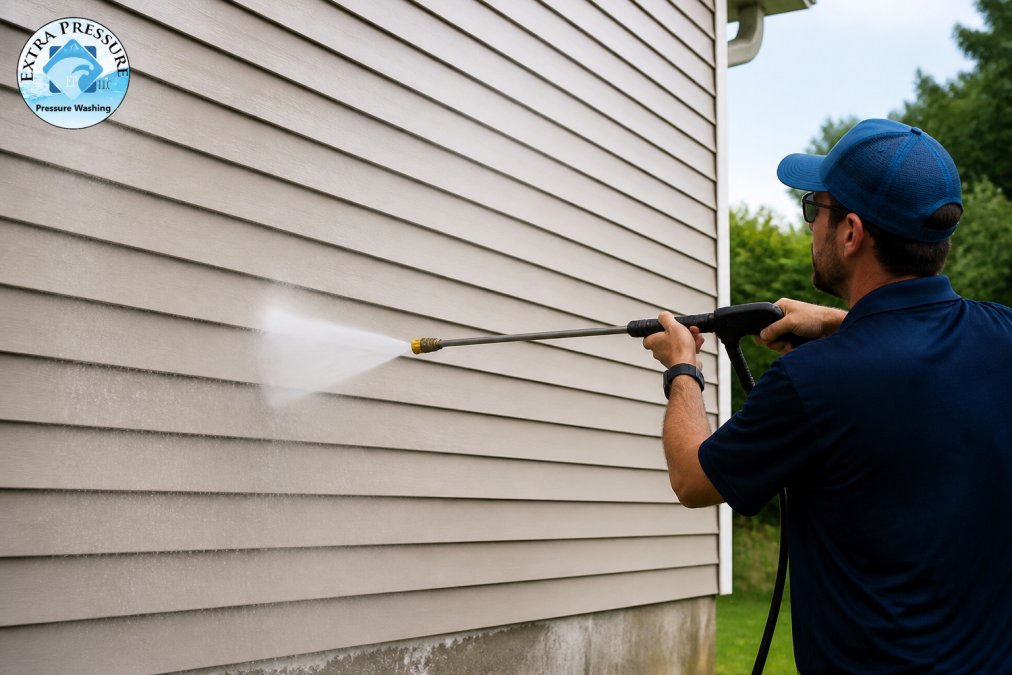
Vinyl siding is durable but not indestructible. High-pressure water can force its way behind panels into wall cavities where it causes mold growth, wood rot, and insulation failure. Once water intrudes, structural damage follows quickly.
The key is matching equipment settings to the material. Vinyl siding typically requires PSI settings between 1,200 and 1,500 for effective cleaning without damage. The good news: the right technique restores your siding to like-new condition without water intrusion risk.
Best Pressure Washer Settings for Vinyl Siding
The most common question is: "What PSI should I use?" The answer depends on three factors: the age of your siding, the type of stain, and whether you’re using detergent.
Understanding PSI and Flow Rate
PSI (pounds per square inch) measures water force. Flow rate (GPM, gallons per minute) determines water volume. Both matter. For vinyl siding, aim for 1,200 to 1,500 PSI maximum with a 2.5 to 3.5 GPM flow rate. This range breaks up mold, algae, and oxidation without forcing water behind panels. Higher pressure is like using a fire hose to water your garden, you’ll get results, but not the ones you want.
Choosing the Right Nozzle Tip
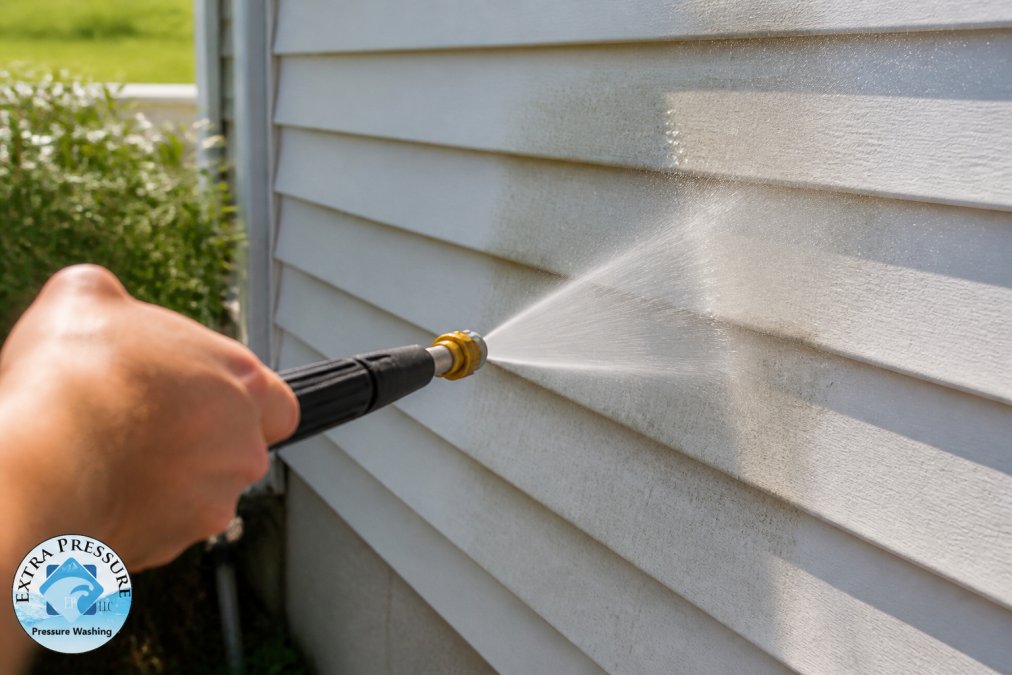
Never use a 0° nozzle on vinyl siding. It creates a pinpoint stream that can punch holes through the material. Use a 25° to 40° nozzle instead. A 25° tip gives tighter spray with more cleaning power for stubborn stains. A 40° tip spreads water over a wider area, making it safer for delicate or older siding.
Hold the nozzle 12 to 18 inches away from the siding. The sweet spot for most vinyl is 15 inches.
Soft Washing vs Pressure Washing Vinyl Siding
Pressure washing relies on force to remove dirt, debris, and loose contaminants. It’s fast and works well for pollen, dust, and surface grime.
Soft washing uses lower pressure (typically under 500 PSI) combined with specialized cleaning solutions. The chemicals kill mold spores, break down algae, and dissolve oxidation. You apply the solution, let it sit for 10 to 20 minutes, then rinse with low pressure.
For mildew and algae, soft washing outperforms pressure washing. Mold spores live inside algae colonies. Pressure alone removes visible growth but doesn’t kill spores, so they return in weeks. Soft washing kills spores at the source, making results last longer. For general dirt and pollen, pressure washing alone works fine.
How to Remove Mildew from Siding
Mildew is a fungus thriving in damp, shaded areas. Unlike dirt, you can’t blast it away, you must kill it.
For mildew removal, use soft washing. Mix water with mild exterior detergent or commercial mildewcides designed for vinyl siding. Apply the solution with a low-pressure sprayer (under 500 PSI) and let it sit for 15 to 20 minutes. After the dwell time, rinse with low pressure from top to bottom, working vertically to avoid trapping water in panel overlaps.
Critical detail: mildew returns if you don’t address the moisture problem. Soft washing buys time, but fixing underlying drainage, shade, or ventilation issues stops it permanently.
Step-by-Step Vinyl Siding Cleaning Process
Preparation and Site Setup
Close all windows and doors. Cover window wells and basement windows with plastic sheeting. Move outdoor furniture, grills, and potted plants away. Protect delicate landscaping with tarps.
Check the weather forecast, don’t pressure wash if rain is expected within hours. Early morning is ideal. Inspect your siding for cracks, loose panels, or gaps before starting. Set up equipment on level ground at least 10 feet away from your work area.
Applying Detergent and Soaking
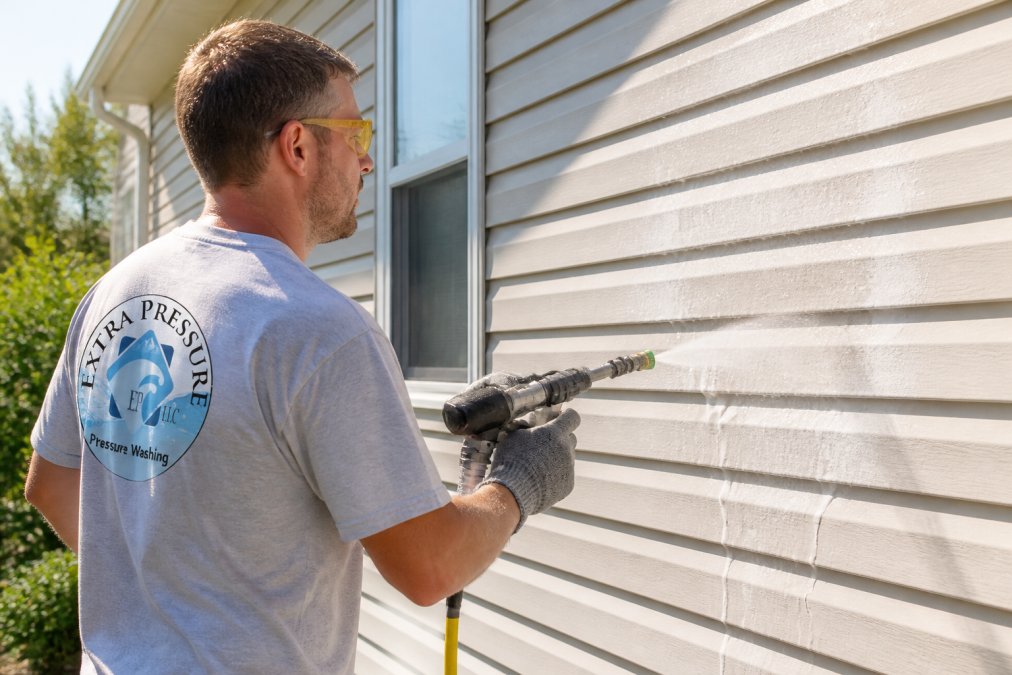
If using detergent, apply it first at low pressure (under 500 PSI) from bottom to top. Work in sections about 10 feet wide. Apply generously and let soak for 15 to 20 minutes. Resist rinsing immediately, patience makes the difference between mediocre and excellent results. If siding dries, lightly mist it to keep it wet.
Rinsing Safely
Once detergent has soaked, rinse from top to bottom using a 25° to 40° nozzle at 1,200 to 1,500 PSI. Use downward spray angle, never spray horizontally or upward, as this forces water into panel seams. Keep the nozzle 15 inches away and move steadily across the wall. Don’t linger on any spot. Pay special attention to areas where siding meets trim, around windows, and where panels overlap.
Preventing Water Intrusion and Damage Behind Siding
Water intrusion is the silent killer of vinyl siding. It occurs when water gets behind panels and into wall cavities, promoting rot and mold growth.
The best prevention is technique: always spray top to bottom, maintain proper distance and angle, and never force water into seams. Before pressure washing, inspect J-channels and trim for damage and seal gaps with caulk. After rinsing, allow siding to dry completely before sunset so trapped moisture can evaporate.
Consider having gutters cleaned after pressure washing. Clogged gutters cause water to back up and run down siding instead of away from the house. If concerned about water intrusion in specific areas, use soft washing instead of pressure washing in those zones.
Safety Precautions and Protective Gear
Wear safety goggles that seal around your eyes. Wear heavy-duty work gloves. Wear closed-toe shoes with good traction. Wear long sleeves and pants when using chemical solutions.
Never point the pressure washer at yourself, another person, or a pet. Keep bystanders away from the work area. If using a gas-powered pressure washer, ensure it’s on level ground and cooled before refueling. Never leave a running pressure washer unattended.
When to Hire a Professional
Hire a professional if your home has multi-story siding requiring work at height. Falls from height are a leading cause of serious home injuries. Hire a professional if your siding is old or damaged, as older vinyl is more brittle and prone to cracking. Hire a professional if you have heavy mold or algae growth requiring soft washing expertise. Hire a professional if you’re not confident operating a pressure washer safely.
Extra Pressure LLC. handles vinyl siding cleaning using specialized soft washing techniques for delicate surfaces and state-of-the-art equipment. We offer same-day estimates so you know the cost before we start work. Professional pressure washing services can provide expertise and peace of mind.
Pressure washing vinyl siding safely comes down to understanding your equipment, respecting the material, and following proven techniques. Get the fundamentals right, PSI between 1,200 and 1,500, proper nozzle angle, top-to-bottom spray direction, and you’ll restore your siding without risk. When in doubt, or if your siding is old, heavily soiled, or showing existing damage, reach out to Extra Pressure LLC. for a professional assessment.
| Cleaning Method | Best For | Pressure Level | Dwell Time | Risk Level |
|---|---|---|---|---|
| Pressure Washing | Surface dirt, pollen, debris | 1,200-1,500 PSI | None | Low to Medium |
| Soft Washing | Mold, algae, mildew | Under 500 PSI | 15-20 minutes | Very Low |
| Hybrid Approach | Mixed soiling (dirt + biological growth) | 1,200 PSI + chemicals | 10-15 minutes | Low |
Frequently Asked Questions
Q: What PSI will damage vinyl siding?
A: Most vinyl siding can be damaged by pressure above 1500 PSI. Pressures exceeding 2000 PSI can crack, dent, or strip paint from panels. The safest approach is to start at 1200 PSI and increase only if needed. Always test on an inconspicuous area first. Using a 25- or 40-degree nozzle tip reduces the concentrated force, allowing you to clean effectively at lower pressures without risking damage.
Q: How do I prevent water from getting behind vinyl siding?
A: Angle your spray downward at 45 degrees or less to let water run off naturally rather than forcing it upward into seams and J-channels. Never spray directly at horizontal seams or gaps. Seal visible cracks or gaps with caulk before washing. After rinsing, inspect the J-channel and trim to ensure water drained completely. Pay extra attention to areas around windows, doors, and where siding meets trim, these are common water intrusion points.
Q: Should I use soft washing or pressure washing for vinyl siding?
A: Soft washing is the safer choice for vinyl siding, especially if it's older or has delicate landscaping nearby. Soft washing uses low pressure (under 500 PSI) combined with biodegradable cleaning solutions to remove mildew, algae, and oxidation without impact damage. Pressure washing works for light dirt and dust but carries higher risk of water intrusion and panel damage. Choose soft washing if your siding has mold or stubborn stains; use pressure washing only for general dirt on newer, well-maintained siding.
Q: What detergents and cleaning solutions work best for vinyl siding?
A: Use biodegradable, pH-neutral detergents formulated for pressure washing or soft washing. Solutions containing algaecide and fungicide are effective for mildew and algae removal. Avoid harsh chemicals that can damage the siding finish or harm plants and soil. Mix according to manufacturer instructions, too strong a solution can strip color or leave residue. Always rinse thoroughly after application. If you're uncertain about which solution to use or want to protect delicate plants, professional soft washing services can apply appropriate treatments safely.
This article was written using GrandRanker
Leave a Reply