
Table of Contents
- Why Delicate Landscaping Needs a Different Cleaning Approach
- How to Protect Plants During Exterior Cleaning
- Soft Washing Delicate Surfaces: What It Is and When to Use It
- Cleaning Landscape Rocks Without Killing Plants
- Eco-Friendly Cleaning Agents Safe for Soil and Foliage
- Seasonal Cleaning Schedules for Landscape Health
- Conclusion
- Frequently Asked Questions
Last Updated: September 16, 2026
Why Delicate Landscaping Needs a Different Cleaning Approach
Delicate landscaping is any planted area, flowering shrubs, young trees, mulch beds, ornamental grasses, where plants and soil are more vulnerable than the hardscape around them. Cleaning near it demands a different approach than blasting a bare concrete driveway, because risks run two ways: physical force from water and chemical exposure from cleaning solutions. At Extra Pressure LLC., plant health comes first.
How to Protect Plants During Exterior Cleaning
Protecting plants during exterior cleaning means shielding them from physical force, overspray, and chemical drift before a single drop of water lands. The two most effective techniques, physical barriers and pre-wetting, take minutes to set up.
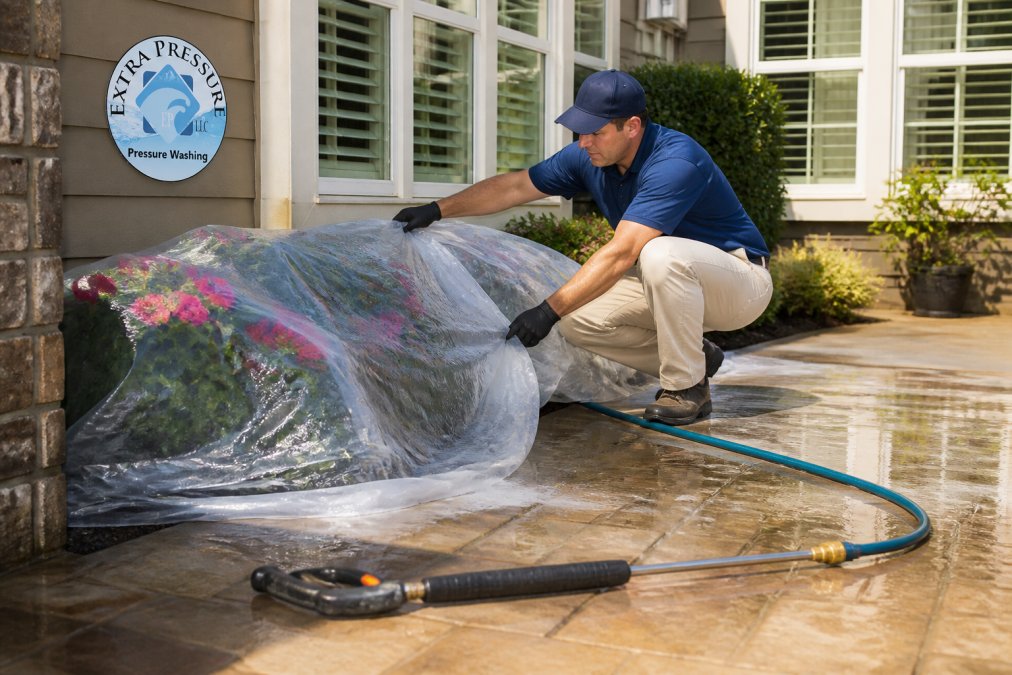
- Move potted plants out of the spray zone entirely
- Cover vegetable gardens and herb beds with breathable fabric, not plastic, to avoid heat buildup
- Direct runoff away from beds using a temporary berm or sandbag
- Check the weather; wind carries mist and chemicals farther than you’d expect
Wet burlap draped over fragile foliage absorbs overspray and keeps leaves from drying out under direct sun while you work. It’s cheap, reusable, and far gentler than plastic sheeting on tender growth.
Soft Washing Delicate Surfaces: What It Is and When to Use It
Soft washing is a low-pressure method that relies on specialized cleaning solutions and gentle rinsing rather than force to remove organic growth like mold, mildew, and algae. It’s the right call whenever the surface or the plants around it can’t tolerate high pressure.
Cleaning Landscape Rocks Without Killing Plants
Cleaning landscape rocks is a low-pressure job, not a high-pressure one. Rocks themselves are durable, but the plants around them are not, and the runoff from rock cleaning flows straight into your beds.
Pressure Settings and Nozzle Tips for Rock Surfaces
If you use a pressure washer on rock, keep the pressure well under what you’d use on concrete and choose a wide-angle tip rather than a narrow pencil jet. Hold the wand at a shallow angle and keep it moving; dwelling in one spot drives grit into soil and dislodges mulch.
A few practical rules for rock cleaning near plants:
- Test on an inconspicuous area first
- Keep the nozzle at least a foot from the surface
- Work away from beds so runoff flows toward drainage, not soil
- Stop if you see soil splashing into foliage
Using a zero-degree or turbo nozzle on rocks near garden beds is the fastest way to bury your plants in grit and compact the soil around their roots. The cleanup costs more time than the shortcut saves.
Eco-Friendly Cleaning Agents Safe for Soil and Foliage
Eco-friendly cleaning agents break down without leaving harmful residue in soil or on foliage, so biodegradable options are the default for landscaping work. But “biodegradable” and “plant-safe” are not the same claim, and that difference is where most DIY cleaning jobs go wrong.
Three Agent Classes and Where Each One Belongs
Most plant-safe exterior cleaning falls into three buckets, and each has a different risk profile for delicate landscaping:
- Oxygen-based cleaners (sodium percarbonate, hydrogen peroxide blends). These break down into water and oxygen and are the gentlest option for hardscape near beds. They work slowly on organic staining like algae and mildew, so they need dwell time, typically 10 to 15 minutes on a shaded surface before rinsing. They are the safest choice when runoff will reach soil.
- Soap-based surfactants (plant-derived, non-ionic). These lift dirt and grime but can strip the waxy cuticle off leaves if they land on foliage. Use them on hardscape only, apply with a pump sprayer rather than a broadcast spray, and rinse immediately if drift reaches a plant.
- Sodium hypochlorite (bleach) and quaternary ammonium blends. These are the workhorses of soft washing, and they are also the most damaging to plants. They will burn foliage on contact, and runoff can shift soil pH for weeks. Reserve them for surfaces where you can fully divert runoff away from beds, and always pre-wet and post-flush the surrounding soil.
Reading a Label for Plant Risk
Look for solutions labeled biodegradable and free of harsh solvents, bleach, and phosphates, and dilute them per the manufacturer’s directions. “Natural” doesn’t mean safe for every plant; citrus-derived d-limonene and some pine oil blends still burn tender leaves.
Post-Runoff Soil Remediation
This step determines whether your beds recover. If cleaning runoff reaches soil, the fix depends on what was in the solution:
- After oxygen-based or soap-based runoff: flush the top 2 to 3 inches of soil with plain water at roughly twice the volume of the runoff you estimate entered the bed. This pushes residue below the shallow root zone without waterlogging deeper soil.
- After bleach or quat runoff: flush the same way, then work a thin layer of compost or aged manure into the top inch once the soil dries. The organic matter buffers pH swings and re-inoculates the microbial life that sanitizers knock back.
- After any runoff on vegetable or herb beds: wait at least one full watering cycle before harvesting, and rinse any edible foliage that was above the splash line.
Mix your cleaning solution in a marked sprayer and never in a hose-end sprayer near beds. Hose-end sprayers broadcast far wider than most homeowners expect, and the drift is invisible until leaves start browning two days later.
Plant Sensitivity Tiers for Cleaning Day
Not every plant in a bed carries the same risk, so triage before you start:
- High-risk (shield or move entirely): hydrangeas, Japanese maples, hostas, ferns, young transplants of any species, and anything with fuzzy or waxy leaves. These absorb or trap spray and show damage fast.
- Moderate-risk (pre-wet and monitor): boxwoods, azaleas, roses, ornamental grasses, and most broadleaf evergreens. They tolerate brief overspray if pre-wetted but will scorch under direct chemical contact.
- Low-risk (still protect, but forgiving): established conifers, mature deciduous trees, and tough groundcovers like ivy or pachysandra. Their cuticles and root depth give them more margin, but runoff still matters.
Seasonal Cleaning Schedules for Landscape Health
Timing exterior cleaning around your landscape’s growth cycle prevents most plant damage before it starts. Most cleaning advice treats “spring” and “fall” as calendar dates rather than biological states, but plants respond to soil temperature and day length, not the month on your phone.
Spring Cleanup vs. Routine Maintenance: Two Different Jobs
Conflating these two is the most common scheduling mistake.
Spring cleanup is a one-time, heavier job: washing winter grime and pollen off hardscape, clearing leaf litter and dead growth from beds, refreshing mulch, and inspecting drainage before the first heavy rain. It happens once, after the last hard freeze but before buds break.
A Soil-Temperature Trigger, Not a Calendar
A more reliable rule than “clean in spring” is to watch soil temperature at a 4-inch depth. Most herbaceous perennials and shrubs begin root activity above roughly 40°F, and bud break follows within a couple of weeks. That’s your hard deadline: finish spring cleanup before bud break, or wait until plants have fully leafed out and hardened off.
| Season | Cleaning Focus | Plant State | Key Precaution |
|---|---|---|---|
| Late winter (pre-bud) | Spring cleanup: hardscape wash, debris removal, mulch refresh | Dormant, roots beginning activity | Finish before bud break; avoid soil saturation |
| Spring (post-leaf-out) | Light rinsing only | New growth hardening | No chemicals; hand-remove debris near stems |
| Summer | Soft wash siding, clean rocks, routine rinse | Full foliage, heat stress | Work early morning; shield leaves; pre-wet beds |
| Early fall | Clear leaf litter, prep drainage | Dormancy beginning | Remove litter before it stains; check gutters |
| Late fall / winter | Light rinsing only | Dormant, roots vulnerable | Skip chemicals; avoid work during freeze |
What Changes Season to Season
Spring and early summer are riskiest because new growth is tender. Late fall and winter, when most plants are dormant, are safest for thorough cleaning, but dormant doesn’t mean invulnerable. Roots stay active in unfrozen soil, and solutions reaching the root zone in winter show no damage until spring.
The single most important scheduling rule is to clean hardscapes before plants leaf out in spring or after they go dormant in fall. Everything else is a detail.
A Note on Weather Windows
Wind and temperature matter as much as season. Cleaning solutions drift farther on a breezy day than most homeowners expect, and applying cleaner below about 50°F slows the chemical reaction and encourages over-application. Work on a calm, mild day, and stop if wind picks up mid-job, the drift you can’t see is the drift that damages your beds.
Conclusion
The hardest part of cleaning around delicate landscaping isn’t the cleaning itself; it’s resisting the urge to treat every surface the same way. Protect plants first, match pressure and solutions to the surface, and time the work around your garden’s growth cycle.
Frequently Asked Questions
How do I clean landscape rocks without killing the plants around them?
Start by pre-wetting surrounding soil and foliage with a garden hose so roots absorb clean water before any runoff arrives. Use a pressure washer on a low setting with a fan nozzle tip, keeping the wand at least 12 inches from rock surfaces. Work in small sections and rinse rocks with plain water afterward. Avoid chemical cleaners near garden beds, or choose biodegradable options labeled safe for soil. Physical barriers like plastic sheeting can shield delicate plants while you work.
Can pressure washing damage delicate landscaping like flower beds and young shrubs?
Yes. High-pressure water can strip bark from young trunks, tear leaves, and displace mulch or topsoil. The force also compacts soil and exposes roots. To avoid damage, use soft washing techniques for nearby surfaces, direct spray away from beds, and never aim the wand at plants. Pre-wetting plants and using physical barriers adds another layer of protection. If you are unsure, a professional soft washing service can clean hardscapes while safeguarding your landscaping.
What eco-friendly cleaners are safe for garden soil and plants?
Biodegradable cleaners labeled safe for plants are the best choice. Look for products with no bleach, no phosphates, and no harsh solvents. Simple solutions like diluted white vinegar or oxygen-based cleaners work for many hardscape surfaces. Always test on a small area first, rinse thoroughly, and avoid runoff into garden beds. For stubborn mold on stones, a soft washing approach using low-pressure water and a plant-safe detergent is safer than harsh chemicals.
How often should I clean hardscapes near delicate landscaping?
A seasonal schedule works well: clean in early spring before plants leaf out, again in midsummer if mildew appears, and once in fall after leaves drop. This prevents organic matter buildup that stains stone and harbors pests. If you have heavy shade or frequent rain, you may need an extra cleaning. Always check plant growth stages before starting, and avoid cleaning during drought or extreme heat when plants are stressed and more vulnerable to chemical exposure or physical damage.