
Table of Contents
Using the right tools can help you clean gutters without ladder, ensuring safety and efficiency in your home maintenance routine.
To clean gutters without ladder is a practical approach that many homeowners can successfully implement. It’s important to be aware of the various tools available that make this task easier.
Cleaning gutters is crucial for maintaining the integrity of your home, as it helps prevent water damage and structural issues. Neglecting this essential task can lead to costly repairs and complications, making it worth your time to learn the most effective techniques available.
- Why Cleaning Gutters Without a Ladder Is Worth Doing Right
- What You’ll Need Before You Start
- Best Gutter Cleaning Tools for Homeowners: A Ground-Level Comparison
- Step-by-Step: How to Clean Gutters Without a Ladder
- Safety Precautions and Blind Spots for Ground-Level Cleaning
- Compatibility Guide: Matching Tools to Your Gutter Type
- How Often to Clean Gutters to Prevent Water Damage
- DIY Tools vs. Professional Gutter Cleaning Services: Cost and Results
- Frequently Asked Questions
Remember, to clean gutters without ladder is not only practical but essential for your home’s maintenance. Take the time to implement these methods effectively, ensuring the longevity and safety of your property.
Before you begin, it’s important to gather all necessary tools. Having everything prepared will streamline the cleaning process, making it more effective. Gather your telescopic wand, vacuum systems, and any attachments necessary for the job. This preparation can save you time and effort.
Why Cleaning Gutters Without a Ladder Is Worth Doing Right
Clogged gutters cause serious home damage. Water overflows against fascia boards, seeps under roofing, and pools near the foundation, problems far costlier than any gutter cleaning. You can clean gutters without a ladder using ground-level tools and a clear method. This guide from Extra Pressure LLC. covers every tool category, a step-by-step process, and the trade-offs between DIY and professional service. We’ll show you which tools work for which gutter types, where ground-level methods fall short, and when to call a licensed team.
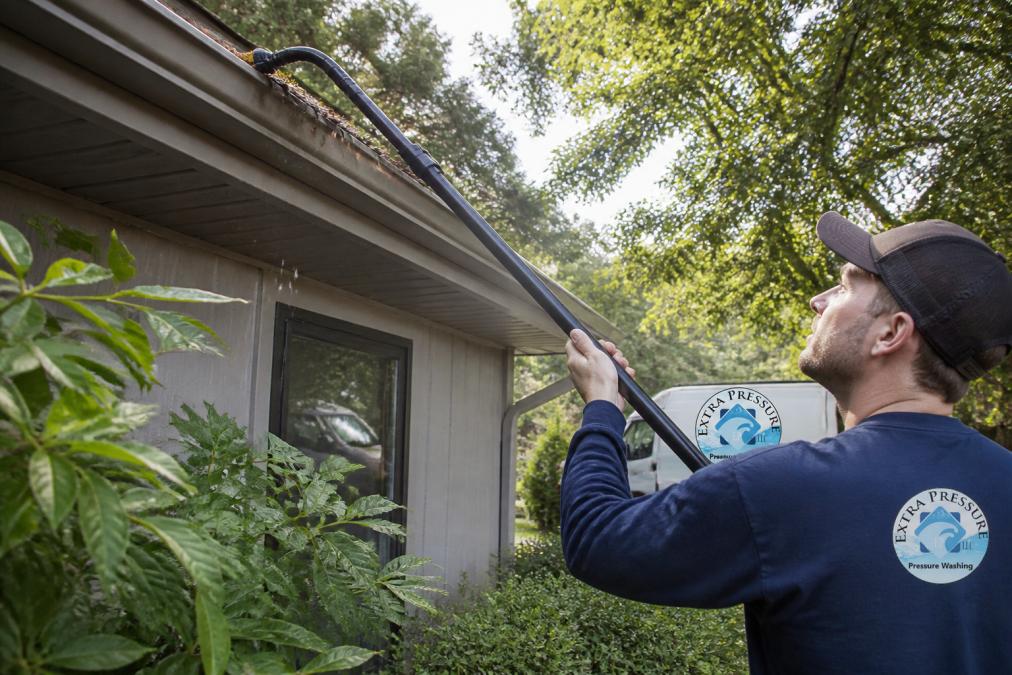
Telescopic gutter cleaning wands are especially useful for reaching high areas without a ladder. These tools can extend up to 20 feet, allowing you to clean hard-to-reach spots effectively. When using a telescopic wand, ensure that it is compatible with your vacuum system or blower. Proper alignment can enhance suction power, making the cleaning process faster.
Leaf blower attachments can greatly enhance your ability to clean gutters without a ladder. These attachments can create powerful airflow that dislodges leaves and debris while allowing them to fall safely to the ground. Pairing a leaf blower with a vacuum can give you a comprehensive approach to gutter cleaning.
Gutter vacuum systems provide a powerful alternative, featuring strong suction capabilities that allow for easy debris removal. These systems often come with various attachments to accommodate different gutter styles, making them versatile options for homeowners.
Garden hose attachments and gutter flushing kits can also be effective. These tools help remove stubborn debris and flush out the gutter system. The force of water can clear away clogs and build-up, ensuring that your gutters are working efficiently.
For those looking for a more hands-off approach, gutter cleaning robots are gaining popularity. These automated devices fit inside gutters and work to remove debris autonomously. While they may be an investment, they save time and provide a convenient solution for regular maintenance.
For single-story homes and many two-story structures, the right telescopic wand or vacuum system delivers thorough results without putting anyone on a roof. According to the National Safety Council’s ladder safety resources, falls from ladders account for a significant share of home improvement injuries every year. Staying on the ground is the smarter safety choice for routine gutter maintenance.
In this section, we’ll detail various methods for effectively cleaning gutters without a ladder. These methods are not only safe but also efficient, ensuring that you can keep your home in top condition without risking injury.
Before starting, assess your gutters from the ground. Look for visible blockages, sagging areas, and overall condition. This initial inspection helps identify where the most work is needed and informs your cleaning strategy. It’s essential to address any issues you see before proceeding with the cleaning process.
When clearing loose debris, use your blower attachment or vacuum to remove leaves, twigs, and other materials without climbing a ladder. It is essential to wear safety goggles while performing this task to protect your eyes from flying debris. When using a blower, work slowly to ensure all debris is dislodged.
Once the debris is cleared, flushing the gutters with water is an essential step. Connect your garden hose to an appropriate attachment and run water through the gutters, checking for proper drainage. This helps to identify clogs and ensures that the system is working as intended.
After flushing, monitor the water flow. If you notice slow drainage, this may indicate a clog or blockage somewhere in the system. Taking the time to inspect and rectify these issues can prevent larger problems down the line.
Safety is paramount when cleaning gutters. Ensure you wear gloves and goggles to protect yourself from debris and sharp edges. Additionally, be aware of blind spots that may not be visible from the ground. Always have a plan in place for any potential hazards you may encounter.
Compatibility between tools and your gutter type is essential. Ensure that your chosen tools are effective for your specific gutter style, as different designs may require different approaches. Researching compatibility can save you time and ensure effective cleaning.
Cleaning your gutters regularly is crucial to preventing water damage. It is recommended to clean them at least twice a year, ideally in spring and fall. However, if you live in an area with heavy foliage, more frequent cleanings may be necessary to maintain optimal flow.
When considering whether to tackle gutter cleaning yourself or hire a professional, weigh the costs and benefits. DIY methods may save you money, but professional services can offer expertise and thoroughness. Evaluate your comfort level and the complexity of the task at hand.
As you consider your options, looking at frequently asked questions can provide valuable insights. Start by asking about local regulations on gutter maintenance and the best practices recommended by industry experts. Understanding these aspects can enhance your cleaning routine.
Regular gutter maintenance is essential especially before seasonal changes. For instance, it’s crucial to clear out gutters before the rainy season to prevent overflow and related damages. Additionally, checking your gutter system after a storm can help you identify any debris that may have accumulated. Regular inspections can extend the life of your roof and foundation.
Equipping yourself with knowledge on how to clean gutters without ladder can make a significant difference in your overall maintenance routine.
Learning effective strategies to clean gutters without ladder should be a priority for all homeowners looking to enhance safety.
Choosing to clean gutters without ladder not only enhances safety but can also be incredibly efficient. You can tackle this task using the right equipment and techniques.
When you clean gutters without ladder, consider using tools that maximize reach and minimize the need for climbing. Such decisions significantly improve safety.
Utilizing methods to clean gutters without ladder can revolutionize your approach to home maintenance, making it simpler and safer.
Implementing strategies to clean gutters without ladder allows homeowners to manage their maintenance more effectively, avoiding the risks associated with traditional methods.
Understanding how to clean gutters without ladder can empower you to maintain your property without the heightened risk of ladder-related injuries.
By learning to clean gutters without ladder, you are taking a proactive step towards home safety and upkeep.
Ultimately, being able to clean gutters without ladder is about adopting smarter practices in home maintenance that prioritize your safety.
As you learn to clean gutters without ladder, remember the importance of safety gear and proper inspection techniques.
Adopting methods to clean gutters without ladder can greatly decrease the chances of accidents and improve cleaning efficiency.
Regularly cleaning gutters without ladder ensures that your home’s drainage system functions properly and helps avoid long-term damage.
Investing time in how to clean gutters without ladder can save you from future headaches related to clogged gutters and water damage.
Incorporating the best practices to clean gutters without ladder into your routine can lead to more efficient home maintenance.
Ultimately, the ability to clean gutters without ladder can save you time, money, and enhance your home’s condition.
In summary, being able to clean gutters without ladder is not just a practical solution but a necessary approach for homeowners.