Table of Contents
- Why Pressure Washing Ruins Asphalt Shingles
- Identifying Roof Algae, Moss, and Lichen Before You Treat
- The Best Roof Cleaning Solution for Algae
- Equipment Needed for Soft Washing Your Roof
- DIY Roof Cleaning Safety Tips
- How to Prevent Roof Algae Regrowth
- Roof Warranty and Material Compatibility Considerations
- Conclusion
- Frequently Asked Questions
Last Updated: September 19, 2026
Why Pressure Washing Ruins Asphalt Shingles
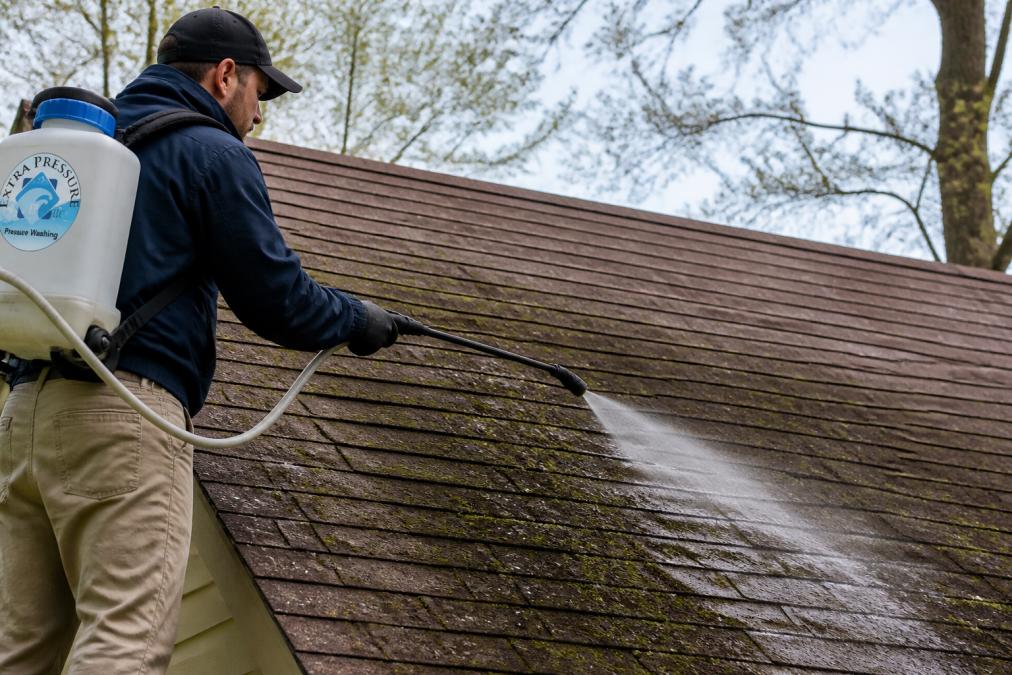
Pressure washing strips the protective granules off an asphalt shingle roof. Those granules shield the asphalt from sun and rain, so once they wash away, the shingle ages years in minutes, and the damage is permanent. A pressure washer also pushes water under the shingle edges, and that trapped moisture can rot the roof deck below.
- Granules wash into your gutters and yard
- Shingle edges lift and curl
- Water forces its way under the layers
- The roof mat cracks from the force
Identifying Roof Algae, Moss, and Lichen Before You Treat
Roof algae feeds on the limestone filler inside asphalt shingles and shows up as dark streaks running down the roof.
- Algae: flat black or green streaks, no raised texture
- Moss: fuzzy green clumps, holds water like a sponge
- Lichen: crusty gray-green patches clinging tight to the shingle
The Best Roof Cleaning Solution for Algae
The best roof cleaning solution for algae is a mix of sodium hypochlorite and water, applied at low pressure and left to sit. This is the core of soft washing: the chemical kills the algae rather than blasting it off.
The 50:50 Bleach and Water Method
A 50:50 mix of household bleach and water is the classic DIY ratio for killing roof algae: spray it on, let it dwell, and rinse. The key word is dwell, the chemical needs 15 to 20 minutes to work before you rinse with a garden hose at low pressure.
A few rules make this safer and more effective:
- Add a surfactant so the mix clings instead of running off. A few drops of dish soap works, but a dedicated roof-cleaning surfactant holds better on sloped shingles.
- Never mix bleach with ammonia or acid-based cleaners. The reaction releases toxic gas.
- Work in sections so the mix does not dry out. Once it dries, the chlorine stops working and you have wasted the pass.
- Keep the hose ready to wet down plants. Bleach runoff will scorch grass and shrubs within minutes.
- Do not let the mix sit longer than about 20 minutes on metal flashing or painted trim. Chlorine attacks the coating.
Never apply bleach-based cleaner on a windy day. Drift can carry the mist onto cars, siding, and neighboring property, and the overspray will leave permanent marks on aluminum and painted surfaces.
Oxygen Bleach for Eco-Friendly Cleaning
Oxygen bleach is the gentler option. Its active ingredient, sodium percarbonate, breaks down into oxygen, water, and soda ash, so it is biodegradable and kinder to your landscaping. The trade-off is speed: it works slower than chlorine, often needing a chemical dwell time of 30 minutes or more and a second pass on heavy growth. Re-mist during the dwell period to keep it wet.
Use oxygen bleach when:
- You have delicate plants near the roof
- You want to avoid harsh runoff
- The algae growth is light to moderate
- Your roof is metal, painted, or a mixed-material assembly where chlorine could attack coatings
Matching the Mix to the Growth and the Weather
- Cool, overcast days (roughly 50-70°F): the ideal window, the solution stays wet long enough to kill the algae.
- Hot, sunny days (above 80°F): the mix dries in minutes. Work in small sections, start on the shaded side, and re-wet as you go.
- Cold days (below 50°F): chlorine and oxygen bleach both slow down. Expect longer dwell times and possibly a second application.
Test the mix on a small, hidden section of roof, a back slope or an area behind a chimney, and wait a full day before treating the whole roof. If the shingles, flashing, or paint react badly, you will see it before you commit.
If you are unsure which chemistry your shingles can handle, check the manufacturer’s published cleaning guidance first. Many shingle warranties name the approved method, and using the wrong one can void coverage.
Equipment Needed for Soft Washing Your Roof
Soft washing needs a handful of basic tools, and no pressure washer.
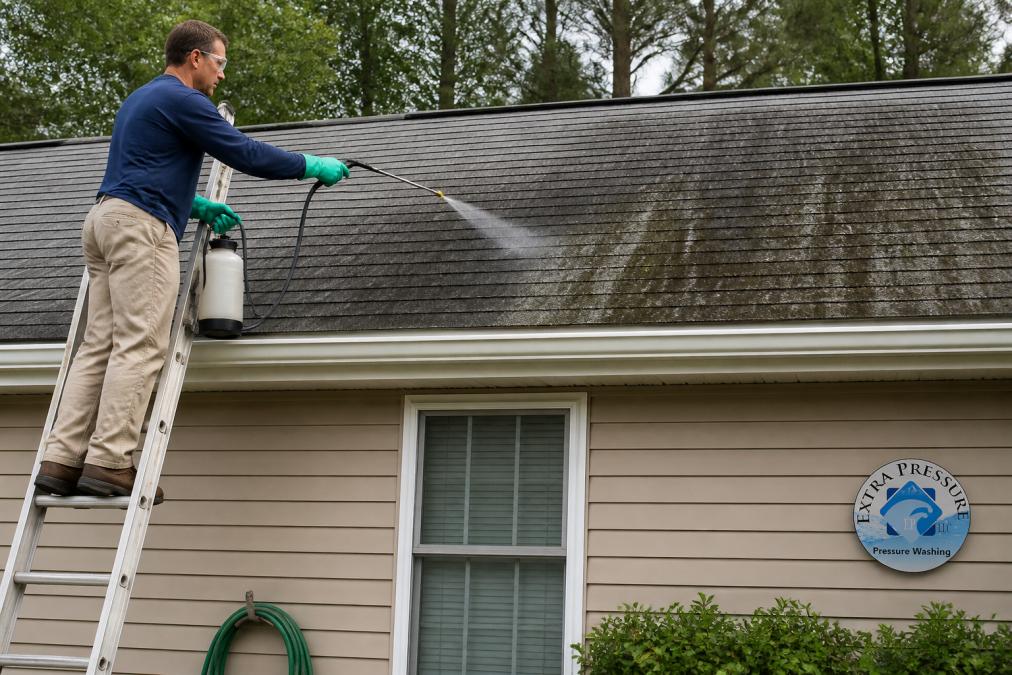
- A pump sprayer or a soft wash system with a nozzle
- A garden hose for rinsing at low pressure
- A safety harness if your roof pitch is steep
- Protective gear: gloves, goggles, and old clothes
- A plastic tarp to cover plants and outdoor furniture
DIY Roof Cleaning Safety Tips
DIY roof cleaning safety tips start with one rule: never walk a wet roof without fall protection. Wet shingles are slick, and most falls happen on the way down. Bleach also burns skin and eyes, so wear goggles and gloves every time.
More safety basics:
- Work on a calm, overcast day so the mix does not dry too fast
- Never spray into the wind
- Keep children and pets off the yard until you rinse
- Tell someone you are on the roof before you climb up
Protecting Your Landscaping and Managing Runoff
Runoff is the hidden problem: the same solution that kills algae can kill your shrubs and grass.
Prevent it with three steps:
- Wet down plants and soil before you start
- Cover delicate beds with plastic sheeting
- Rinse everything again with plain water when you finish
How to Prevent Roof Algae Regrowth
How to prevent roof algae regrowth comes down to keeping the roof dry and clean. Algae needs moisture and organic debris, so prevention means removing the conditions it needs, not just killing what is there.
A few habits make a real difference:
- Trim tree branches so shade and debris stop feeding the growth. Algae thrives on north-facing and shaded slopes because they stay damp longer.
- Clear leaves and needles from valleys and gutters. Debris holds moisture against the shingle surface.
- Rinse the roof with plain water a few times a year. This removes the organic dust algae feeds on.
- Reapply a preventive treatment every 1 to 2 years, ideally in the same season each time.
Seasonal Timing: When Prevention Actually Works
Timing matters more than most guides admit: both the chemistry and the algae respond to temperature and humidity.
- Spring (after the last freeze): the best window for a preventive treatment. Algae is waking up, the roof is still cool, and months of warm weather lie ahead for the treatment to work.
- Late summer: a second good window if you missed spring. Growth is visible and the roof is dry, but watch for afternoon heat that dries the solution too fast.
- Fall: clear debris before winter. Leaves and needles left on the roof through the cold months create the damp, shaded conditions algae needs to establish.
- Winter: skip chemical treatment. Chlorine and oxygen bleach both slow down in cold temperatures, and freezing runoff can damage landscaping. Stick to debris removal.
Material-Specific Prevention
Prevention looks different depending on what your roof is made of, and this is where most guides go silent.
| Roof Material | Best Prevention Approach | What to Avoid |
|---|---|---|
| Asphalt shingles | Copper or zinc strips along the ridge; annual rinse; reapply treatment every 1-2 years | Abrasive scrubbing, pressure washing, harsh acids |
| Metal roofing | Keep coatings intact; rinse after pollen season; use oxygen bleach for any treatment | Chlorine bleach on painted or coated panels |
| Tile | Clear debris from valleys; gentle rinse; treat with oxygen bleach | High pressure, harsh acids that etch the surface |
| Wood shakes | Keep the roof dry; trim overhanging branches; use oxygen bleach only | Chlorine bleach, which degrades wood fibers |
Prevention is not a one-time project. The roofs that stay clean are the ones where debris is cleared every fall, the treatment is reapplied on schedule, and the shade is managed. A roof that stays clear also lasts longer, because algae is not eating into the shingles, and that matters for your warranty, since most manufacturers expect routine maintenance.
Warranty-Safe Prevention
Before applying any preventive product, check your manufacturer’s guidelines. Some shingle warranties specify approved methods and products, and using an unapproved chemical, even a “gentle” one, can void coverage. Copper and zinc strips are generally compatible with asphalt shingles, but confirm against your specific warranty terms.
This is preventative maintenance, far cheaper than repeated cleanings.
Roof Warranty and Material Compatibility Considerations
Roof warranties are the part most guides skip, and it matters. Many shingle manufacturers void coverage if the roof is pressure washed or cleaned with the wrong chemicals.
Before you treat anything, check two things:
- Your manufacturer guidelines for approved cleaning methods
- Whether your warranty requires professional service
| Roof Material | Safe Method | Avoid |
|---|---|---|
| Asphalt shingles | Soft wash, bleach or oxygen bleach | Pressure washing |
| Metal roofing | Mild oxygen bleach, low rinse | Chlorine bleach on coatings |
| Tile | Soft wash, gentle rinse | High pressure, harsh acids |
| Wood shakes | Oxygen bleach, low pressure | Chlorine bleach, pressure |
Conclusion
Roof algae is stubborn, but you do not need a pressure washer to beat it. A soft wash with the right solution, patience, and runoff control gets the job done without wrecking your shingles or your warranty.
Frequently Asked Questions
What kills algae on the roof?
Sodium hypochlorite is the most effective killer of gloeocapsa magma, the cyanobacteria behind those black streaks. A 50:50 mix of household bleach and water, applied with a pump sprayer and allowed to dwell for 15-20 minutes before rinsing, eliminates algae spores at the root. Oxygen bleach works as a gentler alternative. Either way, never use a pressure washer, since the force strips the protective roof granules and shortens shingle life.
Is bleach safe for asphalt shingles?
Yes, when diluted and applied correctly. A 50:50 bleach-to-water ratio kills algae without damaging asphalt shingles. The danger comes from pressure, not the chemical. Rinse with a garden hose at low pressure, protect your landscaping from runoff, and follow the shingle manufacturer’s guidelines. Never mix bleach with ammonia or other cleaners.
How often should you clean roof algae?
Most homes need roof algae removal every 2-3 years, depending on shade, humidity, and tree cover. Homes under heavy tree canopy or in consistently damp conditions may need it annually. Installing copper or zinc strips near the ridge line slows regrowth significantly, so you can stretch the interval between cleanings. Check your roof each spring for early black streaks before they spread.
What is the white powder people put on their roofs?
That white powder is usually zinc sulfate or a similar fungicide applied to kill moss and prevent algae regrowth. Some homeowners also use trisodium phosphate as a cleaning additive. These powders work, but they wash into gutters and landscaping with the next rain. Copper sulfate is another option, though it can stain surfaces and harm plants if runoff isn’t managed carefully.
Leave a Reply