Table of Contents
- How to Find Roof Washers Near Me You Can Actually Trust
- Benefits of Professional Roof Cleaning
- Soft Wash vs Pressure Washing: Safe Cleaning Methods for Shingles
- What Soft Wash Roof Cleaning Cost Looks Like
- How to Hire a Pressure Washing Company: Vetting Checklist
- Roof Material Cleaning Guide and Maintenance Schedules
- Frequently Asked Questions
Last Updated: September 16, 2026
How to Find Roof Washers Near Me You Can Actually Trust
Searching for roof washers near me usually means one of two things: your roof is streaked with black stains, or you’re getting a property ready to sell and need it looking sharp. This guide from Extra Pressure LLC. covers how to hire a qualified roof washing professional, what the process involves, and what questions to ask before anyone climbs a ladder.
The stakes are higher than most homeowners realize. A roof is one of the most expensive components of a home, and the wrong cleaning method can void a shingle warranty or cause thousands in water damage. Choosing the right provider matters more than saving a few dollars.
Below, we’ll walk through what a roof washer actually does, how to vet a company, and which cleaning methods are safe for your roof material.
What a Roof Washer Actually Does
A roof washer is a trained technician who removes algae, moss, lichen, and dirt from roofing surfaces using methods matched to the roof material. The job is not just cosmetic. Those black streaks are a living organism, and left alone they hold moisture against shingles and shorten roof life.
Typical services include:
- Soft washing the roof surface with low-pressure application
- Treating algae, moss, and mildew with cleaning solutions
- Clearing debris from valleys and around penetrations
- Gutter cleaning to keep runoff flowing away from the foundation
- A post-cleaning roof inspection to flag damage
At Extra Pressure LLC., we pair soft washing with gutter maintenance because the two problems usually travel together. Clogged gutters back water up under the roofline, which feeds the same algae you’re trying to kill.
Benefits of Professional Roof Cleaning
Professional roof cleaning does more than improve appearance. It protects the roof structure, extends service life, and preserves resale value. Many homeowners find that consistent exterior cleaning prevents the slow damage that leads to premature replacement.
Curb Appeal and Home Value
A stained roof is the first thing a buyer notices from the street. Streaked shingles read as neglect, even when the roof is structurally sound. Cleaning restores an even color across the surface and lifts the whole facade.
Real estate professionals commonly advise sellers to address exterior cleaning before listing. A clean roof and siding signal that the property has been maintained, which supports a stronger asking price and fewer inspection objections.
Preventing Mold, Algae, and Moss Growth
Algae and moss don’t just sit on top of shingles. They root into the granular surface, trap moisture, and accelerate deterioration. In humid climates and under shade trees, growth returns quickly without treatment.
The right cleaning kills the organism at the root, not just the visible stain. Skipping that step means the black streaks return within months. A proper soft wash treatment, followed by periodic maintenance, keeps growth from re-establishing.
Ask any provider whether they treat the algae at the root or just rinse the surface. Surface rinsing looks good for a few weeks, then the streaks come back.
Soft Wash vs Pressure Washing: Safe Cleaning Methods for Shingles
Soft washing is the safe method for asphalt shingles. It uses low pressure combined with cleaning solutions to kill organic growth and rinse it away. Pressure washing forces water under shingle tabs and strips granules, which shortens roof life.
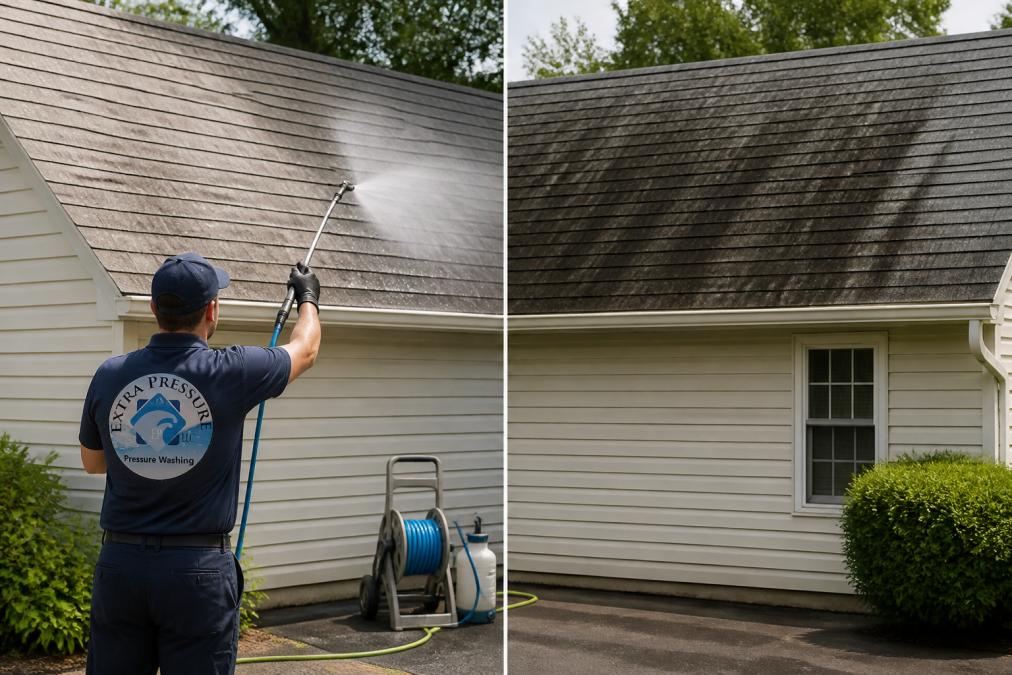
The difference comes down to pressure regulation.
| Method | Pressure Level | Best For | Risk to Shingles |
|---|---|---|---|
| Soft wash | Low, garden-hose range | Asphalt shingles, painted surfaces | Minimal when applied correctly |
| Pressure washing | High, up to 3,000+ PSI | Concrete, driveways, brick | Can strip granules and force water underneath |
What Soft Wash Roof Cleaning Cost Looks Like
Soft wash roof cleaning cost depends on roof size, pitch, material, and how much organic growth has taken hold. Providers typically quote per square foot or as a flat rate after a roof inspection, so the only accurate number comes from an on-site estimate.
Typical Price Ranges by Roof Size
Two-story homes, steep pitches, and roofs with multiple valleys or dormers sit at the top of any range. A single-story ranch with a simple gable sits at the bottom.
Factors That Move the Price
Several variables drive the final quote:
- Roof size and pitch: Steeper and larger roofs take longer and require more safety equipment
- Material: Asphalt shingles are straightforward; tile and metal need different handling
- Severity of growth: Heavy moss or lichen requires stronger treatment and more time
- Access: Landscaping, fences, and tight lots slow the work
- Add-ons: Gutter cleaning and window washing often bundle at a discount
What a Written Quote Should Itemize
A legitimate quote separates the roof treatment from add-ons so you can compare apples to apples across providers. Ask for line items covering:
- Roof square footage and the per-square-foot rate
- Cleaning solution type and application method (soft wash vs. pressure)
- Gutter cleaning, if included
- Landscaping protection and rinse-down
- Any warranty or callback policy if streaks return
A quote that’s dramatically lower than the others usually means the provider plans to pressure wash instead of soft wash, or skip the algae treatment entirely. The savings disappear when the stains return.
Why Cheap Quotes Cost More Later
The real cost comparison isn’t this year’s invoice, it’s the total cost of ownership over the roof’s remaining life. Pressure washing strips granules, which accelerates shingle aging and can void a manufacturer’s warranty. Once a warranty is voided, a roof replacement that might have been years away becomes an immediate expense. A professional soft wash protects that warranty.
How to Hire a Pressure Washing Company: Vetting Checklist
Hiring a pressure washing company comes down to verifying credentials, insurance, and method before anyone touches your roof. The checklist below covers the questions that separate a professional operation from a fly-by-night crew, and explains why each one matters.
- Confirm the company is licensed and insured, and ask for proof. Ask for a certificate of insurance, not just a verbal yes. A legitimate provider can email it the same day.
- Ask specifically whether they soft wash roofs or pressure wash them. The answer should be immediate and unambiguous. Hesitation means they don’t specialize in roofs.
- Request a free estimate with a written scope of work. A written scope protects you if the job expands mid-project.
- Read recent customer reviews, not just the star rating. Look for reviews that mention roof work specifically, not just driveway cleaning.
- Ask what cleaning solutions they use and whether they’re safe for landscaping. Sodium hypochlorite is common and effective, but it kills plants on contact if runoff isn’t managed.
- Confirm they carry liability insurance covering roof work. General liability is not the same as coverage for work performed at height.
- Get the schedule in writing, including weather contingencies. Roof cleaning is weather-dependent; a provider without a rain plan will rush your job.
- Ask about their satisfaction guarantee. A written guarantee is a signal the provider expects the treatment to work.
DIY vs Professional Risk Assessment
DIY roof cleaning is possible with the right equipment, but the risk profile is steep, and the risks are not evenly distributed. Here is how they actually break down.
Eco-Friendly Chemical Safety and Protecting Landscaping
The chemicals used in roof cleaning matter as much as the method. Many providers use sodium hypochlorite, the same active ingredient in pool chlorine, which kills plants quickly if it runs off untreated.
Responsible providers take precautions:
- Pre-wetting landscaping before application
- Covering sensitive plants and shrubs
- Rinsing runoff thoroughly after treatment
- Using biodegradable solutions where the roof material allows
Roof Material Cleaning Guide and Maintenance Schedules
Cleaning methods change with the roof material, and using the wrong one causes damage that’s expensive to fix.
- Asphalt shingles: Soft wash only. Pressure washing strips granules and voids warranties.
- Metal roofing: Soft wash with a manufacturer-approved solution. Avoid abrasive scrubbing.
- Tile and clay: Soft wash, with attention to cracked tiles that let water through.
- Wood shake: Lowest pressure possible, plus a treatment to prevent rot and mildew.
- Flat and membrane roofs: Gentle cleaning with attention to drainage and ponding.
Frequently Asked Questions
What is the average cost to pressure wash a roof?
Roof washing companies typically price by square footage, roof pitch, and how heavy the algae or moss growth is. Because those factors vary so much from home to home, a firm number only comes after an on-site look. Extra Pressure LLC. provides same-day estimates, so you can get a real quote instead of guessing. Request a free estimate and the crew will assess your roof and give you a clear price before any work starts.
Is soft washing a roof worth it compared to pressure washing?
Soft washing is usually the safer choice for asphalt shingles. High-pressure washing can strip granules, force water under shingles, and shorten roof life. Soft washing uses low pressure plus biodegradable solutions to kill algae, moss, and mildew at the root, so black streaks stay gone longer. For most homes, that combination of safety and lasting results makes soft washing the better value over time.
How often should you have your roof professionally cleaned?
In humid climates with heavy tree cover, most roofs need cleaning every 2 to 3 years. Roofs with less shade and better airflow can often go 3 to 5 years. Watch for black streaks, moss patches, or dark staining on north-facing slopes; those are early signs. Scheduling preventative maintenance on a regular cycle costs less than waiting for shingle damage that requires repair.
What are the risks of using high-pressure washing on shingles?
Pressure washing shingles can blast away the protective granules, crack tabs, and push water beneath the roof deck. That leads to leaks, rot, and premature replacement. It can also void some shingle warranties. A qualified roof washer uses soft wash methods with pressure regulation and the right chemical cleaning mix. Always ask a provider how they clean shingles before you book.
Leave a Reply