Table of Contents
- Why Pressure Washing Matters for Commercial Properties
- Types of Commercial Surfaces and Cleaning Methods
- Equipment, Tools, and Pressure Specifications
- Cost of Commercial Pressure Washing Per Square Foot
- Commercial Pressure Washing Maintenance Schedule
- Safety Protocols, Compliance, and Environmental Responsibility
- Protecting Your Property: Insurance, Liability, and Professional Standards
- Frequently Asked Questions
Last Updated: September 18, 2026
Why Pressure Washing Matters for Commercial Properties
Pressure washing for commercial properties protects assets and projects professionalism. A clean exterior signals competence and attention to detail, potential clients form judgments before stepping inside.
Dirt, mold, algae, and grime accumulate rapidly and degrade surfaces, accelerate deterioration, and create liability concerns. Regular pressure washing prevents costly repairs while maintaining curb appeal that impacts foot traffic and property value.
Commercial properties demand equipment for large surface areas, environmental compliance, and operation around active businesses. Improper cleaning damages surfaces or creates safety hazards.
Regular pressure washing for commercial properties extends the lifespan of concrete, asphalt, and building exteriors by removing organic growth that traps moisture. For businesses preparing to sell, refinance, or maintain competitive edge, professional cleaning is essential.
Types of Commercial Surfaces and Cleaning Methods
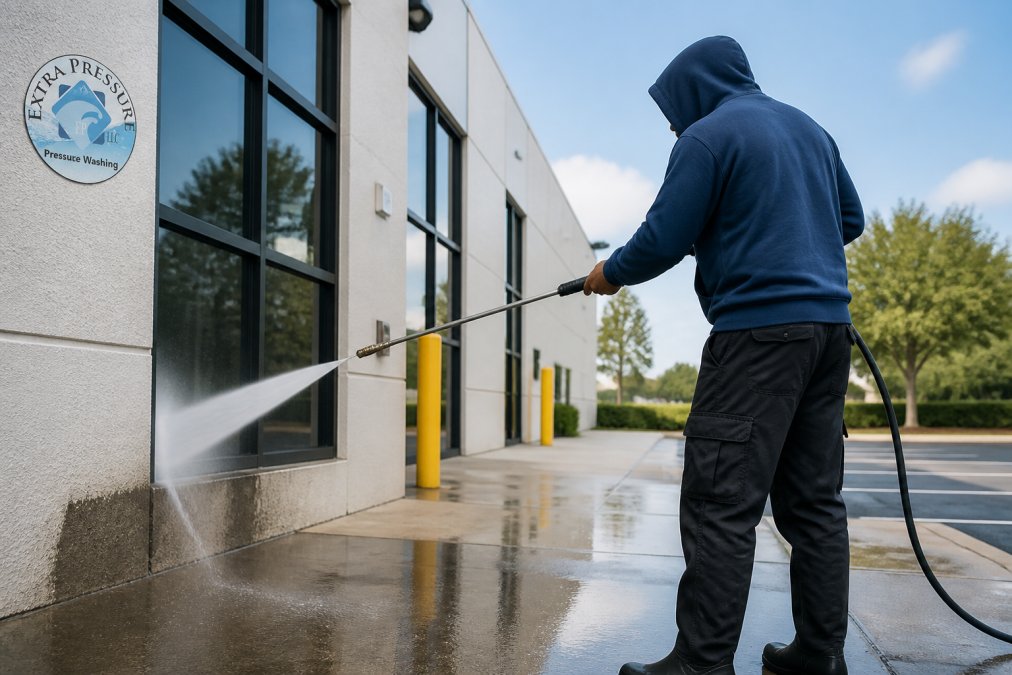
Commercial properties contain diverse surfaces requiring tailored approaches. Wrong pressure or technique causes permanent damage; understanding surface type and appropriate method is essential.
Concrete and Asphalt Restoration
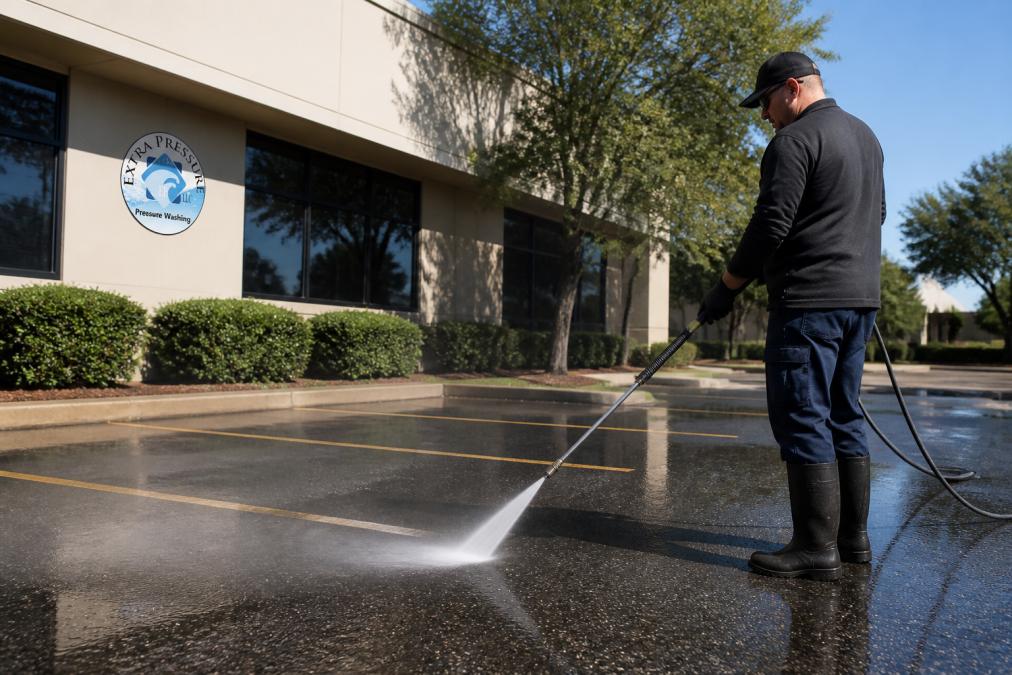
Concrete and asphalt are common in parking lots, sidewalks, loading docks, and foundations. Concrete handles 3000-4000 PSI; asphalt requires 1500-2500 PSI to avoid degradation.
Hot water pressure washing breaks down oil, grease, and stubborn stains more efficiently than cold water. For parking lots with automotive fluid stains or loading areas with heavy residue, hot water systems deliver superior results.
Pressure washing removes years of accumulated dirt, revealing original texture and color. For older properties, this improves curb appeal and perceived value while preventing expensive resurfacing.
Building Facades and Exterior Sanitization
Building facades require different approaches. Brick, stucco, vinyl siding, and metal panels respond differently to pressure and temperature. Improper technique strips paint, cracks mortar, or forces water into cavities causing hidden damage.
Exterior sanitization removes mold, mildew, bird droppings, and biological contaminants that thrive in shaded, damp areas. Professional cleaning restores appearance, critical for commercial real estate competing on visual impression.
Facade cleaning often requires lower PSI settings (500-1500 PSI) combined with specialized detergents. The goal is to dissolve contaminants rather than blast them away. This approach protects delicate surfaces while achieving superior results.
When to Use Soft Washing Instead of High-Pressure Cleaning
Soft washing uses lower pressure (150-500 PSI) with eco-friendly detergents for delicate surfaces. It works well for roofing, painted surfaces, landscaping, and newer construction with sensitive materials.
Many properties have mixed surfaces, durable concrete docks but delicate siding and landscaping. Soft washing cleans everything effectively without damage, with detergents breaking down organic growth chemically for longer-lasting results.
Knowing when to dial back pressure and rely on chemistry separates competent operators from those who create problems.
Equipment, Tools, and Pressure Specifications
Professional equipment determines results and safety. Consumer-grade washers (2000-2500 PSI) lack power for commercial work. Commercial systems deliver 3000-4000 PSI or higher with GPM ratings for large surface areas.
PSI measures pressure intensity; GPM measures flow rate. Both matter, high PSI with low GPM is slow; high GPM with low PSI won’t remove stains. Professional systems balance both.
Surface cleaners, turbo nozzles, and specialized attachments expand capability. Surface cleaners prevent streaking; turbo nozzles concentrate pressure for stubborn stains; hot water systems improve grease and oil removal.
Water reclamation systems capture and filter runoff, preventing contamination and meeting regulatory requirements. Increasingly required in many jurisdictions, they demonstrate environmental responsibility.
Cost of Commercial Pressure Washing Per Square Foot
Pricing for pressure washing for commercial properties varies significantly based on surface type, contamination level, accessibility, and regional market conditions. However, facility managers need a framework to budget and justify cleaning expenditures to stakeholders. Understanding cost drivers and calculating return on investment separates strategic maintenance from reactive spending.
Typical pricing ranges (as of 2026) fall between $0.10 and $0.50 per square foot for standard concrete and asphalt cleaning, depending on regional labor costs and contamination severity. Building facades and specialized surfaces command $0.25 to $1.00+ per square foot due to safety requirements, equipment complexity, and surface sensitivity. These are baseline figures; heavily stained areas, multi-story access, or water reclamation system requirements add 20-40% to the base cost.
Cost-benefit analysis for asset protection is where pressure washing becomes a facility management priority rather than a discretionary expense. Regular cleaning extends pavement life, effectively paying for itself through deferred capital replacement.
Building facades present similar economics. Mold and mildew don’t just look unprofessional; they trap moisture that accelerates material degradation. Annual facade cleaning prevents the need for expensive repainting, siding replacement, or structural remediation. For commercial real estate competing on tenant attraction and property valuation, curb appeal directly impacts lease rates and resale value.
Environmental compliance costs must factor into total cleaning expense. Water reclamation systems, required in many jurisdictions, add to a single cleaning project. Proper disposal of captured runoff (which may contain oil, grease, sediment, and detergent residue) incurs additional fees. However, these costs are non-negotiable; violations of Clean Water Act stormwater discharge rules can result in significant fines per violation. Budgeting for compliant cleaning prevents far costlier regulatory penalties.
Getting accurate quotes requires providing vendors with specific information: total square footage, surface types, contamination type and severity, building height and accessibility, whether water reclamation is required, and desired frequency. Transparent vendors will itemize labor, equipment, materials, and compliance costs separately, allowing you to compare apples-to-apples across providers. Request references from similar commercial properties and verify that quoted prices include all necessary insurance and environmental compliance measures.
Commercial Pressure Washing Maintenance Schedule
Frequency depends on climate, surface type, use intensity, and regulatory requirements. Parking lots in high-traffic areas accumulate stains and organic growth faster than lightly used spaces. Buildings in humid climates see mold and mildew more readily than those in arid regions. However, facility managers must also account for environmental compliance obligations that dictate when and how cleaning can occur.
A practical maintenance schedule for most commercial properties includes:
- Parking lots and concrete surfaces: Quarterly or semi-annually (high-traffic areas benefit from quarterly cleaning to prevent oil stain accumulation and maintain slip resistance)
- Building facades and exterior walls: Annually or as needed (spring and fall are optimal to remove winter salt residue and prepare for seasonal weather)
- Sidewalks and entry areas: Quarterly (higher foot traffic areas require more frequent attention for safety and appearance)
- Roof and gutter cleaning: Semi-annually or seasonally (spring after winter debris accumulation, fall before winter weather)
- Loading docks and service areas: Monthly to quarterly (heavy equipment use and material handling create rapid contamination)
Preventative maintenance costs significantly less than reactive cleaning. A parking lot cleaned quarterly stays manageable and maintains surface integrity. One cleaned only when visibly grimy requires aggressive treatment that damages the surface, accelerates deterioration, and creates liability. Regular cleaning extends asset lifespan and maintains consistent curb appeal.
Regulatory compliance and environmental permits are non-negotiable scheduling factors. The Clean Water Act and EPA stormwater discharge regulations prohibit runoff containing oil, grease, sediment, detergents, and other contaminants from entering storm drains or local waterways without treatment. Many municipalities require:
- Stormwater Pollution Prevention Plans (SWPPP): Documentation of cleaning schedules, methods, and runoff management for properties in regulated areas
- Water reclamation or containment: Capture and proper disposal of all runoff, not discharge to storm sewers
- Notification requirements: Some jurisdictions require advance notice before large-scale cleaning operations
- Seasonal restrictions: Certain areas prohibit pressure washing during wet seasons or restrict water use during drought conditions
Facility managers should contact their local EPA regional office or municipal stormwater authority to determine whether their property falls under SWPPP requirements. Non-compliance can result in fines of $25,000 or more per violation, plus liability for environmental remediation.
Seasonal factors and climate zones influence optimal timing:
- Spring: Remove winter salt residue, road treatment chemicals, and accumulated debris. This is critical for concrete and asphalt longevity in northern climates.
- Summer: Address algae and mold growth accelerated by heat and humidity, particularly on shaded facades and roofing. However, many jurisdictions restrict water use during summer drought periods, verify local restrictions before scheduling.
- Fall: Clean before winter weather to remove leaves, pollen, and organic growth that trap moisture. Prepare surfaces for freeze-thaw cycles that can accelerate damage if surfaces are contaminated.
- Winter: Less frequent but important for removing salt buildup in areas using de-icing treatments. Schedule during dry periods to allow proper runoff containment.
Safety Protocols, Compliance, and Environmental Responsibility
Pressure washing involves hazards, high-pressure water can cause serious injury, equipment creates electrical risks, and chemical use demands careful handling. OSHA guidelines address pressure washer safety, though specific regulations vary by jurisdiction and application.
Protecting Your Property: Insurance, Liability, and Professional Standards
Hiring uninsured contractors exposes your business to liability. If equipment damages your property or an operator is injured on-site, you may face legal and financial consequences. Licensed and insured providers carry liability coverage that protects both parties.
Frequently Asked Questions
How often should commercial properties be pressure washed?
Most commercial properties benefit from pressure washing 1-2 times per year, depending on climate, foot traffic, and surface type. High-traffic areas like parking lots and storefronts may need quarterly cleaning. Properties in humid regions prone to mold and mildew growth should be cleaned more frequently. A professional can assess your specific property and recommend a commercial pressure washing maintenance schedule tailored to your building’s exposure and condition.
What is the cost of commercial pressure washing per square foot?
Pricing depends on several factors: surface type, soil level, accessibility, equipment needed, and whether soft washing or high-pressure cleaning is appropriate. Concrete and asphalt typically cost less than delicate building facades. Contact a licensed and insured provider for a same-day estimate. Pricing depends on square footage and the specific cleaning challenge your property presents.
Is soft washing better than pressure washing for commercial buildings?
Neither is universally better, the choice depends on the surface. High-pressure cleaning excels at removing stubborn stains, graffiti, and grime from concrete and asphalt. Commercial soft washing services are safer for delicate surfaces like stucco, painted siding, and landscaping areas, using lower pressure and specialized biodegradable detergents. A professional assesses your property’s materials and soil condition to recommend the right approach for each surface.
What should I look for in a licensed and insured pressure washing company?
Verify current licensing, liability insurance, and worker’s compensation coverage before hiring. Ask about their equipment specifications (PSI and GPM ratings), cleaning methods for different surfaces, and whether they use water reclamation systems to comply with environmental regulations. Request references from similar commercial properties and confirm they understand OSHA compliance requirements. Same-day estimates and transparent communication about the process and timeline are also good indicators of a reliable provider.
Leave a Reply