Table of Contents
- Why Pressure Washing Transforms Your Home’s First Impression
- Pressure Washing vs Soft Washing: Which Method Protects Your Surfaces
- How to Prepare Your Home for Pressure Washing
- Removing Mold, Mildew, and Algae Without Damaging Your Siding
- Pressure Washing Cost Estimator: What to Expect
- Preparing Your Home for Sale: Pressure Washing as a Value Add
- Seasonal Maintenance Schedules for Year-Round Curb Appeal
- Common Mistakes That Damage Your Property
- Frequently Asked Questions
Last Updated: September 21, 2026
Why Pressure Washing Transforms Your Home’s First Impression
Your home’s exterior is the first thing potential buyers, guests, and neighbors see. Over time, dirt, algae, mold, and mildew accumulate on siding, driveways, and patios, making even well-maintained properties look neglected. Pressure washing for home curb appeal removes these stubborn stains and restores surfaces to their original condition, instantly improving your property’s visual impact.
The difference is dramatic. A driveway caked with grime, roof covered in dark algae, or siding streaked with mildew sends a clear message: this property isn’t cared for. Pressure washing reverses that impression in hours. Clean surfaces reflect light better, colors appear more vibrant, and the entire property looks newer and more valuable.
Beyond aesthetics, regular exterior cleaning prevents damage. Mold and mildew can deteriorate siding and shorten its lifespan. Algae buildup traps moisture against surfaces, leading to wood rot and foundation issues.
Pressure Washing vs Soft Washing: Which Method Protects Your Surfaces
Not all exterior cleaning requires the same approach. The choice between pressure washing and soft washing determines whether your surfaces emerge restored or damaged. Understanding when to use each method is critical.
Pressure washing uses high-pressure water jets to blast away stubborn stains, dirt, and buildup. It’s effective on concrete, asphalt, and metal surfaces that can withstand force. Soft washing applies lower pressure combined with specialized cleaning solutions to gently remove organic matter like mold and algae. It protects delicate surfaces from damage.
The fundamental difference: pressure washing is aggressive; soft washing is protective. Choosing wrong can strip paint, crack siding, or damage landscaping.
High-Pressure vs Low-Pressure: Understanding the Difference
High-pressure systems use high PSI. They excel at removing embedded dirt, concrete stains, and heavy buildup from driveways, parking lots, and industrial surfaces. The force cuts through years of accumulation quickly.
Low-pressure systems are paired with biodegradable detergents that do the actual cleaning work. The water simply rinses away what the cleaning solution has loosened. This approach is gentler on surfaces and more effective at removing organic growth like mold and algae.
High-pressure can damage wood siding, strip paint, dent gutters, and force water into wall cavities where it causes mold and rot. Low-pressure prevents these issues while still delivering thorough cleaning.
When to Choose Soft Washing for Delicate Surfaces
Soft washing is the right choice for wood siding, vinyl, asphalt shingles, stucco, and painted surfaces. It’s also essential around landscaping, gardens, and outdoor furniture where harsh chemicals or high pressure would cause harm.
Soft washing removes mold and mildew more effectively than pressure washing because the cleaning solution treats the root cause. Pressure washing only blasts away visible growth; the spores remain and regrow within weeks. Soft washing kills the organism, preventing rapid recolonization.
For properties with mature landscaping, delicate plants, or ornamental features, soft washing is non-negotiable. The specialized cleaning solutions are typically biodegradable and safe for surrounding vegetation when applied correctly. Extra Pressure LLC. uses soft washing techniques specifically designed to protect your property while delivering professional-grade results.
How to Prepare Your Home for Pressure Washing
Preparation determines cleaning quality and safety. A few simple steps ensure the job runs smoothly and protects your property.
Pre-Cleaning Checklist: What to Do Before the Crew Arrives
Start by clearing the work area. Move outdoor furniture, grills, potted plants, and decorative items away from surfaces being cleaned. Close all windows and doors tightly. Cover any outdoor electrical outlets, light fixtures, or HVAC units with plastic sheeting to prevent water intrusion.
Trim back landscaping that overhangs the areas to be cleaned. Low-hanging branches or dense shrubs can obstruct access and reduce cleaning effectiveness. Mark any fragile items or areas of concern so the crew is aware.
Inform the cleaning team about any existing damage, weak spots in siding, or areas of concern. If you’ve noticed cracks, loose boards, or water stains, point these out beforehand. This protects you and helps the crew adjust their approach.
Protecting Plants, Landscaping, and Outdoor Furnishings
Water the landscaping thoroughly before cleaning begins. Wet soil and plants absorb less chemical residue and recover faster if exposed. Create a protective barrier around delicate plants using cardboard or plastic sheeting.
Move potted plants, outdoor rugs, and furniture away from the cleaning zone entirely. Even soft washing can displace lightweight items or splash residue onto surfaces you don’t want treated.
For permanent landscape features like ornamental grasses or flowering shrubs near the house, discuss protection strategies with your cleaning team. Professional operators know how to shield plants while still accessing the surfaces that need cleaning. Extra Pressure LLC. takes care to preserve your landscaping while delivering thorough exterior cleaning.
Removing Mold, Mildew, and Algae Without Damaging Your Siding
Mold, mildew, and algae are persistent problems in humid climates. They thrive in shade, moisture, and organic debris. Simply blasting them away with high pressure returns them within months. The right approach kills the organism and prevents rapid regrowth.
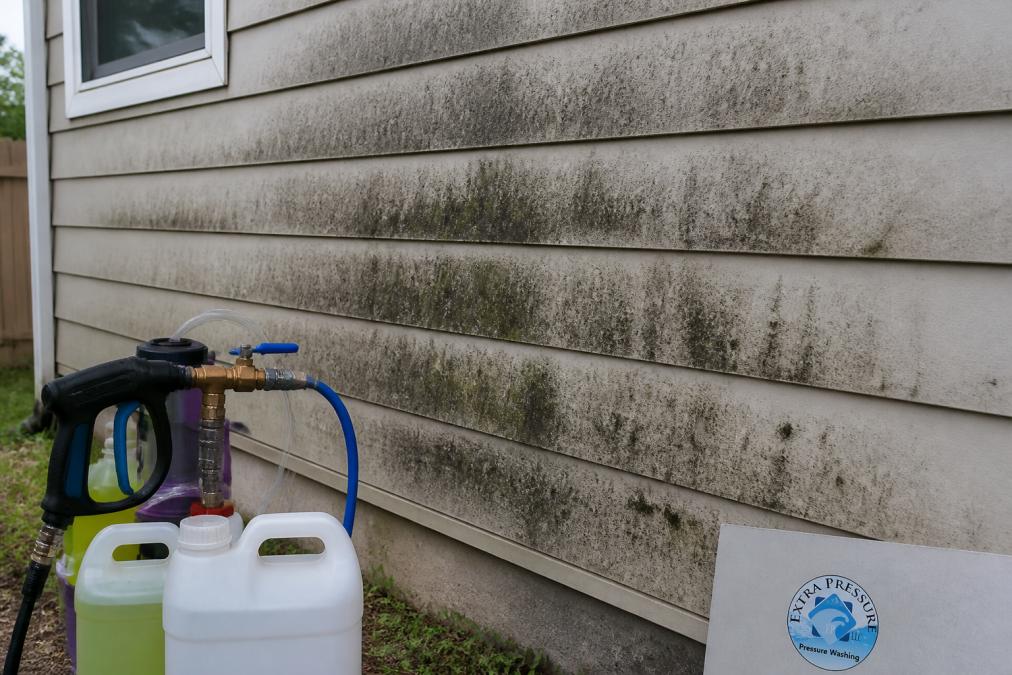
Soft washing is the superior method for mold and mildew removal. The cleaning solution penetrates the surface and kills spores, preventing recolonization. This approach works on wood siding, vinyl, stucco, and painted surfaces without risk of damage.
High-pressure can force water behind siding, creating moisture problems inside walls. It also strips protective coatings and can splinter wood. For residential property maintenance, soft washing delivers better results with lower risk.
The process takes longer than pressure washing because the solution must dwell on the surface to be effective. The process takes longer than pressure washing because the solution must dwell on the surface to be effective. This waiting period is when the chemistry works to eliminate the organism at its source.
Pressure washing mold and mildew on siding often drives moisture into wall cavities, causing interior mold growth and structural damage that becomes visible months later. Soft washing eliminates this risk entirely.
Professional crews use biodegradable cleaning solutions that are safe for your home and environment. These products are specifically formulated to target organic growth without harming plants or damaging surfaces.
Pressure Washing Cost Estimator: What to Expect
Pricing for pressure washing and soft washing varies based on property size, surface type, and contamination level. Understanding the factors that influence cost helps you evaluate quotes and make informed decisions.
Factors That Affect Your Final Quote
Several variables determine the final cost. Square footage is the primary driver: larger homes cost more to clean simply because they require more time and materials.
Surface type matters significantly. Concrete driveways and patios are straightforward and relatively inexpensive. Wood siding requires soft washing, which is more labor-intensive. Roof cleaning demands specialized equipment and safety protocols, increasing cost.
The level of contamination affects pricing. Light surface dirt is quick to remove. Heavy mold, algae, or years of accumulated grime requires additional treatment time and stronger solutions. Stubborn stains may need multiple applications.
Accessibility impacts cost as well. Single-story homes are faster and safer to clean than multi-story properties. Steep roofs, complex architectural details, or tight spaces increase labor time and equipment requirements.
Location and local market conditions influence pricing too.
DIY vs. Professional: Cost-Benefit Analysis
DIY pressure washing appears cheaper upfront.
However, DIY approaches carry hidden costs. Inexperience leads to damage: stripped paint, cracked siding, dented gutters, or water intrusion that requires expensive repairs. A single mistake can cost thousands to fix. Insurance typically doesn’t cover damage from improper cleaning.
Get multiple quotes before deciding. Pricing varies based on local market rates and specific property conditions. A same-day estimate from a professional like Extra Pressure LLC. clarifies exactly what you’ll pay before work begins.
Preparing Your Home for Sale: Pressure Washing as a Value Add
If you’re selling your home, pressure washing is one of the highest-ROI improvements you can make. Clean, well-maintained exteriors increase perceived property value and appeal to buyers.
Seasonal Maintenance Schedules for Year-Round Curb Appeal
Consistent maintenance prevents buildup and keeps your property looking its best year-round. A seasonal approach addresses weather-specific challenges.
Common Mistakes That Damage Your Property
Understanding what not to do is as important as knowing what to do. These errors cause expensive damage.
The difference between a successful cleaning and a costly mistake often comes down to method selection and proper technique. Professional pressure washing for home curb appeal ensures your property is restored safely and thoroughly.
Frequently Asked Questions
Does pressure washing increase home value?
Yes. A clean exterior significantly boosts curb appeal, which directly affects property appraisal value. Buyers form impressions within seconds of arriving at a home. Removing mold, mildew, grime, and stains through professional pressure washing restores your siding, driveway, and roof to their original condition, making your property more marketable and justifying a higher asking price. Professional cleaning is often one of the highest ROI home improvements before listing.
Is soft washing safer than traditional pressure washing for home exteriors?
Soft washing is safer for delicate surfaces like vinyl siding, roof shingles, and painted wood. It uses low-pressure water combined with biodegradable cleaning solutions to remove mold, algae, and stains without surface damage. Traditional high-pressure washing works well on concrete driveways and stone, but can strip paint or crack siding if pressure settings aren’t calibrated correctly. The right method depends on your surface integrity and material type.
How often should you pressure wash your home to maintain curb appeal?
Most homeowners benefit from annual or semi-annual cleaning, depending on climate and exposure. Homes in humid areas prone to mold and mildew growth may need cleaning twice yearly. Driveways and concrete surfaces accumulate grime faster and may need cleaning every 12-18 months. Preventative maintenance prevents stubborn stains from setting in and extends the life of your exterior surfaces by stopping algae prevention and organic matter buildup before they cause permanent damage.
What should I avoid when pressure washing my house siding?
Never use excessive pressure on vinyl or wood siding, as this causes surface damage and paint stripping. Avoid spraying directly at seams, windows, or door frames where water can seep behind the surface and cause water damage. Don’t use harsh chemical cleaners on delicate materials. Keep the nozzle at least 12 inches away from the surface, and always test a small hidden area first. If you’re unsure, hire a professional who knows proper equipment calibration and cleaning techniques.
Leave a Reply