
Table of Contents
- How Soft Wash Pricing Is Actually Calculated
- Soft Washing vs Pressure Washing Cost: What Changes the Number
- Factors Affecting Exterior Cleaning Quotes
- Benefits of Soft Washing Siding (and When It Costs More)
- What a Fair Quote Should Include
- Frequently Asked Questions
Last Updated: September 25, 2026
How Soft Wash Pricing Is Actually Calculated
The average soft wash cost for a house is not a single number you can look up. It is built from square footage, window count, surface type, and how much organic growth has taken hold. Extra Pressure LLC. builds every quote from those inputs rather than quoting a flat “house wash” rate, because two homes on the same street can differ by hundreds of dollars.
Square Footage and Window Count
Square footage sets the base of the estimate. A professional measures total exterior wall area, not the footprint, because a two-story house has far more wall surface than its floor plan suggests. Window count matters separately: each window has glass, a frame, a sill, and often a screen, all treated individually.
Why a Flat Rate Often Beats an Hourly Estimate
Hourly billing punishes the homeowner for problems that are not their fault: heavy mildew on the north side of the house makes an hourly estimate balloon.
Soft Washing vs Pressure Washing Cost: What Changes the Number
Soft washing and pressure washing are not priced the same, and the difference comes down to chemistry versus force. Pressure washing blasts dirt away with high-pressure water, which is faster on hard, flat surfaces like concrete driveways and sidewalks. Soft washing uses low pressure and a cleaning solution, which takes longer per square foot but is the only safe option for vinyl siding, painted wood, stucco, and roofing.
Where the Two Methods Diverge on Labor and Chemicals
The cost gap shows up in two places: chemical volume and dwell time.
- Chemicals: Soft washing requires a diluted sodium hypochlorite solution, often with surfactants. Pressure washing on concrete may need only water.
- Dwell time: The solution has to sit on the surface long enough to kill organic growth, typically several minutes per section, before rinsing.
- Rinsing: Soft washing needs a thorough, careful rinse to avoid leaving residue that can streak glass or damage landscaping.
- Surface protection: Plants, outlets, and light fixtures around a soft wash need covering before application.
| Factor | Soft Washing | Pressure Washing |
|---|---|---|
| Pressure used | Low, under 500 PSI | High, 1,500-4,000 PSI |
| Best for | Siding, stucco, roofs, painted wood | Concrete, brick, driveways |
| Typical time per 1,000 sq ft | Longer, due to dwell time | Shorter, mechanical removal |
| Chemical use | Higher | Lower or none |
| Risk of surface damage | Low when done correctly | High on delicate materials |
Factors Affecting Exterior Cleaning Quotes
Exterior cleaning quotes vary because the variables are physical, not arbitrary. Surface material, building height, growth severity, and service frequency each move the number predictably, and a few, like window type and crew size, are almost never explained on competing quote pages.
Surface Material and Texture
Smooth, non-porous surfaces release organic growth quickly. Porous and textured surfaces hold solution, slow the rinse, and sometimes need a second application.
- Vinyl siding: Fastest to clean. Smooth face, low absorption, standard dilution.
- Fiber cement (HardiePlank and similar): Similar to vinyl but slightly more absorbent; rinse time runs a bit longer.
- Painted wood: Requires a gentler mix to protect the finish; slower, more careful application.
- Stucco: Highly textured and absorbent. Solution soaks in unevenly, so dwell and rinse time both extend.
- Brick and masonry: Porous and often efflorescence-prone; may need a separate treatment step.
- Roofing (asphalt shingle): The slowest surface per square foot because runoff must be controlled and plants below protected.
Height, Access, and Landscaping
Height adds cost through equipment and safety, not just reach. A single-story ranch can often be treated from the ground with a soft wash pump and long-range nozzle. A two- or three-story home may require ladder work, an extension pole system, or a water-fed pole for upper trim and windows, each adding setup and repositioning time.
Window Type Changes the Clock
This is the factor most quote pages skip. Not all windows take the same time to treat:
| Window type | Relative time per unit | Why |
|---|---|---|
| Standard single- or double-hung slider | Baseline | One pane, one frame, one sill, one screen |
| Casement / awning | Slightly longer | Crank hardware and multiple edges to wipe |
| French panes (divided lites) | Significantly longer | Each small pane and muntin must be treated and wiped individually |
| Storm windows | Longer | Outer storm sash must be handled separately from the inner window |
| Fixed / picture windows | Shorter | No moving parts, no tracks to clean |
Crew Size vs. Solo Efficiency
A larger crew finishes faster, but that does not always mean a lower price. Two trade-offs matter:
- Total time on site: A two- or three-person crew can cut wall time roughly in proportion to crew size on large, open-sided homes.
- Disruption and setup: More people means more equipment staged, more vehicles in the driveway, and more coordination, which can offset the speed gain on smaller or tightly landscaped properties.
- Pricing model: Many companies price by the job, not by the hour, so a bigger crew mainly shortens your day rather than your bill. Ask whether the quote changes with crew size.
First-Time Service vs. Recurring Maintenance
A first-time clean almost always costs more than a recurring visit. Years of accumulated mildew, algae, and hard water stains take more solution and more passes. Once clean, a recurring schedule keeps growth from re-establishing, and each visit is faster and lighter on chemicals.
If you have mold that keeps returning to the same fascia or gutter line within months, the problem is usually the cleaning method, not the frequency. A surface that is rinsed but not fully treated leaves spores behind, and they regrow. Ask any provider what dwell time they use on organic growth before they rinse.
A Prep Checklist That Shortens the Job
Most guides focus on how fast the cleaner works, but the homeowner controls a meaningful share of the clock. Clearing access and reducing obstacles before the crew arrives can shorten the visit and, on hourly quotes, lower the bill:
- Move patio furniture, grills, and planters away from the walls
- Close and latch all windows; remove window screens if the quote includes screen cleaning
- Raise or remove blinds so interior glass is not affected
- Unlock gates and clear a path to the backyard and any hose bibs
- Park vehicles away from the work perimeter
- Trim back or tie up shrubs that touch the siding
- Cover or move outdoor electronics, outlets, and light fixtures if not handled by the provider
- Note any known leaks, cracked panes, or loose siding for the technician
Benefits of Soft Washing Siding (and When It Costs More)
Soft washing siding protects the surface while it cleans it. High pressure can force water behind panels, strip paint, and etch softer materials. Low-pressure application with a proper solution removes organic growth at the root without that risk, reaching into siding texture where a pressure washer cannot.
Why Chemistry Beats Force on Siding
The mechanism matters more than the marketing. Soft washing relies on a diluted sodium hypochlorite solution, typically mixed with a surfactant to help it cling, that kills mold, mildew, and algae at the source rather than blasting the surface clean. Because growth is killed rather than scraped off, it does not regrow as quickly and the siding is not abraded.
When Soft Washing Costs More, and Why
The trade-off is time, and time is the biggest driver of soft wash cost. Soft washing a full house takes longer than pressure washing the same square footage because the solution needs to dwell. Expect the higher end of any quote range when:
- Growth is heavy or long-standing. Thick mildew and algae mats require a stronger mix and a second application.
- The home is multi-story. Ladder work, extension poles, and repositioning add labor.
- Landscaping is dense. Pre-wetting, covering, and post-rinsing plants adds prep time.
- The surface is porous. Stucco, brick, and rough-textured siding absorb solution unevenly and take longer to rinse.
- The roof is included. Roof soft washing is the slowest surface per square foot because runoff must be controlled.
- Windows are complex. French panes and storm windows add per-unit time that a simple window count will not capture.
What Soft Washing Does Not Do
A fair quote should be honest about limits. Soft washing is not right for every surface:
- Concrete driveways and sidewalks are usually better served by pressure washing, which removes embedded dirt mechanically.
- Heavy rust or mineral staining may need a dedicated treatment beyond a standard soft wash mix.
- Loose or failing paint can be further loosened by any wet cleaning method; those areas should be identified before work begins.
The most common mistake homeowners make is choosing a quote purely on price without asking what is included. A low number that skips screen cleaning, sill wiping, or plant protection often means a second visit later, or damage you pay to fix. Ask what the quote covers before you compare numbers.
Soft washing costs more than pressure washing on siding because it trades speed for surface safety and longer-lasting results. The premium is justified by chemistry, dwell time, and protection work, not by the label on the service.
What a Fair Quote Should Include
A fair soft wash quote is itemized, written, and specific about what gets cleaned and protected. It should state the total exterior wall area treated, the number of windows included, and whether screens, sills, and tracks are part of the service. It should also name the surface materials inspected and the method planned for each.
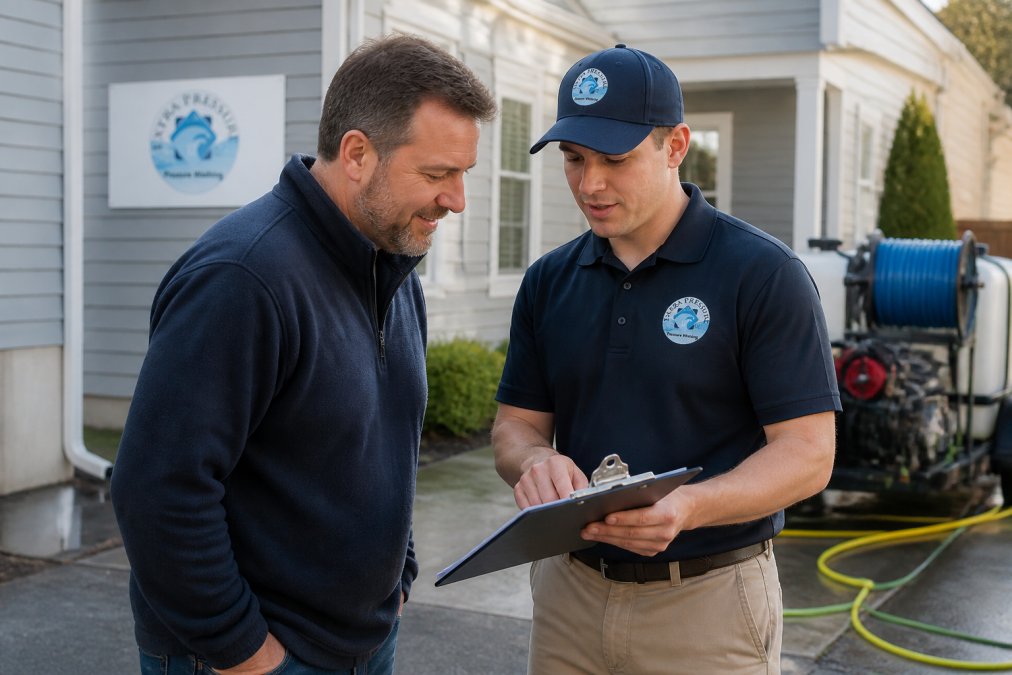
Ask these questions before you sign anything:
- Is the quote flat-rate or hourly, and what triggers an increase?
- Are window screens removed and cleaned, or just rinsed in place?
- Are sills and tracks wiped, or is that a separate line item?
- How are plants, outlets, and light fixtures protected during application?
- Is the provider licensed and insured, and can they show proof?
- What is the dwell time on organic growth before rinsing?
- Is there a satisfaction guarantee if growth returns?
The number on a soft wash quote is a function of measurable inputs: wall square footage, window count, surface material, height, growth severity, and whether the service is one-time or recurring. Compare quotes on those inputs, not on the bottom line alone.
Frequently Asked Questions
What factors influence the cost of soft washing a house?
The biggest drivers are property square footage, the number of stories, and how much surface area needs treatment. Siding material matters too, since vinyl, wood, and stucco each need different chemical mixes and dwell times. Add-ons like gutter brightening, screen cleaning, and window track detailing raise the total. First-time cleans usually cost more than recurring maintenance because heavy organic growth takes longer to kill and rinse. Accessibility also plays a role: landscaping, steep grades, or tight side yards slow the crew down.
Is soft washing safer for my home than pressure washing?
For most exterior surfaces, yes. Soft washing uses low pressure, typically under 500 PSI, combined with a cleaning solution that kills mold, mildew, and algae at the root. Pressure washing relies on force, which can etch vinyl siding, strip paint, and drive water behind flashing. Soft washing is the standard method for siding, roofs, and painted wood. Pressure washing still has a place on concrete driveways and brick, where the surface can handle higher PSI without damage.
How often should I have my house soft washed?
Most homes in humid climates need a soft wash every 12 to 18 months. Properties surrounded by trees or shaded year-round often need it annually, since shade keeps siding damp and feeds organic growth. If you see green or black streaking on the north side of your home, that is mildew and algae, and it will keep spreading until treated. Recurring maintenance plans usually cost less per visit than one-off cleans because the growth never gets a chance to establish.
Can I soft wash my own house or should I hire a professional?
You can buy a pump sprayer and diluted sodium hypochlorite, but the risks add up fast. Mixing the wrong concentration can kill landscaping, damage siding, or leave streaks. Without proper rinsing and dwell timing, the mold comes back within weeks. Professionals carry the right equipment, know which surfaces need a gentler mix, and are licensed and insured, so any accidental damage is covered. For a two-story home or any roof work, hiring out is the safer call.
Getting a soft wash quote that actually holds up means finding a provider who inspects the property, explains the method, and stands behind the result. Extra Pressure LLC. offers licensed and insured soft washing and window cleaning with same-day estimates, specialized treatment for delicate surfaces, and a 100% satisfaction guarantee. Schedule an appointment with Extra Pressure LLC. and get a written quote built on your property’s real numbers.
Leave a Reply