
Table of Contents
- Why Hard Water Stains Form on Glass (and Why They’re So Stubborn)
- Method 1: White Vinegar Soak and Wipe
- Method 2: Baking Soda Paste for Mild Abrasion
- Method 3: Lemon Juice and Other Acidic Solutions
- Method 4: Commercial Cleaners and the Best Hard Water Stain Remover for Glass
- Method 5: How to Remove Hard Water Stains From Shower Doors Safely
- Method 6: Mechanical Removal With a Razor Blade or Non-Scratch Scrubber
- Method 7: How to Prevent Water Spots on Shower Glass and Windows
- Frequently Asked Questions
Last Updated: October 5, 2026
Why Hard Water Stains Form on Glass (and Why They’re So Stubborn)
Hard water stains are mineral deposits left on glass after water evaporates, and they are the most common reason shower doors and windows lose their clarity. Water carries dissolved calcium and magnesium.
This guide breaks down seven ways to remove hard water stains from glass, ranked by how severe the buildup is.
Here is the part most guides skip: the longer those deposits sit, the harder they bond. Fresh spots wipe away in seconds. Months-old stains can fuse to the glass surface.
Calcium, Magnesium, and the Mineral Buildup That Bonds to Glass
Mineral buildup is the layer of calcium and magnesium carbonate that sticks to glass as water evaporates. Each new splash adds another thin layer. Over time, that stack becomes a hard shell that plain soap will not touch.
Two minerals cause most of the trouble:
- Calcium leaves a chalky white haze
- Magnesium adds a dull, gray film
- Both bind tighter every time the surface gets wet and dries
Etching vs. Removable Deposits: How to Tell What You’re Dealing With
Etching is permanent damage where minerals have chemically bonded into the glass itself. Removable deposits sit on top of the surface. The two look similar, but they need very different responses.
Try this test:
- Soak one spot with white vinegar for 10 minutes.
- Wipe with a soft cloth.
- If the glass clears, the stain is removable.
- If the cloud stays, the glass is likely etched.
If you rub a deposit with a fingernail and feel a raised crust, it is removable. If the surface feels smooth but still looks cloudy, the glass is etched. No cleaner fixes etching. Only polishing or replacement will.
Test one small spot before treating the whole pane. A two-minute vinegar test tells you whether you are cleaning a deposit or staring at permanent etching.
Method 1: White Vinegar Soak and Wipe
White vinegar is the best first move for light to moderate hard water stains. Its acid dissolves calcium carbonate on contact, and it costs almost nothing.
Here is how we would do it:
- Mix equal parts white vinegar and water in a spray bottle.
- Spray the glass until it is fully wet.
- Let it sit for 10 to 15 minutes. This dwell time does the work.
- Wipe with a microfiber cloth.
- Rinse and dry with a second clean cloth.
For heavier spots, soak a cloth in full-strength vinegar and press it against the glass for 30 minutes. The longer the acid sits, the more mineral it breaks down.
Two warnings. Never let vinegar touch natural stone, grout, or metal frames, because acid eats those surfaces. And do not skip the rinse. Dried vinegar leaves its own film.
Method 2: Baking Soda Paste for Mild Abrasion
Baking soda works as a gentle abrasive for stains that vinegar alone will not lift. It scrubs without cutting into the glass.
Mix three parts baking soda with one part water until you get a thick paste. Apply it to the stain with a sponge. Rub in small circles for one to two minutes, then rinse well.
- Safe on most glass surfaces
- Good for textured or spotted areas
- Cheap and non-toxic
The catch: baking soda is mild. It will not cut through years of buildup. Use it for touch-ups, not for a full restoration.
Method 3: Lemon Juice and Other Acidic Solutions
Lemon juice is a weaker acid than vinegar, so it suits light water spots and regular upkeep. It also smells better, which matters in a small bathroom.
Squeeze fresh lemon juice onto a cloth and wipe the glass. For a stronger mix, combine lemon juice with a little baking soda to make a fizzing paste. Let it sit for five minutes, then scrub gently and rinse.
Other acidic options include:
- Citric acid powder mixed with warm water
- Club soda, which has mild carbonic acid
- Commercial acidic cleaners made for glass
Acid is acid, though. Lemon juice still damages stone and metal, and it still needs a full rinse. If a stain survives five minutes of lemon juice, move up to vinegar.
Method 4: Commercial Cleaners and the Best Hard Water Stain Remover for Glass
Commercial removers are the right call when the first three methods stall. The best hard water stain remover for glass contains stronger acids, chelating agents, or fine polishing compounds that household ingredients cannot match.
Here is how the main categories actually differ, based on how they behave on real shower doors and windows:
| Cleaner Type | Active Chemistry | Best For | Effort | Watch Out For |
|---|---|---|---|---|
| Acid-based liquid (phosphoric, sulfamic, or hydroxyacetic) | Dissolves calcium carbonate | Heavy calcium deposits on clear glass | Low, spray, dwell, wipe | Etches natural stone, dulls chrome and aluminum frames |
| Chelating gel | Binds calcium and magnesium ions | Thick, old buildup on vertical doors | Medium, long dwell, then agitate | Slow; can leave a slippery residue that needs a full rinse |
| Paste with fine polish (cerium oxide or jeweler’s rouge) | Micro-abrasion plus chemical lift | Haze that looks etched but is not | High, real scrubbing | Over-rubbing on coated glass can wear the coating |
| Foaming spray | Mild acid plus surfactant | Light film on vertical shower doors | Low | Foam runs before it works; reapply or use a gel instead |
| Gel | Thickened acid | Old buildup that stays put | Medium | Dwell time is long; keep the room ventilated |
Two things separate a remover that works from one that wastes your money. First, check whether the label says glass-only or glass-and-tile.
A practical order of operations: start with the mildest product that matches the stain, test a hidden corner, and only step up in strength if the first pass fails.
Never mix a commercial acidic cleaner with bleach or ammonia. The combination can release toxic gas. Open a window, run a fan, and wear nitrile gloves and eye protection whenever you use a strong cleaner indoors. Rinse the glass and any nearby metal or stone thoroughly when you finish.
If a commercial remover still leaves a cloud after two honest attempts, stop. You are likely looking at etching, not a deposit, and no bottle on the shelf will fix that.
Method 5: How to Remove Hard Water Stains From Shower Doors Safely
Knowing how to remove hard water stains from shower doors comes down to one rule: soak first, scrub last. Shower doors collect soap scum on top of minerals, and the two layers bond into a tough film.
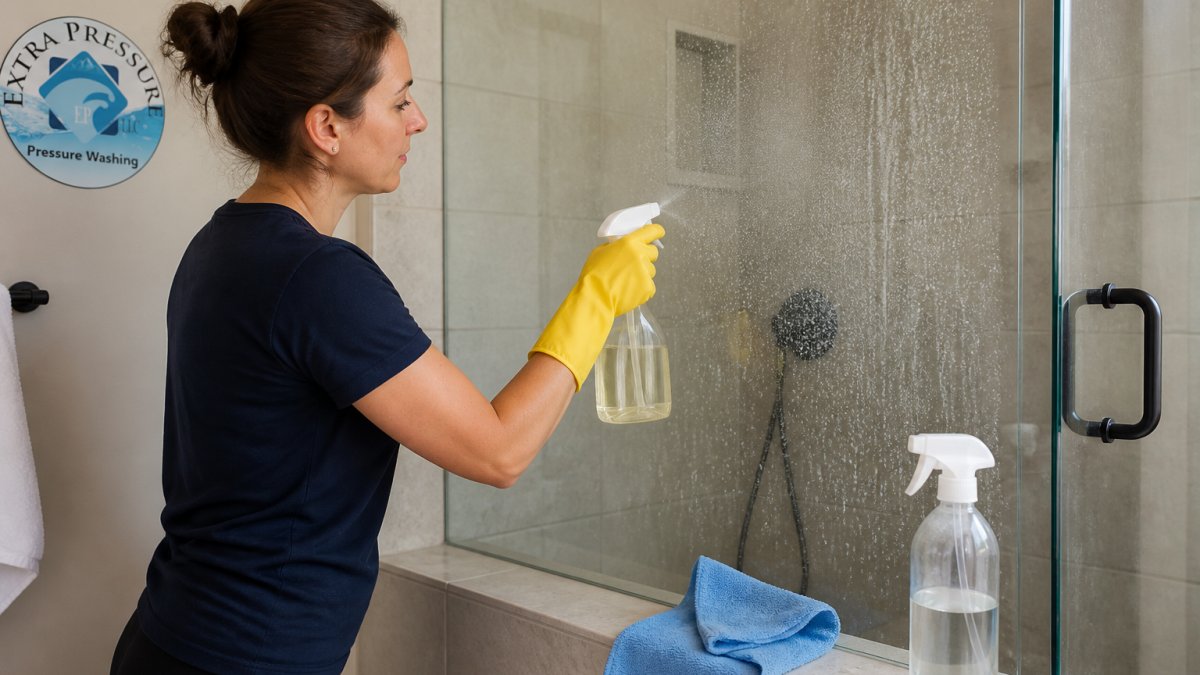
Work in this order:
- Spray the whole door with a vinegar and water mix.
- Wait 15 minutes so the acid can break the film.
- Wipe top to bottom with a microfiber cloth.
- Treat stubborn spots with a baking soda paste.
- Rinse, then squeegee dry.
A squeegee after every shower is the single best habit for shower glass. It takes 20 seconds and removes the water before minerals can dry onto the surface.
If your shower glass has years of buildup, or the door sits behind a frame that traps moisture, professional soft washing and window care can restore clarity without scratching the glass.
Method 6: Mechanical Removal With a Razor Blade or Non-Scratch Scrubber
Mechanical removal scrapes deposits off the glass instead of dissolving them. It works fast on thick, crusty buildup, but it carries the most risk of scratching.
For safety:
- Use a non-scratch scrubber or plastic scraper first
- Hold a razor blade at a shallow angle, never straight up
- Keep the glass wet the whole time
- Test one corner before working the full pane
Never use steel wool, scouring pads, or abrasive powders. Those leave permanent scratches that trap even more minerals next time.
A common mistake is scraping dry glass. Without water as a lubricant, a razor blade drags mineral grit across the surface and cuts fine lines into it. Wet it down, go slow, and wipe the blade often.
Method 7: How to Prevent Water Spots on Shower Glass and Windows
Learning how to prevent water spots on shower glass and windows is far easier than removing them later. Prevention comes down to three jobs: get the water off the glass before it dries, cut the minerals in the water itself, and stay ahead of the buildup with a schedule.
Dry the glass before the water dries. Minerals only bond when water evaporates and leaves them behind, so the goal is to remove water while it is still liquid.
- Squeegee the shower door after every use. A full pass takes about 20 seconds and removes the bulk of the water in one motion.
- Follow the squeegee with a microfiber cloth on the frame and tracks, where water pools and deposits concentrate.
- For exterior windows, a quick rinse with a hose after sprinkler spray or rain beats letting droplets dry in the sun.
Cut the minerals at the source. If your water is hard, no amount of wiping will keep up forever.
- A whole-house water softener exchanges calcium and magnesium for sodium, which does not form the same crusty scale. It is the single biggest lever if you have very hard water.
- A point-of-use softener or inline filter on the shower line is a cheaper middle ground when a whole-house system is not practical.
- Test your water first. A simple hardness test strip tells you whether softening is worth the cost or whether drying habits alone will do.
Stay ahead with a schedule and a sealant.
- Clean weekly with a vinegar spray before deposits harden. Fresh film wipes off; month-old film does not.
- Apply a glass sealant every few months. These coatings make the surface hydrophobic so water beads and runs instead of sheeting and drying in place. Apply to dry, spotless glass, let it cure per the label, and reapply every three to four months.
- Check exterior windows after rain and sprinkler spray, and rinse the glass rather than letting droplets evaporate.
| Stain Severity | Best Method | Time Needed |
|---|---|---|
| Light spots | Vinegar spray | 10-15 minutes |
| Moderate film | Baking soda paste | 15-20 minutes |
| Heavy buildup | Commercial remover | 30-60 minutes |
| Crusty deposits | Razor blade or scrubber | 20-30 minutes |
| Etched glass | Polishing or replacement | Professional call |
If you live somewhere with hard water, a glass sealant buys you weeks between cleanings. Pair it with a squeegee habit and a weekly vinegar spray, and most shower doors stay clear without ever needing a commercial remover.
For exterior windows, the same rules apply on a bigger scale. Sprinklers, rain, and morning dew all leave minerals behind, and sun bakes them on faster than shade does. A regular rinse and dry keeps glass clear far longer than occasional deep cleaning, and it costs nothing but a few minutes a week.
Frequently Asked Questions
How do you remove hard water stains from glass?
Start with white vinegar: soak a cloth, press it against the stain for 15-30 minutes, then wipe. For tougher mineral deposits, make a baking soda paste and scrub gently with a non-scratch pad. If stains persist, a commercial hard water stain remover formulated for glass often works. Always test on a small area first, wear gloves, and ventilate the room. Rinse thoroughly and dry with a microfiber cloth to restore clarity.
What is the best hard water stain remover for glass?
The best option depends on severity. For light spots, white vinegar or lemon juice works well. For moderate buildup, a commercial gel or spray labeled for hard water stains on glass is more effective because it clings to vertical surfaces. For severe or etched stains, professional cleaning may be needed. Look for products containing mild acids like citric or sulfamic acid. Avoid abrasive cleaners that can scratch glass.
Does vinegar remove hard water stains from glass?
Yes, vinegar removes many hard water stains because its acetic acid dissolves calcium and magnesium deposits. White vinegar is most common. For best results, soak a cloth in undiluted vinegar, let it sit on the stain for 15-30 minutes, then wipe. For stubborn spots, add baking soda for gentle abrasion. Vinegar works best on fresh, light stains; older, thicker mineral buildup may need a commercial cleaner or multiple applications.
How do you prevent hard water stains from coming back?
Prevention comes down to drying and maintenance. After every shower, use a squeegee on glass doors and walls. Keep a spray bottle of vinegar and water (1:1) to mist and wipe down surfaces weekly. For windows, dry them promptly after rain or cleaning. Consider a water softener if your home has very hard water. Regular cleaning prevents mineral buildup from bonding to glass and turning into stubborn stains.