Table of Contents
- Why Pressure Washing Matters for Vacation Rental Properties
- Electric vs. Gas Pressure Washers: What Vacation Rental Owners Need
- Soft Washing vs. Pressure Washing for Siding and Delicate Surfaces
- PSI, GPM, and Nozzle Tips: Understanding Pressure Washer Specifications
- Vacation Rental Exterior Maintenance Checklist
- How Much Does Professional Pressure Washing Cost?
- Liability, Safety, and Property Protection
- Conclusion
Last Updated: August 29, 2026
Why Pressure Washing Matters for Vacation Rental Properties
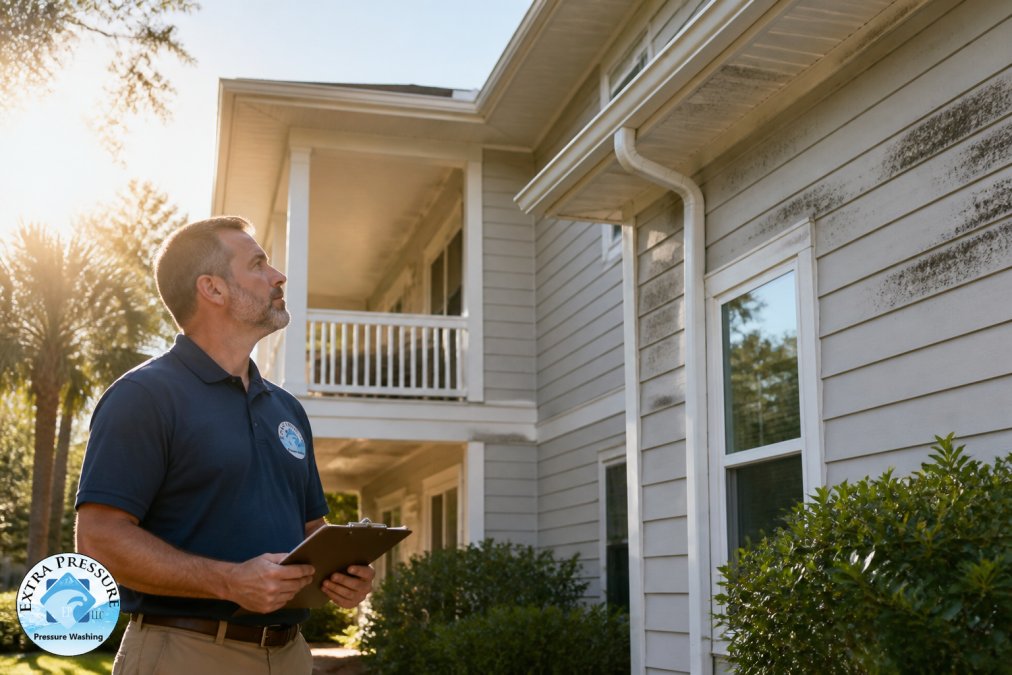
Guests form judgments about vacation rentals within seconds of arrival. Dirt, mold, algae, and grime signal neglect and directly impact bookings and reviews. Pressure washing isn’t optional, it’s a revenue driver. Properties with pristine exteriors command higher nightly rates, attract more bookings, and generate better reviews. The exterior is the first thing guests photograph and share on social media.
Beyond aesthetics, regular pressure washing prevents costly damage. Mold and mildew deteriorate surfaces, shorten the lifespan of siding and roofing materials, and create liability if guests slip on algae-covered walkways. Gutter maintenance prevents water damage that can cost thousands to repair.
At Extra Pressure LLC., we understand the unique demands of vacation rental maintenance. Properties need faster turnaround times between guests, reliable cleaning schedules, and techniques that preserve delicate surfaces while delivering the deep clean guests demand.
Electric vs. Gas Pressure Washers: What Vacation Rental Owners Need
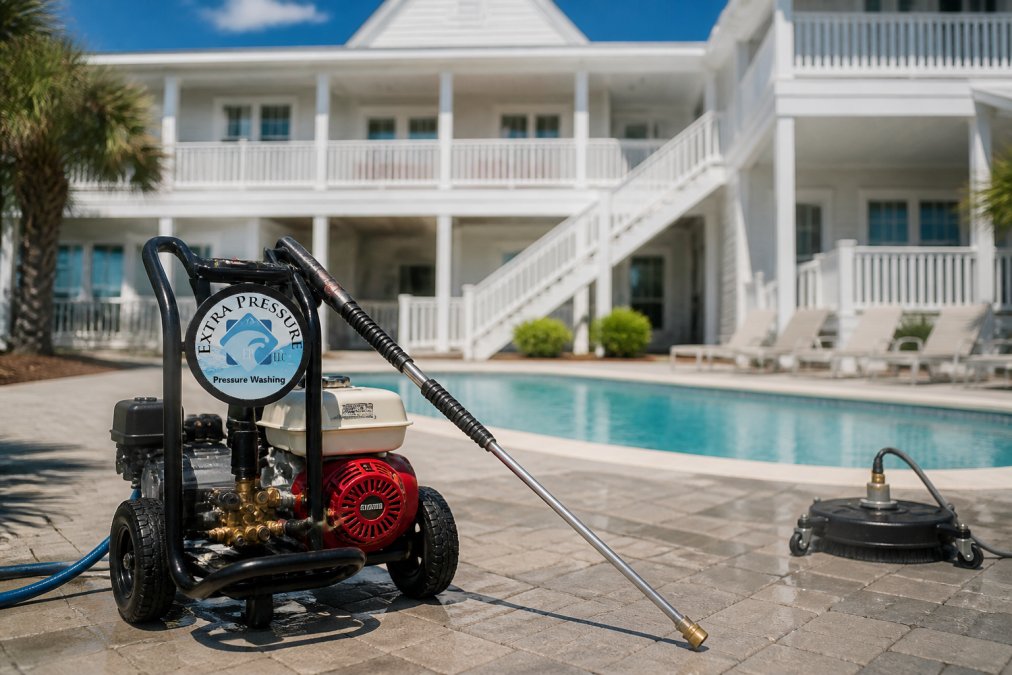
Choosing between electric and gas-powered equipment depends on property size, frequency of use, and turnaround speed between guest stays.
Electric Pressure Washers: Best for Frequent, Quick Turnarounds
Electric pressure washers excel at the critical vacation rental requirement: fast turnaround. They start instantly without fuel mixing or warm-up time. For properties with tight cleaning windows between guests, often just hours, instant-start capability is invaluable.
Electric units are quieter, require minimal maintenance, and handle moderate cleaning schedules efficiently. They’re ideal for monthly or quarterly maintenance on driveways, siding, and deck restoration. They’re also lighter and easier to maneuver around landscaping, reducing accidental property damage during frequent cleaning cycles.
The trade-off is lower PSI (typically 1,500-2,000) and GPM (2.0-3.0) output, meaning longer cleaning times on heavily soiled surfaces. For moderate dirt accumulation between guests, this is acceptable. Electric equipment’s simpler mechanics mean fewer parts to fail, lower maintenance costs, and longer operational lifespan when used regularly.
Gas-Powered Pressure Washers: Best for Heavy Soiling and Multi-Property Operations
Gas-powered pressure washers excel when managing multiple properties simultaneously or cleaning high-volume surfaces quickly. They deliver higher PSI (3,000-4,000) and GPM (3.5-5.0), cutting cleaning time significantly. For properties that have accumulated heavy dirt, mold, or algae over a week-long guest absence, gas-powered equipment handles the deep clean faster.
For vacation rental owners with five or more properties or properties in high-humidity coastal or mountain areas prone to rapid mold growth, gas-powered equipment justifies the investment. Setup takes longer (fuel mixing, engine priming, warm-up), and maintenance is more involved (seasonal tune-ups, spark plug replacement, fuel stabilization). For vacation rental owners with unpredictable cleaning schedules or seasonal properties, this maintenance burden is a real drawback.
The Hybrid Approach: Electric + Professional Service
Many successful vacation rental owners pair a modest electric unit for routine touch-ups with professional gas-powered service for seasonal deep cleaning. You handle quick 30-minute driveway refreshes between guests with your electric unit, then contract professional deep cleaning quarterly or seasonally when mold, algae, or heavy soiling requires industrial-grade equipment.
This approach also mitigates equipment failure risk. If your electric unit breaks down, you still have professional service as backup.
Vacation Rental-Specific Recommendation:
For most vacation rental owners managing one to three properties, a quality electric pressure washer (1,500-2,000 PSI, 2.5-3.0 GPM) is sufficient and practical. Pair it with professional soft-washing service for seasonal mold treatment.
If you’re running five or more properties, operating in a high-humidity climate, or managing properties with heavy guest traffic, invest in a gas-powered unit (3,000-3,500 PSI, 4.0+ GPM) or contract professional service exclusively. The critical vacation rental metric is speed to guest-ready condition, choose equipment that lets you turn properties around reliably within your available window, every time.
Soft Washing vs. Pressure Washing for Siding and Delicate Surfaces
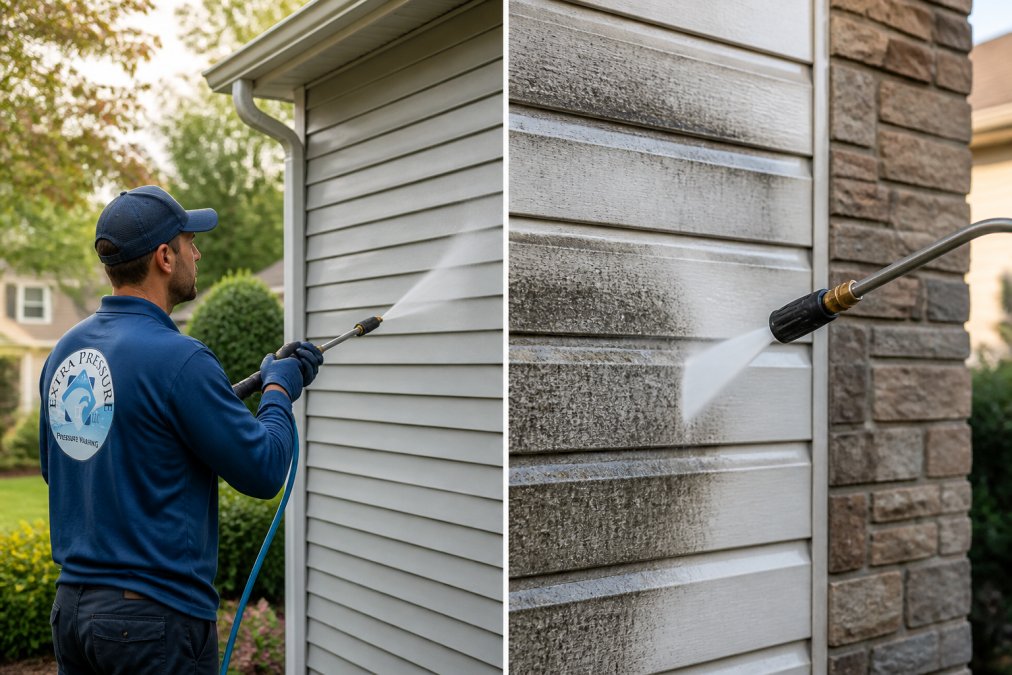
High-pressure spray can damage vinyl siding, strip paint, force water into walls, and kill landscaping. Soft washing uses low-pressure spray combined with specialized cleaning solutions to safely remove mold, mildew, and algae without damaging surfaces.
Pressure washing works best on concrete, driveways, and hardscapes where high PSI removes embedded dirt and stains effectively. On delicate surfaces, vinyl siding, wood, composite decking, or landscaping, this pressure causes real damage.
Soft washing applies cleaning solutions at low pressure (under 500 PSI) and lets chemistry do the work. It’s safer for siding, fascia, gutters, and any surface where appearance matters. The detergent injection system delivers eco-friendly solutions that kill mold and mildew at the root, preventing rapid regrowth.
For vacation rentals, soft washing is often the better first choice for the main house exterior. Guests notice siding condition immediately. Pressure washing that leaves visible damage creates liability and negative reviews. Soft washing delivers cleaner results without risk. Many professional services use soft washing for the home exterior and pressure washing for driveways and concrete, the balanced approach that protects your investment while delivering pristine appearance.
PSI, GPM, and Nozzle Tips: Understanding Pressure Washer Specifications
Understanding pressure washer specifications prevents both underperformance and property damage.
PSI measures water pressure, the force of the spray. Concrete cleaning typically requires 3,000-4,000 PSI. Vinyl siding should never exceed 1,500 PSI. Soft washing operates below 500 PSI. For vacation rentals, knowing the right PSI for each surface prevents costly mistakes.
GPM measures water flow volume. Higher GPM covers larger areas faster, reducing cleaning time. A 2.5 GPM unit cleans slower than a 4.0 GPM unit at the same PSI. For vacation rental turnaround, GPM matters as much as PSI.
Nozzle tips control spray pattern and intensity. A 0-degree nozzle delivers concentrated force for tough stains; a 40-degree nozzle spreads pressure safely across delicate surfaces. Most equipment includes interchangeable nozzle tips for different tasks.
For vacation rentals, the ideal setup combines moderate PSI (2,500-3,500) with decent GPM (3.0-4.0) and multiple nozzle options, giving you flexibility to handle driveways, siding, and deck restoration without overcommitting to heavy-duty equipment.
Vacation Rental Exterior Maintenance Checklist
Professional maintenance prevents emergencies and keeps guest satisfaction high.
Monthly Quick Scan:
- Walk the property perimeter and note visible dirt, algae, or mold
- Check gutters for debris and standing water
- Inspect driveway for new stains or oil spots
- Look for water pooling near the foundation
Quarterly Deep Cleaning:
- Pressure wash or soft wash the main house exterior
- Clean gutters and downspouts thoroughly
- Pressure wash driveway and walkways
- Treat mold and mildew on siding, deck, or fascia
- Clean windows and glass doors
- Remove algae from concrete surfaces
Seasonal Maintenance:
- Spring: Deep gutter cleaning before heavy rains
- Summer: Mold prevention treatments in humid climates
- Fall: Pre-winter gutter clearing and debris removal
- Winter: Post-freeze inspection for water damage
Properties in high-humidity areas or near water need more frequent cleaning. Adjust frequency based on your rental’s environment. Consistent cleaning prevents negative reviews and extends the lifespan of siding, roofing, and landscaping.
How Much Does Professional Pressure Washing Cost?
Pricing varies based on property size, surface type, cleaning difficulty, and location. Please contact Extra Pressure LLC. for a same-day estimate.
The ROI Calculation for Vacation Rentals:
The true cost of pressure washing isn’t the service fee, it’s the opportunity cost of not cleaning. Properties with pristine exteriors command measurably higher nightly rates and booking frequency. Industry data shows that properties with high-quality exterior photos and clean curb appeal receive more inquiries than comparable properties with neglected exteriors.
Guest reviews directly influence booking algorithms. Properties with consistent five-star reviews citing "immaculate" or "spotless" exteriors rank higher in search results. Pressure washing is one of the highest-ROI maintenance investments for short-term rentals.
DIY vs. Professional Cost Comparison:
While DIY pressure washing appears cheaper upfront, the true cost includes equipment purchase, maintenance, storage space, and your labor time.
For vacation rental owners managing one to three properties, professional service typically costs less than DIY when you factor in equipment depreciation and time.
What to Ask When Getting Quotes:
Clarify what’s included: Does the estimate cover gutters, downspouts, and fascia? Are soft-washing adjustments for delicate surfaces included, or charged separately? Is the price based on square footage, time, or surface condition? Do they offer guarantees on mold prevention? Are they licensed and insured? Understanding the breakdown prevents surprise charges and ensures you’re comparing equivalent services.
Liability, Safety, and Property Protection
Pressure washing creates real liability. High-pressure spray can injure skin, damage eyes, and cause serious cuts if misused. Improper technique can force water into walls, damage electrical systems, or create conditions for mold growth inside the property.
Slippery surfaces from algae or improper cleaning create slip-and-fall liability. If a guest is injured on your property due to inadequate maintenance, you’re exposed to lawsuits. Proper cleaning prevents these hazards.
Professional services carry liability insurance, protecting you if something goes wrong. Licensed and insured providers assume responsibility for property damage or injury. DIY pressure washing puts all liability on you.
For vacation rentals, the liability calculation is simple: professional service costs less than a single lawsuit from a guest injury or property damage claim.
Conclusion
The best pressure washing for vacation rentals combines speed, safety, and pristine results that drive guest satisfaction and booking rates. Your property’s exterior is your marketing asset, every guest photograph shared online either builds your reputation or damages it.
Extra Pressure LLC. specializes in vacation rental exterior maintenance with same-day estimates, specialized soft washing for delicate surfaces, and licensed, insured service that protects your property and your guests. Schedule an appointment with Extra Pressure LLC. today and see how professional pressure washing transforms your vacation rental’s curb appeal and guest experience.
Frequently Asked Questions
Q: How often should you pressure wash a vacation rental property?
A: Vacation rentals benefit from pressure washing every 6 to 12 months, depending on climate and foot traffic. Properties in humid regions prone to mold and mildew may need cleaning twice yearly. High-traffic areas like driveways and entryways should be cleaned before each guest arrival to maintain curb appeal. Regular maintenance prevents stains from setting permanently and protects your property value.
Q: Is soft washing better than pressure washing for vacation rentals?
A: Soft washing is better for delicate surfaces like vinyl siding, wood, and stucco common in rental properties. It uses lower PSI and specialized detergents to remove mold, mildew, and algae without damaging paint or stripping finishes. Pressure washing works well for concrete driveways and hardscapes. Many vacation rental owners use both methods: soft washing for the home exterior and pressure washing for concrete surfaces.
Q: Does pressure washing increase vacation rental property value?
A: Yes. A clean, well-maintained exterior directly improves curb appeal and guest first impressions, leading to higher booking rates and positive reviews. Professional pressure washing removes stains, mold, and grime that make properties look neglected. Clean gutters, siding, and driveways signal that the property is well-maintained, which guests associate with quality and safety. This maintenance protects your investment and rental income.
Q: What surfaces in a vacation rental require professional cleaning?
A: Vinyl siding, wood decks, concrete driveways, patios, gutters, fascia, and roof surfaces all benefit from professional cleaning. Gutters and fascia are particularly important because they trap leaves, debris, and organic growth that lead to water damage and foundation issues. Decks and patios accumulate mold and algae that create slip hazards for guests. Professional equipment and expertise ensure thorough cleaning without damaging these surfaces.
This article was written using GrandRanker
Leave a Reply