
Table of Contents
- How Often Should a House Be Soft Washed? The Short Answer
- Soft Washing vs Pressure Washing: What’s the Difference?
- Signs Your Home Needs a Soft Wash Right Now
- How Climate and Shade Change Your Soft Washing Schedule
- The Best Time of Year for Exterior House Cleaning
- How to Prepare a House for Sale With Soft Washing
- DIY Safety, Equipment, and Long-Term Damage Prevention
- Conclusion: Build a Schedule That Protects Your Home
- Frequently Asked Questions
Last Updated: September 23, 2026
How Often Should a House Be Soft Washed? The Short Answer
Most homes should be soft washed once every 12 to 24 months. That is the honest short answer. Homes in humid, tree-heavy areas often need it every 12 months, while drier, sun-exposed properties can stretch to 24 months. Your schedule depends on your siding, your shade, and your local climate, not a fixed calendar. This guide breaks down exactly how to set that schedule.
Soft Washing vs Pressure Washing: What’s the Difference?
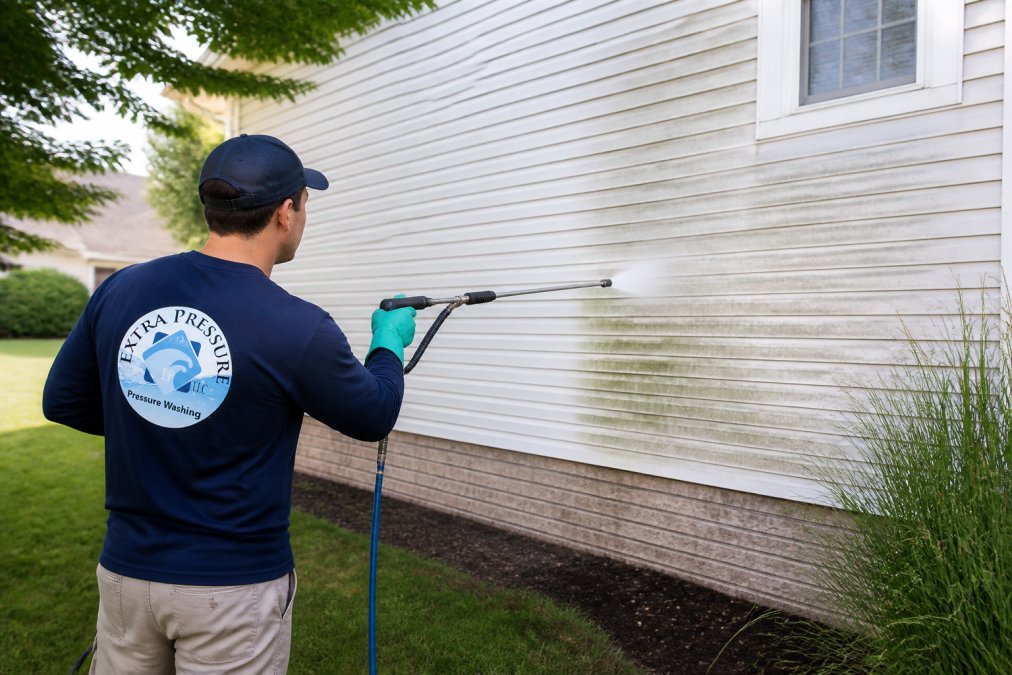
Soft washing and pressure washing are not the same thing. Soft washing vs pressure washing comes down to one key factor: water pressure.
EPA guidance on mold cleanup and moisture control
Why High Pressure Damages Siding, Paint, and Sealants
High pressure is the enemy of a home exterior. It drives water into seams, peels exterior paint, and etches soft materials. On older or composite siding, one careless pass can cause permanent surface damage. That is why professional cleaning crews rarely use full pressure on siding.
What Soft Washing Actually Removes
Soft washing targets organic buildup. It kills and removes:
- Algae accumulation and green streaks
- Mold growth and dark patches
- Mildew on shaded walls
- Dirt, pollen, and spider webs
- Oxidation film on older paint
The cleaning solution does the work. Low pressure just rinses it away.
Ask any provider what PSI they plan to use on your siding. A real soft wash stays well under 500 PSI. If they cannot answer, that is a red flag.
Signs Your Home Needs a Soft Wash Right Now
You do not need to wait for your scheduled date. Your home gives clear signals when it needs attention. Look for visible organic buildup, especially on north-facing walls.
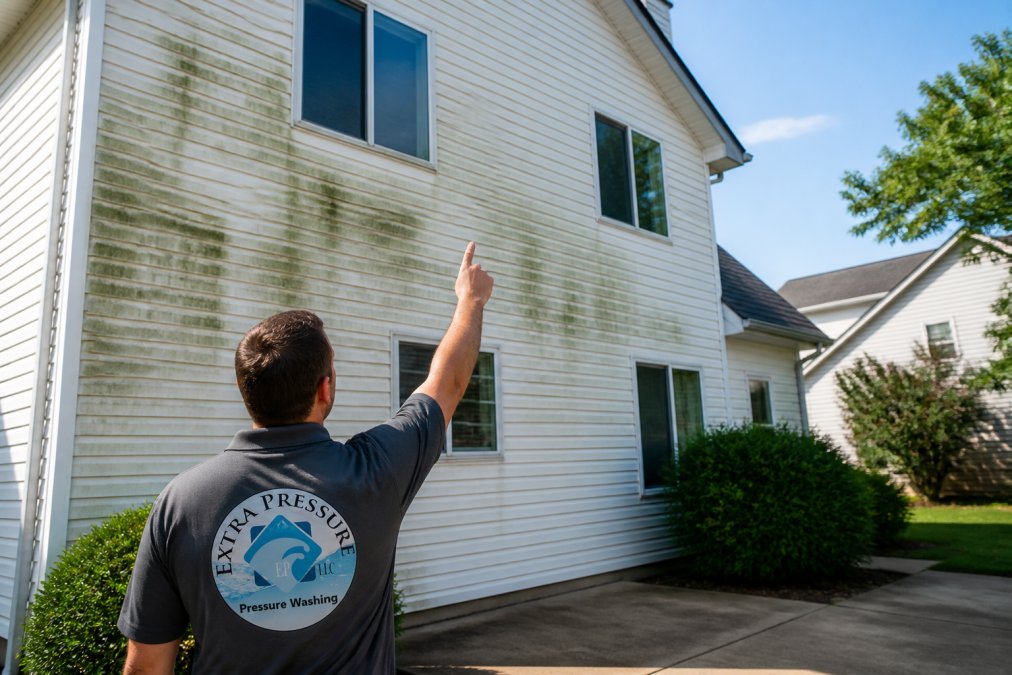
Watch for these signs:
- Green or black streaks on siding
- Chalky white residue on brick or stucco
- Mold spots near gutters and fascia
- A musty smell near exterior walls
- Visible mildew on shaded sides of the house
How Climate and Shade Change Your Soft Washing Schedule
Your local climate and the amount of shade on each wall drive your schedule more than the calendar does. The reason is biological: algae, mold, and mildew need three things to colonize siding, moisture, organic food (pollen, dust, tree sap), and moderate temperatures. Remove any one of those and growth stalls. That is why two houses on the same street can need completely different schedules.
A few patterns most cleaning practitioners see:
- North-facing walls stay damp longest after rain and dew, so they grow algae first and worst. They often need attention 6 to 12 months before the south side does.
- Homes under oak, pine, or maple canopy collect sap, pollen, and shade. The shade keeps the surface wet for hours after the sun comes up, which is exactly the window algae needs. Annual cleaning is the norm here.
- Open, sun-exposed lots dry fast. UV also bleaches organic growth over time. These homes can often stretch to 24 months between washes.
- Coastal or high-humidity regions see faster mildew return because ambient moisture never fully drops. Expect the shorter end of every range.
- Arid, low-humidity regions can push toward the long end, but watch for dust and pollen film that still needs rinsing.
Material-Specific Maintenance Schedules
Different siding materials hold moisture, dirt, and biological growth differently. The table below reflects how each surface actually behaves, not just a generic interval:
| Siding Material | Recommended Frequency | Why It Matters |
|---|---|---|
| Vinyl siding | Every 12-18 months | The embossed texture traps algae spores and pollen; once growth roots in the grain, it stains even after the organism dies. |
| Stucco | Every 12-24 months | Porous cement-based finish wicks and holds moisture, which feeds mildew from the inside out. |
| Composite / fiber cement | Every 12-18 months | Factory finish resists rot but is prone to mildew staining, especially on shaded elevations. |
| Brick | Every 24 months | Fired clay is durable, but mortar joints are porous and hold moisture; efflorescence (white mineral bloom) is common and needs gentle treatment. |
| Wood / cedar | Every 12 months | Wood is food for mold and mildew. It also needs the gentlest chemistry to avoid stripping stain or sealer. |
| Painted surfaces (any substrate) | Every 12-24 months | Paint film is the wear layer. Regular soft washing removes the organic film that breaks down paint adhesion. |
Long-Term Damage Prevention: The Asset-Protection Angle
Most articles frame soft washing as a cosmetic chore. It is better understood as asset protection. Organic growth is not just ugly, algae and mildew hold moisture against the substrate, and that moisture is what drives paint failure, wood rot, and mortar deterioration. A regular soft wash removes the growth before it can do structural work.
Walk your home after a heavy rain. Walls that are still damp hours later are the ones that will need the most frequent soft washing. That single observation tells you more about your schedule than any generic rule.
The Best Time of Year for Exterior House Cleaning
Late spring and early fall are the best time of year for exterior house cleaning. Temperatures are mild, and cleaning solutions work well without drying too fast.
Never soft wash in direct freezing temperatures. The cleaning solution can freeze on siding and leave streaks that are hard to remove later.
How to Prepare a House for Sale With Soft Washing
Curb appeal sells homes, and a clean exterior is the fastest way to boost it. If you are learning how to prepare house for sale, start outside.
- Wash siding, walkways, and driveway
- Clean gutters and fascia
- Wash windows for a bright finish
- Clear organic growth before showings
Consumer Financial Protection Bureau homebuyer resources
DIY Safety, Equipment, and Long-Term Damage Prevention
Soft washing looks easy on video. In practice, the chemicals are the real risk, and the difference between a clean house and a dead shrub is usually timing and dilution, not pressure. If you want to attempt it yourself, here is the checklist most guides leave out.
What You Actually Need
- A pump sprayer or dedicated soft wash system (not a pressure washer)
- A downstream injector if you are using a pressure washer purely as a delivery tool, the nozzle stays low-pressure
- Sodium hypochlorite (the active ingredient in most exterior cleaners) at a diluted concentration, typically in the 1-3% range for siding
- A surfactant, this is what makes the solution cling to vertical surfaces instead of running off. Without it, the bleach flashes off before it can kill the growth
- Personal protective equipment: chemical-resistant gloves, eye protection or a face shield, and a respirator rated for chlorine vapor
- A garden hose and a dedicated rinse nozzle
- Plastic sheeting or tarps for sensitive plants and outdoor fixtures
The Steps That Matter
- Wet down landscaping first. Saturate plants, grass, and soil before you spray anything. Dry plants absorb chemicals; wet plants resist them.
- Apply bottom-up, rinse top-down. Spray the solution starting at the lowest point and work up so you do not streak clean siding with runoff. Rinse from the top down.
- Let it dwell. The solution needs contact time to kill mold and algae, usually several minutes. Do not rinse immediately. Do not let it dry on the surface either, which is why you work in shade or on a cloudy day.
- Rinse thoroughly. Residual cleaner keeps working on plants and metal after you stop spraying. Rinse everything again.
- Rinse plants again after. This is the step most DIYers skip, and it is the one that saves the shrubs.
Chemical Safety Rules
- Never mix bleach with ammonia. The reaction produces chloramine gas, which is toxic.
- Never mix bleach with acid-based cleaners. This releases chlorine gas.
- Never mix bleach with vinegar or hydrogen peroxide. Both reactions are hazardous.
- Store and mix in a ventilated area, never in a closed garage.
- Test any solution on a hidden section of siding first, especially on painted wood or older vinyl, where the finish may be fragile.
If you are unsure what is already on your siding, for example, if a previous owner used a sealer or a different cleaner, test a small area and wait 24 hours before committing to the whole wall. Incompatible chemistry can discolor siding permanently.
Long-Term Damage Prevention
- Keep gutters clear so water does not overflow onto fascia and siding.
- Trim tree branches back from the roofline to reduce shade and sap drop.
- Fix any leak or irrigation spray that hits the siding, constant moisture is what feeds growth.
- Wash on a schedule, not on a reaction. Waiting until stains are obvious means the growth has already been working on the surface for months.
The cheapest exterior maintenance is a steady schedule. Letting buildup sit for years costs far more than a yearly soft wash, and the DIY version only pays off if you respect the chemistry and the dwell time.
For delicate surfaces, many homeowners choose a professional service. Extra Pressure LLC. uses specialized soft washing and state-of-the-art equipment to clean safely without harm.
Conclusion: Build a Schedule That Protects Your Home
The real challenge is not knowing the schedule. It is sticking to it. Organic growth returns quietly, and one missed year can undo your progress. A licensed and insured team makes that easy, with same-day estimates and a 100% satisfaction guarantee. Extra Pressure LLC. offers specialized soft washing, window washing, and gutter maintenance to protect your home year after year.
Frequently Asked Questions
Should I power wash or soft wash my house?
For most siding, soft washing is the safer choice. Soft washing uses low pressure and a cleaning solution to kill mold, algae, and mildew at the source, while power washing relies on high pressure that can force water behind siding, strip paint, and etch stucco or wood. Save pressure washing for concrete driveways, brick patios, and other hard, unpainted surfaces. If your home has vinyl siding, stucco, painted wood, or composite siding, ask for soft washing instead.
What are the signs that my house needs a soft wash?
Look for green or black streaks on siding, chalky white oxidation, dark patches on the roof or fascia, and a dull, dingy look that hose water won’t fix. Musty odors near entryways, mold returning within months of a DIY scrub, and visible algae on north-facing walls are also signals. If your home has gone more than 12 to 18 months without exterior cleaning, it is likely due for a soft wash.
Does soft washing damage siding or landscaping?
Soft washing is designed to protect both. The low-pressure application stays under the threshold that cracks vinyl or forces water behind siding, and the cleaning solution is typically biodegradable. A trained technician will pre-wet and rinse plants, cover sensitive landscaping, and control runoff. That is very different from high-pressure washing, which can pit wood, strip paint, and tear up mulch beds. Ask the provider how they protect landscaping before they start.
How long does it take to soft wash a home?
Most single-family homes take two to four hours, depending on square footage, the number of stories, and how much organic buildup is present. Roof cleaning, gutter brightening, or heavy mold on shaded walls can add time. Scheduling matters too: most homeowners book in spring or early fall, so wait times stretch during peak weeks. If you are preparing a house for sale, book at least two to three weeks before listing photos so everything has time to dry and settle.