
Table of Contents
- What Residential Exterior Cleaning Maintenance Plans Include
- How Exterior House Cleaning Cost Works and What Drives It
- Soft Washing vs Pressure Washing: Which Belongs in Your Plan
- Building a Seasonal Exterior Cleaning Schedule
- Frequency Options: Monthly, Quarterly, or Annual Plans
- DIY vs Professional Maintenance and the Long-Term ROI
- How Recurring Plans Protect Curb Appeal and Property Value
- Frequently Asked Questions
Last Updated: September 10, 2026
What Residential Exterior Cleaning Maintenance Plans Include
Residential exterior cleaning maintenance plans are recurring service agreements that keep a home’s siding, windows, gutters, and hardscapes clean on a set schedule instead of waiting for visible damage. This guide explains what these plans cover, how pricing is structured, and how to match frequency to your property. Most homeowners only call a professional after grime, mold, or clogged gutters have already caused a problem. A maintenance plan flips that sequence.
Core Services in a Standard Plan
A typical plan bundles the exterior tasks that degrade fastest:
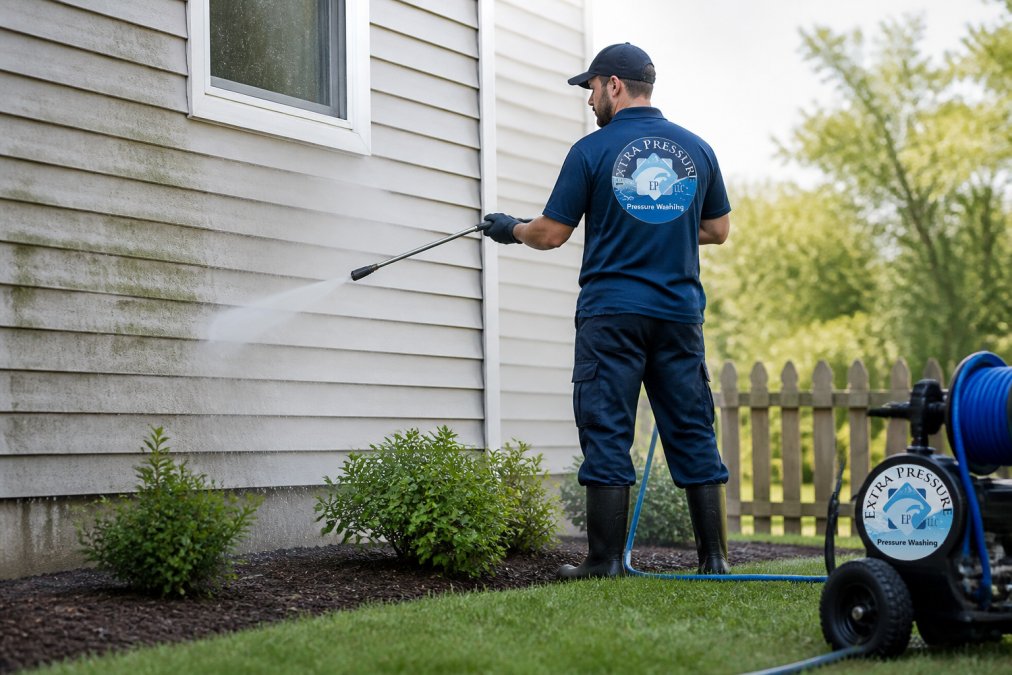
- Soft washing for siding, fascia, and painted surfaces
- Pressure washing for driveways, walkways, and patios
- Window cleaning for streak-free glass and screens
- Gutter cleaning to clear debris from troughs and downspouts
Not every home needs every service every visit. The right mix depends on your exterior facade material, tree coverage, and how much shade your property gets. Homes surrounded by mature trees usually need gutter service more often than homes in open lots.
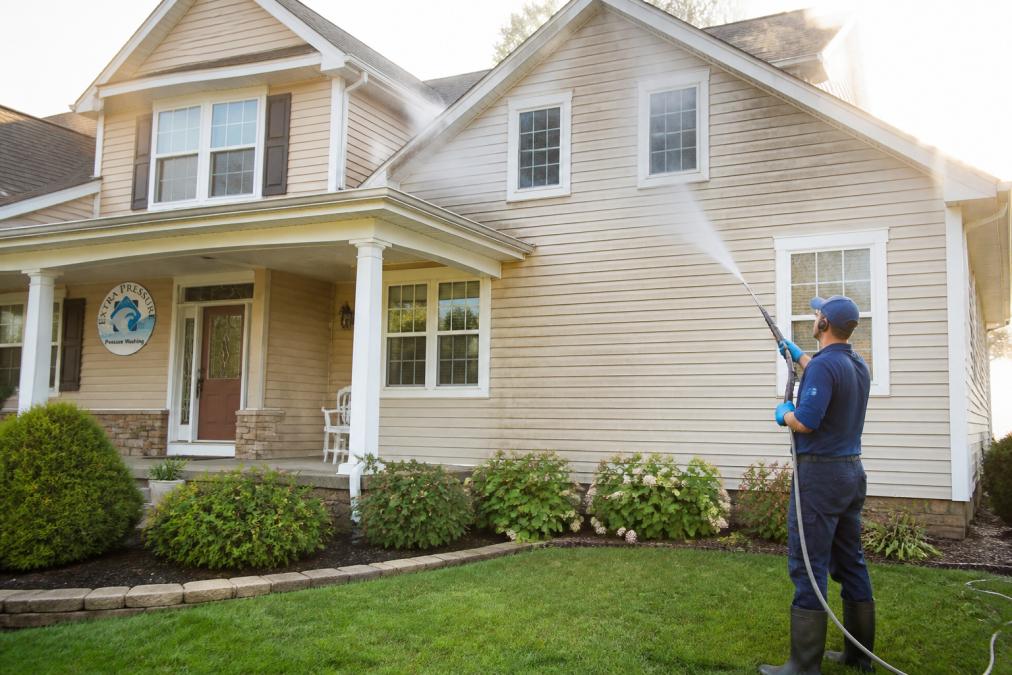
The core value of a plan is timing, not just labor. Cleaning surfaces before organic growth takes hold costs less than restoring them after damage sets in.
How Exterior House Cleaning Cost Works and What Drives It
Exterior house cleaning cost is not a single number, it is the sum of four variables that move independently: total cleanable square footage, surface material, number of stories, and the condition of the exterior at the first visit. A single-story ranch with vinyl siding in an open lot sits at the low end of the range. A two-story home with stucco, multiple roof lines, and mature tree canopy sits at the high end. Because those variables combine differently on every property, Extra Pressure LLC. provides same-day estimates rather than flat-rate quotes, so you see the number before any work begins.
How Pricing Is Actually Structured
Most residential exterior cleaning is priced one of three ways, and knowing which model you are being quoted matters more than the headline number:
- Per-service pricing: each task (soft wash, window cleaning, gutter clearing) is quoted separately. Simple to compare, but it hides the discount a bundle would earn.
- Per-visit pricing: a flat rate per scheduled visit regardless of which services are performed. Predictable, but you need to confirm what is included so a “visit” is not just a quick rinse.
- Subscription pricing: a recurring monthly or quarterly rate that spreads the cost of a full annual rotation across the year. This is the model most maintenance plans use, and it is the one that keeps a home in the maintenance range instead of the restoration range.
The Four Cost Drivers, In Order of Impact
1. Condition at the first visit. This is the single biggest driver. A home that has never been professionally cleaned may carry years of embedded organic growth, oxidized siding, and compacted gutter debris. That first catch-up visit is where most of the expense lives. Once a home is on a recurring schedule, every subsequent visit stays in a lower maintenance band because buildup never gets a chance to set.
2. Surface mix. Painted wood, stucco, and aged composite require gentler methods, lower pressure, and more time per square foot than concrete or brick. A property with a large driveway and a small siding footprint prices differently than the reverse, even at identical total square footage.
3. Accessibility. Steep grades, tight side yards, gated areas, and fragile landscaping all slow the work. A technician who has to hand-carry equipment around a pool enclosure or work around newly planted beds spends more labor hours on the same square footage.
4. Frequency. Quarterly plans spread cost more evenly than one-off deep cleans because each visit does less corrective work. Monthly plans cost more per year in total but less per visit, and they suit properties where appearance is constant, rentals, high-visibility frontages, or homes under heavy pollen load.
Why the One-Time vs. Recurring Comparison Misleads
A one-time deep clean and a recurring plan are not the same scope of work, and comparing their prices directly leads to bad decisions. The one-time quote reflects a restoration job: heavier chemistry, more dwell time, more labor. The recurring price reflects a maintenance job: lighter chemistry, faster passes, predictable scheduling. Over a full year, a recurring plan avoids the repair bills that follow deferred upkeep, such as rotted fascia from clogged gutters or etched siding from improper pressure.
The most common mistake homeowners make is comparing a one-time quote to a recurring plan price. They are not the same scope of work, and treating them as equivalent leads to bad decisions.
Where the Real Savings Come From
The savings in a maintenance plan are not primarily on the cleaning invoice, they are on the repair invoice you never receive. Preventative upkeep is widely treated by housing counselors and home inspectors as a core asset-protection practice, the same logic behind home maintenance guidance from the U.S. Department of Housing and Urban Development. When you price a plan, compare it against the cost of one preventable repair: a fascia replacement, a section of re-painted siding, or a driveway resurfacing. That comparison is where the ROI becomes obvious.
Ask any contractor to quote both a one-time clean and a 12-month plan side by side.
Soft Washing vs Pressure Washing: Which Belongs in Your Plan
Soft washing vs pressure washing comes down to the surface. Soft washing uses low pressure with specialized cleaning solutions to remove mold, mildew, and organic growth from delicate surfaces. Pressure washing uses high-pressure water to strip grime from hard, durable materials like concrete and brick.
Choosing wrong causes real damage. Blasting painted siding or aged wood with high pressure can strip paint, force water behind the exterior facade, and etch the surface. That is why a professional plan matches the method to the material rather than defaulting to one approach for the whole house.
Matching the Method to the Surface
| Surface | Recommended Method | Why |
|---|---|---|
| Vinyl and painted siding | Soft washing | Low pressure protects finish |
| Stucco | Soft washing | Prevents cracking and water intrusion |
| Concrete driveways | Pressure washing | Removes embedded stains |
| Brick and stone | Pressure washing | Withstands higher pressure |
| Wood decks | Soft washing | Avoids splintering and grain damage |
| Roof shingles | Soft washing | Prevents granule loss |
For a closer look at how Extra Pressure LLC. handles delicate surfaces, see soft washing guidance for residential exteriors.
Building a Seasonal Exterior Cleaning Schedule
A seasonal exterior cleaning schedule spreads work across the year so no single visit becomes a major restoration job. Spring and fall are the highest-value seasons: pollen and winter debris accumulate fast, and cleaning before summer growth and winter freeze protects surfaces when they are most vulnerable.
A workable annual rhythm looks like this:
- Spring: soft wash siding, clear winter gutter debris, clean windows
- Summer: pressure wash driveways and patios, spot-treat mildew
- Fall: gutter cleaning before leaf drop finishes, clear downspouts
- Winter: inspect, touch up problem areas, prep for spring
The schedule should flex to your property. Homes under heavy tree canopy may need gutter service twice in fall alone.
Frequency Options: Monthly, Quarterly, or Annual Plans
Most homeowners choose between monthly, quarterly, and annual service frequency, and the right pick depends on exposure and how pristine you want the property to look. A quarterly plan suits the average suburban home. Monthly plans fit properties with heavy pollen, dense landscaping, or rental use where appearance is constant. Annual plans work for newer homes in low-debris areas.
| Plan | Best For | Typical Coverage |
|---|---|---|
| Monthly | Rentals, heavy pollen, high visibility | Full exterior, frequent windows |
| Quarterly | Most single-family homes | Seasonal rotation of all services |
| Annual | New builds, low-debris lots | One deep clean plus inspection |
If you are unsure, start quarterly and adjust after one year. You will learn how fast your specific property accumulates grime, which is the only reliable way to set frequency.
DIY vs Professional Maintenance and the Long-Term ROI
DIY exterior cleaning saves on the invoice but rarely on the total cost. Renting equipment, buying cleaning agents, and risking surface damage adds up, and improper pressure washing can void warranties or create repair bills that dwarf the savings. Professional service brings the right method, equipment, and insurance to each surface.
A simple way to weigh it: compare your time, rental costs, and risk of damage against a recurring plan price. For most homeowners, the plan wins once you factor in the cost of one botched DIY job. This is the same logic behind home maintenance guidance from the U.S. Department of Housing and Urban Development, which treats preventative upkeep as a long-term asset protection strategy.
A frequent DIY error is using the wrong nozzle or too much pressure on painted surfaces. The damage often shows up weeks later as peeling paint or water intrusion, long after you have returned the rental.
How Recurring Plans Protect Curb Appeal and Property Value
Curb appeal is the first thing buyers, appraisers, and neighbors notice, but its financial weight is more concrete than most homeowners realize. Exterior condition feeds directly into three money decisions: what an appraiser notes, what a buyer offers, and what an insurer sees when they assess risk. A recurring maintenance plan keeps all three on the favorable side of the ledger.
The Appraisal and Resale Connection
Appraisers document exterior condition as part of the overall property assessment. Deferred maintenance, stained siding, mildew on fascia, overflowing gutters, reads as a deduction, not a neutral. Buyers, meanwhile, price in the cost of the work they can see needs doing, and they typically discount it by more than the actual repair cost because they are pricing in uncertainty. A home with a documented cleaning history presents as maintained, which removes that discount.
The practical takeaway: keep records. A simple log of service dates, methods used, and surfaces treated becomes a maintenance history you can hand to a buyer or an inspector. It is the exterior equivalent of a service record on a car.
What Insurers Actually Care About
Homeowners insurance policies generally require the property to be maintained in good condition, and water damage from neglected gutters or unchecked organic growth is a common reason claims get scrutinized. This is not about a specific policy clause, it is about the general principle that insurers expect homeowners to prevent foreseeable damage. Clogged gutters that overflow into the foundation, or mildew that spreads into siding and sheathing, are the kinds of slow failures that a maintenance schedule prevents and that a claims adjuster will ask about after the fact.
A recurring plan creates a paper trail showing the homeowner acted to prevent the damage. That documentation is worth more than the cleaning itself when a claim is on the line.
The Environmental Angle Most Guides Skip
Most exterior cleaning content focuses on cost and appearance. The method matters too. Soft washing relies on low pressure plus cleaning solutions rather than high-pressure water alone, which means less water used per square foot and less risk of pushing contaminants into soil and storm drains. Choosing a contractor who uses biodegradable cleaning agents and controlled runoff can be a meaningful difference for homeowners with vegetable gardens, pets, or nearby waterways.
This is also a durability argument: gentler methods preserve siding, paint, and roofing longer, which reduces the frequency of full replacement, the single largest environmental and financial cost in exterior maintenance. A plan built on soft washing for delicate surfaces is both a value play and a lower-impact one.
Preventing the Secondary Damage That Kills Value
Recurring plans prevent the cascade that starts with a clogged gutter. Overflowing water reaches the foundation, stains the exterior facade, and rots fascia boards. Once rot reaches the fascia, the repair expands to trim, soffit, and sometimes roofing edge, a scope that dwarfs the cost of the gutter cleaning that would have prevented it. The same pattern applies to organic growth: once mildew establishes on siding or fascia, it returns faster each season unless it is managed consistently.
Extra Pressure LLC. builds visits around your specific property, tree coverage, shade, facade material, so year-round protection happens without you tracking it. For window-specific upkeep, see window washing services for residential properties.
Start a simple maintenance log today: date, service performed, surfaces treated, and any issues noted. It costs nothing to keep and pays off at resale, at claim time, and when you hand the property to the next owner.
Frequently Asked Questions
What is included in a standard residential exterior cleaning maintenance plan?
Most plans bundle pressure washing for hard surfaces like driveways and sidewalks, soft washing for siding and roofs, window cleaning, and gutter debris removal. A recurring service agreement typically schedules these at set intervals so nothing gets missed. Some plans add priority scheduling and annual inspections. The exact mix depends on your home’s materials and how much tree cover or moisture exposure it faces.
How often should you schedule professional exterior house cleaning?
Most homes benefit from a full exterior cleaning once or twice a year, with gutters checked quarterly in wooded areas. Homes near heavy tree cover or with north-facing walls that stay damp may need soft washing every six months to prevent mold and mildew. A seasonal exterior cleaning schedule that follows spring pollen, summer growth, and fall leaf drop keeps surfaces ahead of buildup rather than reacting to it.
How does soft washing differ from standard pressure washing in maintenance plans?
Soft washing uses low pressure and cleaning solutions to lift mold, mildew, and algae from delicate surfaces like vinyl siding, shingles, and painted wood. Pressure washing uses high pressure for concrete, brick, and stone. A well-built maintenance plan assigns each method to the right surface, so soft washing protects your siding while pressure washing restores your driveway. Using the wrong method on the wrong material can strip paint or force water behind siding.
Is a recurring exterior cleaning subscription worth the cost?
Preventative maintenance stops mold, mildew, and debris from causing damage that costs far more to repair. Gutter cleaning alone prevents water damage and foundation issues. For homeowners preparing to sell, consistent exterior upkeep supports curb appeal and property value. Request a quote to compare plan pricing against your current spending.