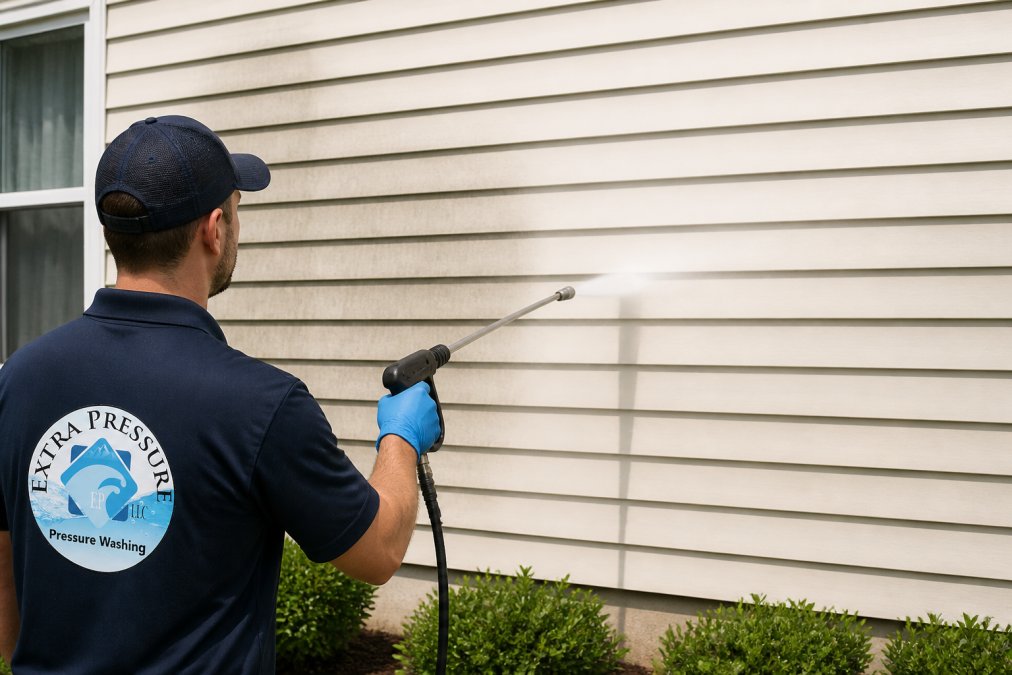
- Why Soft Washing Is Safe for Vinyl Siding
- Soft Washing vs Pressure Washing Vinyl Siding
- How Soft Washing Works on Vinyl Siding
- Best Cleaning Solutions for Vinyl Siding
- How to Remove Mildew from Siding
- Protecting Seams, Weep Holes, and Siding Panels
- Long-Term Maintenance to Prevent Water Intrusion
- Frequently Asked Questions
Last Updated: September 3, 2026
Why Soft Washing Is Safe for Vinyl Siding
Soft washing is the safer cleaning method for vinyl siding because it uses low pressure, typically under 500 PSI, combined with specialized cleaning solutions to remove dirt, algae spores, and mold without causing structural damage. Unlike high-pressure methods that can strip paint, crack panels, or force water into seams, soft washing relies on chemical action and dwell time to break down organic matter safely.
Vinyl expands and contracts with temperature changes, and high-pressure water can exploit these seams, forcing moisture behind panels where it causes water intrusion and rot. Soft washing avoids this risk entirely. The cleaning solution does the heavy lifting, surfactants break down organic buildup while low pressure rinsing protects both the siding and your home’s structural integrity.
Soft washing is a professional standard for delicate exteriors because it works, it’s predictable, and it doesn’t create liability.
Vinyl siding can be damaged at pressures as low as 1,500 PSI if the nozzle is held too close. Soft washing typically operates at 200-500 PSI from a safe distance, making accidental damage nearly impossible.
Soft Washing vs Pressure Washing Vinyl Siding
The difference between soft washing and pressure washing isn’t just about pressure levels, it’s about approach. Pressure washing relies on force to dislodge dirt and organic growth. Soft washing relies on chemistry and time. For vinyl siding, this distinction matters because vinyl is inherently vulnerable to high-pressure damage.
How Pressure Washing Damages Vinyl
Pressure washing uses nozzles that concentrate water into a narrow stream, delivering 2,000 to 4,000 PSI or higher. At these levels, water acts like a cutting tool, punching holes through vinyl panels, separating seams, and forcing moisture into cavities behind siding where it promotes rot and mold growth in the wall structure.
The damage often isn’t visible immediately. Weeks or months later, water intrusion causes paint bubbling, soft spots in the substrate, or mold blooms inside the home. High pressure also strips protective coatings and causes chalking, a powdery oxidation that accelerates UV damage and color loss.
Pressure washing vinyl siding can void manufacturer warranties. Most vinyl manufacturers explicitly prohibit pressures above 1,500 PSI. Damage caused by high-pressure cleaning becomes a homeowner’s liability, not a manufacturing defect.
Why Low Pressure Works Better
Soft washing works because cleaning solutions break chemical bonds between dirt, algae spores, mold, and the vinyl surface. Surfactants lower surface tension, allowing the solution to penetrate biofilm and organic growth. Sodium hypochlorite kills mold and mildew at the cellular level. The combination means contaminants release from the surface on their own without force.
Low pressure, under 500 PSI, is sufficient for rinsing because the solution has already done the work. This approach protects seams, weep holes, and siding panels while delivering a clean finish that lasts longer because the protective coating remains intact. Soft-washed surfaces stay cleaner longer because the siding’s protective layer can better resist new colonization.
How Soft Washing Works on Vinyl Siding
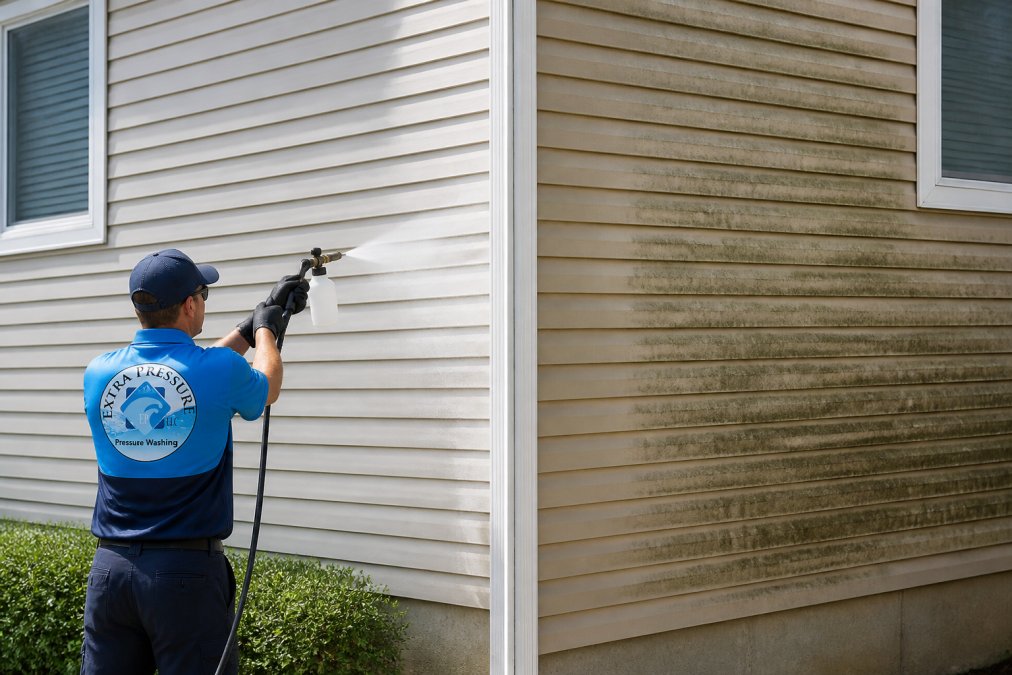
Soft washing follows a predictable sequence: apply cleaning solution, allow dwell time, rinse gently. The chemistry does most of the work, and timing is critical.
First, the technician applies a biodegradable cleaning solution specifically formulated for vinyl. This solution contains surfactants that break down the waxy coating protecting algae spores and mold. Maximum effectiveness requires dwell time, typically 10 to 20 minutes depending on contamination severity and the specific product used.
During dwell time, surfactants penetrate biofilm layers, and sodium hypochlorite kills mold and mildew cells. The surface often darkens slightly as moisture penetrates the organic growth, then gradually lightens as contaminants die and release from the vinyl.
After dwell time, low-pressure rinsing removes dead organic matter and excess solution. Water pressure stays below 500 PSI, and the nozzle maintains distance from the surface, preventing water from being forced into seams or behind panels. The entire process typically takes 30 to 45 minutes per 1,000 square feet, depending on contamination level and home complexity.
Best Cleaning Solutions for Vinyl Siding
Effective solutions contain surfactants, compounds that reduce water’s surface tension and allow it to penetrate and suspend dirt and organic matter. Sodium hypochlorite (bleach) is the active ingredient in most mold and mildew-killing formulations. Biodegradable solutions break down naturally after use, reducing environmental impact and protecting plants and soil.
Professional-grade solutions are more concentrated than consumer products, meaning they work faster and more effectively. However, they still require proper dilution and application technique to avoid damaging the siding or harming nearby vegetation.
Why Surfactants and Sodium Hypochlorite Matter
Surfactants work at the molecular level, surrounding dirt particles and mold spores so they can be suspended in water and rinsed away. Without surfactants, water alone can’t penetrate biofilm effectively.
Sodium hypochlorite kills mold and mildew by breaking down their cell walls. Once organisms die, they release from the surface easily. This is why soft-washed surfaces stay cleaner longer, you’ve eliminated the organism, not just displaced visible growth. Typical soft-wash solutions contain 10% to 15% sodium hypochlorite, though this is often diluted further during application.
The best cleaning solutions for vinyl are biodegradable, contain surfactants, and use sodium hypochlorite as the active mold-killing agent. These formulations work safely on vinyl while protecting your landscaping and the environment.
Protecting Your Landscaping and Seams
Application technique matters as much as the solution itself. Before applying any cleaning solution, experienced technicians protect landscaping by wetting plants with fresh water, creating a protective barrier. During application, they direct spray away from gardens and plant beds, then rinse landscaping thoroughly afterward.
Weep holes are intentional openings at the bottom of vinyl siding that allow trapped moisture to escape, they’re critical for preventing water intrusion. Soft washing preserves these openings, whereas high-pressure cleaning can force solution or debris into them, causing clogs that trap moisture inside.
Soft washing technicians angle their spray to avoid seams between siding panels, preventing water from being forced behind panels where it causes rot and mold growth in the wall cavity.
How to Remove Mildew from Siding
Mildew removal is one of the most common reasons homeowners call for soft washing. The process requires understanding what you’re dealing with and how to address it effectively.
Identifying Mold, Mildew, and Algae Spores
Mildew appears as black, gray, or greenish spots, usually in shaded areas where moisture lingers. It’s a surface fungus that feeds on the vinyl’s protective coating and organic debris. Mildew responds well to soft washing with sodium hypochlorite.
Mold is similar but often appears in larger patches and can penetrate deeper into the siding. It thrives in consistently damp environments. Mold requires the same soft-wash approach as mildew but may need longer dwell time or slightly stronger solution concentration.
Algae spores create a green or brown film on siding. Unlike mildew and mold, which are fungi, algae are photosynthetic organisms that thrive in sunlit areas. Soft washing removes algae effectively, though regrowth can occur faster on pressure-washed surfaces because the protective coating is compromised.
The Dwell Time Factor
Dwell time is the period between applying the cleaning solution and rinsing it off. During this time, surfactants penetrate biofilm layers, and sodium hypochlorite kills mold and mildew cells. Insufficient dwell time means the solution doesn’t work effectively. Excessive dwell time can damage the siding or harm nearby plants.
Optimal dwell time depends on contamination type, severity, solution concentration, temperature, humidity, and sun exposure. Light mildew might need only 10 minutes. Heavy mold growth might require 20 to 30 minutes. Professional technicians monitor dwell time carefully, watching for visual cues and rinsing when timing is right.
Most homeowners underestimate dwell time. They apply solution and rinse within 5 minutes, which isn’t enough time for the chemistry to work. Set a timer for at least 15 minutes and resist the urge to rinse early.
Protecting Seams, Weep Holes, and Siding Panels
The structural details of vinyl siding need protection during cleaning to prevent water intrusion and long-term damage.
Seams are the joints where two siding panels meet. High-pressure water can force seals open or blast water directly into seam cavities, causing rot in the wall sheathing. Soft washing avoids this risk by using low pressure and angling spray away from seams.
Weep holes are intentional openings at the base of vinyl siding that allow trapped moisture to drain. If soft-wash solution or debris clogs these holes, moisture can’t escape. Professional soft washing maintains these openings by directing spray away from them and rinsing carefully.
Panel edges are the top and bottom borders of each siding section. Water can penetrate under panel edges if pressure is applied directly against them. Soft washing technicians direct spray at an angle to the siding surface rather than driving it into panel edges.
| Detail | Risk if Damaged | Soft Wash Protection |
|---|---|---|
| Seams | Water intrusion behind panels, rot in wall structure | Low pressure and angled spray away from joints |
| Weep holes | Moisture trap, mold growth in wall cavity | Spray directed away from holes, careful rinsing |
| Panel edges | Water forced behind vinyl, structural damage | Angled application, never direct spray at edges |
| Protective coating | Chalking, UV damage, faster recontamination | Gentle pressure preserves coating integrity |
Long-Term Maintenance to Prevent Water Intrusion
One soft wash isn’t a permanent solution. Algae spores, mold, and mildew will return unless you address the underlying conditions that allow them to thrive.
Water intrusion is the root cause of most siding problems. It happens when moisture penetrates behind the vinyl through damaged seams, clogged weep holes, or compromised caulk. Once water gets behind the siding, it promotes mold growth in the wall cavity and causes rot in the sheathing and framing.
Prevention starts with maintenance. Keep gutters clean so water drains properly. Trim tree branches that shade the siding and keep it damp, sunlight and airflow inhibit mold and mildew growth. Inspect caulk around seams and windows annually, and recaulk any gaps. Ensure downspouts direct water at least 4 to 6 feet away from the foundation.
Soft washing every 12 to 24 months removes organic growth before it becomes severe. The frequency depends on your climate, shade exposure, and local humidity levels. Shaded, humid areas need more frequent cleaning.
According to the Environmental Protection Agency’s guidance on mold prevention, controlling moisture is the primary strategy for preventing mold growth on any building surface. Regular soft washing removes existing mold and mildew, but addressing moisture sources prevents them from returning quickly. The long-term cost of regular soft washing is far less than the cost of replacing damaged siding or repairing water damage inside your home.
Vinyl siding is a durable, attractive choice for home exteriors, but only if you clean it correctly. Soft washing is safe for vinyl siding because it uses low pressure and chemistry instead of force, protecting both the surface and your home’s structural integrity. High-pressure methods might seem faster, but they create vulnerabilities that lead to water intrusion, mold growth, and expensive repairs.
If your vinyl siding shows signs of mildew, algae growth, or general discoloration, soft washing is the professional solution. Extra Pressure LLC. offers licensed, insured soft washing specifically designed for delicate surfaces like vinyl. Our team understands the vulnerabilities of vinyl siding and applies techniques that clean effectively while protecting your home’s long-term integrity. Schedule an appointment today and see how soft washing can restore your siding’s appearance without the risk.
Frequently Asked Questions
Is soft washing safe for vinyl siding compared to pressure washing?
Yes, soft washing is significantly safer for vinyl siding. It uses low-pressure water (typically under 500 PSI) combined with specialized cleaning solutions, whereas pressure washing can exceed 3,000 PSI and force water behind seams and weep holes, causing structural damage and water intrusion. Soft washing removes algae spores, mold, and mildew without compromising the integrity of your siding panels or paint.
What chemicals are safe for soft washing vinyl siding?
The best cleaning solutions for vinyl siding contain biodegradable surfactants and sodium hypochlorite at controlled concentrations. These ingredients break down organic matter like mildew and algae without damaging the vinyl or causing chalking and UV damage. Always ensure chemicals are diluted properly and that landscaping and weep holes are protected during application. Professional-grade solutions are formulated to be environmentally responsible while delivering reliable results.
How often should you soft wash vinyl siding?
Most homeowners benefit from soft washing vinyl siding annually or every 12-18 months, depending on climate and exposure. Properties in humid areas with frequent algae spores or mold growth may need cleaning twice yearly. Regular maintenance prevents oxidation, green film buildup, and chalking, which can reduce curb appeal and property value. A professional can assess your specific conditions and recommend a maintenance schedule.
Can soft washing remove oxidation and chalking from vinyl siding?
Soft washing can remove surface dirt, algae, and mildew that make oxidation appear worse, but it cannot reverse permanent chalking caused by UV damage. However, regular soft washing with proper dwell time and detergent application slows oxidation progression by removing the organic matter that accelerates UV degradation. For severe chalking, a professional assessment can determine whether cleaning alone will restore appearance or if panel replacement is necessary.
This article was written using GrandRanker
Leave a Reply