Table of Contents
- How Soft Washing Works on Painted Wood
- Soft Wash House Cleaning Solution Ratio for Painted Surfaces
- How to Remove Mildew From Siding Without Stripping Paint
- Protecting Plants, Landscaping, and Runoff
- Safety Gear and Chemical Handling for Homeowners
- When Soft Washing Painted Wood Goes Wrong
- Frequently Asked Questions
Last Updated: September 27, 2026
How Soft Washing Works on Painted Wood
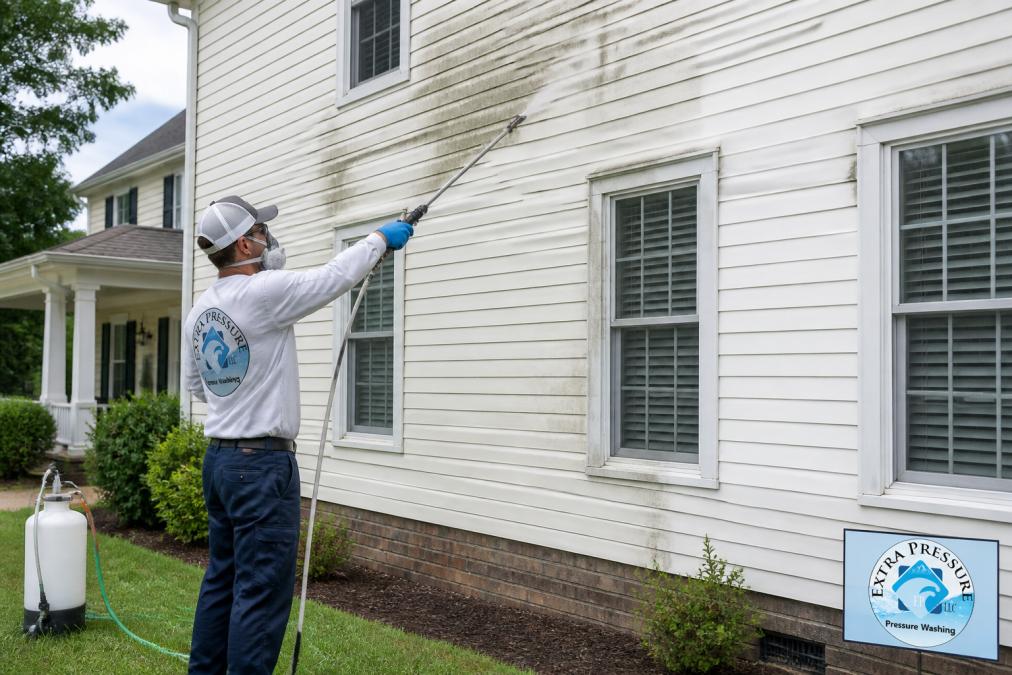
Soft washing is a low-pressure exterior cleaning method that relies on cleaning solutions, not force, to remove organic growth from painted wood. The question of is soft washing safe for painted wood comes down to control: the mix ratio, pressure, and dwell time. The process starts with a pump and hose system.
Low Pressure vs. High Pressure: What Hits Your Siding
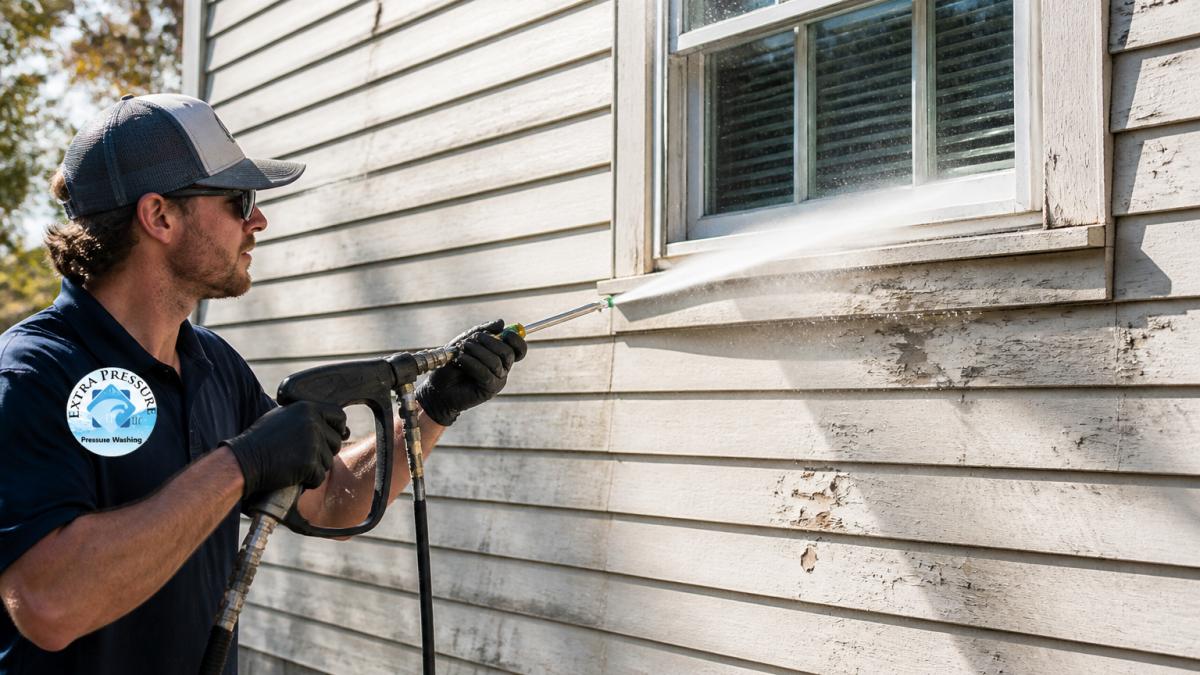
Pressure washing pushes water at 1,500 to 4,000 PSI. That force strips loose paint, gouges soft wood, and drives water behind siding boards.
Soft Wash House Cleaning Solution Ratio for Painted Surfaces
A common soft wash house cleaning solution ratio for painted wood is one part sodium hypochlorite to three or four parts water, mixed with a surfactant. The exact ratio depends on how much organic growth you’re fighting.
A typical starting point looks like this:
- 1 gallon of 12.5% bleach
- 3 to 4 gallons of water
- A splash of surfactant to help it cling
Mixing bleach with ammonia or acids creates toxic gas. Never combine cleaning products unless the label says it’s safe.
Sodium Hypochlorite vs. Household Bleach
Sodium hypochlorite is the active ingredient in bleach. The difference is strength. Household bleach runs about 3% to 6%. Soft wash mixes often use 12.5% bleach, also called SH.
How to Remove Mildew From Siding Without Stripping Paint
To remove mildew from siding without stripping paint, apply a diluted soft wash mix at low pressure, let it dwell, then rinse gently. The steps below keep the paint intact.
- Wet down surrounding plants and cover them if possible.
- Pre-soak the siding with plain water.
- Apply your diluted mix from the bottom up.
- Let it dwell 5 to 10 minutes. Don’t let it dry.
- Rinse top down at low pressure.
- Re-wet plants to wash off any overspray.
Protecting Plants, Landscaping, and Runoff
Plants and runoff are the two things most guides gloss over. Both decide whether a job ends clean or ends in a damage claim.
Which Plants Are Most at Risk
Not all landscaping reacts the same way to sodium hypochlorite overspray. Sensitivity generally breaks down like this:
- Highly sensitive: Japanese maple, hydrangea, dogwood, boxwood, ferns, moss, and most young transplants. These can show leaf scorch within hours of contact.
- Moderately sensitive: azalea, rhododendron, hosta, and most annual bedding plants. Damage is usually cosmetic and recoverable.
- More tolerant: established turfgrass, mature hollies, junipers, and most native shrubs, but even these can burn if concentrate pools at the root zone.
Pre-Soak, Cover, and Post-Rinse Protocol
Before any application, soak beds and shrubs with plain water. Wet soil dilutes overspray before it can burn roots, and wet foliage gives the bleach something to react with besides leaf tissue. Cover delicate plants with plastic sheeting, but remove it within an hour so you don’t cook the plant in the sun.
Neutralizing Overspray With Sodium Thiosulfate
Sodium thiosulfate is a common dechlorinating agent, the same chemistry used to neutralize chlorine in pools and aquariums. When mixed with water and applied to soil or foliage that took a bleach hit, it neutralizes the hypochlorite instead of just diluting it.
Keep a small container of sodium thiosulfate on the truck during any soft wash job. It’s cheap insurance against a five-figure landscaping replacement.
Runoff: Storm Drains, Sensitive Areas, and Local Rules
Runoff needs a plan before you start, not after. Divert wash water away from storm drains where you can, a simple sandbag or berm of soil across a driveway apron redirects flow into a lawn or gravel area where it can infiltrate. Many municipalities restrict what can enter storm systems, and some classify wash water from exterior cleaning as an illicit discharge if it carries cleaning chemicals.
- Contain and pump: Use a wet/dry vacuum or a small sump pump to collect pooled runoff and discharge it onto a pervious surface away from water features.
- Berm and absorb: Build a temporary berm and lay down absorbent socks or pads to capture the bulk of the chemical load before it travels.
- Skip the wash: If the surface is near a sensitive water body and the growth is light, a plain-water rinse with a stiff brush may be the safer call.
Never let wash water with visible suds or a strong chlorine smell reach a storm drain. In most jurisdictions, that is a violation, and the fines can exceed the cost of the cleaning job.
Soil and Groundwater Considerations
Sodium hypochlorite breaks down quickly in soil and sunlight, so the long-term groundwater risk from a properly diluted soft wash is generally low. The acute risk is to the plants and aquatic life the runoff touches on its way there. That’s why containment and neutralization matter more than dilution alone.
Safety Gear and Chemical Handling for Homeowners
Soft washing chemicals demand real protective gear, not a pair of sunglasses and flip-flops. Bleach burns skin and eyes. It damages lungs.
Wear this every time:
- Chemical-resistant gloves
- Safety goggles or a face shield
- A respirator when mixing or spraying
- Long sleeves and pants
- Rubber boots
When Soft Washing Painted Wood Goes Wrong
Is soft washing safe for painted wood? It goes wrong in predictable ways. Knowing the failure modes helps you avoid them, but knowing how to respond when they happen is what separates a pro from a homeowner with a hose.
Diagnosing the Failure Mode
- Paint peeling after the job: usually too much pressure or a mix that was too strong. Check your pump setting and your dilution ratio before blaming the paint.
- Dead plants along the foundation: overspray that wasn’t rinsed off in time. See the neutralization protocol below.
- Streaky, uneven siding: the mix dried before it was rinsed. Dwell time ran long or the sun was too hot.
- Mildew back within weeks: the growth wasn’t killed, only knocked loose. The mix was too weak or the dwell time too short.
- Dull or chalky paint: a strong mix etched the surface. This is cosmetic but often permanent without a recoat.
If You Burned the Plants
Act fast. Fresh water first, flush the foliage and soil thoroughly to dilute the hypochlorite. Then apply a sodium thiosulfate solution to neutralize what’s left (see the plant-protection section above for mixing guidance). Remove plastic covers so the plant can breathe. Water deeply for the next several days to flush the root zone.
If You Damaged the Paint
Let the surface dry fully, at least 24 to 48 hours, before assessing. Wet paint looks worse than it is. Once dry, check for:
- Blistering or peeling: the paint film lost adhesion. Scrape the loose material, prime the bare wood, and spot-paint. If the damage is widespread, a full recoat is the honest answer.
- Dulling or chalking: the surface was etched. A light sanding and a fresh coat of paint restores it.
- Bleach burn on stained wood: if the wood was stained rather than painted, bleach can lighten the pigment. There is no reliable spot fix, the affected boards usually need to be re-stained or replaced.
The single most common cause of paint damage is a mix that was too strong, not pressure that was too high. When in doubt, dilute more and dwell longer.
If You Let the Mix Dry on the Surface
Dried bleach leaves a white residue and can etch the paint. Re-wet the area with plain water and a soft brush, then rinse thoroughly. Do not scrub hard, you’ll drive the residue into the paint. If a white haze remains after drying, a diluted vinegar wipe (one part white vinegar to four parts water) can neutralize the alkaline residue, followed by a plain-water rinse.
Equipment Maintenance After a Bleach Job
This is the step that kills pumps and nozzles. Sodium hypochlorite is corrosive to metal components, seals, and rubber. After every job:
- Flush the pump and hose with fresh water for at least two to three minutes, until the runoff runs clear and smells like nothing.
- Run a neutralizing rinse if your pump manufacturer recommends it. Some pros use a dilute vinegar solution, then a plain-water flush.
- Clean the nozzle with a soft brush and clear water. A clogged nozzle sprays unevenly and can cause the streaking you were trying to avoid.
- Inspect seals and O-rings monthly. Bleach degrades rubber faster than water alone.
- Store the pump dry with the lines drained. Standing bleach residue in a pump is the fastest way to buy a new one.
When to Stop and Call a Pro
If a surface is already failing, loose, peeling, or chalky paint across large areas, soft washing won’t fix it. Loose paint needs prep and a new coat, not a wash. That’s the honest limit of the method. If you’ve already caused damage and you’re not sure how to reverse it, a professional exterior cleaning or painting contractor can assess whether spot repair or a full recoat is the right call.
Frequently Asked Questions
What is the best solution for soft washing a house with painted wood?
The standard mix is sodium hypochlorite diluted to roughly 1 to 1.5 percent concentration, combined with a surfactant that helps the solution cling to vertical surfaces. For painted wood, many pros keep the mix on the milder side and rely on longer dwell time instead of stronger chemicals. Always test a small area first and rinse thoroughly to avoid residue that can dull the paint.
Does soft washing remove paint from wood?
Soft washing itself does not remove paint because it uses low pressure, typically under 500 PSI. Paint loss happens when the chemical mix is too strong, the dwell time is too long, or the pressure is cranked up. On properly cured, intact paint, a correctly diluted soft wash removes algae and mildew without lifting the coating. If paint is already peeling or chalky, even gentle washing can accelerate flaking.
How often should you soft wash painted wood siding?
Most homes in humid climates need a soft wash every 12 to 24 months. Painted wood in shaded areas with heavy tree cover may need annual cleaning because mildew and algae return faster. If you notice green or black streaking returning within a few months, the underlying issue is likely moisture retention, not a cleaning failure, and addressing drainage or shade can extend the interval between washes.
Can soft washing damage plants around painted wood siding?
Yes, if the solution is not managed properly. Sodium hypochlorite can burn foliage on contact. Professional soft washing includes pre-wetting plants with fresh water, covering sensitive shrubs, and rinsing everything down after the wash. Runoff should be directed away from garden beds and storm drains where possible. If you are doing it yourself, water plants before and after, and never spray chemical mix directly onto landscaping.
Painted wood doesn’t have to be a gamble every time it needs a wash. The right mix ratio, low pressure, and careful plant protection turn a risky job into a routine one. Extra Pressure LLC. handles soft washing for painted siding, trim, and delicate surfaces with licensed and insured crews, same-day estimates, and equipment built for the job. Get started with Extra Pressure LLC. and protect your paint, your plants, and your curb appeal.
Leave a Reply