Table of Contents
- Why Mold Returns to Gutters After Cleaning
- Step-by-Step Process to Prevent Mold on Gutters
- Best Gutter Cleaning Solution for Mold Prevention
- Gutter Maintenance Schedule to Stop Mold Growth
- Professional Soft Washing for Gutters and Fascia
- Tools and Safety Gear You’ll Need
- Common Mistakes That Let Mold Return
- Frequently Asked Questions
Why Mold Returns to Gutters After Cleaning
Mold doesn’t stay gone just because you scrubbed it away. The problem isn’t the cleaning itself, it’s that most homeowners treat mold as a surface stain rather than a symptom of deeper drainage issues. Until you address what’s actually causing the mold to return, you’ll be cleaning those gutters again in a few months.
Poor Drainage and Water Pooling
Water pooling in gutters is the primary culprit behind recurring mold. When water sits instead of flowing toward downspouts, it creates the exact environment mold needs to thrive: moisture, darkness, and organic debris. Poor drainage happens when gutters sag, develop low spots, or when downspouts don’t carry water far enough from the home. The standing water becomes a breeding ground for fungal growth within days of cleaning.
Check your gutters after rain. If water is sitting in sections rather than flowing freely, you’ve found your problem. The fix isn’t just cleaning, it’s ensuring water moves continuously toward the downspout system.
Inadequate Gutter Pitch
Gutter pitch is the slight angle that allows water to flow toward downspouts. Most gutters should slope about one-eighth inch per ten feet of run. Without proper pitch, gravity can’t do its job, and water pools instead. Even a gutter that looks level to the naked eye might not have enough slope to prevent water accumulation.
Over time, gutter hangers can loosen or shift, reducing the pitch. Temperature fluctuations and settling can also affect alignment. The result is water pooling in low spots, which leads directly to mold and mildew growth. Fixing the pitch requires checking the alignment and potentially adjusting or replacing hangers.
Organic Debris and Moisture Buildup
Leaves, pine needles, shingle granules, and other organic matter decompose in gutters. This debris traps moisture and creates a nutrient-rich environment for fungal growth. Even after cleaning, small amounts of organic material remain in crevices and under gutter hangers. When combined with poor drainage, this debris accelerates mold development.
Moisture buildup happens faster in shaded areas where gutters don’t dry between rains. North-facing gutters and sections blocked by tree canopy stay damp longer, making them prime targets for mold. Without addressing both the debris source and the moisture conditions, prevent mold on gutters after cleaning becomes impossible.
Step-by-Step Process to Prevent Mold on Gutters
A systematic approach to prevent mold on gutters after cleaning requires more than a single cleaning. You need to remove the conditions that allow mold to return. Here’s the exact process to follow.
Step 1: Remove All Debris and Spore Buildup
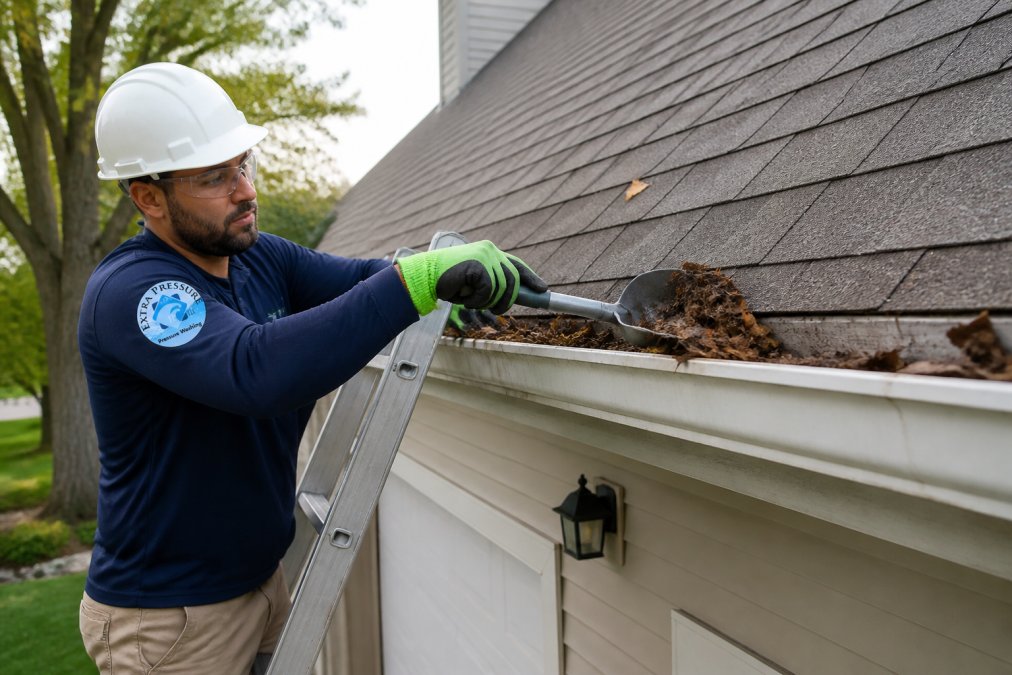
Start by removing every bit of visible debris from gutters and downspouts. Use a gutter scoop or small shovel to pull out leaves, dirt, and decomposing matter. Don’t rush this step, you’re removing the organic material that feeds mold growth. Pay special attention to the corners where gutters meet and the areas under gutter hangers where debris accumulates.
Once visible debris is gone, flush the gutters with water to clear smaller particles. Use a pump sprayer or garden hose to push water and remaining sediment toward the downspout. This step removes spore buildup and prepares the surface for the next treatment.
Step 2: Rinse Thoroughly With a Pressure Washer
After debris removal, a pressure washer removes stubborn buildup and surface contaminants. Use low pressure (1,200-1,500 PSI maximum) to avoid damaging gutter seams or paint. The goal is to clean the surface without forcing water into joints or creating new damage points where water can pool.
Direct the spray along the gutter bottom and sides, working systematically from one end to the downspout. This removes algae, mildew stains, and any remaining organic material. Soft washing approaches are gentler on older gutters and fascia, making them ideal if your gutters show signs of wear.
Step 3: Apply a Preventative Mildewcide Solution
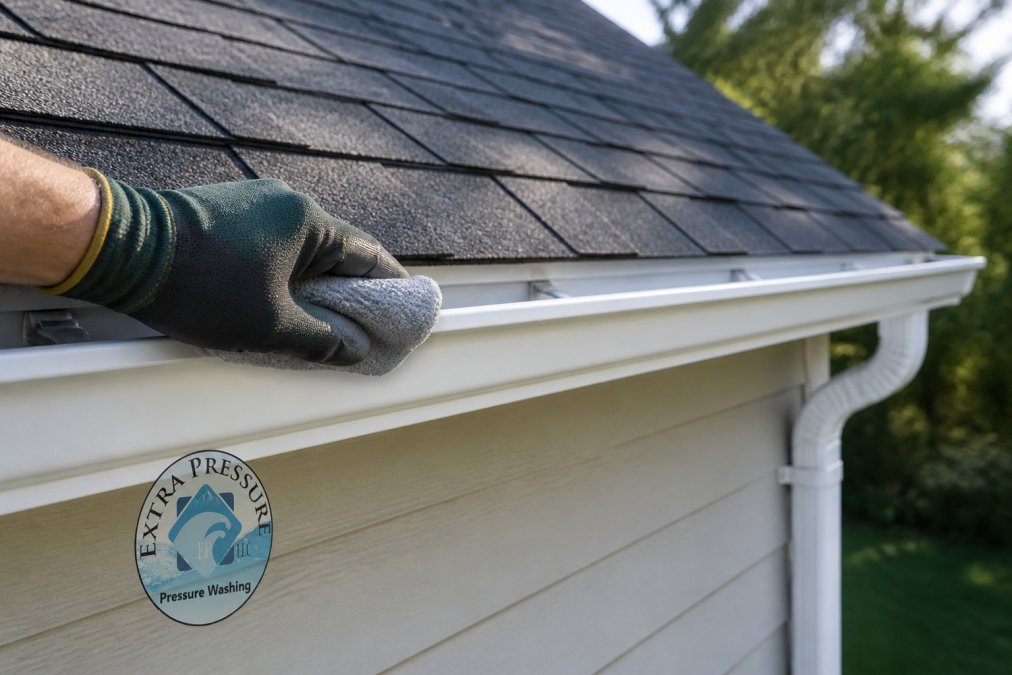
Once gutters are clean and dry, apply a mildewcide product designed for exterior surfaces. These solutions inhibit fungal growth and prevent mold from returning quickly. Apply the solution evenly across all gutter surfaces using a pump sprayer or soft brush.
Let the treatment dry completely before exposing gutters to rain. Most mildewcide solutions require 24-48 hours of dry conditions to cure properly. This step is where most homeowners fail, they clean thoroughly but skip the preventative coating, so mold returns within weeks.
Step 4: Inspect and Repair Gutter Alignment
Check the gutter pitch by observing water flow during the next rain. Water should move steadily toward downspouts without pooling. If you see standing water in any section, the gutter alignment needs adjustment. Loosen gutter hangers slightly and reposition the gutter to restore proper slope.
Inspect all downspouts to ensure they’re securely attached and directing water away from the foundation. Downspouts should extend at least 4-6 feet from the home’s base to prevent water from pooling near the foundation. Proper water flow is essential to prevent mold on gutters after cleaning.
Best Gutter Cleaning Solution for Mold Prevention
The right cleaning approach makes the difference between temporary results and lasting prevention. Extra Pressure LLC. recommends a comprehensive strategy that combines mechanical cleaning with chemical protection.
Chemical Safety and Material Compatibility
Not all cleaning agents work safely on all gutter materials. Aluminum gutters react poorly to some bleach solutions, which can cause discoloration or corrosion. Steel gutters tolerate stronger chemicals better, but vinyl gutters require gentler treatments. Before applying any solution, verify compatibility with your gutter material.
A mild bleach solution (1 part bleach to 10 parts water) works for most materials, but test it on a hidden section first. For sensitive surfaces, use degreaser-based solutions designed specifically for exterior cleaning. Always wear protective gear when handling cleaning chemicals, and ensure proper ventilation during application.
Long-Term Preventative Coatings
Preventative coatings create a barrier that resists fungal growth. Hydrophobic coatings reduce water adhesion, making it harder for moisture to pool and algae to establish. These treatments typically last 12-24 months before requiring reapplication.
Some coatings include mildewcide additives that actively inhibit mold growth. These products offer the strongest protection against fungal return. Apply coatings after thorough cleaning when gutters are completely dry. Professional application ensures even coverage and optimal effectiveness.
Gutter Maintenance Schedule to Stop Mold Growth
Consistency prevents mold more effectively than any single treatment. A structured maintenance schedule keeps gutters clean and dry year-round.
Spring and Fall Cleaning Frequency
Spring cleaning removes winter debris and prepares gutters for heavy spring rains. Fall cleaning is equally critical, leaves and pine needles accumulate rapidly, and wet debris decomposition creates ideal conditions for mold. Clean gutters at minimum twice yearly, more often if trees hang over your roof.
After each cleaning, apply preventative treatment to extend the protection period. This routine prevents the moisture and organic buildup that leads to fungal growth.
Post-Storm Inspections
Heavy rain and wind deposit debris and can shift gutter alignment. Inspect gutters within 24 hours after storms to check for debris accumulation and standing water. Remove debris immediately and verify proper water flow. Post-storm inspections catch problems before they develop into mold infestations.
Professional Soft Washing for Gutters and Fascia
Professional cleaning services provide advantages that DIY approaches can’t match. Extra Pressure LLC. uses soft washing techniques specifically designed to protect your home while eliminating mold and mildew.
How Soft Washing Differs From Pressure Washing
Soft washing uses low-pressure water combined with specialized cleaning solutions to remove organic growth without damaging surfaces. Pressure washing relies on force, which can damage gutter seams, dent aluminum, or strip paint from fascia. Soft washing is gentler and more effective for delicate areas.
The approach involves applying solution first, allowing it to work on mold and algae, then rinsing gently. This method prevents mold from returning as quickly as pressure washing alone. Professional soft washing includes preventative treatment application, ensuring long-lasting results.
Protecting Roof Runoff and Downspout Systems
Professional services ensure that roof runoff flows properly through the entire system. Technicians verify downspout connections, check for clogs, and ensure water exits far from the foundation. They also inspect gutter hangers and alignment, fixing problems that cause water pooling.
Same-day estimates and specialized soft washing for delicate surfaces mean your home gets the right treatment without guesswork. This comprehensive approach prevents the conditions that allow mold to return.
Tools and Safety Gear You’ll Need
Proper equipment makes gutter maintenance safer and more effective. Using the right tools reduces injury risk and improves cleaning results.
Essential Equipment for Gutter Maintenance
A gutter scoop removes debris efficiently without damaging gutters. A pump sprayer applies cleaning solutions evenly. A pressure washer set to low PSI handles stubborn stains without causing damage. For preventative coatings, a soft brush or low-pressure sprayer ensures even application.
A sturdy ladder rated for your weight is essential. Gutter cleaning requires reaching high areas safely, and a proper ladder prevents falls. Bucket hooks allow you to carry debris containers without using both hands.
Ladder Safety and Personal Protection
Always use a ladder rated for your weight plus 250 pounds. Position it on level ground and have someone stabilize it if possible. Never lean too far to either side, move the ladder instead. Work during daylight hours with good visibility.
Wear gloves to protect hands from sharp debris and chemical exposure. Safety glasses protect eyes from splashing water and debris. A dust mask prevents inhalation of mold spores and decomposing organic matter. Proper footwear with good grip prevents slipping on wet surfaces.
Common Mistakes That Let Mold Return
Most homeowners make one critical error: they clean but don’t address the underlying conditions. Skipping the preventative coating step is the biggest mistake. You can scrub gutters spotless, but without mildewcide or hydrophobic treatment, mold returns within weeks.
Another common error is ignoring gutter pitch and alignment. Even perfectly clean gutters develop mold if water pools due to improper slope. Checking pitch and fixing low spots prevents recurring problems.
Failing to extend downspouts far enough from the foundation creates moisture near the home’s base. This moisture wicks into soil and foundation, creating conditions for mold growth in multiple areas. Proper downspout extension is non-negotiable for preventing mold return.
Mold on gutters keeps returning because the conditions that caused it in the first place never change. Cleaning alone isn’t enough, you need proper drainage, preventative treatment, and regular maintenance. Extra Pressure LLC. provides licensed and insured gutter maintenance with state-of-the-art soft washing equipment designed to protect your home while preventing mold growth long-term. Our comprehensive approach includes debris removal, preventative coating application, and alignment verification to ensure mold doesn’t return. Schedule an appointment today and get same-day estimates for professional gutter cleaning that keeps your home protected year-round.
| Maintenance Task | Frequency | Purpose |
|---|---|---|
| Debris removal | Spring & Fall | Remove organic material that feeds mold |
| Pressure/soft wash | After debris removal | Clean surface and remove spores |
| Preventative coating | After each cleaning | Inhibit fungal growth for 12-24 months |
| Alignment inspection | Quarterly | Verify proper pitch and water flow |
| Post-storm check | Within 24 hours of storms | Catch debris and damage early |
Apply preventative mildewcide or hydrophobic coating immediately after cleaning while gutters are completely dry. This is the single step that determines whether mold returns in weeks or months.
Bleach solutions can corrode aluminum gutters if left too long or applied too strong. Always test on a hidden section first and rinse thoroughly after application to prevent discoloration or structural damage.
According to the National Association of Home Builders, proper gutter maintenance prevents water damage that can cost thousands in repairs. Regular cleaning and preventative treatment protect your home’s structural integrity and curb appeal.
Research from the Environmental Protection Agency on mold prevention emphasizes that controlling moisture is the most effective way to prevent fungal growth. Eliminating water pooling and ensuring proper drainage addresses the root cause rather than just treating symptoms.
A study by the American Society of Home Inspectors found that gutter-related water damage is one of the most common issues in home inspections. Professional maintenance and preventative treatment significantly reduce the likelihood of costly water damage and mold problems.
Frequently Asked Questions
How often should gutters be professionally cleaned to prevent mold?
Gutters should be cleaned at least twice yearly, in spring and fall, to prevent mold on gutters after cleaning. If your home is surrounded by trees or experiences heavy rainfall, quarterly cleaning may be necessary. Post-storm inspections are also critical, as debris and water pooling accelerate fungal growth. A professional gutter maintenance schedule ensures mold spores don’t accumulate between cleanings.
What is the best gutter cleaning solution for mold prevention?
A diluted bleach solution (1 part bleach to 10 parts water) effectively removes mildew and prevents regrowth. For long-term protection, apply a mildewcide or hydrophobic coating after cleaning. Always verify chemical compatibility with your gutter material before application. Professional soft washing services use specialized cleaning agents designed for durability without damaging the gutter hangers or roof runoff system.
Why does mold keep coming back to my gutters?
Mold returns when gutters have poor drainage, inadequate pitch, or water pooling. Organic debris traps moisture, creating ideal conditions for fungal growth. If downspouts are clogged or misaligned, water doesn’t flow properly, causing moisture buildup. Addressing the root cause, improving gutter alignment and drainage, prevents mold from recurring. Regular debris removal and preventative maintenance are essential to stop the cycle.
Can soft washing safely clean gutters without damaging them?
Yes. Professional soft washing uses lower pressure and specialized cleaning solutions to remove mold and mildew without harming gutters, fascia, or surrounding surfaces. Unlike pressure washing, soft washing is gentle on delicate areas and prevents surface staining or structural damage. This method is especially effective for older homes or properties with sensitive landscaping, ensuring comprehensive cleaning while maintaining your home’s exterior integrity.
This article was written using GrandRanker
Leave a Reply