Table of Contents
- Why Your Roof Has Black Streaks (It’s Not Just Dirt)
- Is Pressure Washing Safe for Asphalt Shingles?
- The Safest Method: Soft Wash Roof Cleaning Explained
- What You’ll Need for a DIY Roof Cleaning
- Step-by-Step: How to Safely Remove Black Streaks
- Finding the Best Roof Cleaning Solution for Shingles
- How to Prevent Roof Algae Growth After Cleaning
- When to Hire a Professional vs. DIY
- Frequently Asked Questions
Last Updated: September 7, 2026
Those dark, streaky stains creeping down your asphalt shingle roof are not dirt, and they are not a sign of structural failure. Black streaks from roof shingles are a living organism called Gloeocapsa magma, a type of blue-green algae that feeds on the limestone filler in asphalt shingles. The good news is that it is entirely treatable without damaging your roof.
The instinct to grab a pressure washer is understandable, but it is the wrong move. High-pressure water can blast away the protective granules that give shingles their lifespan, turning a cosmetic problem into a costly repair. Below, we’ll show you the safe, effective method for removing these streaks, explain why soft washing is the only approach professionals trust, and give you a clear plan for keeping your roof clean for years.
Why Your Roof Has Black Streaks (It’s Not Just Dirt)
Gloeocapsa magma is an algae species that thrives in warm, humid climates, which is why it is so prevalent across the southeastern United States. It appears as dark brown or black streaks that typically start at the top of the roof and work their way down, following the path of dew and rainwater. The algae itself is not damaging the shingle directly, but it feeds on the limestone granules, and as it spreads, it holds moisture against the surface. That trapped moisture accelerates the breakdown of the shingle material and can shorten the overall lifespan of your roof.
Beyond the functional concern, there is the curb appeal issue. A roof covered in black streaks makes an entire home look neglected, and it can be a significant red flag for potential buyers if you are preparing to sell. Understanding that this is biological growth, not staining, is the key to choosing the right removal method. A simple detergent spray or a pressure washer will not kill the organism; it will just wash away the surface pigment, leaving the algae alive and ready to return within a few weeks. Proper treatment requires a biocide that kills the algae at the root, which is where the soft wash method comes into play.
Is Pressure Washing Safe for Asphalt Shingles?
Pressure washing is not safe for asphalt shingles, and the risk far outweighs any benefit. A pressure washer typically operates at 1,500 to 3,000 PSI, which is more than enough force to strip the protective mineral granules from the surface of a shingle. Those granules are what shield the asphalt underneath from UV rays, and once they are gone, the shingle becomes brittle, cracks, and ages prematurely. You may not see the damage immediately, but you will see it within a year or two as your roof begins to show bald patches and accelerated wear.
The damage is not just cosmetic. Stripped granules can clog your gutters and downspouts, leading to water overflow and potential foundation issues. Additionally, forcing water up under the shingles with a high-pressure wand can compromise the water-shedding ability of your roof, leading to leaks in the decking or attic. Many manufacturers’ warranties explicitly exclude damage caused by improper cleaning methods, so a pressure washing mistake can void your coverage entirely. If you are considering cleaning your roof yourself, this is the single most important fact to understand: high pressure is for concrete driveways, not for the delicate surface of an asphalt shingle roof.
The Safest Method: Soft Wash Roof Cleaning Explained
Soft washing is a low-pressure cleaning method that uses specialized cleaning solutions to kill organic growth at the source, rather than blasting it off with force. The process relies on a blend of sodium hypochlorite, water, and a surfactant to break the surface tension of the water, allowing the solution to cling to the shingles and penetrate the algae biofilm. This chemical dwell time is what actually kills the Gloeocapsa magma, the moss, and the lichen, leaving the roof clean and preventing regrowth for a much longer period than any mechanical method.
The pressure used in soft washing is comparable to a garden hose, typically under 500 PSI, which is gentle enough to protect your shingle granules while still delivering the cleaning solution effectively. This makes it far safer for asphalt shingles, and it is also the reason why the method is recommended by roofing manufacturers and industry professionals. For homeowners, the key takeaway is that soft washing addresses the root cause of black streaks from roof shingles, not just the visible symptom. It cleans the surface, kills the organism, and leaves a residual treatment that slows future growth.
What You’ll Need for a DIY Roof Cleaning
Before you attempt any roof cleaning, you need the right equipment and safety gear. Working on a pitched roof is dangerous, and the combination of water and cleaning chemicals makes surfaces slick. You will need a safety harness anchored to a secure point, a ladder with a stabilizer to protect your gutters, and non-slip footwear with good traction. A common mistake is trying to work from a ladder while holding a spray wand, which puts you off-balance and at risk of a serious fall.
For the application itself, you will need a low-pressure sprayer, such as a pump-up garden sprayer or a dedicated soft wash system that connects to a garden hose. The cleaning solution should be a mix of sodium hypochlorite, a roof-safe surfactant, and water, mixed to a dilution ratio that is strong enough to kill the algae but not so strong that it damages your landscaping or surrounding surfaces. You will also need to protect nearby plants by covering them with plastic sheeting or pre-wetting them thoroughly with fresh water. Finally, have a plan for rinsing, which means a separate sprayer or hose nozzle set to a gentle, wide-angle stream. Never use a metal nozzle, as it can scratch the shingle surface.
| Equipment | Purpose | Safety Note |
|---|---|---|
| Safety harness and anchor | Prevent falls on pitched roof | Anchor to a secure structural point |
| Ladder with stabilizer | Safe access to roof edge | Stabilizer prevents gutter damage |
| Low-pressure sprayer | Apply cleaning solution | Pump-up or dedicated soft wash system |
| Sodium hypochlorite | Kill algae and organic growth | Handle with gloves and eye protection |
| Surfactant | Help solution cling to shingles | Use roof-safe, non-ionic formula |
| Garden hose with spray nozzle | Rinse the roof after dwell time | Use wide-angle, low-pressure setting |
Step-by-Step: How to Safely Remove Black Streaks
This process is straightforward, but it demands patience and attention to detail. Rushing any step will either damage your roof or leave the algae alive. The entire job, for an average-sized home, typically takes two to three hours, with most of that time spent waiting for the solution to work.
Step 1: Apply the Cleaning Solution
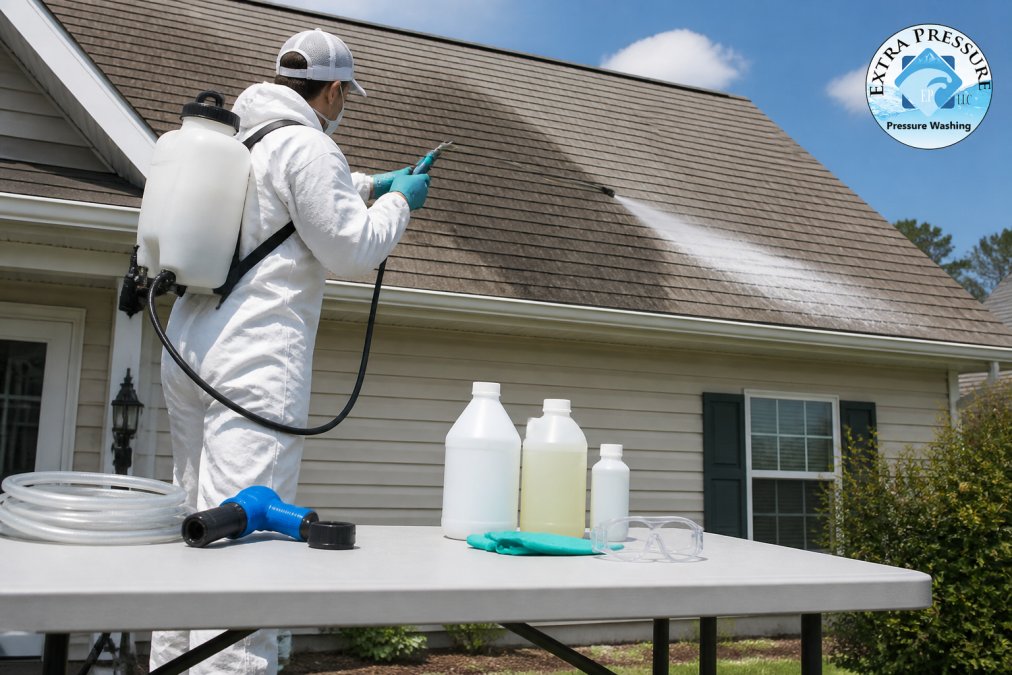
Mix your sodium hypochlorite solution to the appropriate dilution ratio for roof cleaning, which is typically weaker than what you would use on a concrete driveway. Add your surfactant to help the solution stick to the vertical surface of the shingles, and fill your low-pressure sprayer. Starting from the top of the roof, apply the solution in a horizontal band, working your way down. Do not saturate the roof to the point of runoff pooling in the gutters, as the chemical can damage metal gutters and kill landscaping below.
Step 2: Let the Solution Dwell
The chemical dwell time is what kills the algae, so do not rush to rinse. Allow the solution to sit on the shingles for 10 to 15 minutes. You will see the black streaks begin to bubble and lift as the sodium hypochlorite breaks down the algae cell structure. In particularly thick or stubborn areas, you may need to reapply the solution and wait another 10 minutes. This is the stage where the surfactant earns its keep, as it prevents the solution from beading up and running off before it has done its job.
Step 3: Rinse with Low Pressure
Using a garden hose with a wide-angle nozzle, rinse the roof from the top down, working in the same horizontal pattern you used for application. The dead algae and cleaning solution will wash away, revealing the clean shingle surface underneath. Ensure you rinse thoroughly, as any residual sodium hypochlorite can dry and leave a chalky white residue. After rinsing, check your gutters and downspouts for any debris that may have washed down, and flush them with clean water.
Never walk on a wet roof. The combination of moisture, cleaning chemicals, and algae residue creates an extremely slick surface. If you lose your footing, a fall from even a single-story roof can cause serious injury. Always work from a secured position and keep your center of gravity low.
Finding the Best Roof Cleaning Solution for Shingles
The best roof cleaning solution for shingles is one that combines a strong algaecide with a surfactant, applied at the correct dilution. Sodium hypochlorite, commonly known as bleach, is the active ingredient in most professional roof cleaning solutions because it is highly effective at killing Gloeocapsa magma and other organic growth. However, it must be used carefully. A solution that is too strong can damage your shingles, discolor your siding, and kill your plants. A solution that is too weak will not kill the algae, and you will be back to scrubbing in a month.
Many hardware stores sell pre-mixed roof cleaning solutions, but these are often too diluted to be effective on established algae growth. A better approach is to buy concentrated sodium hypochlorite and mix your own, following a reliable dilution ratio based on the severity of the staining. Adding a non-ionic surfactant is critical, as plain water and bleach will run off the shingles before the chemical has time to work. The surfactant allows the solution to cling to the surface, maximizing the dwell time and ensuring the algae is fully saturated and killed. For most homeowners, this is the difference between a clean roof that stays clean and a roof that looks clean for two weeks before the streaks return.
How to Prevent Roof Algae Growth After Cleaning
Preventing regrowth is about creating an environment where the algae cannot thrive. The most effective preventative measure is installing zinc or copper strips along the ridge of your roof. When rain falls on these metal strips, it carries trace amounts of the metal ions down the roof, creating a natural algaecide that inhibits new growth. This is a passive, low-cost solution that can keep your roof clean for years after a single professional soft wash.
Beyond metal strips, consider trimming overhanging tree branches. Algae thrives in shaded, damp areas, and allowing more sunlight to reach your roof will dry it out faster and make it less hospitable to organic growth. Regular gutter cleaning is also important, as clogged gutters cause water to pool and back up, keeping the roof edge constantly damp. These preventative steps, combined with a proper soft wash every few years, are the most effective way to maintain your roof’s appearance and extend its lifespan. The goal is not just to remove the black streaks from roof shingles once, but to keep them from coming back.
When to Hire a Professional vs. DIY
DIY roof cleaning is feasible for a single-story home with a low-pitch roof, where you can safely reach the surface from the ground or a stable ladder. If you have a steep roof, a two-story home, or a complex roofline with multiple valleys and dormers, the risk of a serious fall is simply too high to justify the cost savings. The equipment, safety gear, and specialized chemicals also add up, and a mistake can cost you thousands in roof repairs or medical bills.
A professional service brings the right equipment, the correct chemical dilutions, and the experience to handle unexpected issues like fragile shingles or delicate landscaping. Professional soft washing services, like those offered by Extra Pressure LLC., use state-of-the-art equipment and are licensed and insured, which protects you if something goes wrong. They also carry the proper surfactants and fungicides to ensure a thorough clean that lasts, and they know how to protect your plants and property from chemical runoff. If you are preparing your home for sale, or if you simply want the job done right the first time without risking your safety, hiring a professional is the smarter investment. The peace of mind that comes from knowing your roof is clean and undamaged is worth the cost.
Removing black streaks from roof shingles is a task that requires the right method, not just the right effort. High pressure will cause more harm than good, while a proper soft wash kills the algae at its source and protects your shingle granules. For homeowners who are not comfortable working at height, or who want a guaranteed, long-lasting result without the risk, a professional soft washing service is the clear choice. Extra Pressure LLC. provides licensed and insured roof soft washing using specialized equipment and roof-safe cleaning solutions, protecting your landscaping and delivering a clean that lasts. Schedule an appointment today and restore your home’s curb appeal without risking your safety or your roof’s integrity.
Frequently Asked Questions
Will bleach ruin roof shingles?
Ordinary household bleach can damage asphalt shingles because it often contains additives and is not diluted correctly. A proper soft wash solution uses sodium hypochlorite diluted with water and a surfactant to a safe strength. The surfactant helps the solution cling to the algae rather than running off, and the low pressure prevents shingle granules from being washed away. Professional-grade mixes are balanced to kill Gloeocapsa magma without prematurely aging your roof.
What is a good homemade black streak remover?
A common DIY mix is a solution of sodium hypochlorite, water, and a few drops of dish soap to act as a surfactant. However, getting the dilution ratio wrong is risky; too strong can damage your shingles and landscaping, and too weak won’t kill the algae. For most homeowners, a safer approach is to hire a professional soft wash service that carries the correct commercial-grade fungicide and knows how to protect your plants and property.
Can pressure washing damage roof shingles?
Yes, pressure washing with a high-pressure machine is not safe for asphalt shingles. The force of the water can blast away the protective shingle granules, which accelerates weathering and shortens the roof’s lifespan. It can also force water up under the shingles, leading to leaks. The safe alternative is soft wash roof cleaning, which uses low-pressure spray and chemical cleaning solutions to kill the algae at the root without damaging the roof surface.
How often should you clean black streaks off a roof?
The frequency depends on your climate and surrounding vegetation. In humid, shaded areas, algae growth can become visible within 2 to 3 years after a cleaning. To maximize the time between cleanings, consider installing zinc or copper strips near the roof peak; as rain washes over them, it releases ions that prevent algae growth. Regular gutter cleaning also helps prevent moisture buildup that encourages algae, moss, and lichen.