Table of Contents
- Why Commercial Sidewalk Cleaning Service Benefits Your Property
- Sidewalk Cleaning Frequency: How Often Is Enough?
- Commercial Sidewalk Pressure Washing: Methods and Surface Compatibility
- Storefront Sidewalk Cleaning: Logistics and Business Continuity
- Commercial Sidewalk Cleaning Cost: What Affects Your Quote
- Environmental Practices and Runoff Management
- Conclusion: Making the Case for Professional Sidewalk Care
- Frequently Asked Questions
Last Updated: October 14, 2026
Why Commercial Sidewalk Cleaning Service Benefits Your Property
Commercial sidewalk cleaning service benefits start with the surface customers actually walk on. A clean walkway signals that a business pays attention, and that signal reaches every visitor before they touch a door handle.
The case for professional sidewalk cleaning rests on more than appearance. It touches safety, liability, tenant satisfaction, and how long your concrete and pavers last.
Safety First: Reducing Slip and Trip Hazards
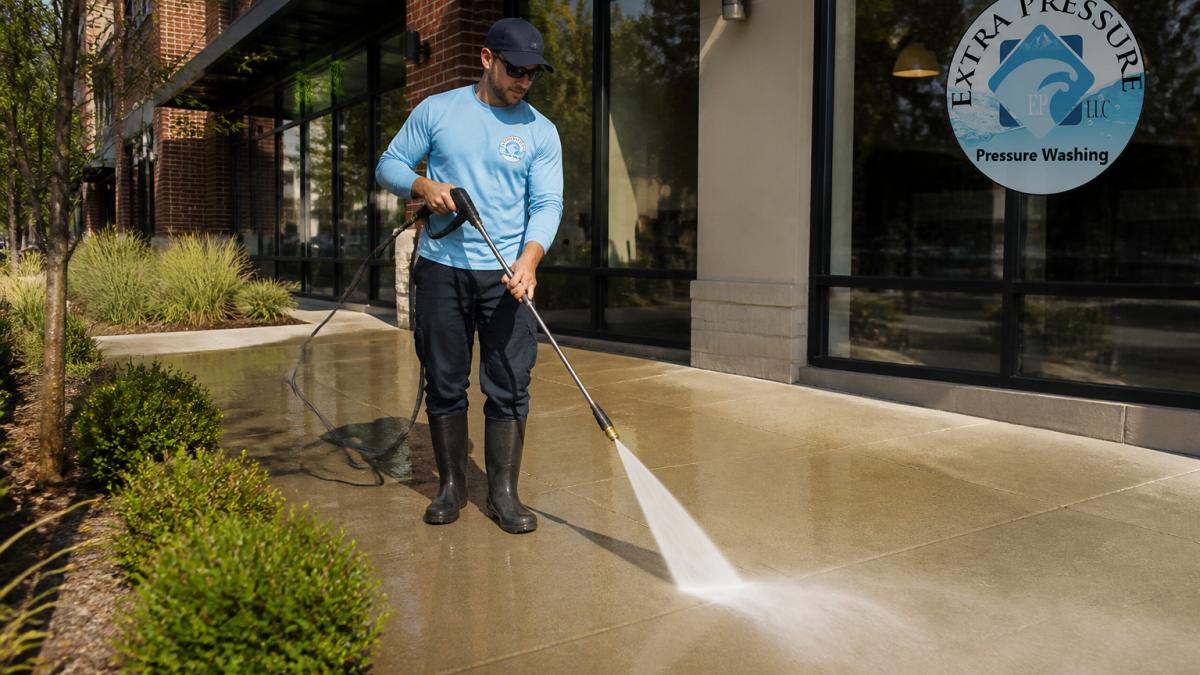
Wet leaves, algae film, and grease tracked out from a kitchen create slick patches that are easy to miss until someone falls.
Regular cleaning removes the organic growth that makes concrete slick when damp. It also clears debris that hides cracks and uneven slabs, which are common trip hazards.
- Algae and moss film: common on shaded north-facing walks
- Grease and oil: heaviest near restaurant and auto-service entrances
- Leaf litter and mulch spill: seasonal, worst in fall
- Loose gravel and sand: tracked from parking areas
A clean, dry surface is a safer surface. That alone justifies putting sidewalk cleaning on a recurring schedule.
Curb Appeal and First Impressions That Drive Revenue
First impressions form in seconds, and the sidewalk is the first thing a customer sees. Curb appeal is not vanity; it is part of how a business communicates reliability.
For retail and hospitality, the effect is direct. A clean entry makes people more willing to walk in. For property managers, clean common areas support higher tenant retention and fewer complaints.
The sidewalk is the only part of your property every visitor touches. Treat it as a marketing asset, because that is how customers read it.
Sidewalk Cleaning Frequency: How Often Is Enough?
Most commercial properties need sidewalk cleaning two to four times a year, with high-traffic storefronts closer to monthly. The right sidewalk cleaning frequency depends on foot traffic, tree cover, and how much food or grease is handled on site.
A single annual cleaning rarely holds up. Organic growth returns, and stains set deeper the longer they sit. Think in terms of a baseline plus adjustments.
| Property Type | Baseline Frequency | Add Cleaning When |
|---|---|---|
| Retail storefront | Quarterly | Heavy foot traffic, food service nearby |
| Restaurant or cafe | Monthly | Grease tracking, outdoor seating |
| Office building | Two to three times a year | Shaded entrances, leaf drop |
| Apartment complex | Quarterly | High pedestrian traffic, pet areas |
| Vacation rental | Before each peak season | Guest turnover, coastal or wooded setting |
Seasonal Planning for Year-Round Cleanliness
Seasonal planning keeps a walkway presentable without emergency calls. Spring removes winter grit, road salt residue, and the first algae growth. Summer focuses on pollen, gum, and grease from peak foot traffic.
Building a calendar around these shifts is cheaper than reacting to problems. It also spreads the work so no single visit is overwhelming. A provider that understands your property can recommend a schedule and adjust it as conditions change.
Commercial Sidewalk Pressure Washing: Methods and Surface Compatibility
Commercial sidewalk pressure washing works well on durable concrete, but the wrong pressure or nozzle can etch, streak, or pit a surface. Surface compatibility decides the method, not the other way around.
Concrete handles higher pressure. Brick, pavers, and older or decorative surfaces need a gentler approach. Joint sand between pavers can wash out under too much force, and soft stone can scar permanently.
Soft Washing vs. Pressure Washing for Delicate Surfaces
Soft washing uses lower pressure with specialized cleaning solutions to lift organic growth without blasting the surface. Pressure washing relies on force to strip dirt and stains. The choice comes down to what the material can take.
- Concrete: pressure washing is usually the right call
- Pavers: lower pressure, and expect to re-sand joints afterward
- Brick and stone: soft washing protects the face and mortar
- Painted surfaces: soft washing avoids stripping the coating
Ask any provider how they decide between soft washing and pressure washing before they start. If the answer is “we always pressure wash,” that is a warning sign for delicate surfaces.
Extra Pressure LLC. offers soft washing for delicate surfaces, which removes mold, mildew, and grime without the damage high pressure can cause. For glass and frames, our window washing service pairs naturally with a sidewalk cleaning visit.
Storefront Sidewalk Cleaning: Logistics and Business Continuity
Storefront sidewalk cleaning should never interrupt the business day. The best schedule works around your hours, often early morning before opening or after close.
Good providers plan the visit like a project.
- Confirm the time window in advance
- Mark wet areas clearly until they dry
- Protect landscaping and planters near the walk
- Work in sections to keep an entry open
Business continuity is a real concern for retail and restaurants. A short, well-planned visit beats a long one that disrupts a Saturday. Ask about timing and access before you book.
Commercial Sidewalk Cleaning Cost: What Affects Your Quote
Commercial sidewalk cleaning cost is usually quoted by the square foot, by the linear foot of frontage, or as a flat per-visit rate, and most providers arrive at that number from the same handful of inputs. There is no national flat rate, and any provider quoting one without seeing the property is guessing. What you can do is understand the inputs so you can compare quotes on equal footing.
The factors that move a quote up or down:
- Total square footage: the biggest driver. Most commercial work is priced per square foot, so a 2,000 sq ft storefront apron and a 20,000 sq ft shopping-center walk are different jobs entirely.
- Surface material: broom-finished concrete is fast; pavers, brick, and decorative finishes need lower pressure, slower passes, and sometimes re-sanding of joints, which adds labor.
- Stain type and severity: routine dirt and algae lift quickly. Grease, gum, rust, paint overspray, and tannin stains from leaf litter take pre-treatment, dwell time, and repeat passes.
- Access and setup: gated courtyards, tight alleys, sloped walks, and obstructions that force a hose run of 100 feet or more add time before cleaning even starts.
- Water and runoff handling: sites near storm drains or with sensitive landscaping may need containment, recovery, or re-routing, which is a separate line item.
What a Commercial Sidewalk Cleaning Quote Should Include
A quote you can actually compare should spell out the following, in writing:
- The unit basis (per square foot, per linear foot, or flat per visit) and the measured area it covers
- The method proposed for each surface (pressure washing vs. soft washing) and the target pressure range
- Whether pre-treatment, post-treatment, or gum and stain removal is included or billed separately
- How runoff will be managed and whether containment equipment is part of the price
- Whether re-sanding of paver joints or any post-cleaning repair is included
Be cautious of a quote given without a walkthrough. A price that looks low on the phone often grows once the provider sees the actual conditions, and that surprise lands on your invoice. Ask for the scope in writing before you sign.
The most reliable approach is a same-day estimate based on your property. At Extra Pressure LLC., we provide same-day estimates so you know the scope before work begins. For current pricing, request a quote rather than relying on a generic number.
How to Compare Two Sidewalk Cleaning Quotes
Put the quotes side by side on the same scope, not the same total. A lower number that excludes gum removal, runoff containment, or paver re-sanding is not cheaper, it is a smaller job. Ask each provider to confirm the unit basis, the surfaces covered, and what triggers a change order. If one quote is materially lower for the same scope, ask what is being left out.
Environmental Practices and Runoff Management
Runoff management keeps dirty wash water out of storm drains, creeks, and landscaping. Cleaning a sidewalk sends water, dirt, and whatever was on the surface somewhere, and in most municipalities that ‘somewhere’ is a storm drain that discharges, often untreated, to a local waterway. Under the federal Clean Water Act, many commercial and industrial sites operate under a stormwater permit administered by the state or local authority, and wash water is frequently treated as an illicit discharge when it carries pollutants.
What Is Actually in Sidewalk Wash Water
The pollutants of concern are not just dirt:
- Sediment: fine grit and concrete dust that clouds water and smothers aquatic habitat
- Oils and grease: tracked from parking areas and restaurant entrances
- Detergent surfactants: the soap itself is a pollutant, not just a cleaning aid
- Metals and hydrocarbons: zinc, copper, and petroleum residue from vehicles and roofing
- Organic load: algae, leaf tannins, and mulch fines
Practical Runoff Controls
Good practices include:
- Containment and recovery: berms, mats, or vacuum recovery to capture wash water before it reaches a drain, used where the site drains directly to a storm system or waterway
- Drain protection: filter fabric or catch-basin inserts over inlets during the job, removed and disposed of after
- Detergent selection: biodegradable, low-surfactant, or detergent-free cleaning where the surface allows, and never solvents or caustics near plantings
- Water volume discipline: lower-flow nozzles and surface cleaners that use less water for the same result
- Vegetation buffers: directing water onto grass or landscaped areas only when the runoff is free of detergents and heavy soil
If you have delicate landscaping, storm-drain proximity, or a permitted stormwater plan, say so up front. A provider can adjust methods and products to protect it, and can document the controls used if your site is subject to inspection.
Properties with landscaped entrances, planters, or storm-drain proximity, where runoff control and plant-safe methods matter most.
Questions to Ask Before the Job
- Where will the wash water go when it leaves the surface?
- Will you contain or recover it, or let it sheet to the drain?
- What detergents are you using, and are they safe for the adjacent plantings?
- Can you provide documentation of the controls if my site is permitted?
A provider who can answer these without hesitation is managing runoff as a process, not an afterthought.
Conclusion: Making the Case for Professional Sidewalk Care
Sidewalk care is one of those maintenance tasks that pays back in ways that are easy to overlook until something goes wrong. A clean, safe walkway protects visitors, supports your reputation, and extends the life of the concrete and pavers you already paid for.
Extra Pressure LLC. is licensed and insured and handles residential and commercial exterior cleaning with state-of-the-art equipment. We provide same-day estimates, specialized soft washing for delicate surfaces, and a 100% satisfaction guarantee on every job.
Frequently Asked Questions
What are the main benefits of hiring a commercial sidewalk cleaning service?
Professional sidewalk cleaning improves safety by removing slip and trip hazards like algae and gum, boosts curb appeal for customer first impressions, and extends pavement life by preventing stain set-in and surface degradation. It also supports employee wellbeing and operational efficiency by keeping entrances and walkways clean without pulling staff from their primary duties. Regular service helps maintain a professional appearance that reflects well on your business and reduces long-term maintenance costs.
How often should commercial sidewalks be cleaned?
Sidewalk cleaning frequency depends on foot traffic, weather, and local conditions. High-traffic storefronts may need cleaning monthly or more, while lower-traffic properties can go quarterly. In areas with trees, pollen, or winter salt, more frequent cleaning during those seasons prevents buildup. A professional can assess your property and recommend a schedule that balances cost with appearance and safety needs.
Is pressure washing safe for concrete sidewalks?
Yes, pressure washing is safe for most concrete sidewalks when done correctly. Professionals adjust pressure and use appropriate nozzles to avoid etching or damaging the surface. For delicate materials like stamped concrete or pavers, soft washing may be recommended. Always hire a licensed and insured provider who can evaluate your sidewalk material and choose the right method to clean effectively without harm.
How much does commercial sidewalk cleaning cost?
Commercial sidewalk cleaning cost varies based on square footage, level of soiling, surface type, and frequency of service. Pricing also depends on access, water availability, and whether additional services like gum removal or oil stain treatment are needed. For an accurate quote, contact a local provider for a same-day estimate tailored to your property. Many companies offer recurring service discounts.
A stained, unsafe sidewalk quietly works against everything you have built. Extra Pressure LLC. restores it with licensed and insured service, same-day estimates, and soft washing that protects delicate surfaces. Get started with Extra Pressure LLC. and give your property the clean, safe entrance it deserves.