
Table of Contents
- What Professional Window Cleaning Services Actually Include
- Window Cleaning Cost: What Drives the Price Up or Down
- Window Washing vs. Window Cleaning: What’s the Difference?
- How Often Should You Schedule Window Cleaning Frequency?
- What Window Cleaning Reviews Tell You Before You Hire
- Residential vs. Commercial Window Cleaning: Key Differences
- DIY vs. Professional Window Cleaning: A Cost-Benefit Breakdown
- Frequently Asked Questions
Last Updated: October 8, 2026
What Professional Window Cleaning Services Actually Include
According to the U.S. Department of Energy’s guidance on window efficiency, dirty windows can block a meaningful share of natural light and force heating and cooling systems to work harder.
Interior and Exterior Glass Cleaning
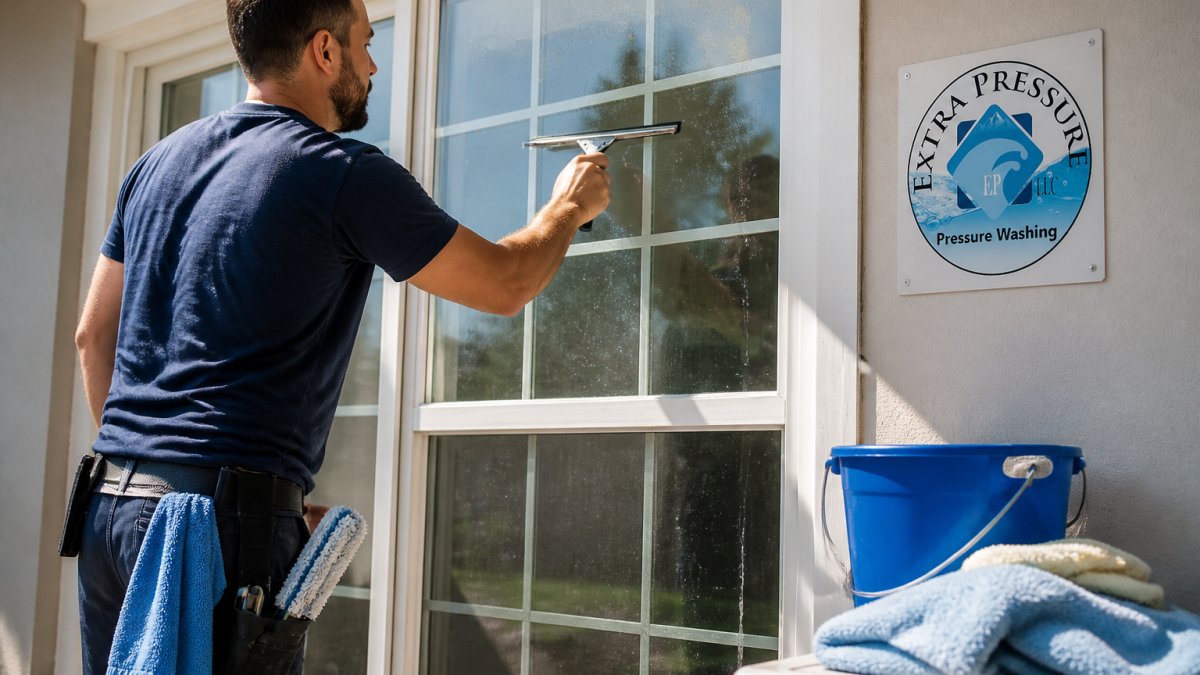
Exterior glass collects pollen, road dust, and sprinkler minerals; interior glass collects fingerprints, cooking residue, and pet nose prints. A proper service handles both sides with a squeegee technique and deionized water for a streak-free finish instead of the haze left by a spray bottle and rag.
For double-hung windows and French doors, the crew also cleans recessed edges and hinges where grime hides, the detail work that separates a real clean from a surface wipe.
Screen Cleaning and Track Detailing
Screens trap pollen and grit that blows back onto glass when the wind picks up, while track and sill detailing removes the compacted debris that jams sliding windows and lets water pool against the frame.
- Screens removed, washed, and dried before reinstalling
- Tracks vacuumed, then wiped with a damp cloth
- Sills cleared so water drains instead of sitting
- Frames checked for cracks, peeling paint, or seal failure
Ask any provider whether they remove and reinstall screens and whether they vacuum tracks before wiping. If the answer is vague, that is your sign the “clean” is glass-only.
Window Cleaning Cost: What Drives the Price Up or Down
Window cleaning cost depends on five variables: pane count, height and access difficulty, glass condition, whether screens and tracks are included, and travel distance. Two houses of identical square footage can land on very different quotes for those reasons.
Most providers price one of three ways, and knowing which model you are quoted makes comparison possible:
- Per pane: A flat rate per pane, the most common residential model because it is easy to estimate and verify. A standard single-hung or double-hung pane is one unit; a large picture window or French door may count as two or more.
- Per hour: An hourly rate plus materials, usually for commercial storefronts, post-construction cleanup, or jobs with unknown scope.
- Flat rate by job: A single quoted price for the whole property, typically from an on-site or satellite estimate. Most homeowners receive this model, and it hides the most variation between providers.
Because pricing is not one-size-fits-all, we give every property a same-day estimate based on what we actually see. Here is how the main factors break down:
| Factor | What Raises the Price | What Lowers It |
|---|---|---|
| Pane count | More windows, more time | Fewer, larger panes |
| Height and access | Second story, high-rise cleaning, ladder safety setup | Single-story, ground-level reach |
| Glass condition | Hard water stain removal, glass restoration | Light dust only |
| Scope | Screens, tracks, sills included | Glass only |
| Scheduling | Peak season, rush requests | Off-season, recurring plan |
Hard water stain removal is the biggest cost driver most homeowners underestimate. Mineral deposits etch into glass over time, and reversing that takes more than soap and water. A routine clean often becomes a restoration job once the crew sees the glass in direct sunlight, which is why an on-site estimate beats a phone quote every time.
How to Compare Quotes Without Getting Burned
When you collect estimates, ask each provider to break the number into four lines: glass, screens, tracks and sills, and any stain treatment. A lump-sum quote cannot be compared to anything, and the cheapest number is almost always the narrowest scope.
Also ask whether the price is guaranteed once the crew arrives. Reputable providers honor the estimate unless the scope changes visibly, such as a painted-shut window or etching not visible from the ground. Get that policy in writing before you book.
Skipping a hard water stain for a full season can turn a cleanable deposit into permanent etching. Once glass is etched, no cleaning method fully restores it. You are looking at glass restoration or replacement.
Recurring Plans and Off-Season Discounts
Recurring service is the most reliable way to lower your per-visit cost. Providers can schedule recurring work into predictable routes, cutting drive time and passing some savings back. A twice-a-year plan prices lower per visit than two one-off bookings, and a quarterly plan lowers it further.
Off-season scheduling works the same way. Late winter and midsummer are slower for most crews, so a flexible homeowner who books then often pays less than one who calls the week before a holiday.
Window Washing vs. Window Cleaning: What’s the Difference?
The two terms get used interchangeably, but they describe different scopes. Window washing typically refers to the glass itself: spray, squeegee, done. Window cleaning is the broader job that includes glass plus screens, tracks, sills, and frames.
For most homeowners, the distinction matters because a low quote is often a washing quote, it looks cheap until you realize screens and tracks were never included. When comparing estimates, ask each provider to spell out exactly what is included so you compare the same scope.
How Often Should You Schedule Window Cleaning Frequency?
Twice a year is the baseline for most homes: once in spring to clear winter grime and pollen, once in fall before the holidays. Homes near heavy tree cover, construction, or busy roads often need quarterly service.
But frequency should follow your local conditions, not a generic rule. A calendar that accounts for what actually lands on your glass keeps deposits from hardening and keeps you ahead of the seasons that do the most visible damage.
A Month-by-Month Maintenance Calendar
Use this as a starting framework and shift it to match your property:
- Late winter (February-March): The first clean of the year clears road salt spray, grit, and condensation film. It is also the best time to inspect frames and seals for freeze damage before spring rain finds the gaps.
- Spring (April-May): Pollen season. Tree and grass pollen coats glass in a sticky film that holds dust and hazes after the first rain. Screen cleaning matters most now, since screens trap pollen and blow it back onto the glass.
- Early summer (June): Sprinkler season. Hard water deposits from overspray build on lower panes and glass facing a lawn. Catching these early keeps them from etching.
- Late summer (August-September): Dust, pollen from late-blooming plants, and peak air-conditioning residue. South- and west-facing glass takes the worst of it.
- Fall (October-November): The pre-holiday clean, and the time to detail tracks and sills before rain season so water drains instead of pooling against the frame.
- Winter (December-January): A light touch-up on interior glass and high-traffic doors. Exterior work is limited by temperature, so most homeowners skip a full exterior clean and catch up in late winter.
Adjusting the Calendar for Your Property
The baseline above assumes a typical suburban lot. Shift frequency up or down based on these conditions:
- Heavy tree cover: Add a clean after leaf drop and one after pollen peak. Sap and leaf tannins stain glass fastest.
- Near construction or a busy road: Quarterly service is the realistic minimum. Concrete dust and road film are abrasive and settle into tracks.
- Coastal or salt-exposed properties: Salt spray holds moisture against frames. A quarterly cycle protects glass and hardware.
- Vacation rentals: A tighter cycle between guest turnovers. Guests notice dirty glass immediately, and a streak-free finish drives reviews.
- Single-story homes with light dust: Once a year may be enough if the glass does not face a lawn or road.
If you only remember one rule: book spring and fall. That schedule keeps deposits from hardening and keeps you ahead of the two seasons that do the most visible damage. Then adjust up for trees, construction, salt, or rentals, and adjust down only if your glass genuinely stays clean.
Why the Schedule Matters More Than the Frequency
Cleaning on a schedule is cheaper than cleaning on a reaction. A deposit that sits for one season wipes off; the same deposit after a year may need restoration. The calendar is not about cleaning more often than you need, it is about cleaning before the deposit changes character.
What Window Cleaning Reviews Tell You Before You Hire
Window cleaning reviews are the fastest way to separate a real local provider from a one-truck operation that vanishes after the deposit clears. Read for patterns, not stars.
Look for reviews citing specific outcomes: “removed hard water stains I thought were permanent,” “cleaned the tracks, not just the glass,” “showed up when they said they would.” Vague five-star reviews tell you almost nothing.
Then check the boring stuff:
- Licensed and bonded status confirmed
- Liability insurance mentioned or verifiable
- Satisfaction guarantee stated in writing
- Photos of before-and-after work
- Consistent scheduling flexibility praised across reviews
A licensed and insured provider will say so plainly and back it up. If a crew cannot confirm coverage, you carry the risk if a ladder slips or a pane cracks.
Residential vs. Commercial Window Cleaning: Key Differences
Residential window washing focuses on double-hung windows, French doors, and the occasional skylight, usually on a seasonal schedule. Commercial glass cleaning is a different job: storefronts, office buildings, and multi-story properties needing recurring service, often before business hours.
Commercial work brings high-rise cleaning, water-fed pole systems for upper floors, and stricter safety certification. It also demands reliability: a storefront with dirty glass loses walk-in traffic, and a property manager cannot afford a no-show.
Both share the same core promise: streak-free glass, clean frames, and a property that looks maintained rather than neglected.
DIY vs. Professional Window Cleaning: A Cost-Benefit Breakdown
DIY saves money on paper and costs time, safety, and results in practice. Here is the honest comparison most guides skip.
| Factor | DIY | Professional |
|---|---|---|
| Equipment | Basic squeegee, spray, rags | Professional-grade equipment, deionized water, water-fed pole system |
| Streak-free finish | Hard to achieve, especially on sunny days | Reliable with proper technique |
| Safety | Ladder risk on second story | Trained crews, ladder safety protocols |
| Hard water stains | Rarely removable | Removable with the right agents |
| Time | A full weekend for a large home | A few hours |
| Risk | Scratches, damaged screens, falls | Covered by liability insurance |
For energy efficiency, clean windows matter more than people think. The U.S. Department of Energy’s window efficiency resources notes that window performance affects how much heat and light enter a home.
Homeowners with single-story homes, light dust, and time to spare. Everyone else, especially with second-story glass or mineral stains, gets better results and lower risk from a professional crew.
Eco-friendly cleaning agents are worth asking about. Many providers now use biodegradable solutions and deionized water that cut chemical runoff, which matters if you have landscaping, pets, or a garden bed under the windows.
Dirty windows undercut everything else you have done to your property, from fresh paint to new landscaping.
Frequently Asked Questions
How much should I expect to pay for window cleaning services?
Pricing depends on the number of windows, height, condition, and whether you need interior cleaning, screen cleaning, or track detailing. Most providers charge per pane or by the hour, and factors like hard water stain removal or high-reach access add cost. The best approach is to request a free estimate from a licensed and insured local provider so you get an exact quote for your property rather than a rough guess.
What is the difference between window washing and window cleaning?
Window washing typically refers to rinsing glass with water and a cleaning solution, often using a water-fed pole system or deionized water for a streak-free finish. Window cleaning is the broader term that includes washing the glass plus screen cleaning, track and sill detailing, and wiping down frames. In practice, most professional services combine both, so the terms are often used interchangeably.
Do window cleaning services clean screens and tracks?
Many professional window cleaning services include screen cleaning and track and sill detailing as part of a standard package, but some charge extra. Always confirm what is included before booking. Screens trap pollen and dust, and tracks collect debris that can affect how double-hung windows and french doors operate. If these are not included, ask for them to be added to your service quote.
What should I look for when hiring a window cleaning service?
Check for licensing and liability insurance first, since these protect you if a cleaner is injured or damages your property. Read customer reviews to gauge reliability and quality. Ask whether the provider uses professional-grade equipment like water-fed poles and whether they offer a satisfaction guarantee. A reputable local service provider will give you a free estimate and explain exactly what is included.