
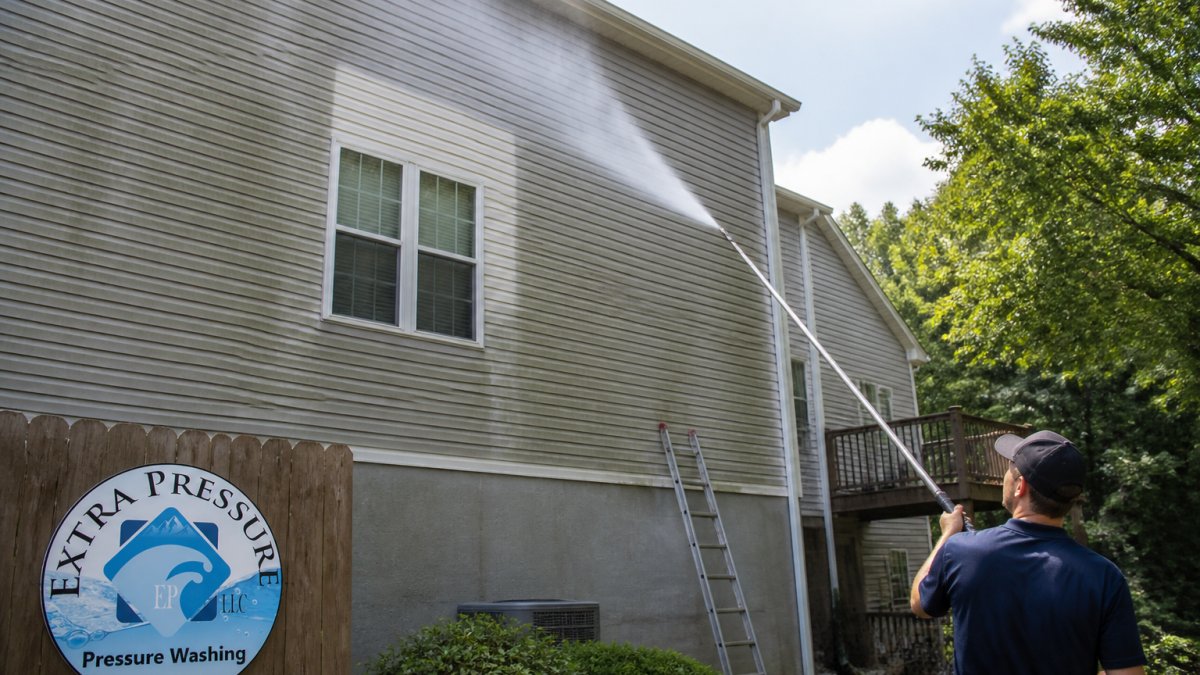
Table of Contents
- Why Second-Story Siding Requires Different Tools
- Essential Tools for Reaching and Cleaning Second-Story Siding
- Cleaning Siding Without a Pressure Washer
- How to Remove Mildew From Siding
- Step-by-Step Process for Cleaning Second-Story Siding
- Protecting Your Siding and Landscaping During Cleaning
- When to Call a Professional
- Frequently Asked Questions
Last Updated: October 10, 2026
Why Second-Story Siding Requires Different Tools
Cleaning second story siding is fundamentally different from ground-level work. You can’t simply walk up to it. You need the right equipment to reach safely and clean effectively without damaging your home.
Standard pressure washers and short brushes won’t cut it. The height creates unique challenges. You need tools that extend your reach while keeping you firmly planted on the ground. This is where specialized equipment makes all the difference.
The good news: with the right approach and equipment, you can achieve professional results safely.
The tools you choose determine three critical outcomes: how well you clean, how safe the job is, and whether your siding survives intact. Let’s break down what actually works.
Essential Tools for Reaching and Cleaning Second-Story Siding
Cleaning second-story siding requires a combination of reach, control, and safety. No single tool does everything. You need a system that works together, and the right choice depends on your siding material, the height you’re reaching, and whether you want to avoid ladders entirely.
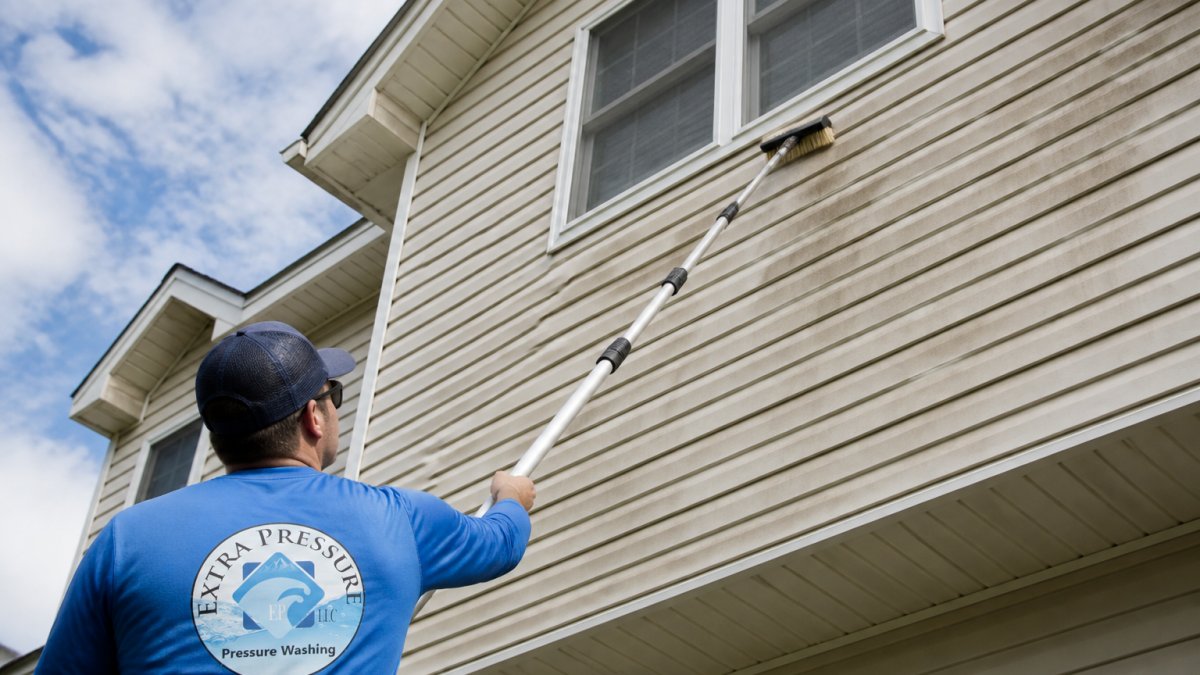
Tool Comparison: Reach, Safety, and Effectiveness
Before selecting tools, understand the trade-offs:
Telescoping Poles (15-30 feet)
- Reach: Safe reach is typically 20-25 feet from ground level; beyond that, control and stability diminish significantly.
- Effectiveness: Excellent for soft washing and brush work; poor for high-pressure rinsing (water pressure drops over distance).
- Safety: Eliminates ladder risk; one person can work alone; lightweight aluminum models (under 5 pounds) reduce fatigue.
- Best for: Vinyl siding, fiber cement, and painted wood where gentle cleaning is essential.
- Limitation: Requires two hands to operate safely; difficult to use in tight spaces or around obstacles.
Ladder + Short Pole Combination (8-12 feet)
- Reach: Extends your reach from a ladder platform; total height depends on ladder height plus pole length.
- Effectiveness: High control and precision; good for targeted cleaning of stubborn spots.
- Safety: Introduces fall risk; requires stable footing and a helper for safety; not recommended for heights over 15 feet.
- Best for: Spot treatment, seam cleaning, and detailed work on lower second-story sections.
- Limitation: Slower than ground-level work; fatigue increases with height.
Pressure Washers (1500-3000 PSI)
- Reach: Hose length typically 25-50 feet; pressure diminishes slightly with distance.
- Effectiveness: Fast removal of heavy dirt and algae; can damage siding if misused.
- Safety: Requires training; high-pressure water can cause injury; risk of forcing water behind siding.
- Best for: Concrete, brick, and metal siding only; NOT recommended for vinyl or wood without professional guidance.
- Limitation: Overkill for routine cleaning; expensive to rent or buy; creates water intrusion risk on residential siding.
Soft-Bristle Brushes and Siding Brushes
Soft-bristle brushes are essential for cleaning siding without damage. Hard bristles scratch vinyl and wood. Soft bristles clean effectively while protecting your surface.
A dedicated siding brush has angled bristles designed to work into seams and crevices. The angle matters. It lets you scrub without excessive pressure. This is especially important on older siding where paint may be compromised.
Attach the brush to your telescoping pole. The combination gives you reach and cleaning power. You control the pressure from the ground, which is safer than working on a ladder.
Best practices for brush use:
- Use light to medium pressure (think gentle scrubbing, not aggressive scrubbing)
- Work in circular motions
- Focus on stained or discolored areas
- Rinse as you go to avoid streaking
- For vinyl siding, never use stiff-bristled deck brushes, they leave permanent marks
Matching Tools to Siding Material
Your siding type determines which tools are safe:
Vinyl Siding: Use telescoping poles with soft brushes and low-pressure rinsing. Avoid pressure washers entirely; even 1500 PSI can crack or dent vinyl. Bleach-based cleaners are safe if diluted and rinsed thoroughly.
Fiber Cement (HardiePlank): Durable but porous. Soft brushes and moderate pressure (under 1500 PSI) are acceptable. Avoid prolonged water saturation in seams. Rinse downward only.
Wood Siding: Most fragile. Use soft brushes only, low-pressure water, and mild detergents. Never use bleach on stained or sealed wood, it strips finish. Test any cleaner on a hidden section first.
Brick and Stone: Can handle higher pressure (up to 3000 PSI) but requires care around mortar joints. Soft brushes work well for surface cleaning without pressure.
Garden Hoses and Spray Nozzles
A standard garden hose connected to your water supply provides the rinsing power you need. Pair it with an adjustable spray nozzle. This gives you control over water pressure and spray pattern.
The nozzle matters as much as the hose. A wide spray pattern rinses evenly. A narrow pattern concentrates water for stubborn spots. Adjustable nozzles let you switch between patterns without changing equipment.
For second-story work, a hose long enough to reach your entire home is critical. Most standard hoses are 50 to 100 feet. Measure your house before buying. You may need to connect multiple hoses or use a hose reel for easier management.
Critical spray nozzle rule: Always use a wide-angle or fan spray pattern when rinsing siding. Never use a pencil-stream or jet nozzle on residential siding, concentrated pressure forces water behind siding and causes rot.
Cleaning Siding Without a Pressure Washer
Pressure washers are powerful but risky on siding. High pressure damages vinyl, strips paint, and forces water into wall cavities. Soft washing is the safer approach.
Soft washing combines low-pressure water, proper cleaning solutions, and dwell time. This method removes organic growth and stains without forcing water into seams or damaging surfaces.
Start with your cleaning solution. Apply it with a low-pressure spray or pump sprayer. Let it sit on the siding for 10 to 15 minutes. This is called dwell time. The cleaner works while you wait. Then rinse with low-pressure water from your hose.
This approach is gentler on your siding and landscaping. It’s also safer because you’re not fighting high-pressure water. You maintain better control and balance.
How to Remove Mildew From Siding
Mildew appears as dark spots or streaks on siding. It’s a living organism that grows in damp conditions. Simply scrubbing won’t kill it permanently. You need to address the growth itself.
A bleach-based cleaner kills mildew at the source. Mix one part bleach to three parts water. Apply this solution to affected areas. Let it sit for 15 to 20 minutes. The bleach kills the mildew spores. Then scrub gently with your soft-bristle brush and rinse thoroughly.
Mildew often returns if conditions remain damp. Check for drainage issues around your foundation. Ensure gutters are clean and functioning. Improve air circulation around your home if possible. These steps prevent mildew from coming back quickly.
Step-by-Step Process for Cleaning Second-Story Siding
Preparation and Safety Setup
Before cleaning second story siding, start by clearing the area around your home. Move lawn furniture, grills, and potted plants away from the work zone. This prevents damage from falling water or cleaning solution.
Protect delicate plants and landscaping. Cover them with tarps or plastic sheeting. This is especially important when using bleach-based cleaners. These solutions can kill plants. Prevention is easier than replacement.
Check your equipment before starting. Test your telescoping pole for smooth extension and secure locking. Check your hose for leaks or damage. Fill your spray bottle or pump sprayer with your chosen cleaning solution. Make sure all connections are tight.
Safety checklist before you begin:
- Clear work area of obstacles
- Protect plants and landscaping
- Test all equipment
- Wear appropriate clothing (long sleeves, closed-toe shoes)
- Have a helper nearby if possible
Applying Cleaner and Allowing Dwell Time
Attach your spray nozzle or pump sprayer to your telescoping pole. Start at the top of the affected area. Work your way down. This prevents dirty water from running over already-cleaned sections.
Apply your cleaning solution evenly across the siding. Don’t oversaturate. You want enough to coat the surface and penetrate the grime. Let the solution sit. This dwell time is when the cleaner does most of the work. Most solutions need 10 to 20 minutes.
While the cleaner works, you can prepare the next section or simply wait. Don’t let the solution dry completely. If it dries, reapply before brushing.
Brushing and Rinsing Siding
Once dwell time is complete, attach your soft-bristle brush to the pole. Scrub the siding with gentle, circular motions. You’re not trying to remove the cleaner or force it deeper. You’re helping the chemical action along and loosening stubborn spots.
Work systematically from top to bottom. This prevents dirty water from dripping onto cleaned areas. Pay extra attention to seams, corners, and areas with visible stains.
Rinse thoroughly with your hose. Start at the top and work down. Use a moderate water pressure. Your goal is to remove all cleaner and loosened grime. Low pressure is fine. You don’t need force to rinse. Just steady, complete coverage.
Protecting Your Siding and Landscaping During Cleaning
Water intrusion is a real risk during siding cleaning. Water can seep into seams and behind siding, causing rot and mold inside your walls. Prevent this by controlling water direction.
Always rinse downward, never upward. Upward spray forces water behind siding. Downward flow follows gravity and drains away. This simple rule prevents costly damage.
Avoid spraying directly into seams, gaps, or joints. These are entry points for water. Aim for the flat face of the siding. Let water run down naturally. If you must spray near seams, use very low pressure.
Landscaping damage is preventable with planning. Cover delicate plants before you start. Use low-concentration cleaning solutions. Rinse plants thoroughly if they contact cleaning solution. Most plants recover quickly if rinsed immediately.
When to Call a Professional
Some situations call for professional help. If your siding is heavily stained or covered with mold, professional cleaning is faster and safer. Professionals have equipment and expertise you may lack.
Second-story work at heights over 20 feet becomes risky for DIY efforts. We provide same-day estimates and use soft washing to protect your siding.
If your siding shows signs of damage, cracks, or deterioration, professional assessment is wise. This prevents water damage and extends your siding’s lifespan.
Recurring mold or mildew suggests an underlying moisture issue. Fixing the root cause prevents the problem from returning.
Frequently Asked Questions
What is the safest way to clean second-story siding without a ladder?
Telescoping poles with soft-bristle brush attachments are the safest approach for cleaning second-story siding without a ladder. These poles extend 20-30 feet and allow you to remain on the ground while reaching high surfaces. Pair them with a garden hose or pump sprayer to apply cleaner and rinse. This ladder-free method eliminates fall risk and gives you better control over water pressure and cleaning solution application, reducing the chance of siding damage.
What type of brush should you use to clean house siding?
Soft-bristle brushes are essential for cleaning house siding safely. Hard bristles can scratch vinyl, wood, or fiber cement siding and strip paint. Look for brushes specifically labeled as siding brushes or soft-bristle exterior brushes. These typically have bristles made from nylon or natural fibers that are stiff enough to remove dirt, grime, and mildew without causing surface damage. For second-story work, attach the brush to a telescoping pole for safe, controlled cleaning from the ground.
How do you remove mildew from siding effectively?
Mildew requires a specialized cleaning approach. Mix a solution of one part white vinegar to three parts water, or use a commercial mildew-specific cleaner diluted per manufacturer instructions. Apply the solution using a pump sprayer or garden hose with a spray nozzle, allowing 10-15 minutes of dwell time for the cleaner to penetrate and break down the mildew. Gently brush the affected area with a soft-bristle brush, then rinse thoroughly with clean water. For stubborn or recurring mildew, soft washing methods are effective at preventing regrowth.
Can you clean second-story siding without a pressure washer?
Yes, you can clean second-story siding effectively without a pressure washer using hand tools and low-pressure methods. A garden hose with a spray nozzle, a soft-bristle brush on a telescoping pole, and appropriate cleaning solution work well for removing dirt, grime, and organic growth. This approach is actually safer for delicate siding materials and reduces the risk of water intrusion or surface damage. Pressure washers can force water behind siding if not used correctly, so hand cleaning with proper technique is often the better choice for residential siding.
Cleaning second-story siding doesn’t have to be dangerous or complicated. The right tools and techniques keep you safe while delivering excellent results. If you prefer professional expertise, Extra Pressure LLC. specializes in soft washing and specialized exterior cleaning. We protect your siding and landscaping while removing stubborn stains, mold, and grime. Schedule a same-day estimate and let our licensed, insured team handle the high-reach work safely.