Table of Contents
- Why Hiring Insured Exterior Cleaning Services Protects Your Home
- How to Verify Contractor Insurance Before You Book
- Questions to Ask a Pressure Washing Company Before Hiring
- Soft Washing vs. Pressure Washing: Matching the Method to the Surface
- What a Fair Exterior Cleaning Service Quote Should Include
- Chemical Handling, Runoff, and Protecting Your Landscaping
- Conclusion: Book With Confidence, Not Guesswork
- Frequently Asked Questions
Last Updated: October 12, 2026
Why Hiring Insured Exterior Cleaning Services Protects Your Home
Hiring insured exterior cleaning services tips start with one number: the cost of damage when nobody is covered.
Most homeowners shop on price alone: compare three quotes, pick the cheapest, never ask about coverage, until a ladder goes through a window or a worker slips on a wet driveway.
Exterior cleaning is a physical job. It involves ladders, water, chemicals, and heavy equipment. Risk is built into every visit.
If an uninsured worker is hurt on your property, your homeowners policy may be the one that pays. That claim can raise your premiums or follow you at renewal.
This guide covers seven practical checks: verifying coverage, reading a quote, and spotting red flags.
What Can Go Wrong Without Coverage
- Property damage. A wand tip cracks siding, a ladder dents a gutter, or overspray strips paint from a car in the driveway.
- Bodily injury. A worker falls from a roof or slips on a wet walkway.
- Chemical damage. Runoff kills shrubs, stains concrete, or etches glass.
In each case the question is simple: whose insurance pays? If the contractor has none, the answer is usually yours. That is why your first question should never be about price.
How to Verify Contractor Insurance Before You Book
Verification takes about ten minutes and follows four steps: request the certificate, read it line by line, call the insurer, and match the names. Most homeowners stop after step one, where the gaps hide.
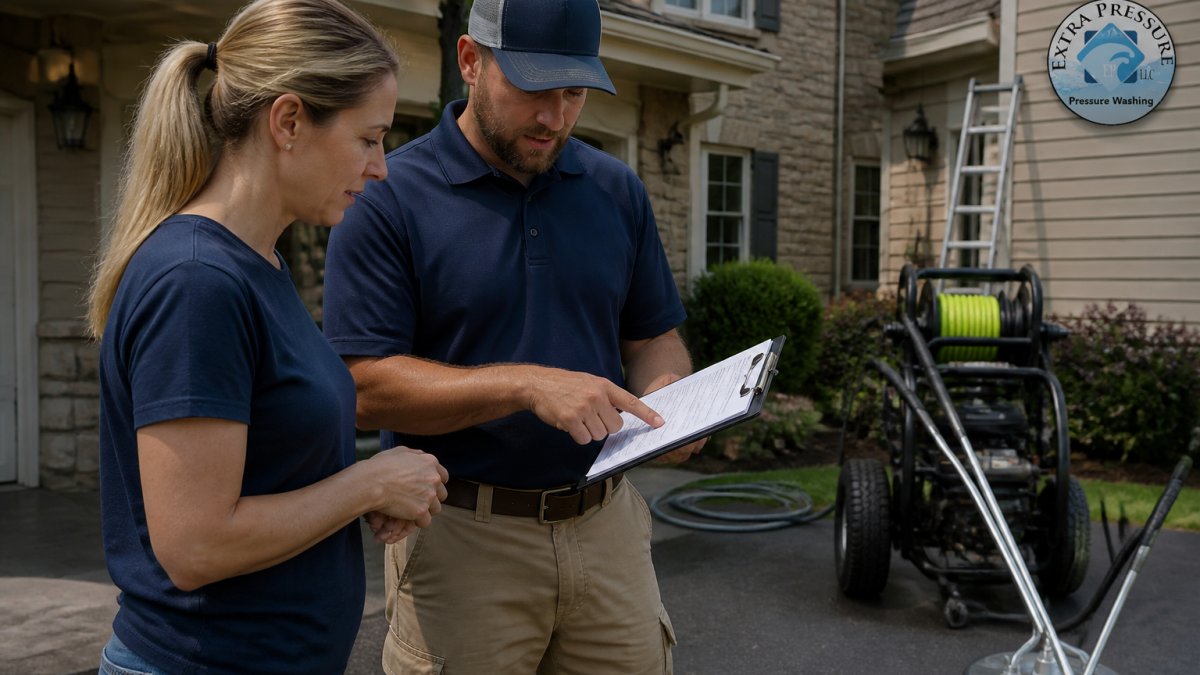
Step 1: Request the Certificate of Insurance
Ask for a certificate of insurance (a COI), a one-page document the contractor’s insurer issues listing the insured’s name, policy numbers, coverage types, limits, and effective dates. Any legitimate company can send one the same day. If a contractor stalls, offers a screenshot, or sends a photo of a policy declaration page, treat that as a warning sign.
Step 2: Read the Certificate Line by Line
A COI is short, but four fields matter most for exterior cleaning:
- Named insured. The legal business name and any DBAs. This must match the name on your written estimate and the truck.
- Policy effective and expiration dates. Confirm the policy is active on the day of your scheduled service, not just the day you booked. A policy expiring next week is not coverage for a job next month.
- Coverage types. Look for Commercial General Liability (CGL) and, if the crew has employees, Workers’ Compensation. Commercial auto may also appear if they bring trucks and trailers onto your property.
- Limits. The per-occurrence and aggregate limits. A $1,000,000 per-occurrence limit is a common baseline. Ask what the aggregate is and whether prior claims have drawn it down this policy period.
Step 3: Call the Insurer or Agent Directly
Almost nobody does this step. Certificates can be expired, altered, or canceled for nonpayment, and the document is not proof the policy is still in force. Call the number printed on the certificate, not one the contractor gives you, and ask:
- Is this policy active today?
- Are the named insured and policy number correct?
- Will the insurer send me written notice if the policy is canceled or lapses?
If the contractor is a sole proprietor, the agent may confirm coverage under a personal or business policy. Either way, get the confirmation in writing.
Step 4: Match the Names and Ask About Additional Insured Status
Finally, check the names. The business name on the certificate must match your written estimate. If you hire “ABC Cleaning” but the policy covers “John Smith,” you may have a gap. Ask whether the crew is employees or subcontractors, subcontractors often carry their own policies that may not appear on the certificate you were handed.
Ask for the certificate to list you or your property as a certificate holder or additional insured. A certificate holder gets notice if the policy lapses mid-job. Additional insured status can give you a direct right to coverage for certain claims. Not every contractor will agree, but the ones who do are usually the ones with nothing to hide.
General Liability and Workers’ Compensation: What to Confirm
Two policies matter for exterior cleaning, and they cover different things.
General liability insurance pays for damage to your property or injuries to third parties: the broken window, the stained driveway, the dented gutter, and, depending on the policy, runoff that damages a neighbor’s landscaping. Workers’ compensation pays when an employee gets hurt on the job, protecting you if a worker falls off a ladder in your yard.
| Coverage Type | What It Pays For | Why You Need It |
|---|---|---|
| General liability | Property damage, third-party injury | Covers your home and bystanders |
| Workers’ compensation | Employee injuries on the job | Blocks injury claims against you |
| Commercial auto | Vehicle damage during service | Covers trucks and trailers on site |
Watch for one common gap: a lone operator with no employees may legally skip workers’ compensation in some states. That is not automatically a problem, but the liability policy needs to be solid. Ask directly whether the crew is employees or subcontractors, and request the subcontractors’ certificates too.
Who Pays When Something Goes Wrong
Coverage only matters when a claim happens. Walk through the three most common scenarios before you book:
- A worker is injured on your property. If the contractor carries workers’ compensation, the claim goes to that policy. If not, the worker, or their health insurer, may pursue your homeowners liability coverage.
- A window breaks or siding cracks. General liability typically responds, provided the damage came from the contractor’s operations and not a pre-existing defect. Document surface conditions before work starts.
- Runoff damages landscaping or a neighbor’s property. Policies get murky here. Some general liability policies exclude pollution or runoff claims. Ask the contractor’s agent directly whether runoff-related property damage is covered, and get the answer in writing.
A contractor who can walk you through these scenarios without hesitating has thought about risk. Hold every bid to that standard.
Questions to Ask a Pressure Washing Company Before Hiring
The right questions separate a professional outfit from a weekend operator. Ask these before anyone touches your property.
- Are you licensed and insured, and can you send proof today?
- Is your crew made up of employees or subcontractors?
- What method will you use on each surface, and why?
- Do you carry general liability and workers’ compensation?
- What is your process for protecting plants and landscaping?
- Will you provide a written estimate and service agreement?
- Can you share two or three local references?
- What happens if something gets damaged?
The answers tell you more than the price tag. A contractor who hesitates on question one is not worth your time; one who answers all eight clearly is worth a premium.
A fair price with no insurance is not a deal. It is a gamble where you hold all the risk.
Soft Washing vs. Pressure Washing: Matching the Method to the Surface
Method matters more than most homeowners realize. The wrong technique damages the surface it is meant to clean.
| Surface | Best Method | Why |
|---|---|---|
| Vinyl and wood siding | Soft washing | High pressure can crack or strip it |
| Roof shingles | Soft washing | Pressure voids shingle warranties |
| Concrete driveways | Pressure washing | Durable enough for high pressure |
| Brick and stone | Soft washing | Prevents mortar and surface damage |
| Gutters and fascia | Soft washing | Removes organic growth without harm |
Roof cleaning and roof moss removal are the clearest examples. A pressure washer on asphalt shingles strips the granules that protect the roof, shortening its life and potentially voiding the manufacturer’s warranty.
This is where experience shows. A professional assesses each surface first, then picks the method. At Extra Pressure LLC., our specialized soft washing cleans delicate surfaces without harm.
What a Fair Exterior Cleaning Service Quote Should Include
A written estimate should spell out the job in plain terms. If you have to guess what is covered, the quote is not finished. Use the checklist below to compare bids side by side, because the cheapest number is often the one with the most asterisks.
The Quote and Contract Checklist
Method per surface. Which areas get soft washing and which get pressure washing, and why.
Line-item pricing. A price for each service, not one vague lump sum.
Damage terms. What the contractor does if something breaks, repair, replace, or file a claim.
Cancellation terms. How much notice is required, and whether a deposit is refundable.
Payment terms. Deposit amount, due date, and accepted methods.
Window cleaning and gutter cleaning are often quoted as add-ons.
Red Flags in a Written Estimate
- No business name, address, or phone number on the estimate.
- Cash-only payment with no receipt or contract.
- A price far below every other quote.
- No mention of insurance anywhere.
- Pressure washing promised on a roof or delicate siding.
- No written agreement, just a verbal handshake.
- High-pressure sales tactics or same-day-only discounts.
- No exclusions listed, which usually means the contractor has not thought the job through.
- A warranty that is verbal only.
A lowball quote is often the most expensive one, usually no insurance, no training, and no plan for when something goes wrong.
Chemical Handling, Runoff, and Protecting Your Landscaping
Chemicals are part of exterior cleaning, and how a contractor handles them tells you a lot. Runoff flows into soil, storm drains, and waterways.
Good contractors follow a few basic practices:
- Cover plants and mulch before any chemical application.
- Pre-wet landscaping so plants absorb clean water first.
- Use eco-friendly products where the surface allows.
- Control runoff so it does not pool in garden beds.
- Rinse and neutralize surfaces after cleaning.
- Wear protective equipment during application.
The EPA’s guidance on managing runoff and water pollution explains why this matters. Cleaning chemicals that reach storm drains often flow untreated into local water.
If you have delicate landscaping, say so up front. A professional will adjust the plan, not brush off the concern.
Conclusion: Book With Confidence, Not Guesswork
The gap between a good exterior cleaning job and a costly mistake comes down to verification. Request the certificate of insurance, call the insurer, and read the quote line by line.
That is the standard we hold ourselves to at Extra Pressure LLC.
Get started with Extra Pressure LLC. and book a crew that protects your home, your landscaping, and your peace of mind.
Frequently Asked Questions
What insurance should an exterior cleaning company have?
An exterior cleaning contractor should carry general liability insurance and workers’ compensation coverage. General liability covers property damage and bodily injury claims, while workers’ compensation protects you if a worker is injured on your property. Ask for a certificate of insurance that lists policy limits, effective dates, and coverage exclusions. If the contractor is an individual with no employees, workers’ compensation may not apply, but general liability should still be in force. Verify coverage directly with the insurer before work begins.
How can I verify that a cleaning contractor is insured?
Request a certificate of insurance and call the phone number listed on it to confirm the policy is active. Ask whether your address will be listed as the job site and whether coverage includes exterior cleaning work like soft washing or pressure washing. Check policy limits and any exclusions that could leave you exposed. For how to verify contractor insurance, never rely on a verbal claim alone. A legitimate provider will supply documentation without hesitation and may also provide references from past exterior cleaning jobs.
What should an exterior cleaning service quote include?
A written estimate should itemize the surfaces to be cleaned, the method for each (soft washing vs. pressure washing), the cleaning products used, and any surface protection or plant covering. It should state whether gutter cleaning, window washing, or roof moss removal is included, list the cleaning schedule, and note any exclusions. Look for proof of insurance, a physical business location, and clear terms for post-service inspection. Avoid quotes that are verbal only or that pressure you to pay in full upfront.
Does homeowners insurance cover damage caused by a cleaning contractor?
Your homeowners policy may cover certain damage, but filing a claim can raise your rates and may not cover contractor negligence. The better protection is the contractor’s own general liability insurance. If a pressure washing crew strips paint, cracks siding, or kills landscaping, the contractor’s policy should handle the claim. That is why verifying coverage before work starts matters. If a contractor cannot provide proof of insurance, hire someone else. Do not accept the risk yourself.