Table of Contents
- The High Cost of High Pressure: Why Delicate Surfaces Fail
- Soft Washing vs Pressure Washing: Which Method is Right?
- Pressure Washing PSI Settings for Siding and Other Surfaces
- How to Clean Stucco Without Damage: A Step-by-Step Guide
- Selecting the Right Nozzle and Cleaning Agents
- DIY vs. Professional Risk Assessment for Your Home
- Post-Cleaning Maintenance to Prevent Mold and Mildew
- Frequently Asked Questions
Last Updated: September 6, 2026
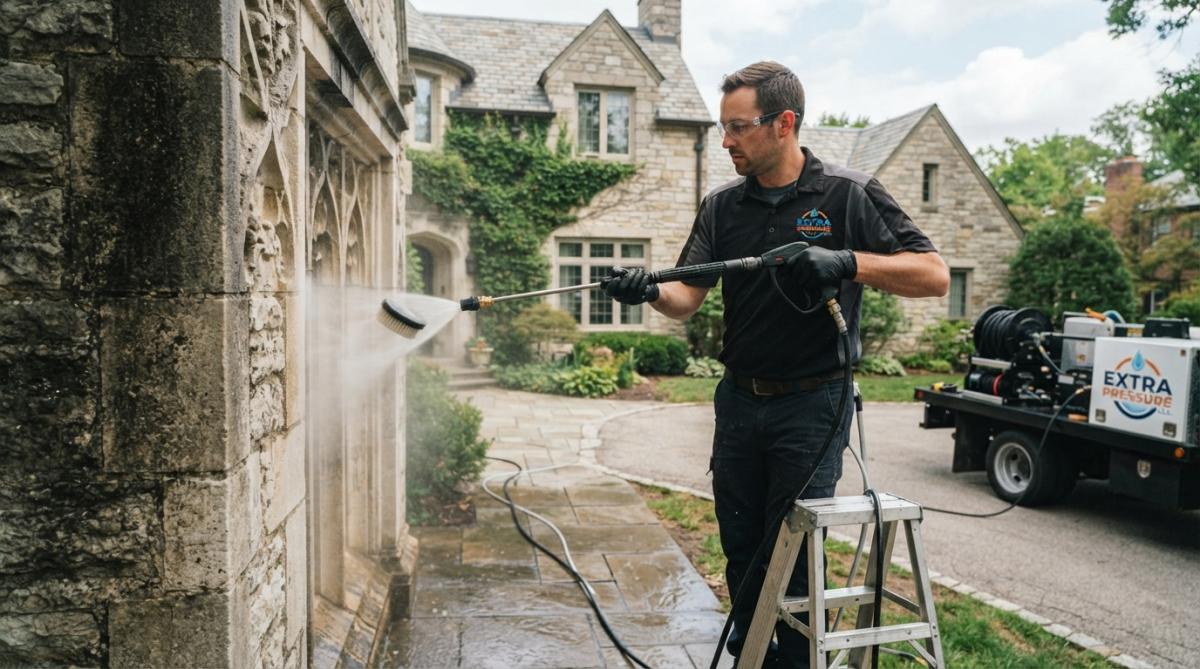
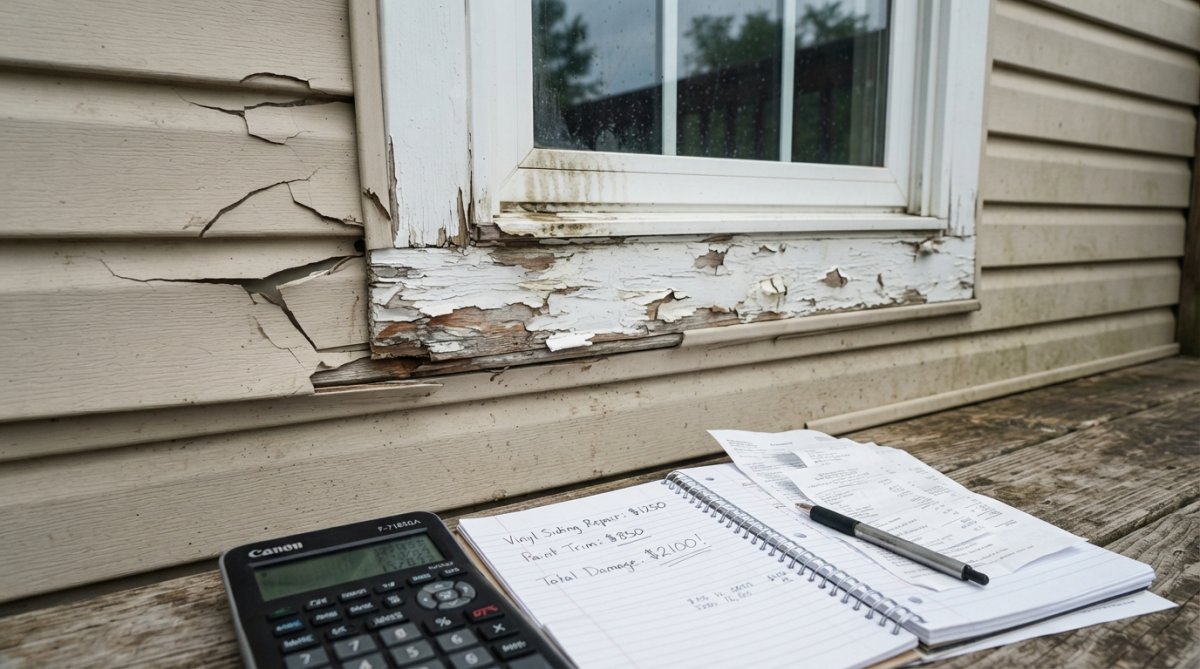
Every spring, a homeowner with good intentions rents a pressure washer and turns a 3,000 PSI wand on aging vinyl siding, often cracking panels, forcing water behind walls, and stripping paint off trim. Expert pressure washing for delicate surfaces is about matching the right pressure, chemical, and technique to the material. At Extra Pressure LLC., we use state-of-the-art equipment and specialized soft washing to protect the surfaces we are hired to restore. This guide breaks down the technical thresholds, step-by-step methods, and honest risk assessments that keep your home looking new without turning a cleaning job into a repair bill.
The core problem is that most homeowners and even some contractors treat every surface like a concrete driveway. A concrete slab can handle high-impact force; roof shingles, painted trim, and wooden decks cannot. Water forced under siding leads to mold inside wall cavities, and damaged shingle granules accelerate roof aging. Below, we show you how to match cleaning methods to delicate substrates.
The High Cost of High Pressure: Why Delicate Surfaces Fail
The most common mistake in exterior cleaning is assuming that if a little pressure is good, more is better. When a wand delivering several thousand PSI hits a soft material, the water acts less like a cleaning agent and more like a chisel, eroding surface integrity and forcing moisture where it does not belong.
For homeowners, the financial stakes are high. Replacing vinyl siding or repairing a stucco crack costs far more than a professional cleaning service. High pressure can loosen seals around windows, strip protective coatings off wooden decks, and break the seal on roof shingles, leading to leaks months later. The goal is to remove organic matter like mold and mildew, not to abrade the surface. If you see paint flecks in the runoff, the pressure is already too high.
Never use a zero-degree nozzle on any surface. This precision nozzle produces a concentrated jet that can cut through caulking, dent soft metals, and etch concrete. It is a tool for removing paint, not for cleaning siding.
Soft Washing vs Pressure Washing: Which Method is Right?
Soft washing is a low-pressure cleaning method that relies on biodegradable cleaning solutions to kill organic growth at the root. Pressure washing uses high-impact force and water volume to physically scour away dirt and grime. The choice is not about which is “better,” but which is appropriate for the substrate.
The general rule is simple: if the surface is hard and durable, like concrete or brick, pressure washing is effective. If it is soft, painted, or porous, soft washing is safer. Soft washing is the industry standard for roofs, painted wood, stucco, and older vinyl siding because the chemical dwell time does the heavy lifting. The low pressure, usually under 500 PSI, simply rinses dead organic matter away without risking substrate damage.
| Cleaning Method | Typical PSI | Best For | Primary Cleaning Action |
|---|---|---|---|
| Soft Washing | 100 – 500 PSI | Roof shingles, stucco, painted trim, vinyl siding | Biodegradable chemicals kill mold and mildew at the root |
| Pressure Washing | 1,500 – 3,000+ PSI | Concrete driveways, brick, stone patios | High-impact water scours surface dirt |
This distinction is critical for preventative maintenance. Blasting mold off a roof with high pressure removes the visible stain but also strips protective granules and leaves roots behind to regrow quickly. Soft washing removes the food source and neutralizes the surface, extending the time between cleanings significantly.
Pressure Washing PSI Settings for Siding and Other Surfaces
If you are using a pressure washer on delicate surfaces, the PSI setting is the single most important variable you control. There is no universal “safe” PSI, but there are established guidelines based on material hardness. For most residential pressure washing psi settings for siding, stay well below the maximum output of your machine.
Here are the recommended maximum PSI thresholds for common home exterior materials:
- Vinyl Siding: Keep the pressure between 1,200 and 1,500 PSI. Higher pressure can crack the panels and force water behind them, leading to hidden mold growth.
- Wood (Decks, Fences, Trim): Use 500 to 800 PSI. Wood is fibrous and soft; high pressure creates furrows and splinters.
- Stucco: Limit pressure to 1,200 PSI or less. Stucco is porous and brittle; high pressure can gouge the finish and crack the underlying mesh.
- Roof Shingles: Never exceed 500 PSI. Asphalt shingles are coated in granules that protect them from UV rays. High pressure will strip these granules, drastically shortening the roof’s lifespan.
- Brick and Masonry: 1,500 to 2,000 PSI is generally safe, but always test in an inconspicuous area first.
Always test your spray pattern on a small, hidden section of the surface before you begin. Start with a wider fan angle and lower pressure, then tighten the nozzle or increase pressure only if the dirt does not lift. This 60-second test can save you from a costly mistake.
The distance between the nozzle and the surface also acts as a pressure regulator. Holding the wand 12 to 18 inches away significantly reduces impact force compared to 2 inches away. For delicate surfaces, increase the distance and let the cleaning agents do the work.
How to Clean Stucco Without Damage: A Step-by-Step Guide
Learning how to clean stucco without damage requires a specific protocol because stucco is porous, cement-based, prone to cracking, and absorbs water readily. The wrong technique can result in unsightly channels and long-term moisture intrusion. Here is the safest method.
Step 1: Pre-Wet the Surface
Thoroughly wet the stucco with a standard garden hose. Pre-wetting prevents the cleaning solution from being sucked deep into the wall before it has a chance to work, and it lubricates the surface to prevent streaking.
Step 2: Apply a Biodegradable Cleaner
Use a pump sprayer or the chemical injector to apply a biodegradable cleaning solution designed for organic growth. Starting from the bottom and working up prevents streaking. Allow the solution to dwell for 10 to 15 minutes; this dwell time kills the mold and algae, and the rinse is just the final step.
Step 3: Rinse with Low Pressure
Rinse using a fan nozzle with the pressure set to 1,200 PSI or lower. Keep the wand at least 12 inches from the wall and use smooth, overlapping passes. The goal is to wash dead organic matter down the wall, not to dig it out.
Step 4: Spot Treat Stubborn Areas
If areas of mildew remain, do not increase the pressure. Instead, reapply the chemical solution to those specific spots and use a soft-bristled brush to gently agitate the surface. Rinse again with low pressure.
The secret to cleaning stucco is patience. The chemical solution needs time to break down the organic matter. If you rely on pressure alone, you will damage the finish and the mold will return faster because the porous surface is now rougher and holds more moisture.
Selecting the Right Nozzle and Cleaning Agents
The nozzle dictates the spray pattern and the force of the water hitting the surface. Using the correct nozzle is as important as setting the right PSI. For delicate surfaces, you should primarily rely on fan nozzles, which disperse the water over a wider area to reduce impact.
The color-coded nozzle system is standard across the industry and is essential for safe operation. The degree number refers to the width of the spray angle; a higher degree means a wider, gentler spray.
- White (40-degree): The gentlest fan nozzle, ideal for soft washing and rinsing delicate surfaces like siding and windows.
- Green (25-degree): A general-purpose fan nozzle for medium-duty cleaning like wooden decks and fences.
- Yellow (15-degree): A more aggressive fan nozzle for stripping paint or cleaning concrete and brick.
- Red (0-degree): A pinpoint jet for extreme staining. Do not use this on any surface unless you intend to etch or cut it.
Cleaning agents are the other half of the equation. Biodegradable cleaning solutions, often containing sodium hypochlorite (bleach) or oxygen bleach, are engineered to kill mold, mildew, and algae at the root. These agents are safer for your landscaping and the environment than relying on high pressure. Always use a solution labeled for the specific surface you are cleaning. A heavy-duty house wash mix may be too strong for a delicate painted surface, while a roof-cleaning mix is specifically formulated to be gentle on shingles.
Be cautious with runoff. While biodegradable solutions are designed to break down, concentrated runoff can still harm plants and grass. Wet down your landscaping before cleaning and rinse the foliage thoroughly after you finish to dilute any overspray.
DIY vs. Professional Risk Assessment for Your Home
The decision to rent a machine or hire a professional comes down to a realistic risk assessment. While DIY pressure washing seems cost-effective, the potential for property damage and personal injury is significant. A rented machine often lacks the precise pressure regulation and chemical injection systems of professional equipment, leaving you to guess the correct pressure for each surface.
The physical risks are also real. The high-impact force can cause serious lacerations if the wand is mishandled, and working on ladders introduces a fall hazard. Professionals carry liability insurance for this reason. If you hire an uninsured individual and they damage your roof or fall, the financial and legal burden falls on you.
Professionals bring a trained eye beyond just spraying water. They assess the condition of your siding, the age of your roof, and the type of organic growth before selecting the method, and they know how to protect delicate landscaping. If you have a single-story home with durable siding and a simple layout, DIY may be viable. If your home has multiple stories, delicate materials, or stubborn organic growth, the risk assessment typically favors calling a licensed professional. The cost of one mistake often exceeds the price of a professional service.
Post-Cleaning Maintenance to Prevent Mold and Mildew
The cleaning is only half the battle; preventing the rapid regrowth of mold and mildew delivers long-term value. A clean surface is vulnerable immediately after washing, as the protective layer of dirt has been removed. A simple maintenance routine can double or triple the time between professional cleanings.
The most effective strategy is to address the conditions that allow organic growth to thrive. Mold and mildew need moisture, shade, and a food source. Eliminating one of these makes your home inhospitable to regrowth. Key steps include:
- Trim Overhanging Branches: Allowing more sunlight to reach the siding and roof keeps the surface drier and inhibits growth.
- Clean Gutters Regularly: Clogged gutters overflow and saturate the fascia and siding, creating a perfect breeding ground for mold. This is where regular gutter maintenance becomes a critical defense.
- Maintain a Gap: Ensure soil and mulch are not piled high against the siding, as this provides a direct path for moisture and pests.
- Schedule Annual Cleanings: A yearly soft wash to remove early-stage organic growth is far more effective and less expensive than waiting for heavy staining to develop.
By following these steps, you protect the surface integrity of your home and maintain its curb appeal. Preventative maintenance is significantly more cost-effective than reactive cleaning, and it preserves the value of your property over the long term.
Cleaning your home’s exterior is a technical task where the margin for error is measured in dollars. The most important takeaway is to respect the material you are cleaning. High pressure has its place on concrete, but it is the enemy of siding, stucco, and roofing. If you are unsure about the condition of your surfaces or want the job done right the first time, Extra Pressure LLC. offers licensed and insured residential and commercial cleaning. We provide same-day estimates and specialized soft washing for delicate surfaces, backed by a 100% satisfaction guarantee. Get started with Extra Pressure LLC. and let our state-of-the-art equipment restore your home’s curb appeal without the risk of damage.
Frequently Asked Questions
What surfaces are considered too delicate for high-pressure washing?
Surfaces like roof shingles, painted wood trim, stucco, vinyl siding, and older brick are vulnerable. High-impact force can crack stucco, force water under siding, or strip paint. Soft washing, which uses low-pressure technology and biodegradable cleaning solutions, is the safer choice for these delicate substrates. If you are unsure, a professional assessment can determine the correct PSI and method for your specific exterior.
What is the difference between pressure washing and soft washing?
Pressure washing relies on high-impact force from water alone to blast away dirt. Soft washing uses low pressure (typically under 500 PSI) combined with specialized biodegradable cleaning solutions to kill mold, mildew, and algae at the source. This method is gentler on surfaces like roof shingles and painted trim because it cleans without surface abrasion, and it often provides longer-lasting results by preventing regrowth.
Can soft washing remove mold and mildew effectively?
Yes, soft washing is highly effective at removing mold and mildew. Unlike pressure washing, which can simply rinse away surface stains, soft washing uses cleaning agents that kill the organic matter at its roots. The chemical dwell time allows the solution to penetrate and eliminate the growth, which is key for long-term algae prevention and protecting your home’s exterior from recurring stains.
How do I prevent damage to my landscaping during a house wash?
Before any cleaning begins, thoroughly wet down all plants and landscaping near the work area. Professional cleaners also use biodegradable cleaning solutions that are safe for plants when diluted properly. Cover delicate shrubs with plastic sheeting if necessary, and ensure the technician rinses vegetation with fresh water after the service to neutralize any overspray from the cleaning agents.
Leave a Reply