
Last Updated: November 13, 2026
Quick Summary
Clear downspout clogs effectively by first locating the blockage with a knuckle-tap test, then matching the tool to the spot: a shop vacuum for loose debris at the outlet, a downspout snake for packed elbow clogs, and a hose with a high-pressure nozzle in short bursts for clogs you can hear but not reach. If water backs up immediately at the outlet, skip the hose and troubleshoot the underground line instead.
- Tap the downspout top to bottom: a dull thud means debris, a hollow ring means clear pipe.
- On a packed elbow plug, use a snake first, then flush, since water alone bounces off.
- Feed the hose upward in short bursts and start with a moderate stream before increasing pressure.
- If water flows out the bottom but pools at the foundation, the buried line is blocked.
- Clear the discharge point first, and stop after two attempts if the buried line stays blocked.
Table of Contents
- Diagnose the Clog Before You Grab a Tool
- How to Clean a Clogged Downspout from the Ground
- Downspout Cleaning Snake: When a Flexible Tool Beats Water
- How to Unclog a Downspout That Goes Underground
- Downspout Cleanout Adapter: A Simple Upgrade for Stubborn Clogs
- Schedule Your Gutter Maintenance with Extra Pressure LLC.
- Frequently Asked Questions
Diagnose the Clog Before You Grab a Tool
A downspout clog is easier to fix when you know exactly where the blockage sits. Water pouring over the gutter edge, a dry downspout, or a stain line on the siding all point to a different problem spot. The diagnosis step is what separates a ten-minute fix from an afternoon of guesswork.
Signs of a Blocked Downspout
Look for these clues before you touch anything:
- Water spilling over the gutter lip during rain
- Downspout that stays dry while the gutter runs full
- Rust streaks or dark stains on the siding below the gutter
Two or more of these signs usually means a real blockage. If you want a deeper walkthrough on spotting the symptoms, this guide on how to tell if gutters are clogged covers each warning sign in detail.
Locate the Blockage: Top, Elbow, or Underground
Clogs live in one of three places. Find out which one before you choose a method.
- Top of the downspout: debris sits at the gutter outlet where the tube starts. Common after a windy week.
- The elbow joint: leaves and grit collect in the bend. This is the most common spot.
- Underground: the buried line or the connection to the drain is blocked. Water backs up at the base.
Tap the downspout with your knuckles from top to bottom. A dull thud means debris. A hollow ring means clear pipe. That quick test tells you where to start.
How to Clean a Clogged Downspout from the Ground
You can clear most downspout clogs without a ladder. The trick is matching the method to where the clog sits and how tightly it is packed, rather than defaulting to the hose and hoping.
Pick the Method by Clog Location and Severity
Before you turn on the water, use the knuckle-tap test from the diagnosis section to decide which ground-based tool to reach for. The table below is the decision guide most how-to articles skip.
- Loose debris at the bottom outlet (hollow ring low, dull thud high): Start with a shop vacuum and a narrow crevice tool. Pull the loose leaves and grit out before any water goes in, so you are not flushing a plug deeper.
- Packed clog at or just above the elbow (dull thud at the bend): Use a downspout cleaning snake first, then flush. Water alone tends to bounce off a tight plug and back up the outlet.
- Clog you can hear but not reach (dull thud mid-run, hollow at both ends): Feed a hose with a high-pressure nozzle upward in short bursts. This is the case where water pressure does the work a snake cannot reach.
A common pattern is that homeowners reach for the hose first on every clog. On a packed elbow plug, that just wets the debris and makes it heavier, so the snake-then-flush order saves time.
Using a Garden Hose and Hose Attachment
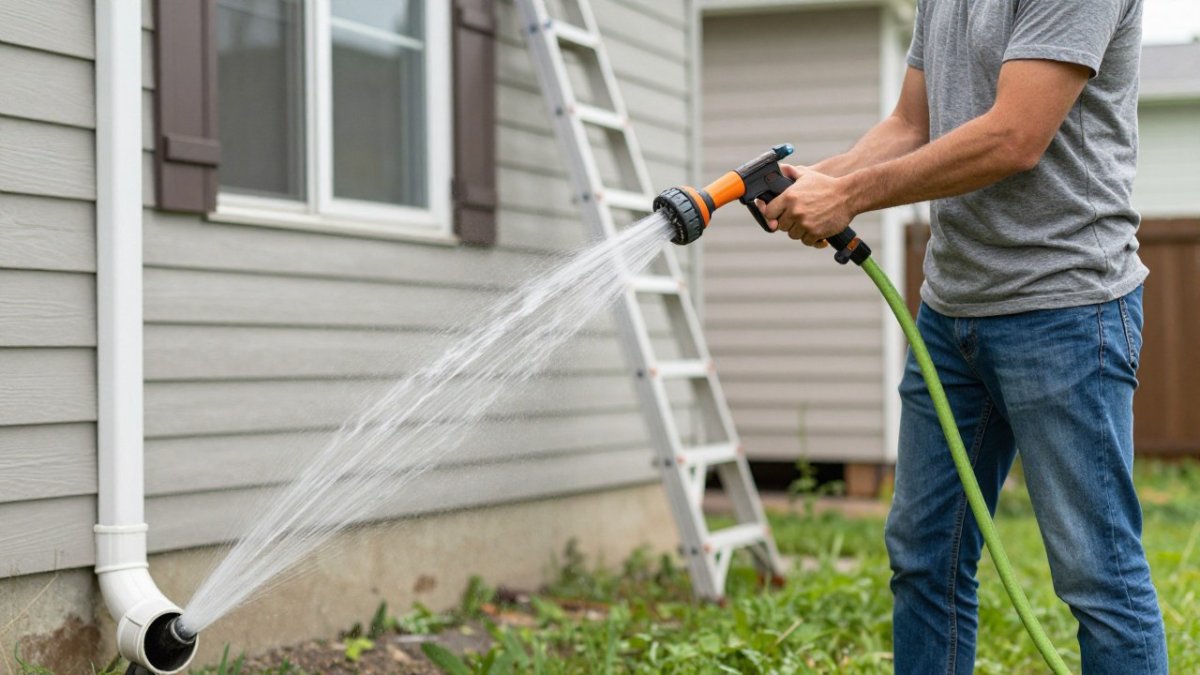
This is the standard approach for how to clean a clogged downspout from the ground, and it works on most loose-to-moderate blockages.
- Attach a high-pressure nozzle or a downspout cleaning attachment to your garden hose. A nozzle with an adjustable stream lets you start gentle.
- Feed the hose up into the bottom outlet of the downspout.
- Turn the water on and push the hose upward in short bursts rather than a steady shove.
- Work the hose past the elbow joint if you can reach it.
- Watch for debris flushing out the bottom, and keep your face and eyes clear of the outlet.
Watch out: too much water pressure can pop a loose elbow joint or spray back in your face, and a hard steady stream can push debris past the elbow into an underground line where it is much harder to reach. Before you begin, it helps to know which tools for safe gutter maintenance you actually need, so you are not working at height without the right gear.
Ground-Based Alternatives When the Hose Fails
If two or three hose attempts do not move the clog, switch tools instead of adding pressure. A shop vacuum with a narrow hose pulls loose debris out of the outlet before it can be driven deeper. A flexible downspout snake (covered in the next section) reaches bends the hose cannot. And if the outlet itself is buried or screened, clear the discharge point first, flushing a clear downspout into a blocked drain just moves the problem.
When none of the ground methods work after a reasonable effort, that is the signal to stop rather than escalate to a ladder you are not comfortable on.
Match the tool to where the clog sits before you turn on the water.
| Clog location | Sign from knuckle-tap test | Method to use |
|---|---|---|
| Loose debris at bottom outlet | Hollow ring low, dull thud high | Shop vacuum with narrow crevice tool |
| Packed clog at or above elbow | Dull thud at the bend | Downspout cleaning snake first, then flush |
| Clog you can hear but not reach | Dull thud mid-run, hollow at both ends | Hose with high-pressure nozzle in short bursts |
| Water backs up immediately at outlet | Blockage at or below the base | Skip hose, go to underground troubleshooting |
Downspout Cleaning Snake: When a Flexible Tool Beats Water
Water fails when the clog is packed tight or the pipe has a sharp bend. That is when a downspout cleaning snake earns its place.
Here is how to use one:
- Feed the snake into the bottom outlet and turn the handle as you push.
- Work through the elbow joint in small increments.
- Pull back slowly to drag debris out with the tool.
A plumbing snake or a length of PEX tubing works well for home use. Watch out: forcing a stiff tool through a sharp bend can crack an older plastic elbow. If the snake stops hard, back off and try the hose again.
How to Unclog a Downspout That Goes Underground
An underground blockage is a different job from a clog in the tube itself, and the first mistake is treating them the same. Water backs up at the base and pools against the foundation, which looks identical to a downspout clog from above. The difference is where the water stops moving.
Tell an Underground Blockage from a Downspout Clog
Run this quick check before you feed anything into the line:
- Water flows out the bottom of the downspout but pools at the foundation: the downspout is clear and the buried line or discharge point is blocked.
- Water backs up and out the top of the downspout during rain: the clog is in the tube or elbow, not underground. Go back to the ground-clearing methods.
- Water drains slowly but does not pool: a partial underground restriction, often roots or a crushed section, rather than a full plug.
If you cannot see the discharge point because it is buried, dig it out or probe gently to find it before you flush. Flushing a clear downspout into a blocked, buried drain is how homeowners turn a small clog into a flooded foundation bed.
Clear the Discharge Point First
Start at the end of the line, not the top. If the drain outlet is buried under soil, mulch, or a plugged pop-up emitter, clear it first. Then try these steps:
- Insert the hose or snake into the downspout at the base.
- Flush with water and watch for flow at the discharge point.
- If water does not move, the buried line itself is blocked.
Watch out: forcing water or a stiff tool into a blocked buried line can separate joints, crack older plastic, or push debris into a section you cannot reach without digging. Use moderate pressure and stop if the tool meets hard resistance.
When the Buried Line Stays Blocked
If the buried line stays blocked after two attempts, stop. Underground lines can be crushed, root-filled, or collapsed, and forcing a tool can make it worse. That is a job for a professional with a camera and proper equipment. A camera inspection can show whether the line is root-filled, crushed, or simply clogged at a joint.
A cleanout adapter at the base makes future flushing much easier, and we cover that next.
Downspout Cleanout Adapter: A Simple Upgrade for Stubborn Clogs
A downspout cleanout adapter is a small fitting that gives you a screw-off access point at the base of the downspout. It costs little and saves time every season.
Install one if your downspout clogs often or feeds an underground line. The adapter lets you check flow, clear debris, and reassemble in minutes. Pair it with a downspout extension to push roof runoff away from the foundation.
Schedule Your Gutter Maintenance with Extra Pressure LLC.
Repeated clogs usually mean the whole system needs attention, not just one pipe. Extra Pressure LLC. provides licensed and insured gutter maintenance and exterior cleaning for homeowners and property managers, including window washing and soft washing for siding and exterior surfaces. If you are weighing your options, our breakdown of residential gutter cleaning costs shows what homeowners typically pay, and this guide on gutter cleaning versus gutter repair explains the difference between a cleaning and a fix.
Water pooling at your foundation is a warning you should not ignore. Extra Pressure LLC. handles gutter maintenance, soft washing, and window cleaning with licensed, insured crews and same-day estimates. Our team clears the blockage, checks the whole system, and leaves your exterior looking its best. Get started with Extra Pressure LLC. and protect your home from water damage before the next storm.
Frequently Asked Questions
What is the best way to clean out clogged downspouts?
Start by diagnosing the clog location. For most blockages, a garden hose with a high-pressure nozzle pushed up from the bottom works well. If water backs up, use a downspout cleaning snake or remove the elbow to access the debris. For underground clogs, a plumber’s snake or a cleanout adapter may be needed. Always prioritize ground-level methods to avoid ladder risks.
How can you tell whether a downspout is clogged?
Look for water overflowing at the gutter joints, visible debris at the downspout outlet, or water pooling around the foundation. After a rain, if water doesn’t flow freely from the bottom, there’s a clog. You can also tap the downspout; a dull thud indicates a blockage. A quick visual inspection from the ground often reveals leaves or granules stuck at the opening.
How do you unclog a downspout from the ground?
Use a garden hose with a high-pressure nozzle. Insert the nozzle into the bottom of the downspout and turn the water on. The pressure will push debris up and out. If that fails, try a downspout cleaning snake or a vacuum with a narrow attachment. For stubborn clogs, remove the elbow at the bottom to access the blockage directly.
When should you call a professional to clear a downspout?
Call a professional if the clog is underground, if you’ve tried DIY methods without success, or if the downspout is difficult to reach safely. Licensed gutter maintenance services, like Extra Pressure LLC., can help clear blockages. Contact the business for details on its services.
