
Last Updated: November 12, 2026
Quick Summary
You can clean brick siding without harsh chemicals by matching the cleaner to the stain and keeping water pressure low. Most everyday grime, dust, and light moss come off with warm water, mild dish soap, and a stiff brush. Brick damage more often comes from wrong pressure than from wrong soap.
- Test a small hidden area first before scrubbing any mystery stain with a strong product.
- Mix 1 tablespoon mild dish soap per 1 gallon warm water for general dirt and dust.
- Use 1 part white vinegar to 1 part warm water for light moss and algae, soaking 5 to 10 minutes.
- Keep pressure washer output under 1,500 PSI with a 25-degree or 40-degree fan tip.
- Never mix vinegar and bleach, even in a rinse bucket, because it releases chlorine gas.
Table of Contents
- How to Clean Brick Siding Without Harsh Chemicals: A Step-by-Step Approach
- Best Brick Cleaner for Outdoor Use: Safe Options That Work
- How to Clean Bricks with Vinegar: A Gentle Solution for Everyday Grime
- How to Clean a Red Brick Wall Outside: Step-by-Step Without Damage
- Best Brick Cleaner for Pressure Washer: What to Use and What to Avoid
- Schedule Your Appointment for Professional Soft Washing
- Frequently Asked Questions
How to Clean Brick Siding Without Harsh Chemicals: A Step-by-Step Approach
You can clean brick siding without harsh chemicals by matching the cleaner to the stain and keeping water pressure low. Brick damage more often comes from wrong pressure than from wrong soap.
Below, we show you how to clean brick siding without harsh chemicals, step by step, safely for old, new, and painted brick alike.
Identify Your Brick, Mortar, and Stain Type First
Brick type, mortar condition, and stain type decide which cleaner and method you use. Old and soft brick crumble easily and need the gentlest touch; hard, newer brick can take more scrubbing.
Check these before you wet anything:
- Mortar: Crumbly or sandy mortar means no pressure washing. Hand scrub only.
- Stains: White chalky film is efflorescence, a salt deposit. Green or black patches are moss and algae. Rust is orange-brown.
- Paint or sealer: Painted brick needs a mild cleaner and a soft brush, never a wire brush.
A common mistake is scrubbing a mystery stain with a strong product. Test a small area first, always.
Gather Your Supplies and Prep the Area
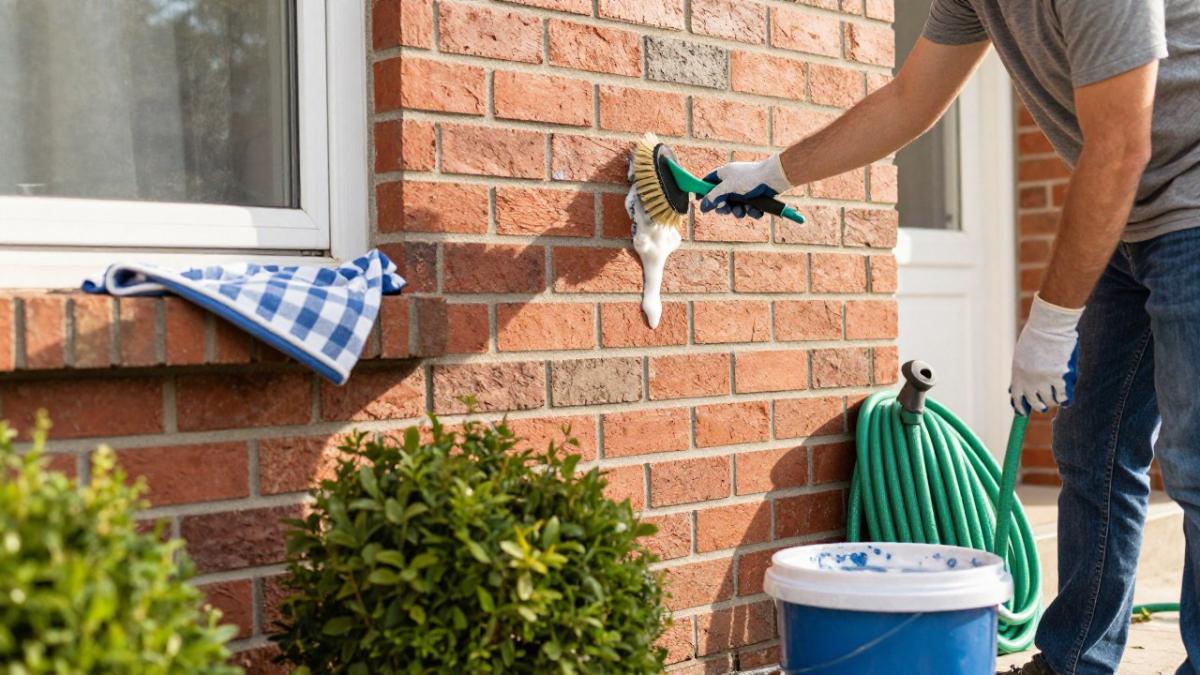
Cover shrubs and flower beds with drop cloths or plastic sheeting. Close windows and doors tight. Move patio furniture and grills away from the wall.
Here is what you need:
- A stiff-bristled brush (not wire) or a masonry brush
- A bucket, a garden hose, and a masonry sponge
- Mild dish soap or castile soap
Wetting the brick before you apply any cleaner is important. Dry brick soaks up cleaning solution fast and can leave streaks.
Best Brick Cleaner for Outdoor Use: Safe Options That Work
The best brick cleaner for outdoor use depends on the stain, the brick, and the mortar. The mildest option that removes the stain is always correct. Below is a measured, no-harsh-chemicals recipe for each common job, plus the reasoning so you can adapt when your wall does not match the table exactly.
A measured no-harsh-chemicals recipe for each job
| Job | Recipe | How to apply | Why it works |
|---|---|---|---|
| General dirt, dust, and pollen | 1 tablespoon mild dish soap per 1 gallon warm water | Scrub with a stiff-bristled brush, rinse top to bottom | Soap lifts oily film; warm water softens dried grime without attacking mortar |
| Light moss and algae | 1 part white vinegar to 1 part warm water | Wet brick, spray or sponge on, soak 5-10 minutes, scrub, rinse | Acetic acid breaks down the organic film algae uses to cling to the brick face |
| Efflorescence (white chalky film) | Plain water, plus a stiff brush | Wet, scrub, rinse, let dry, repeat | The salts are water-soluble; scrubbing dry drives them back into the brick |
| Light soot near a grill or fire pit | 1 tablespoon mild dish soap per 1 gallon warm water, applied twice | Soak, scrub gently, rinse, repeat | Soap lifts loose carbon; scrubbing hard grinds soot into the pores |
| Rust streaks | 1 part white vinegar to 3 parts water, spot-tested first | Dab on the spot only, dwell 2-3 minutes, rinse immediately | Dilute acid lifts light iron staining; full-strength vinegar can etch mortar |
Measure the soap loosely, a tablespoon per gallon, not a cup. Overly strong soap leaves a film that attracts new dirt and can streak when it dries. Mix only what you will use in one session.
Match the method to the brick and mortar, not just the stain
- Soft, old, or historic brick: hand scrub only, with the dish soap recipe. Skip vinegar unless spot-tested on a hidden area. Soft brick is more porous, so acid and pressure both remove material rather than dirt.
- Crumbly or sandy mortar: hand scrub only, and keep the wall wet the whole time. Any scrubbing pressure or acid dwell time accelerates the loss.
- Painted brick: mild dish soap and a soft brush. Vinegar can dull or lift paint, and a stiff brush can chip it at the edges.
A common pattern is to treat every stain as if it were the same. White efflorescence is a salt deposit, not dirt, and soap does nothing for it. Green and black growth is organic, so it responds to vinegar but not to soap alone. Rust is a mineral stain that needs a short, controlled acid dwell. Matching the recipe to the stain is what lets you avoid bleach, TSP, and acid masonry cleaners entirely.
What to avoid and why
Bleach, TSP (trisodium phosphate), and muriatic acid are the three products most often recommended for brick and the three most likely to cause a problem on siding. Bleach can lighten the brick face and kill beneficial soil biology when it runs off. TSP feeds algae in nearby water and leaves a residue that can haze the wall. Muriatic acid etches mortar and can permanently scar brick if not fully neutralized.
Watch out: never mix vinegar and bleach, even in a rinse bucket. The combination releases chlorine gas, and it is a real risk when a homeowner is switching between a vinegar sprayer and a bleach-based product on the same wall.
If you are weighing pressure washing against a gentler method, read our guide on whether soft washing is safe for asphalt shingles to see how the two approaches differ.
How to Clean Bricks with Vinegar: A Gentle Solution for Everyday Grime
To clean bricks with vinegar, mix one part white vinegar with one part warm water in a sprayer or bucket.
- Wet the wall with a garden hose.
- Spray or sponge on the vinegar solution.
- Let it soak for 5 to 10 minutes. Do not let it dry.
- Scrub with a stiff-bristled brush.
- Rinse thoroughly with the hose.
Vinegar is mild, but it is still an acid. Keep it off plants and rinse them well afterward. Test a hidden spot first on old brick.
Watch out: Letting any cleaner dry on brick leaves streaks and can trap residue.
How to Clean a Red Brick Wall Outside: Step-by-Step Without Damage
Cleaning a red brick wall outside comes down to five steps: prep, wet, apply, scrub, and rinse. Follow them in order and keep the pressure low to protect the brick face and mortar joints.
- Prep the area. Cover plants, close windows, and move furniture.
- Wet the brick. Soak the wall so it does not drink up the cleaner.
- Apply your cleaner. Use dish soap and warm water, or vinegar for moss.
- Scrub with a masonry brush. Work in small sections, top to bottom.
- Rinse with a garden hose. Start at the top and wash downward.
For stubborn spots, let the cleaner soak longer rather than scrubbing harder. Scrubbing too hard on soft brick wears away the surface. Rinse plants afterward to wash off any runoff.
Best Brick Cleaner for Pressure Washer: What to Use and What to Avoid
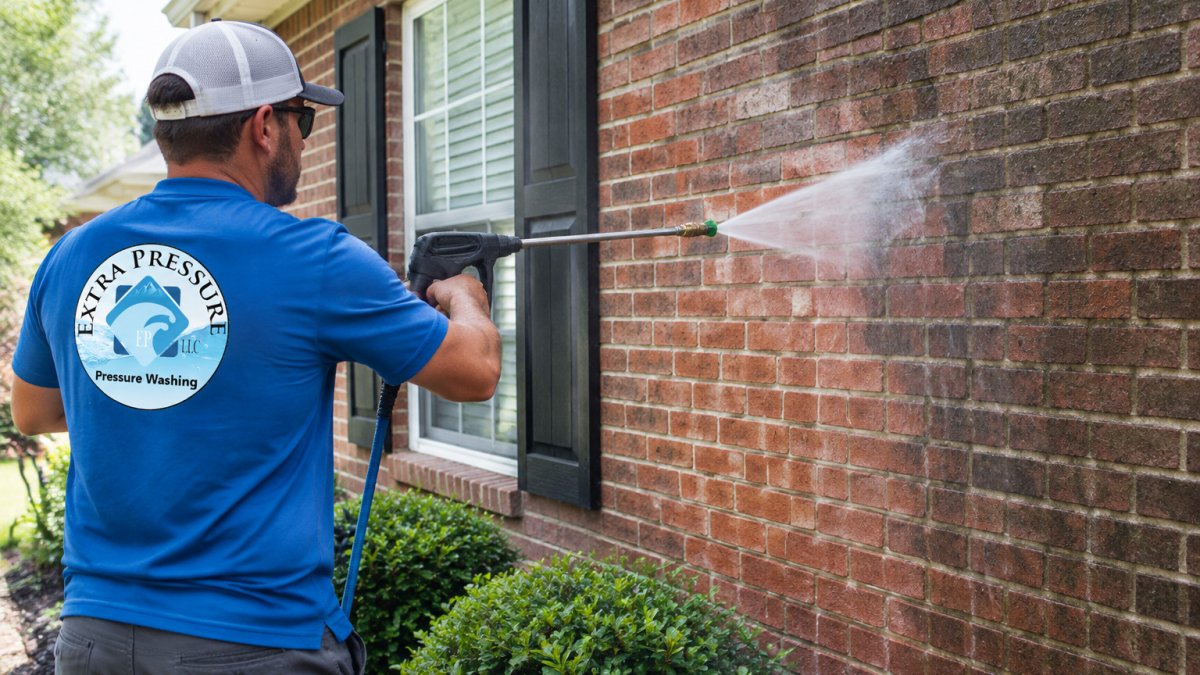
The best brick cleaner for a pressure washer is plain water at low pressure, paired with a mild soap applied by hand first. On brick siding, the pressure washer is a rinse tool, not a cleaning tool. High pressure drives water into the brick face and erodes mortar joints, and on a large exterior wall the damage is easy to miss until a joint starts shedding sand weeks later.
Pressure-washer settings that are safe for brick siding
- Pressure: keep the nozzle output under 1,500 PSI. Most residential electric units run 1,300-1,800 PSI at the tip, so test on a hidden section before committing to the whole wall.
- Tip: use a 25-degree or 40-degree fan tip. A 0-degree pinpoint tip concentrates force and will etch brick.
- Distance: hold the wand at least 12 inches from the wall, and farther on soft or old brick.
Skip the pressure washer entirely on soft, old, or crumbly brick, on painted brick with chipped edges, and on any wall where the mortar already sheds sand when you rub it with a gloved hand.
Brick-siding-specific risks the generic advice misses
A brick chimney or freestanding wall does not have the same surroundings as a full exterior wall, and the runoff is where most of the real damage happens on siding:
- Landscaping and runoff: soapy water and vinegar both harm bedding plants and grass. Pre-wet beds with clean water, cover shrubs with drop cloths, and rinse plants when you finish. Direct runoff away from storm drains where local rules restrict soapy discharge.
- Windows, doors, and openings: water forced sideways at a window frame or dryer vent can get behind the flashing. Close windows and doors, and keep the spray off frames, vents, and utility penetrations.
- Weep holes: brick veneer has small weep holes at the base to let moisture escape. Do not spray directly into them, and check after cleaning that they are still open.
Avoid harsh chemical cleaners in a pressure washer. They splash back, harm plants, and can strip the brick. For delicate surfaces, soft washing is the safer choice. Our soft washing service is designed for delicate surfaces and cleans without harsh chemicals.
When to stop and call a masonry professional
Some conditions mean the wall needs an assessment before anyone cleans it, and a pressure washer will make them worse:
- Mortar that crumbles or turns to sand when rubbed.
- Brick that spalls, flakes or chips off the face, in more than a small patch.
- White efflorescence that returns within a few weeks of cleaning, which can signal moisture moving through the wall rather than a surface deposit.
If you see any of these, stop, let the wall dry, and have a masonry professional look at it. Cleaning a failing wall can turn a repointing job into a rebuild.
Schedule Your Appointment for Professional Soft Washing
Some jobs are better left to a pro. Heavy moss, deep soot, tall walls, or fragile old brick call for experience and the right equipment.
At Extra Pressure LLC, we are licensed and insured, and we offer same-day estimates.
Schedule an appointment with Extra Pressure LLC to restore your brick’s curb appeal.
Cleaning brick siding without harsh chemicals is doable with the right steps.
Frequently Asked Questions
Will Dawn dish soap clean brick?
Yes, a few drops of mild dish soap in a bucket of warm water can lift general dirt and grime from brick siding. Apply with a soft brush and rinse thoroughly. Avoid harsh detergents or bleach, which can damage mortar and surrounding plants. For tougher stains like moss or soot, use a vinegar solution or call a professional soft washing service.
Does vinegar damage brickwork?
White vinegar in a diluted solution (typically 1 part vinegar to 4 parts water) is generally safe for most brick and mortar when used briefly and rinsed well. However, avoid letting vinegar sit for long periods or using it on old, soft brick or damaged mortar, as the mild acid can slowly erode the surface. Always test a small area first and rinse thoroughly with water after cleaning.
What is the best cleaner for exterior brick?
For a chemical-free approach, a mixture of warm water and mild dish soap works well for general dirt. For organic stains like moss or mildew, a diluted vinegar solution (1:4 ratio) is effective. For deep stains or large areas, a professional soft washing service is a good option. Avoid harsh chemicals like bleach or TSP, which can damage brick and harm landscaping.
Can you clean brick siding with just water and a brush?
Yes, for light dirt and dust, a garden hose and a stiff-bristled brush (not wire) can remove surface grime. Wet the brick first, scrub gently, and rinse. However, for stains like soot, moss, or hard water deposits, you’ll need a mild cleaning solution like dish soap or vinegar. Always avoid high pressure, which can chip brick and erode mortar.
