
Quick Summary
After pressure washing, rinse every surface with clear water from top to bottom, then walk the perimeter to check for soap film, lifted paint, loose caulk and pooling water. Let the surfaces dry fully before painting, sealing or applying any post-treatment.
- Rinse siding top-down with short, overlapping passes of clear water, then trim, then the foundation line.
- Rinse concrete, decks, walkways and plant bases too, since detergent runoff collects there.
- Walk the full perimeter and check for soap film, dirt lines, pooling water and loose caulk.
- If moisture appears behind siding or wood feels soft, stop rinsing, let it dry and note the location.
- Wait several days of dry weather before painting, and check the paint maker’s required wait time.
Table of Contents
- Rinse Residue and Inspect the Surfaces Right Away
- What Is Post-Treatment After Pressure Washing and When to Apply It
- How Long After Pressure Washing Your House Can You Paint
- Cleaning Windows After Power Washing Your House and Booking Your Next Step
- Frequently Asked Questions
Rinse Residue and Inspect the Surfaces Right Away
Last Updated: November 11, 2026
Pressure washing leaves more behind than clean siding. To understand why the cleaning cycle matters, read Why You Should Pressure Wash Your House Annually. Loosened dirt, soap and cleaning solution can dry into streaks if you walk away too soon. Rinsing every surface with clear water and checking the work before you put the hose away is a good habit.
Step 1: Rinse top-down with clear water
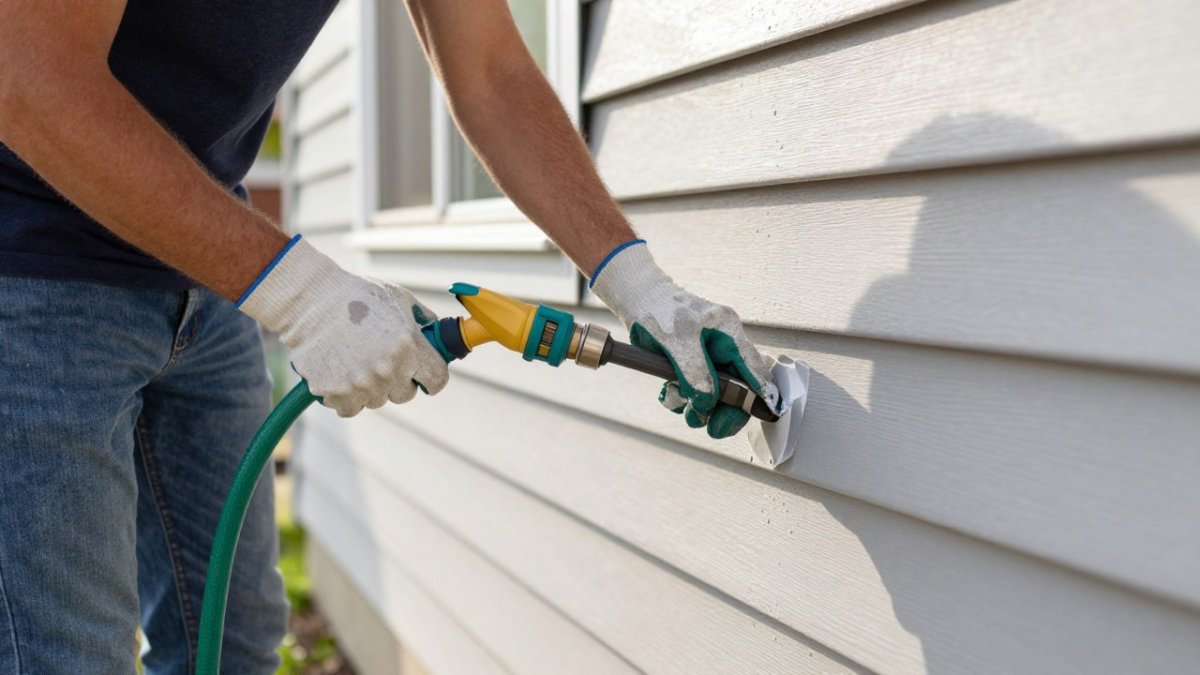
Start with a slow, top-down rinse using a garden hose and clear water. Work in short, overlapping passes, keeping the nozzle moving and avoiding seams, window frames, and the gap where siding meets trim. Rinse siding, then trim, then the foundation line last so residue flows away from the house.
Step 2: Rinse the surrounding surfaces too
Detergent and dirty runoff collect on concrete, decks, walkways, and plant bases. Rinse those with clear water after the siding, watching low spots where water pools. If runoff reached a storm drain, check your local wash-water rules.
Step 3: Walk the perimeter and inspect
Walk the perimeter and look for:
- Soap film or cloudy patches near the bottom of the walls
- Dirt lines that did not come off
- Water pooling along the foundation or under the eaves
- Loose caulk, cracked trim or damaged vinyl
- Paint that has blistered, peeled, or lifted at edges
- Water staining or soft spots around windows, doors, and utility penetrations
Mildew and stains sometimes look faded at first and return after damp weather. If streaks remain, rinse the spot again rather than scrubbing harder.
Step 4: Troubleshoot what you find
A common pattern after a wash is water intrusion at failed caulk or loose trim. If you see moisture behind siding, bubbling paint, or soft wood, stop rinsing, let it dry, and note the location before deciding whether to recaulk or call a contractor. Missed dirt and light mildew can respond to a second clear-water rinse.
Step 5: Protect plants, pets, and people
Rinse landscaping with clear water after the wash to dilute detergent on leaves or soil. Keep pets and children off treated hardscapes and away from puddles until surfaces are dry. Wash hands and tools that contacted cleaning solution, store leftover detergent out of reach, and follow the product label’s guidance.
!Homeowner inspecting freshly washed vinyl siding beside a garden hose on a sunny afternoon
The steps below summarise the rinse-and-inspect routine covered in this section.
| Step | What to do | Time or frequency |
|---|---|---|
| 1. Rinse siding | Top-down, short overlapping passes with clear water | Before putting hose away |
| 2. Rinse surroundings | Clear water on concrete, decks, walkways and plant bases | After siding is rinsed |
| 3. Inspect perimeter | Check for soap film, dirt lines, pooling water and damage | Walk the full perimeter |
| 4. Troubleshoot | Stop rinsing if moisture or soft wood appears; let it dry | Before recaulking or calling a contractor |
| 5. Protect plants and people | Rinse landscaping; keep pets and children off until dry | After the wash; until surfaces are dry |
What Is Post-Treatment After Pressure Washing and When to Apply It
Post-treatment is any step taken after washing to protect the surface, such as a sealer or mildew-resistant product applied once the siding is fully dry. For a full walkthrough, see Mold Prevention for Wood Siding: A Step-by-Step Guide.
Consider post-treatment if your home has:
- Concrete or stone that has been cleaned and needs sealing
- Wood siding that tends to grow mold in damp shade
- Surfaces that were cleaned with a stronger solution
Wait until the surface is dry before you apply anything. Read the product label, since drying times vary by material and weather.
Aftercare by exterior material
The right follow-up depends on your cladding. Treat these as starting points and confirm against the product label and manufacturer’s guidance.
- Vinyl siding: Usually needs nothing beyond a clear-water rinse. Check that weep holes and seams are clear, let it dry before caulking or painting trim, and avoid sealers that trap moisture behind panels.
- Wood siding: Wood holds water longer than vinyl. Give it several dry days before staining or sealing, test with a moisture meter if you have one, and spot-treat mildew rather than washing heavier.
- Brick and masonry: Brick and mortar can stay damp for days. Let the wall dry thoroughly before applying a breathable masonry sealer, and never seal over efflorescence or active moisture.
- Stucco: Stucco is porous and slow to dry. Repair cracks after the wall is dry, then use a breathable coating if the manufacturer recommends one.
- Concrete (driveways, walkways, patios): A common sealing candidate, but only after it is fully cured and dry. New concrete needs to cure fully before sealing; check the sealer label for the required moisture condition.
Drying times and weather-dependent follow-up
Drying time depends on the material, how much water soaked in, and the weather. Shade, high humidity, and cool temperatures stretch the window; sun, wind, and low humidity shorten it. Wait until the surface feels dry and looks uniform in color before painting, sealing, or replacing fixtures, and postpone sealing and painting if rain is forecast.
What to do if streaks, residue, or mildew remain
If streaks or a cloudy film remain after the final rinse, re-rinse with clear water before trying anything stronger. For spot mildew, apply the same detergent at lower pressure and rinse thoroughly. If mildew returns within a few days of damp weather, the cause is usually moisture or shade, so improve drainage, trim vegetation, or apply a mildew-resistant coating rather than more pressure.
!Homeowner checking drying time on a wood-sided exterior before applying sealer
How Long After Pressure Washing Your House Can You Paint
Paint needs a dry, clean surface to stick. Most painters wait until the siding has dried completely after washing. Drying time depends on weather, material, and how much water soaked in. Plan on several days of dry weather before painting, and check the paint maker’s instructions for any required wait time.
Cleaning Windows After Power Washing Your House and Booking Your Next Step
Windows often get splashed during a wash. Rinse the glass with clear water once the house is done. If spots or film remain, a professional window cleaning service can remove them safely. You can book exterior window cleaning in Georgia on this local service page. Find out whether professional window cleaning removes hard water stains. Learn more about window washing near you.
If you find damage, mildew that keeps returning, or streaks you cannot remove, call a professional. Extra Pressure LLC. is licensed and insured and offers same-day estimates.
Frequently Asked Questions
How long should a house dry after pressure washing?
Drying time depends on material, humidity, shade, and temperature, so check that the surface is fully dry before coating it. Wood and stucco hold moisture longer, so give them extra time before sealing, staining, or painting. Check that surfaces look uniformly dry and feel dry to the touch before you start any coating work. Rainy forecasts within a day or two of washing are worth planning around. If you are unsure, pick a warm, dry day and let the house air out before judging the finish.
Should you clean windows after pressure washing a house?
Yes. Pressure washing spreads fine dirt, soap, and loosened grime onto glass, so windows are often streaked or hazy afterward. Wait until the house is fully rinsed and dry, then wash the glass with a squeegee and a mild cleaning solution. Clean from top to bottom and wipe the frames and sills as well. Doing this last prevents you from re-soiling freshly cleaned glass. Professional window cleaning services can handle this step if you prefer not to do it yourself.
What should you inspect after pressure washing?
Check siding for raised edges, cracks, or areas where water was forced behind the panels. Look at caulk lines, gaps around doors and windows, and loose trim. Inspect painted surfaces for peeling or thinning finish, and check concrete for etching or chipping. Review plants and landscaping for chemical or water damage. If you find problems early, you can address them before they worsen. Note any issues with photos so you can discuss repairs with your contractor.
