Table of Contents
- Why You Should Pressure Wash Your House Annually
- How Often to Pressure Wash a House
- The Best Time to Pressure Wash a House
- Soft Washing vs. Pressure Washing: Choosing the Right Method
- House Washing Cost: DIY vs. Professional Service
- Your Annual Exterior Maintenance Checklist
- Common Pressure Washing Mistakes to Avoid
- Frequently Asked Questions
Last Updated: October 20, 2026
Why You Should Pressure Wash Your House Annually
Pressure washing your house annually is the practice of removing accumulated dirt, pollen, mold, mildew, and algae from exterior surfaces once a year to protect siding, paint, and structural materials.
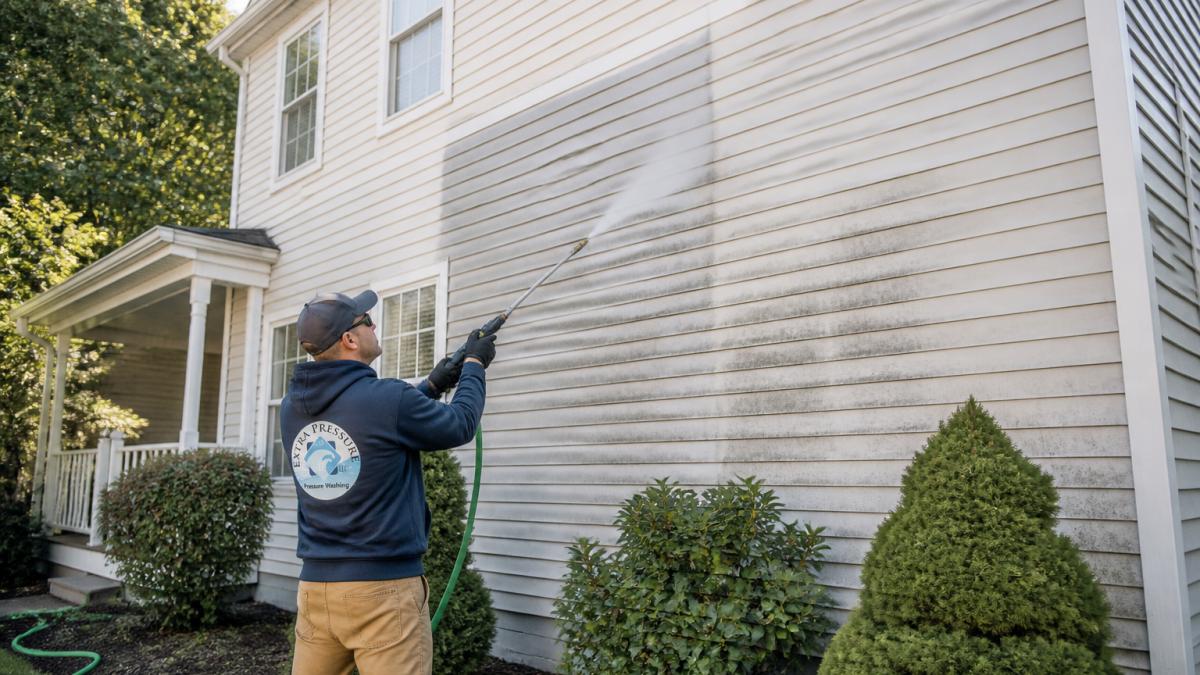
Your home’s exterior takes a beating every season. Rain splashes dirt onto siding, pollen settles into every seam, and shade keeps moisture trapped long enough for organic growth to take hold. None of that damage announces itself.
Here’s what most guides get wrong: they treat house washing as cosmetic. It isn’t. It’s preventive maintenance, the same category as changing your HVAC filter or sealing your deck.
The benefits stack up quickly:
- Removes contaminants like dirt, grime, mold, mildew, algae, and pollen before they bond to surfaces
- Protects exterior paint from the chalking and premature failure that organic growth causes
- Extends siding lifespan by keeping moisture from feeding into seams and joints
- Improves curb appeal and property appearance, which matters whether you’re selling or staying
- Prevents costly repairs by catching surface deterioration early
- Prepares surfaces for painting or staining, since fresh paint won’t adhere to a dirty substrate
Annual exterior cleaning isn’t about looks. It’s about interrupting the cycle where organic growth holds moisture against your siding, and moisture is what drives rot, peeling paint, and repair bills.
How Often to Pressure Wash a House
Most homes need a professional house washing once every 12 months. That annual cadence is the baseline because it matches the growth cycle of the contaminants themselves: algae, mildew, and mold build through warm, damp seasons, and one wash per year resets the clock before growth becomes established enough to stain or damage siding. Homes in humid climates, under heavy tree cover, or near water often need service every 6 to 9 months instead.
The annual question is really a scheduling question. Instead of asking “once a year or not,” build a simple exposure profile for your property and let it set the interval. The table below is the schedule most practitioners use as a starting point; adjust it after one full year of watching where growth returns fastest.
| Exposure profile | Typical interval | What drives it |
|---|---|---|
| Dry climate, full sun, no tree canopy | Every 12 to 18 months | Low moisture, fast drying, little organic food source |
| Mixed climate, some shade, mature landscaping | Every 12 months | Pollen and sap load, seasonal damp |
| Humid climate, heavy shade, north-facing walls | Every 6 to 9 months | Slow drying, persistent mildew pressure |
| Near water, lake or stream, or dense woods | Every 6 to 9 months | Algae and moss spores, constant moisture |
| Older wood or hardboard siding | Every 9 to 12 months, with inspection | Porous material absorbs and holds moisture |
| Recently painted or stained exterior | Every 12 months, gentle method | Fresh coatings benefit from gentler, more frequent cleaning |
Reading Your Home’s Exposure Signals
A few observable signals tell you whether the 12-month baseline is enough:
- North-facing walls. These stay damp longest and usually grow mildew first. If the north side is green each spring while the south side is clean, you are a twice-yearly candidate.
- Tree canopy. Homes under oaks, pines, or maples collect more pollen, sap, and organic debris. Debris that sits on siding and in gutters holds moisture against the surface.
- Proximity to water. Properties near lakes, streams, or dense woods see more algae and moss because spores are constantly present and humidity stays higher.
- Siding material. Vinyl and fiber cement shed water well; wood and hardboard absorb it. Porous materials need closer monitoring even when they look clean.
- Recent coating work. New paint or stain benefits from gentler, more frequent cleaning rather than a single aggressive wash.
A common mistake is waiting for visible green staining before booking a wash. By then, growth has been feeding on moisture for months, and the stain is the last stage of the problem, not the first. If you notice dark streaks on the north side of your home each spring, that is your signal to move from an annual schedule to a twice-yearly one.
Treat 12 months as the default and 6 to 9 months as the correction for humid, shaded, wooded, or waterside properties. Watch the north side and the gutters first; they tell you whether your interval is right.
The Best Time to Pressure Wash a House
The best time to pressure wash a house is late spring or early fall, when temperatures are moderate and pollen season has passed. Washing in mild weather lets surfaces dry evenly and gives you time to spot and address any damage before winter.
Spring washing clears winter grime and pollen before summer heat bakes it onto siding. Fall washing removes organic growth before cold, wet months give it a foothold. Either window works; what matters is avoiding extremes. Washing in freezing temperatures risks water intrusion, and washing in peak summer heat can dry cleaning solutions too fast to work.
For homeowners preparing to sell, schedule the wash at least two weeks before listing photos. That gives surfaces time to dry fully and any touch-up painting a chance to cure.
Soft Washing vs. Pressure Washing: Choosing the Right Method
Soft washing uses low pressure and specialized cleaning solutions to kill and remove organic growth, while pressure washing uses high-pressure water to blast away dirt and grime. For most home exteriors, soft washing is the safer choice.
Here’s where the distinction matters. High pressure can force water behind siding, strip paint, and etch soft materials. Soft washing relies on the cleaning solution to do the work, then a gentle rinse carries debris away. That’s the method we use on delicate surfaces, because it removes mold and mildew without the risk of damage.
Surface-by-Surface Safe Methods
Not every exterior surface tolerates the same approach. A quick reference:
| Surface | Recommended Method | Why |
|---|---|---|
| Vinyl siding | Soft wash | High pressure can force water behind panels |
| Painted wood | Soft wash | Pressure strips paint and etches grain |
| Brick and masonry | Pressure wash, low setting | Durable, but mortar joints need care |
| Concrete driveways | Pressure wash | Hard surface handles higher pressure |
| Roof shingles | Soft wash only | Pressure dislodges granules and voids warranties |
| Windows and screens | Soft wash, then squeegee | Delicate frames and seals |
Never let anyone pressure wash your roof shingles at high pressure. It strips the protective granules, shortens roof life, and can void the shingle manufacturer’s warranty. Soft washing is the only safe method for roofing.
House Washing Cost: DIY vs. Professional Service
Professional house washing pricing depends on your home’s size, siding type, number of stories, and level of buildup, so most providers quote each property individually rather than publishing a flat rate. What you can do is understand the cost factors and compare them honestly against the DIY path.
The main professional cost drivers are square footage of exterior surface, siding material, height and access, and severity of organic growth. Ask for a written estimate that itemizes these factors rather than a single lump figure.
The DIY path has real costs too, and they are easy to underestimate:
- Equipment rental. A pressure washer rental for a weekend typically runs in the range of roughly $75 to $150 at many equipment rental outlets, depending on machine size and location.
- Cleaning supplies. Detergent, a soft-wash mix, and PPE add to the total, and buying the wrong product for your siding can cost more in damage than the supplies saved.
- Ladder and access work. Two-story walls and roof edges require ladders and fall protection that most homeowners do not own.
- Time. A full exterior wash is a weekend project for one person, and rework from streaking or missed areas eats more time.
- Damage risk. Inexperienced pressure washing can strip paint, etch concrete, force water behind siding, and damage window seals, and those repairs often exceed the cost of hiring a professional in the first place.
The trade-off comes down to more than money. A rented pressure washer plus detergent, ladder work, and a full weekend is the DIY path. The professional path brings licensed and insured technicians, proper soft-wash equipment, and a result you do not have to redo.
Ask any provider for proof of licensing and insurance before they start. It takes one minute and protects you from liability if something goes wrong on your property.
A practical way to decide: if your exterior is single-story vinyl or fiber cement with light buildup, DIY rental can be reasonable. If you have wood or hardboard siding, two or more stories, heavy mildew, or delicate landscaping, the professional path usually wins on total cost once damage risk and rework are counted.
Your Annual Exterior Maintenance Checklist
A yearly wash works best as part of a broader exterior routine. Here’s the checklist we recommend running each year:
- Inspect siding for cracks, soft spots, or peeling paint before washing
- Clear gutters and downspouts of debris
- Schedule the house wash for late spring or early fall
- Wash windows and screens after the exterior cleaning
- Check caulking around windows and doors, and reapply where cracked
- Touch up any paint that failed over the past year
- Trim vegetation back from siding to improve airflow
- Note any areas that regrew mold quickly and flag them for closer monitoring
This checklist is also where early problem detection happens. Washing reveals what dirt was hiding: hairline cracks, loose flashing, failing caulk. Catching those in year one is far cheaper than discovering them after water has been working its way in for three years.
Common Pressure Washing Mistakes to Avoid
The most damaging mistake is using too much pressure on the wrong surface. It’s also the most common. Homeowners rent a machine, turn it up, and etch a permanent stripe into concrete or strip paint off siding in seconds.
Other mistakes we see regularly:
- Skipping the pre-wash inspection. Loose caulk, cracked siding, and failing seals all get worse under pressure.
- Ignoring landscaping. Cleaning chemicals and runoff can damage plants if they aren’t protected and rinsed.
- Washing in direct sun. Solution dries before it works, leaving streaks.
- Using the wrong nozzle. A narrow tip concentrates force; wide tips spread it.
- Letting runoff flow into storm drains. Most municipalities regulate what enters stormwater systems, so contain and manage runoff responsibly.
EPA guidance on managing residential wash water and runoff
The thing nobody tells you about mold on gutters and fascia: if it keeps returning, the underlying moisture source hasn’t been fixed. A wash removes the growth, but recurring mold points to a drainage or ventilation issue worth investigating.
Your exterior is the first thing anyone notices about your property, and it’s the last thing most homeowners think to maintain.
Frequently Asked Questions
How often should you get your house pressure washed?
Most homes need a full exterior wash once a year. In humid climates or areas with heavy tree cover, twice a year may be necessary to keep mold and algae from returning. Homes with vinyl siding, painted wood, or stucco benefit from annual cleaning because organic growth breaks down surface materials over time. If you notice green or black streaks returning within six months, increase frequency or ask a professional about soft washing, which treats the growth at the root rather than just blasting it off.
What’s the average cost of having your house power washed?
House washing cost varies by home size, siding type, and local labor rates. DIY equipment rental and detergent can be an option, but professional service includes insurance, proper nozzles, and safe methods for delicate surfaces. Request a same-day estimate from a licensed provider to get a firm number for your property rather than relying on national averages.
Can pressure washing damage siding or paint?
High-pressure washing can damage siding and strip paint if the wrong nozzle or too much pressure is used. Vinyl siding can crack, wood can splinter, and paint can chip. Soft washing, which uses low pressure and specialized cleaning solutions, is the safer choice for painted wood, stucco, vinyl, and older siding. A professional will adjust pressure and technique for each surface. Always test a small area first and avoid aiming the wand upward under siding edges where water can get behind the wall.
Is it better to pressure wash or soft wash a house?
For most house exteriors, soft washing is better. It uses low pressure and cleaning solutions to kill mold, mildew, and algae at the source, while pressure washing relies on force and can damage delicate surfaces. Pressure washing is better for concrete driveways, brick patios, and tough stains on hard surfaces. Many professional services use both methods on the same property: soft washing for siding and roofs, pressure washing for walkways and driveways. Ask which method will be used on each surface before booking.