
Table of Contents
- Why Preparation Makes or Breaks a Professional Pressure Washing Visit
- Your Pressure Washing House Preparation Checklist
- What to Move Before Pressure Washing: Furniture, Decor, and Vehicles
- Protecting Plants During Pressure Washing and Landscaping
- Water Access, Drainage, and Runoff Planning
- Questions to Ask a Pressure Washing Company Before Service Day
- What to Expect on Service Day and After the Wash
- Conclusion
- Frequently Asked Questions
Last Updated: October 21, 2026
Why Preparation Makes or Breaks a Professional Pressure Washing Visit
Preparing your home for professional pressure washing is the difference between a fast, clean result and a costly repair.
Here’s the part most people miss: the crew can’t touch anything until your windows are shut and your outlets are sealed.
Pressure washing is the use of high-pressure water to strip dirt, mold, and grime from exterior surfaces.
Below, we’ll show you exactly how to get ready, room by room and surface by surface, so service day runs smooth.
Never let a crew start before you’ve walked the exterior and flagged loose siding, cracked caulk, or chipped paint. High pressure finds every weak spot, and a small gap becomes a water leak behind your walls.
Your Pressure Washing House Preparation Checklist
A good pressure washing house preparation checklist starts outside and works inward, but the version most guides give you stops at “move the furniture.” For a professional visit, the list needs to cover every feature on the property and draw a clear line between what you handle and what the crew handles. Use this sequence so nothing gets missed:
- Close and lock all windows and doors
- Seal outlets and cover light fixtures
- Move furniture, grills, and vehicles away from the house
- Cover or wet down plants and landscaping
- Confirm water access and clear drains
- Check siding and exterior surfaces for damage
- Note any pre-existing damage for your records
That last step matters more than people think. Photograph cracks, loose boards, and peeling paint before the crew arrives. If something looks worse after the wash, you’ll have proof of its condition beforehand. Date-stamped photos on your phone are enough; you do not need a formal report.
Property-Feature Preparation Checklist
Walk the property feature by feature so you do not miss the spots crews commonly have to work around. Most practitioners find that a 20- to 30-minute walkthrough the day before service catches nearly everything.
- Patios and decks: Remove furniture, cushions, grills, planters, and decor. Sweep loose debris. Note loose boards, popped nails, or cracked pavers so the crew can adjust pressure.
- Garages and driveways: Move vehicles, bikes, and toys off the slab. Clear the garage door threshold and check that the door seals are intact. Remove oil stains? Leave them; the crew will discuss pre-treatment.
- Outdoor kitchens and built-ins: Empty cabinets, cover or remove countertop items, and disconnect any gas lines to grills per the manufacturer’s instructions. Cover outlets and light fixtures in the cooking area.
- Porches and entryways: Remove doormats, welcome signs, potted plants, and seasonal decor. Check that door seals and weatherstripping are tight.
- Pets and pet areas: Bring pets indoors or relocate them away from the work zone. Remove food and water bowls, tie-outs, and pet houses from the wash area.
- Vehicles: Park them down the street or in the garage, not in the driveway. Overspray carries cleaning solution and can spot finishes.
- Roofs and gutters: Clear leaves and debris from gutters and downspouts so runoff flows away from the foundation. If the crew is washing the roof, confirm the method (soft wash versus pressure) before service day.
- Fences and gates: Unlock gates the crew needs to access, and move anything leaning against the fence line.
What the Homeowner Handles vs. What the Crew Handles
A professional crew typically handles setup, covering fixtures, applying cleaning solution, washing, rinsing, and the final walkthrough. The homeowner’s job is access and clearance: shut windows, lock doors, move loose items, secure pets, and confirm water access. Ask the company before service day which tasks they expect you to complete, because policies vary. Some crews will move light furniture; most will not move grills with propane tanks or anything fragile.
Exterior Surfaces and Siding Checks
Walk the perimeter and look closely at your siding. Tap on any soft spots.
What most guides miss is that older siding needs a gentler approach. Wood, stucco, and painted surfaces can’t take full pressure. That’s where soft washing comes in.
At Extra Pressure LLC., our specialized soft washing for delicate surfaces protects older siding while still removing stubborn stains.
Windows, Doors, Outlets, and Light Fixtures
Windows and doors need to be shut tight before any water flies. Check the seals around each one. A gap lets water into the wall cavity, and that’s how you end up with rot.
Outlets and light fixtures are the bigger risk. Water plus electricity is a hazard, so cover every exterior outlet with a waterproof cover or plastic wrap and tape. Do the same for light fixtures on the exterior walls.
- Close and latch all windows
- Lock exterior doors
- Cover outdoor outlets with waterproof covers
- Wrap exterior light fixtures
- Remove screens or storm windows if the crew asks
What to Move Before Pressure Washing: Furniture, Decor, and Vehicles
What to move before pressure washing comes down to one rule: anything loose goes. Patio sets, grills, planters, doormats, and yard decor all need to clear the work area.
Move vehicles out of the driveway and away from the house. Pressure washing throws overspray, and that mist carries cleaning solution.
Here’s a quick list of what to relocate:
- Patio furniture and cushions
- Grills and propane tanks
- Potted plants and garden decor
- Doormats and welcome signs
- Bikes, toys, and yard tools
- Vehicles parked near the house
Clear a path to the water spigot too. The crew needs a hose run that won’t trip anyone or drag across your landscaping.
Protecting Plants During Pressure Washing and Landscaping
Protecting plants during pressure washing starts before the first spray. Overspray and cleaning solution can burn leaves and wilt flowers, so cover what you can and wet down what you can’t.
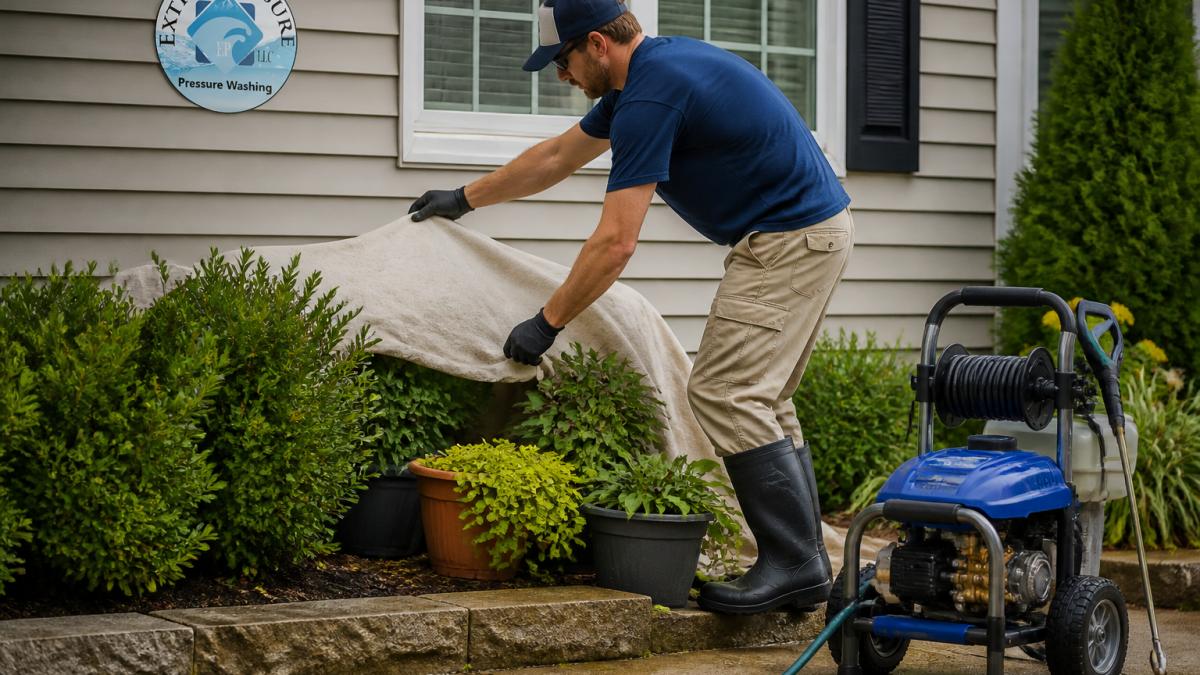
Drape tarps or old sheets over shrubs and small trees near the house. For larger beds, soak the soil and foliage with a garden hose first.
The cleaning solution is the real threat, not the water. Bleach and mildewcide kill mold on siding, and they’ll kill your garden too.
Water your landscaping the morning of service, not the day before. Wet foliage and soil resist chemical burn far better than dry ground, and it takes five minutes with a hose.
Water Access, Drainage, and Runoff Planning
Water access and drainage planning keeps the job moving and protects your yard.
Confirm the outdoor spigot works and the hose reaches the house. If you have a well, tell the crew. Some systems can’t handle the draw of a pressure washer running for hours.
Runoff is the part nobody plans for. Wash water carries dirt, mold, and cleaning solution. Point the crew toward a driveway or lawn that slopes away from the foundation.
- Check that the outdoor spigot works
- Clear leaves from gutters and downspouts
- Make sure downspouts point away from the foundation
- Identify a low spot where runoff can drain
- Keep pets and kids away from pooling water
Questions to Ask a Pressure Washing Company Before Service Day
Questions to ask a pressure washing company should cover licensing, method, and what happens if something breaks.
Start with the basics. Are they licensed and insured? What method will they use on your siding, and why?
Here’s a checklist for hiring a professional:
- Are you licensed and insured?
- Which surfaces get soft washing versus pressure washing?
- What’s the estimate, and is it in writing?
- Do you protect plants and cover fixtures?
- What happens if the wash damages something?
- Can you provide a same-day estimate?
- How do you handle runoff and water access?
The Federal Trade Commission’s guidance on home improvement scams is worth a read before you sign anything.
At Extra Pressure LLC., we’re licensed and insured and offer same-day estimates, so you can get answers before you commit.
What to Expect on Service Day and After the Wash
On service day, expect the crew to walk the property first, then set up hoses and covers. Most of the work happens top to bottom, so water and solution run down instead of drying in streaks. The better you understand the schedule, the less likely you are to be surprised by noise, water use, or access requests.
Here’s how the day usually runs:
- Crew arrives and walks the exterior with you
- Hoses and equipment get set up
- Plants and fixtures get covered
- Washing starts at the top and works down
- Final rinse and walkthrough
Arrival, Access, and Water Needs
Confirm the arrival window the day before. Most companies give a morning or afternoon window rather than an exact time, because weather and prior jobs affect the schedule. Make sure someone is home or that the crew has a agreed-upon way to access the property, water spigot, and any locked gates.
Expect the crew to connect a hose to your outdoor spigot. Confirm the spigot works and that the hose run does not cross a walkway where someone could trip.
Noise, Duration, and What to Expect During the Wash
Pressure washing is loud. Equipment noise can carry through walls, so plan for pets and children to be away from the work zone. Most residential exterior washes take a few hours depending on square footage, surface type, and how much prep the crew has to do.
Expect water to run down the exterior and pool in low spots. That is normal. The crew should direct runoff away from the foundation and toward a lawn or driveway that slopes away from the house.
The Final Walkthrough and Inspection
After the wash, do your own inspection with the crew lead. Look for missed spots, new cracks, or water pooling near the foundation.
The U.S. Environmental Protection Agency’s guidance on managing wash water notes that runoff can carry pollutants, so keep an eye on where the water went.
One more thing: wash water can strip old paint. If your paint was already peeling, plan to touch up after the wash dries.
The best time to catch a problem is the walkthrough right after the wash. Photograph everything before and after, and speak up the same day if something looks off.
Conclusion
Getting your home ready for a professional wash takes a few hours and saves you real money in repairs.
Extra Pressure LLC. handles the rest. We’re licensed and insured, and we offer specialized soft washing for delicate surfaces, same-day estimates, and a 100% satisfaction guarantee. Our team treats every property like it’s our own.
Schedule an appointment with Extra Pressure LLC. and get your exterior cleaned right the first time.
Frequently Asked Questions
Should I close windows and doors before pressure washing?
Yes. Close and lock every window and exterior door before the crew arrives. Water forced at high pressure can slip past loose seals, worn weatherstripping, and sliding door tracks, which can lead to interior moisture and water damage. Check that storm windows are latched and that basement or garage doors are fully shut. If you have older single-pane windows with cracked glazing, point them out to the technician so they can lower the pressure setting or switch to soft washing around those areas.
Do I need to cover plants before pressure washing?
Covering is a good idea for delicate plants, and it is part of protecting plants during pressure washing. Move potted plants out of the spray zone, and drape tarps or plastic sheeting over shrubs and flower beds that sit close to the siding. The technician should pre-wet plants before applying any cleaning solution and rinse them afterward. Ask what cleaning solution will be used, since bleach and mildewcide mixes can burn foliage if they are not diluted and rinsed properly.
How long does professional house washing take?
Most single-family home exteriors take two to four hours for a standard house wash, depending on square footage, the number of stories, and how much organic growth is on the siding. Soft washing a large two-story home with heavy mildew can run longer. Driveways, sidewalks, and decks add time if they are included. Ask the company for a time window when you book, and plan to be available for the start so you can walk the property and point out anything fragile.
What should I ask a pressure washing company before the appointment?
Ask whether they are licensed and insured, what method they use for your siding type, and whether they use pressure washing or soft washing on delicate surfaces. Confirm how they protect plants and landscaping, what cleaning solutions they apply, and whether they document pre-existing damage. Get a written estimate in USD before work starts, and ask about their satisfaction guarantee. For window cleaning or gutter work bundled with the wash, confirm those services are included in the quote.