
Table of Contents
- Why Commercial Gutter Damage Leads to Expensive Building Repairs
- Commercial Gutter Inspection Checklist: What to Check and How Often
- Commercial Gutter Cleaning: Routine Debris Removal That Prevents Clogs
- Commercial Gutter Maintenance: Seasonal Tasks and Preventive Upkeep
- Commercial Gutter Repair Signs: When to Fix vs. Replace
- Sizing Gutters and Downspouts for Roof Area and Rainfall Intensity
- Safe Maintenance Procedures for Large or Elevated Buildings
- Drainage Performance Beyond the Gutter: Downspout Placement and Water Discharge
- Frequently Asked Questions
Last Updated: October 17, 2026
Why Commercial Gutter Damage Leads to Expensive Building Repairs
Water is patient. A clogged commercial gutter system lets rainwater spill down exterior walls, soak foundations, and erode landscaping one storm at a time.
Learning how to prevent gutter damage on commercial buildings comes down to a simple principle: move water off the roof fast and keep it moving.
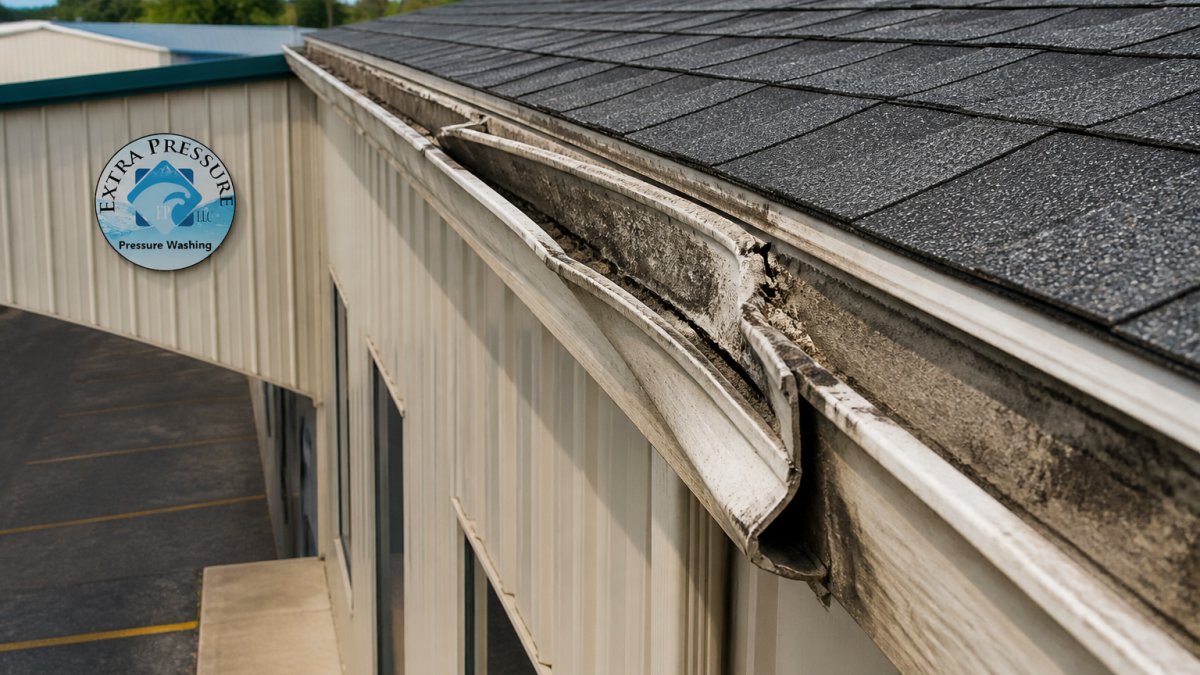
The stakes are real. Repeated overflow can lead to foundation damage, basement flooding, soil erosion, and exterior wall damage.
Gutter damage is rarely sudden. It builds over months of small failures, which means most of it is preventable with a steady inspection and cleaning routine.
Commercial Gutter Inspection Checklist: What to Check and How Often
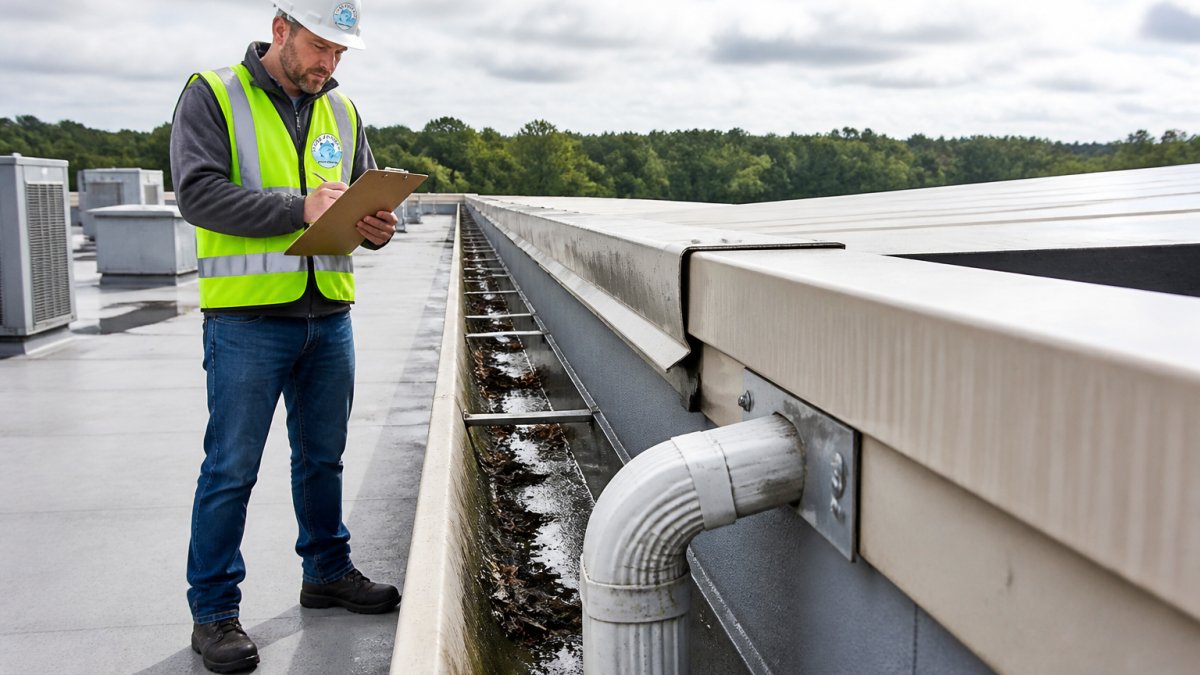
A commercial gutter inspection checklist is a set of visual checks a property manager runs on a fixed schedule to catch clogs, leaks, and loose fasteners before they cause water damage. Check the system monthly, after every major storm, and at each season change, and log every inspection so you can spot recurring failures instead of rediscovering them.
Monthly Walk-Through Checklist
Run these checks from the ground where possible. Climb up only when you have safe access.
- Water flows freely out of every downspout during rain
- No standing water or overflow at the roof edge
- No sagging sections along the gutter run
Seasonal and Post-Storm Inspection Frequency
Timing matters as much as the checklist itself. Here is how often to inspect:
| Inspection Type | Frequency | Best Timing |
|---|---|---|
| Ground-level walk-through | Monthly | Any dry day |
| Full roof-level inspection | Twice a year | Spring and fall |
| Post-storm inspection | After every major storm | Within 48 hours |
| Post-winter check | Once | Early spring |
Fall matters most. Leaf drop and branch damage fill gutters fast. A spring check catches winter damage like cracked joints and loosened fasteners.
Post-Storm Triage: What Changes After Severe Weather
A post-storm inspection is not the same as a routine walk-through. Wind-driven debris, hail, and ice loading stress different parts of the system. After a major storm, prioritize:
- Downspout outlets, confirm water still exits freely; packed debris is the most common post-storm failure.
- Hangers and fasteners, look for pulled screws, bent hangers, and gutter sections that have dropped away from the fascia.
- Joint seams, check for separation or sealant failure where sections meet.
- Roof-edge flashing, confirm flashing still overlaps the gutter and has not lifted.
- Discharge points, verify splash blocks and extensions were not displaced and that soil has not eroded back toward the foundation.
Document any damage with photos and note the date, location, and severity. This record becomes your evidence for insurance claims and your baseline for the next inspection.
Inspection Documentation and Recordkeeping
A checklist only prevents damage if you can prove what was checked and when. Keep a simple gutter inspection log with these fields for every visit:
- Date and inspector name
- Inspection type (monthly, seasonal, post-storm, post-winter)
- Sections inspected and any defects found
Review the log quarterly. Recurring entries, the same joint leaking, the same downspout clogging, the same section sagging, are your signal that a repair is not holding and the system needs a design or replacement decision rather than another patch.
An inspection without a written record is just a walk around the roof. The log is what turns a checklist into a preventive maintenance program, and what tells you when to stop repairing and start replacing.
Commercial Gutter Cleaning: Routine Debris Removal That Prevents Clogs
Routine debris removal is the single most effective way to prevent clogs. Clear gutters twice a year at minimum, and more often if trees overhang the roof.
Commercial gutter cleaning follows a simple sequence:
- Remove large debris by hand or with a scoop
- Flush the gutter run with water toward each downspout
- Clear downspouts until water flows freely
- Check drainage outlets for blockages
- Rinse the exterior of the gutter to spot leaks
Tree trimming helps too. Cut back branches that hang over the roof. This reduces leaf load and prevents branch damage during storms.
Never flush debris toward a downspout without checking it first. A packed downspout turns a simple rinse into an overflow that soaks the wall behind the gutter.
Commercial Gutter Maintenance: Seasonal Tasks and Preventive Upkeep
Preventive maintenance is the work you do between cleanings to keep the system strong. It covers fasteners, joints, slope, and guards. This is where most commercial gutter maintenance plans save the most money.
Seasonal task list:
- Spring: check for winter damage, reseal joints, confirm slope
- Summer: tighten fasteners, clear debris after storms
- Fall: clean gutters, trim trees, inspect before heavy rain
Gutter Guards and Clog Prevention
Gutter guards, also called leaf guards, reduce how much debris enters the system. They help most on buildings surrounded by trees. They do not eliminate cleaning, though. Fine debris still collects on top and works its way in. Treat guards as a reducer, not a replacement for routine cleaning.
What most guides miss: a gutter guard that sits too flat can let water skim right over the top and miss the gutter entirely. Check that water actually enters the system after any guard install.
Commercial Gutter Repair Signs: When to Fix vs. Replace
Some damage calls for a quick repair. Other damage means the system is done. Here is how to tell the difference.
Repair signs (fix now):
- Small leaks at joints or seams
- One or two loose fasteners
- Minor sagging in a single section
Replace signs (plan for it):
- Widespread corrosion or rust-through
- Multiple cracks across long runs
- Repeated joint failure after repairs
- Sagging along most of the run
Material choice affects lifespan. Seamless aluminum resists corrosion well and suits most commercial buildings. Steel is stronger but rusts if the coating fails. Vinyl is cheap but cracks in cold weather. Match the material to your climate and tree load, not just the price.
Sizing Gutters and Downspouts for Roof Area and Rainfall Intensity
Undersized gutters overflow even when they are clean. Gutter sizing depends on two things: roof area and rainfall intensity.
The math is straightforward once you break it into four inputs. You do not need to design the system yourself, but understanding these inputs lets you ask the right questions and spot a system that was never sized for the building.
Input 1: Roof Area Draining to Each Gutter Run
Measure the footprint of the roof that drains to a given gutter run, not the whole roof. On a commercial building with interior valleys or multiple roof levels, water from an upper roof may discharge onto a lower roof, that lower roof’s gutters carry both its own area and the upper roof’s runoff. Add them. A common mistake is sizing each gutter run to its own roof section while ignoring the upper-roof load dumping into it.
Input 2: Rainfall Intensity
Local building codes and plumbing codes set a design rainfall intensity for your area, usually expressed as inches per hour for a short-duration storm. Your local authority having jurisdiction (AHJ) is the source for the number that applies to your building. Design to that intensity, not to an average rainfall figure, gutters fail during short, intense storms, not during drizzle.
Input 3: Gutter Slope and Capacity
Gutters rely on slope to move water to the downspouts. A run that is too flat holds water, which accelerates corrosion and joint failure. A run that is too steep looks bad and can overflow at the low end if the downspout cannot keep up. Slope, gutter profile, and gutter size work together, a larger gutter can carry more water at a flatter slope, which is often the practical fix on a long commercial run where you cannot add much pitch.
Input 4: Downspout and Outlet Capacity
Gutter capacity means nothing if the downspouts cannot discharge it. Each downspout has a limited flow capacity based on its size and the number of elbows. Long runs with few downspouts overflow at the low end even when the gutter itself is adequately sized. Adding downspouts is often cheaper and more effective than upsizing the gutter.
Putting It Together
A drainage professional runs these inputs through the sizing tables in the applicable plumbing or building code and produces a code-compliant design. What you should confirm before signing off:
- The design rainfall intensity matches your AHJ’s requirement
- Upper-roof runoff is included in the lower-roof gutter load
- Downspout count and size match the gutter capacity, not just the gutter length
- Slope is specified and achievable on the actual building
When in doubt, size up. Extra capacity costs little and prevents overflow during heavy storms. But do not size up blindly, an oversized gutter on an undersized downspout still overflows.
A clean gutter that still overflows is almost always a sizing problem. Check capacity before you blame debris, and check downspout capacity before you blame the gutter.
Safe Maintenance Procedures for Large or Elevated Buildings
Safety comes first on commercial roofs. Many gutter injuries happen on ladders and roof edges, not from the work itself.
Follow these rules:
- Use a stable ladder rated for the load, set on level ground
- Keep three points of contact on every ladder climb
- Wear non-slip footwear and use fall protection near roof edges
- Never reach out over the edge to clean a gutter
For tall buildings or steep roofs, hire a licensed and insured crew. While a crew is on site, it is also worth having the exterior cleaned properly, services like window washing and soft washing address the streaks and organic buildup that overflow water leaves on walls and glass, so the building looks as sound as the drainage now is.
Drainage Performance Beyond the Gutter: Downspout Placement and Water Discharge
The best gutter system fails if water dumps at the foundation. Downspout placement and water discharge decide whether the whole system protects the building or undermines it.
Direct every downspout to a drainage outlet or splash block that carries water away from the foundation.
That is the full picture: inspect often, clean on schedule, repair small issues early, size the system right, and send water where it belongs.
Frequently Asked Questions
How often should commercial gutters be inspected and cleaned?
Inspect commercial gutters at least twice a year, in spring and fall, and after any major storm. Clean them when debris reaches one-third of the gutter depth, which may mean quarterly if trees overhang the roof. Buildings near heavy tree cover or in areas with high rainfall intensity need more frequent checks. Keep a written log of each inspection and cleaning so you can spot recurring problems before they turn into leaks, sagging, or foundation damage.
What are the signs of damage to a commercial gutter system?
Watch for sagging sections, cracks, corrosion, joint failure, loose fasteners, and water overflow during rain. Standing water in the gutter or stains on the exterior wall below the roofline point to clogs or poor slope. Peeling paint, mold on fascia, and soil erosion around downspout outlets are also warning signs. Any of these commercial gutter repair signs means you should schedule a professional inspection before the next storm season.
How can you prevent commercial gutters from overflowing?
Overflow usually comes from undersized gutters, clogged downspouts, or too few drainage outlets for the roof area. Clear debris regularly, confirm the gutter capacity matches the roof area and local rainfall intensity, and add downspouts if water pools in long runs. Gutter guards reduce leaf buildup but do not replace routine cleaning. Also check that the slope directs water toward outlets and that discharge points carry water away from the foundation.
When should a commercial gutter be repaired or replaced?
Repair localized problems like loose fasteners, small leaks, or a single failed joint. Replace the system when corrosion is widespread, seams fail repeatedly, or the gutter size cannot handle the roof area and rainfall intensity. If repairs exceed half the cost of a new seamless gutter, replacement is usually the better long-term choice. A professional inspection can confirm whether the existing slope, fasteners, and downspouts are worth saving.
Commercial gutter upkeep takes time, safe roof access, and the right equipment. That is where Extra Pressure LLC. comes in. We offer licensed and insured gutter maintenance, same-day estimates, and state-of-the-art equipment to clear debris and protect your building. Our team also handles soft washing to safely remove organic matter from fascia and siding without damage. Get started with Extra Pressure LLC. and keep your commercial property protected all year.