
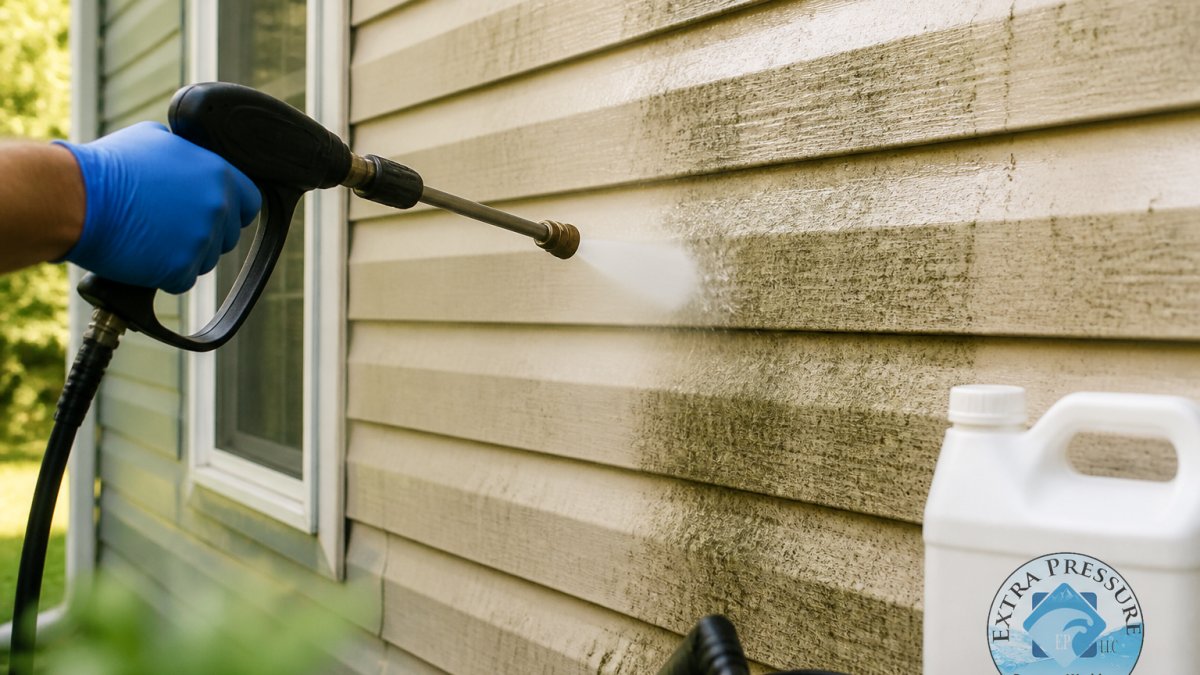
Table of Contents
- Why Mold Keeps Coming Back on Your Home Exterior
- How to Prevent Mold on Siding: Fix the Moisture Source First
- How to Remove Mold From House Siding Safely
- Soft Washing for Mold Removal on Delicate Surfaces
- Exterior House Washing Frequency: How Often Is Enough?
- Airflow, Sunlight, and Trimming Vegetation Near Walls
- A Surface-by-Surface and Seasonal Prevention Plan
- Frequently Asked Questions
Last Updated: October 17, 2026
Why Mold Keeps Coming Back on Your Home Exterior
Mold regrowth on a home exterior almost always traces back to one thing: a moisture source nobody fixed. Wash the siding, and the green comes back within months if water still sits where it shouldn’t. We see this constantly on homes across the region, and the pattern is always the same. The stain gets cleaned, the leak doesn’t get repaired.
Here’s what most guides get wrong. They treat exterior mold as a cleaning problem. It’s a water problem that shows up as a stain.
Mold needs three things to grow: moisture, organic food (dirt, pollen, wood, paint film), and time. You can’t remove the food entirely outdoors. You can’t stop rain. That leaves moisture control as your only real lever, which is why the EPA’s mold guidance puts fixing the water source first and cleanup second.
Mold vs. Algae vs. Mildew vs. Dirt
Not every green streak is mold, and misreading it wastes money. Here’s how to tell them apart:
- Mold: fuzzy or powdery patches, often black, green, or white. Grows in irregular blotches. Feels slightly raised.
- Algae: a thin green film or streaking, common on vinyl and wood siding facing north. Slick when wet.
- Mildew: flat, powdery, and lighter in color. Often clusters in shaded spots.
- Dirt: brown or gray splatter, usually concentrated near the ground or under roof runoff.
The test is simple. A drop of household bleach on a small patch will lighten mold, mildew, and algae. Dirt stays put. This matters because algae and mildew respond to the same treatment as mold, but dirt just needs rinsing.
How to Prevent Mold on Siding: Fix the Moisture Source First
Preventing mold on siding starts with finding where water lingers. Walk the house after a hard rain and look for these:
- Gutters overflowing or pulling away from the fascia
- Downspouts dumping water against the foundation
- Sprinklers hitting the siding
- Shaded walls that stay damp for hours
- Caulk lines and window trim that have failed
Each of these keeps a wall wet long enough for mold to take hold. A common mistake is sealing and painting over a damp wall. That traps moisture and makes the problem worse.
Drainage and Water Management Around the House
Water should leave your property, not sit next to it. Check these points:
- Downspouts extend at least 4 to 6 feet from the foundation
- The ground slopes away from the house on every side
- Gutters are clear and pitched correctly
- No mulch or soil is piled above the siding’s bottom edge
- Shaded low spots don’t hold standing water after rain
If a wall stays wet for more than a day or two after rain, mold will return no matter how well you clean. Fix the drainage first, then clean.
How to Remove Mold From House Siding Safely
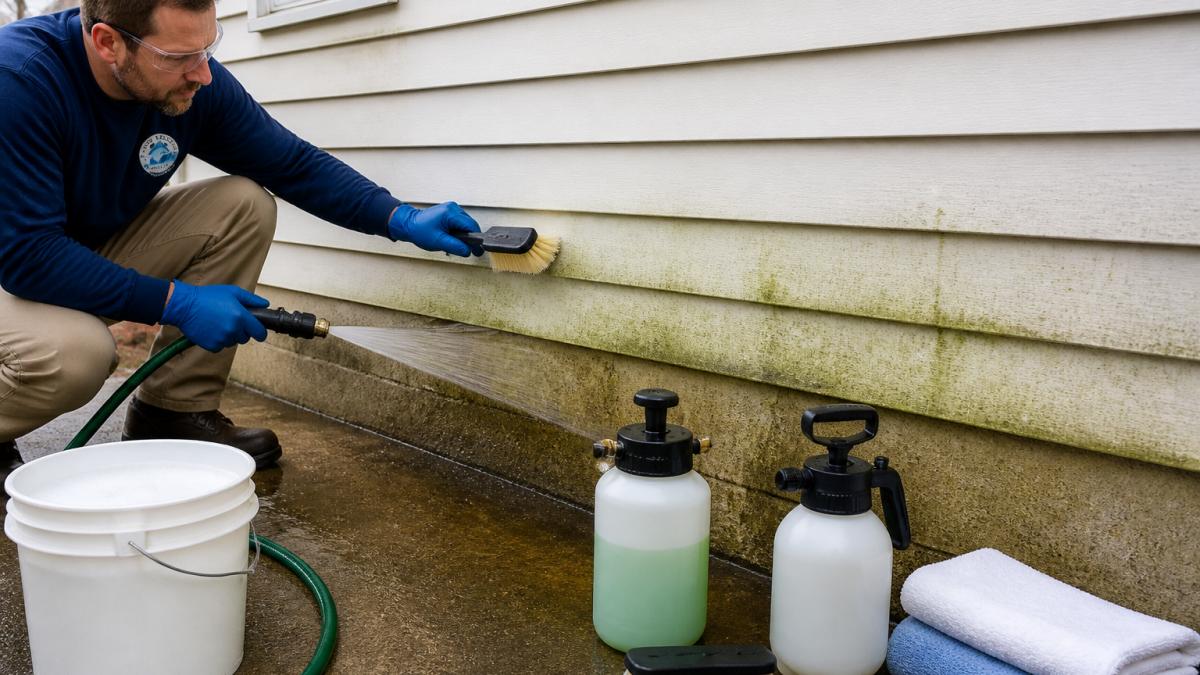
Removing mold from house siding requires killing the growth, not just scrubbing the color off. Follow these steps:
- Protect yourself. Gloves, eye protection, and a mask.
- Wet the surface first. This keeps spores from going airborne.
- Apply a cleaning solution. A mix of oxygen bleach and water works on most siding. Avoid chlorine bleach on painted wood and metal.
- Let it dwell. Give it 10 to 15 minutes to work.
- Scrub gently. A soft-bristle brush on stubborn spots.
- Rinse from the top down. Low pressure, steady flow.
- Let it dry fully. Check for any remaining moisture issues.
Pressure-Washing Limits and Safe Cleaning Methods
Pressure washing can strip paint, force water behind siding, and etch wood. Keep these limits in mind:
| Surface | Safe Pressure | Method |
|---|---|---|
| Vinyl siding | Low | Soft wash, wide tip |
| Painted wood | Very low | Soft wash only |
| Stucco | Low | Soft wash, gentle rinse |
| Brick | Low to moderate | Soft wash, avoid mortar |
| Window seals | None | Hand clean only |
Never aim a pressure washer upward under siding panels or into window and door seams. Water forced behind the wall is exactly how mold regrowth starts.
Blasting mold off with high pressure spreads spores and drives water into the wall cavity. The stain disappears for a season, then comes back worse because the moisture never left.
Soft Washing for Mold Removal on Delicate Surfaces
Soft washing for mold removal uses low pressure and a cleaning solution to kill organic growth at the root. It’s the right choice for painted wood, stucco, vinyl, and older siding that can’t take a hard blast.
The process is straightforward. Apply the solution, let it dwell, then rinse at low pressure. The cleaner does the work, not the force. That’s why soft washing for mold removal lasts longer than scrubbing, since it kills the growth rather than just removing the visible layer.
Our team uses soft washing on delicate surfaces for exactly this reason. It removes the growth without damaging the material underneath.
Ask any exterior cleaner what pressure they plan to use on your siding before they start. If the answer is “full pressure,” that’s your signal to find someone who soft washes.
Exterior House Washing Frequency: How Often Is Enough?
Exterior house washing frequency depends on your surroundings, not a calendar. A home under heavy tree cover or near water needs washing more often than one in open sun.
A practical rule: wash the exterior once a year, and inspect twice. Homes with dense shade, high humidity, or lots of vegetation may need washing every 6 to 8 months. Homes in open, sunny spots can stretch to 18 months.
Watch for these signs it’s time:
- Green or black streaking on north-facing walls
- Chalky or dull paint
- Visible growth on gutters and fascia
- Mildew smell near entryways
Airflow, Sunlight, and Trimming Vegetation Near Walls
Mold regrowth thrives where air doesn’t move and sun doesn’t reach. Both are things you can change.
Trim vegetation near walls so bushes and branches stay at least 12 to 18 inches from the siding. This lets air circulate and sunlight hit the wall. Vines climbing the exterior trap moisture directly against the surface, so keep them off siding and trim.
Inside the yard, thin out dense shrubs that block airflow along the foundation. Keep mulch pulled back from the siding line. Move firewood, planters, and stored items away from walls so damp air can escape.
The shadiest, stillest wall on your house will always be the first to grow mold. Fixing airflow there does more than any cleaner.
A Surface-by-Surface and Seasonal Prevention Plan
Different exterior materials trap and release water differently, so a prevention plan that works on vinyl can damage stucco or drive moisture into brick. The table below pairs each common surface with its typical failure point, the prevention check that matters most, and the cleaning limit to respect.
| Surface | Typical moisture failure | Prevention check | Cleaning limit |
|---|---|---|---|
| Vinyl siding | Loose panels and seams trap water; north-facing walls stay damp | Press panels back into place; check J-channel and corner trim for gaps | Soft wash only; keep pressure low and never spray upward under laps |
| Stucco | Hairline cracks and failed sealant around windows admit water | Inspect annually for cracks wider than a hairline; reseal penetrations | Low pressure; avoid driving water into cracks |
| Brick and mortar | Cracked mortar joints and poor runoff from above | Repoint deteriorated mortar; confirm gutters and downspouts carry water away | Low to moderate pressure; never direct at mortar joints |
| Painted wood | Peeling paint and soft spots signal trapped moisture and rot | Probe trim and siding for softness; repair rot before repainting | Very low pressure or hand cleaning; soft wash only |
| Fiber cement | Failed paint film and caulk joints at butt seams | Check caulk at seams and penetrations; repaint when film fails | Low pressure; avoid chalking the surface |
A common pattern is that the same wall grows mold every year because the material-specific failure was never addressed. On vinyl, it is often a loose panel that lets water behind the lap. On stucco, it is a hairline crack above a window. On brick, it is a downspout that dumps onto the wall or a gutter that overflows at the same corner. Matching the fix to the material is what stops the cycle.
Seasonal Exterior Maintenance Checklist
A calendar turns general advice into a routine. The schedule below is built around how water behaves in each season, not around a generic to-do list.
- Spring: after the last freeze, walk the exterior and look for winter damage, cracked caulk, lifted paint, loose siding panels, and gutters pulled away from the fascia. Clear gutters and downspouts of debris and confirm downspouts discharge at least 4 to 6 feet from the foundation.
- Summer: wash the exterior when growth is visible, trim vegetation back 12 to 18 inches from walls, and check that sprinklers do not hit siding. This is also the time to inspect shaded north walls that stay damp after rain.
- Fall: clear leaves from gutters, roof valleys, and downspout strainers before the rainy season. Seal cracks in stucco and caulk joints before freeze-thaw cycles open them further. Move firewood and planters away from walls.
- Winter: after storms, check for ice dams, water staining under eaves, and damp spots inside the home near exterior walls. Ice dams force water under shingles and down walls, so address them before spring.
Photograph each wall in spring and fall from the same angle. Comparing the images year over year shows whether growth is returning to the same spots, a sign the moisture source was never fixed.
When growth keeps returning to the same surface despite these checks, the next step is diagnosing the hidden moisture path, failed flashing, a roof leak, or grading that slopes toward the house. That is the point where a licensed and insured exterior cleaning team can inspect and clean in one visit.
Frequently Asked Questions
How do you stop mold from regrowing on a house exterior?
Kill the mold and then remove what feeds it. Clean the surface with a soft wash or appropriate cleaner, then fix the moisture source: repair leaks, clear gutters, redirect downspouts away from the foundation, and dry any water-damaged areas within 24 to 48 hours. Trim bushes and tree limbs back from the walls so sunlight and airflow reach the siding. Mold regrowth almost always traces back to a wet surface that never dries, so moisture control matters more than the cleaner you choose.
What causes mold to keep coming back on siding?
Recurring mold usually means a moisture source was never fixed. Common culprits include clogged gutters spilling water down the fascia, downspouts dumping next to the foundation, sprinklers hitting the siding, shaded north-facing walls that stay damp, and vines or shrubs trapping humidity against the surface. Wood rot and failing paint also hold moisture. Cleaning alone removes the visible growth; unless you correct the water infiltration and improve airflow, the mold will return within a season or two.
Does pressure washing prevent mold from returning?
Pressure washing removes surface mold, but it does not prevent regrowth and can make things worse. Too much pressure drives water into siding seams, strips paint, and etches wood, which gives mold new places to grow. For mold on siding, soft washing with low pressure and a cleaning solution is the safer method, especially on painted wood, stucco, and vinyl. After cleaning, fix the moisture source and keep vegetation trimmed so the surface dries quickly.
How often should you clean exterior siding to prevent mold?
Most homes need exterior washing every 12 to 24 months, and homes in shaded, humid, or wooded lots often need it annually. Check the siding each spring and fall: if you see green growth, dark streaks, or chalky buildup, it is time to clean. Regular inspection lets you catch small patches before they spread and gives you a chance to spot leaks, rotten wood, or gutter problems early. Pair each cleaning with a quick walk-around to check drainage and vegetation clearance.