
Quick Summary
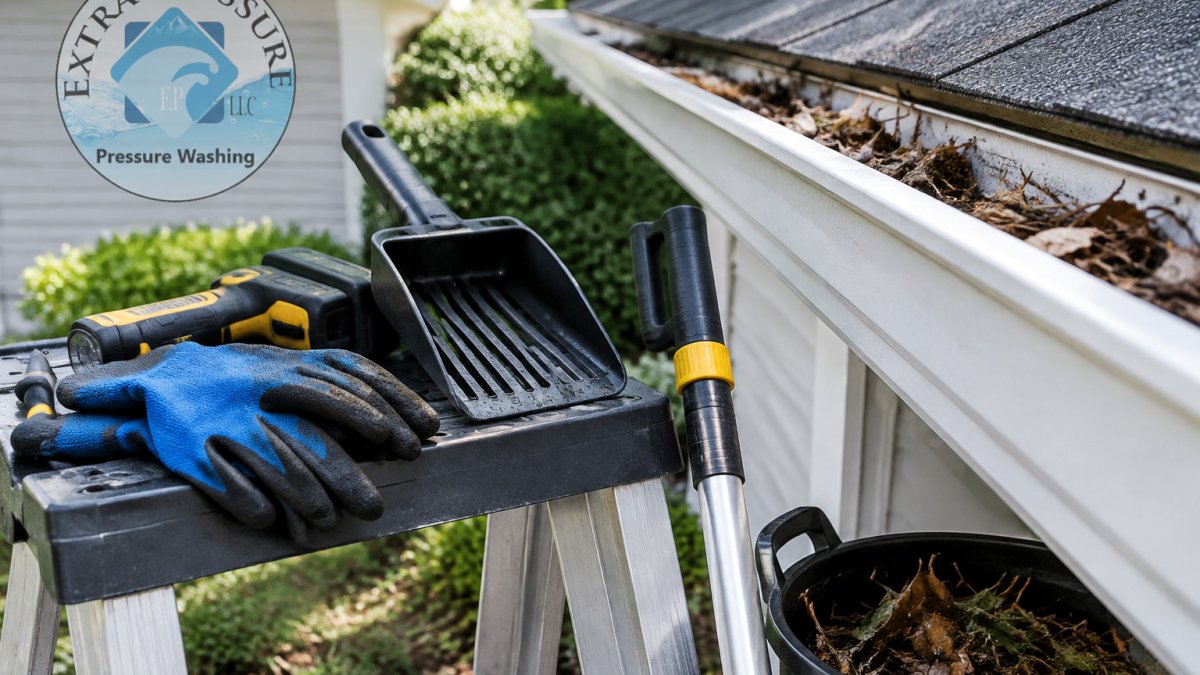
The essential tools for safe gutter maintenance are a telescoping pole with a gutter attachment, a hose with a spray wand, a gutter scoop, work gloves, eye protection, and a wet/dry vacuum or leaf blower with an extension. Choose tools based on gutter height, debris type, and whether the gutter can be reached from the ground.
- Clean gutters from the ground whenever you can, since falling is the biggest risk.
- Use a leaf blower or wet/dry vacuum only for dry, loose debris.
- Scoop packed, wet debris out first, then flush the channel with water.
- Use a gentle spray setting, since high pressure can loosen seams or dent aluminum.
- Check the downspout for blockage after cleaning, because it is the step most often skipped.
Table of Contents
- Why the Right Tools Matter for Safe Gutter Maintenance
- Gutter Cleaning Tools Without a Ladder
- Gutter Cleaning Tools for a Leaf Blower and Wet/Dry Vac
- The Gutter Scoop and Hand Tools for Packed Debris
- Choosing Tools for a Two-Story House and Your Roofline
- Protective Gear, Ladder Safety and a Post-Cleaning Checklist
- Booking Your Gutter Cleaning With Extra Pressure LLC
- Frequently Asked Questions
Why the Right Tools Matter for Safe Gutter Maintenance
Last Updated: November 11, 2026
Clogged gutters cause real damage. Water spills over the edge, soaks the fascia, and can seep toward the foundation. The job itself carries risk too. Many injuries happen on ladders, not on the roof. Choosing the right essential tools for safe gutter maintenance lets you clear debris without leaning out over a ledge.
The Occupational Safety and Health Administration (OSHA) sets fall protection rules for work performed at height. OSHA fall protection standards for construction work Those rules are written for employers, but the same logic applies to a homeowner on a ladder. Keep your feet on the ground when you can.
Most homeowners do not need a long list of gear. A few well-chosen items cover most jobs:
- A telescoping pole with a gutter attachment
- A hose with a spray wand
- A gutter scoop for packed debris
- Work gloves and eye protection
- A wet/dry vacuum or leaf blower with an extension
This guide shows which tools to use, when to use them, and how to stay safe.
Gutter Cleaning Tools Without a Ladder
The safest approach is to clean gutters from the ground. A ground-based setup removes the biggest risk: falling. Ground tools work well on single-story homes and on many two-story homes where the gutters are within reach of an extension.
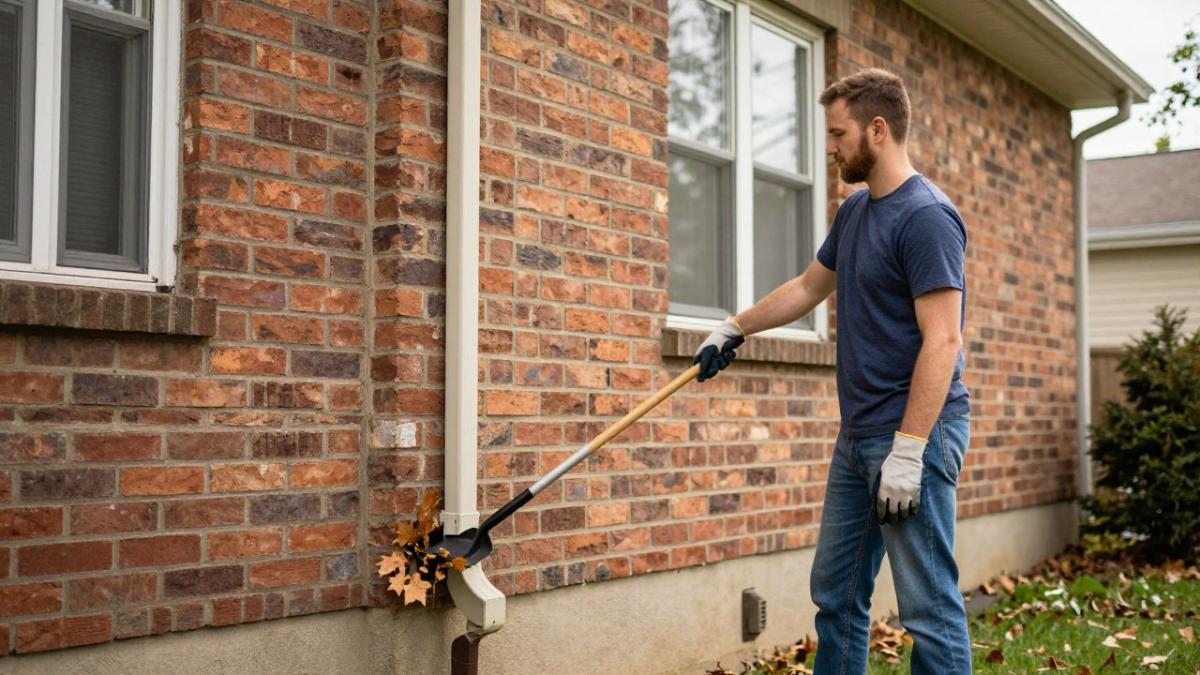
Ground-level gutter cleaning relies on reach. Extension poles, wands, and attachments do the work that a ladder would do. Expect the job to take longer than a ladder job, but you stay on solid ground the whole time.
Key benefits of ground-based cleaning include:
- No climbing or leaning over the edge
- Lower risk of falls and roof damage
- Fewer trips to move ladders around the house
- Usable for most single-story homes
Telescoping Poles and Gutter Wands
A telescoping pole lets you reach the gutter from the ground. Choose a pole that extends far enough to reach your gutter line without strain. Lighter poles are easier to control over long reaches.
A gutter wand or attachment fits on the end of the pole. It has a scoop, a brush, or a curved hook that pulls debris out of the channel. Some wands also connect to a garden hose.
Check these points before you buy:
- Reach: measure the height from the ground to the gutter
- Weight: a lighter pole reduces arm fatigue
- Lock: a secure locking collar stops the pole from collapsing mid-task
Practical tip: start at the end of the run nearest the downspout and work toward the corner. Debris will move toward the outlet as you go.
Hose Wands and Water-Flushing Attachments
A hose wand sends water through the gutter and pushes debris toward the downspout. This works well for loose leaves and fine grit. It does not work well for wet, packed debris. For that, use a scoop first.
Water flushing also helps you check flow. Once the gutter is clear, run water and watch where it goes. If water pools or spills over the edge, you may have a slope problem or a blocked section.
Pressure matters. Use a gentle spray setting. High pressure can loosen gutter seams, dent aluminum, or force debris up under roof shingles.
Gutter Cleaning Tools for a Leaf Blower and Wet/Dry Vac
Leaf blowers and wet/dry vacuums can clear dry debris quickly. Both tools work best when the gutter is dry and the debris is loose. They are poor choices for wet, compacted sludge.
A leaf blower with a long extension tube can blow leaves out of the gutter from the ground. Keep the nozzle at a safe angle so debris moves toward the downspout, not onto the roof or into your landscaping.
A wet/dry vacuum with a hose extension can suck up debris from the gutter. This works well for fine material. Make sure the hose and wand are rated for the vacuum and that you use a filter suited to wet or dry debris.
Watch out: a leaf blower can drive debris up under shingles or into the soffit. Angle the blower away from the roof edge.
Use these tools when:
- The debris is dry and light
- The gutter is accessible from the ground
- You want to avoid wet debris staining the gutter
The Gutter Scoop and Hand Tools for Packed Debris
Packed, wet debris needs a scoop. A plastic or stainless steel gutter scoop removes compacted leaves, mud, and shingle grit that water will not move. Scoops come in curved and straight shapes. Curved scoops fit the gutter channel better.
Hand tools help with corners, elbows, and downspout openings. Keep a small trowel or hook on hand for these spots. Remove debris by hand rather than forcing a tool into a tight space.
Pair scoop work with a bucket and a plastic tarp under the gutter. Debris falls onto the tarp and does not stain siding or patio surfaces.
Steps for packed debris:
- Loosen the top layer with a scoop or wand.
- Scoop the packed material into a bucket.
- Flush the channel with water.
- Check the downspout for remaining blockage.
Choosing Tools for a Two-Story House and Your Roofline
Tool choice on a two-story home comes down to four questions you can answer before buying anything: how high the gutter sits, whether you can reach it from the ground, what kind of debris has collected, and how long you can hold a pole without losing control. Working through them in order gives you a clear answer about which approach is safe for your house.
Start by measuring. Stand at the base of the wall and measure from the ground to the gutter’s lower edge.
Next, check whether the gutter is reachable without roof contact. If you can reach the channel from the ground while standing on level, firm soil, a ground-based setup works.
Debris type decides the tool. Dry, loose leaves respond well to a leaf blower with an extension tube or a wet/dry vacuum.
Finally, be honest about your physical limits.
Watch out: a pole that looks long enough on the box can still be unsafe if it flexes or wobbles at full extension in wind.
The right tool depends on gutter height, reachability, debris type and your own physical limits, as this summary shows.
| Factor | What to check | Tool it points to |
|---|---|---|
| Gutter height | Measure ground to gutter’s lower edge | Telescoping pole with room to spare |
| Reachability | Reachable from level, firm ground | Ground-based setup |
| Dry, loose debris | Leaves that are light and dry | Leaf blower or wet/dry vacuum |
| Wet, packed debris | Mud or shingle grit | Scoop first, then water flush |
| Physical limits | Arm and shoulder fatigue at full reach | Shorter reach, avoid full extension |
| Unsafe conditions | Steep roof, sagging gutters, unstable ground | Stop DIY and call a professional |
Protective Gear, Ladder Safety and a Post-Cleaning Checklist
Good gear reduces the consequences of a slip, and a clear setup routine reduces the chance of one. Use the two together, and treat the post-cleaning check as part of the job rather than an afterthought.
Start with the gear. Work gloves should be rated for cuts and should stay dry enough to grip, since wet gloves reduce control of a scoop.
If you must use a ladder, set it up before you climb. Place the feet on firm, level ground, not on mulch, soft soil, or a slope.
Watch out: most ladder falls happen during the step off the last rung onto the roof or during the reach to one side. Never step off onto a roof to finish a section.
After the debris is out, run the post-cleaning check in this order:
- Remove all loose debris from the gutter channel, corners, and end caps
- Clear the downspout opening and the first few feet of the downspout pipe
- Flush the gutter from the far end toward the downspout and watch where the water goes
- Confirm water exits the downspout freely at the bottom, with no pooling or backflow at the outlet
- Check that the gutter slopes toward the downspout and that no section holds standing water after the flush
- Inspect brackets, hangers, and seams for loose fasteners, gaps, or sagging
- Look for granules or debris in the downspout discharge, which can indicate shingle wear
- Dry the tools and store them out of the weather to prevent rust
- Replace gloves with cuts or worn grip, and replace wands or poles with cracked joints
The downspout check is the step most often skipped. If the gutters are too high, too wet, or simply not worth your time, a professional crew can take the job on, and window washing and soft washing are other exterior services Extra Pressure LLC offers.
Booking Your Gutter Cleaning With Extra Pressure LLC
If the job is too high, too wet, or simply not worth your time, a professional can handle it. Extra Pressure LLC offers gutter maintenance along with residential and commercial exterior cleaning. We are licensed and insured.
Gutter cleaning costs vary with home size and access. For a breakdown, see Residential Gutter Cleaning Service Costs: What Homeowners Pay. If you prefer to schedule directly, you can book your gutter cleaning with our team through our North Georgia page.
Contact us to schedule your service and keep your gutters clear, your roofline protected, and your feet on the ground.
Frequently Asked Questions
What tools do I need to clean out my gutters?
Most homeowners need work gloves, safety glasses, a gutter scoop or trowel, a bucket with hooks, and a garden hose with a spray nozzle. A telescoping wand or extension pole lets you reach the gutter from the ground. A wet/dry vacuum with a gutter attachment helps with wet, packed debris. Start by flushing the gutter with the hose, then scoop out remaining material. Check that downspouts run clear afterward, since a clog that looks cleared at the top often sits lower in the pipe.
Is there a tool to clean gutters without a ladder?
Yes. Telescoping gutter wands, extension poles with scoop heads, and hose wands with gutter-flushing nozzles let you clean from the ground. Gutter vacuums that attach to a wet/dry vac can also reach upper gutters. Ground-level tools work well for one- and two-story homes with moderate debris, but they have limits: heavy, compacted debris may need hands-on removal, and pressure washing gutters can damage them or push debris onto the roof. Choose tools based on gutter height and debris type.
Can you use a leaf blower to clean gutters?
A leaf blower can move dry leaves and loose debris out of a gutter, especially when used with a blower extension attachment. It does not work well on wet, matted leaves or sludge, which stick to the gutter bottom. Blowing debris can also send it onto the roof, landscaping or yourself. Use a leaf blower for light, dry cleanup, and switch to a scoop or wet/dry vacuum for packed material. Always confirm downspouts are flowing freely afterward.
When should I hire a professional for gutter cleaning?
Consider a professional if your home is more than two stories, your roof pitch is steep, your gutters are heavily clogged or sagging, or you are uncomfortable on a ladder. Extra Pressure LLC. is licensed and insured for residential and commercial gutter maintenance and offers same-day estimates. Contact the company for a quote, since pricing depends on the size and condition of your property.
