
Last Updated: November 18, 2026
Quick Summary
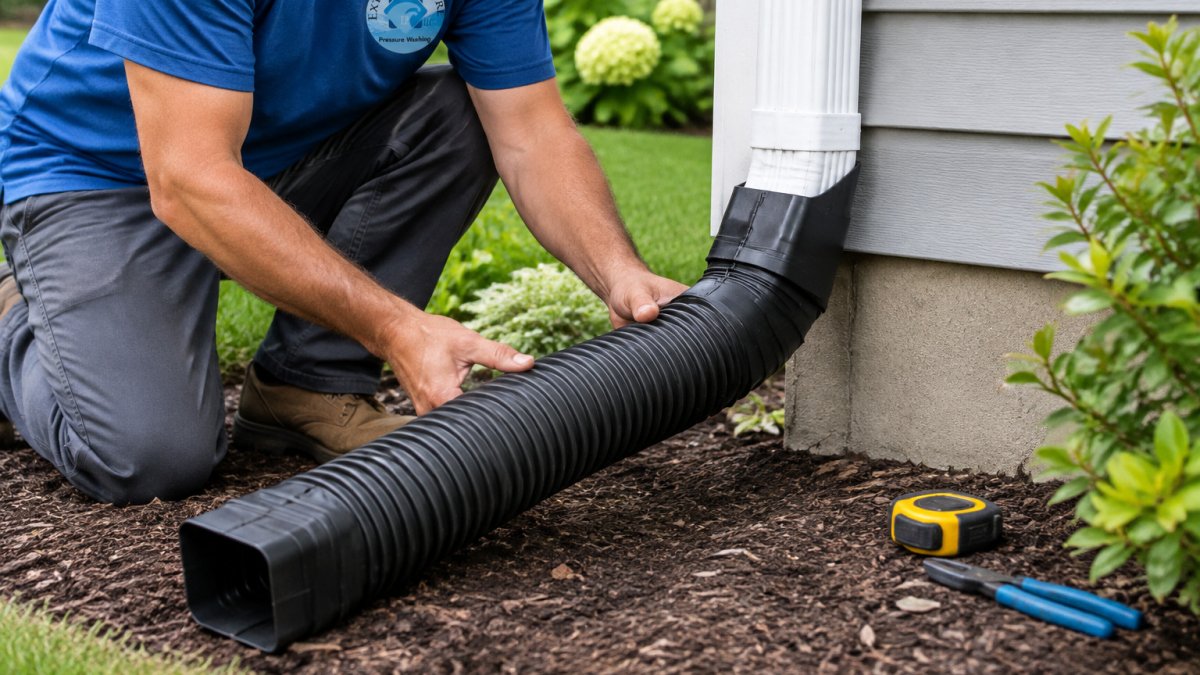
Yes, you can install a downspout extension yourself with basic hand tools. Slide the extension over the crimped end of the downspout, drill pilot holes, fasten with sheet metal screws, seal the joint, and set a slope of about 1 inch per foot so water drains away from the house.
- Measure the downspout outlet and distance to the discharge point before buying an extension.
- Space pilot holes about 3 inches apart along the joint.
- Downspouts should drain at least 4 to 6 feet from the foundation.
- A hinged aluminum extension is the best compromise for most homes.
- Disconnect and store the extension before the first freeze to prevent trapped water.
Table of Contents
- Tools and Materials You Need Before You Start
- How to Attach a Gutter Downspout Extender to Your Downspout
- How Far Should Downspouts Drain From a House?
- How to Connect Two Downspout Extensions for a Longer Run
- Downspout Extension Ideas That Solve Common Drainage Problems
- Common Mistakes and How to Keep Your Extension in Place
- Schedule a Gutter Inspection Before Your Next Storm
- Frequently Asked Questions
Tools and Materials You Need Before You Start
A downspout extension can be installed with basic hand tools. The job comes down to measuring, cutting, and fastening one piece of pipe or metal to the end of your existing downspout.
Here is what to gather before you climb the ladder:
- Tape measure for the length of your run
- Drill driver with a 1/8-inch bit for pilot holes
- Sheet metal screws or pop rivets for a metal extension
- Hacksaw for cutting corrugated pipe or aluminum
- Caulk or sealant for the joint at the downspout
- Work gloves and safety glasses
- A stepladder rated for your weight
A common mistake is buying the extension before measuring. Measure the downspout outlet and the distance to your discharge point first.
If you plan to work near the roof line or on tall gutters, read up on essential tools for safe gutter maintenance at home before you start. Safety gear matters more than speed on a ladder.
How to Attach a Gutter Downspout Extender to Your Downspout
Slide the extension over the crimped end of the downspout, drill pilot holes through both pieces, and fasten with sheet metal screws. Seal the joint, then check that the slope carries water away from the house.
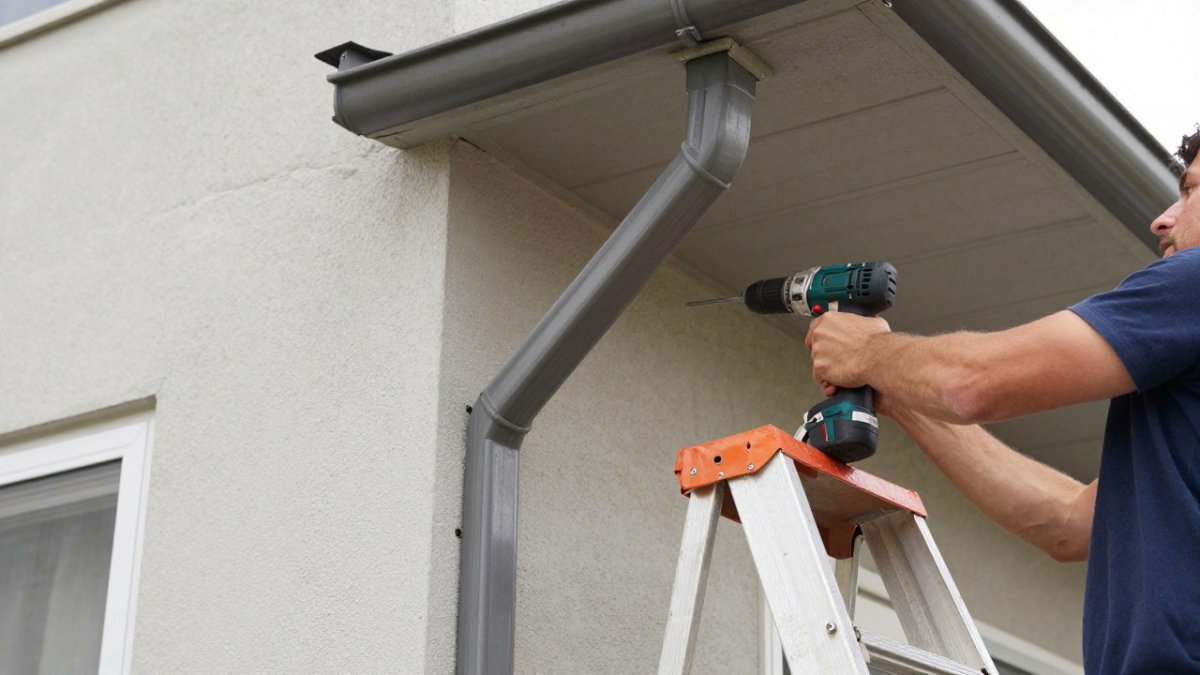
Before you attach anything, clear the downspout first. A clogged spout pushes water back up under your roof edge. If yours is blocked, our guide on 7 ways to clear downspout clogs effectively walks through the fix.
Step-by-Step Installation
- Measure the outlet. Note the width and shape of the downspout opening.
- Test-fit the extension. Slide it on dry to check the overlap.
- Mark the holes. Space them about 3 inches apart along the joint.
- Drill pilot holes through the female opening and the downspout.
- Fasten with screws or rivets. Do not overtighten; metal dents easily.
- Seal the seam with exterior caulk.
- Set the slope. The extension should drop about 1 inch per foot of run.
- Run water and watch where it lands.
Expected result: water exits at the end of the extension, not at the foundation.
How Far Should Downspouts Drain From a House?
Downspouts should drain at least 4 to 6 feet from the foundation, and farther is better on sloped ground. Water that dumps right at the wall soaks into the soil and finds cracks in the basement or crawlspace.
The right distance depends on your yard:
- Flat lots: push for 6 feet or more
- Sloped lots: aim the discharge point downhill
- Tight side yards: use a splash block plus a short extension
A downspout extension is one way to move water runoff away from the house.
How to Connect Two Downspout Extensions for a Longer Run
Water must flow downhill through the joint, never uphill.
Watch the slope as you add length. A telescoping or corrugated pipe run that looks fine on paper can sag in the middle. Support long runs with a brick or stake so the gradient holds.
For runs over 10 feet, a downspout adapter helps join mismatched sizes. Line up the seams, drill through both walls, and rivet. Then test with a garden hose before the next storm.
Downspout Extension Ideas That Solve Common Drainage Problems
The right downspout extension for a house depends on where the water needs to go and how long the run is. A short splash block handles a small gap. A buried line handles a long run. But the material you choose determines how long the extension lasts and how much maintenance it demands.
| Extension Type | Best For | Watch Out For | Typical Cost |
|---|---|---|---|
| Splash block (concrete or plastic) | Small gaps, flat ground | Splash back at the wall; plastic versions crack in freeze-thaw | $5-$15 |
| Hinged aluminum extension | Tight spaces, mowing, snow removal | Loose hinge over time; hinge pin can rust | $15-$30 |
| Fixed aluminum | Straight, long runs | Dents from lawn mowers; paint chips | $10-$25 |
| Corrugated plastic pipe | Burying, curved paths | Sagging without support; UV degradation over 3-5 years | $8-$20 per 10 ft |
| Telescoping vinyl | Adjustable length | Weak joints at full stretch; brittle in cold | $10-$20 |
A hinged aluminum extension is the best compromise for most homes: it flips up for mowing and snow, and the hinge absorbs impact instead of the pipe. If you plan to bury the run, use rigid PVC or Schedule 40 pipe rather than corrugated, corrugated traps debris and is harder to snake clean.
Aesthetic integration: A bare metal pipe running across a garden bed looks like a mistake. Low-profile vinyl or brown-painted aluminum blends into mulch and hardscaping. For longer runs, bury the extension and terminate at a pop-up emitter set flush with the lawn, it disappears when not in use and mows over cleanly. Run the buried line along the edge of a bed or under a gravel strip so you can find it later without digging up the whole yard.
Code compliance: Most municipalities restrict where downspout water can discharge. Common rules prohibit dumping onto a neighbor’s property, into a sanitary sewer, or directly against a foundation. Some require discharge to a splash block or a dry well at least 4-6 feet from the property line. Check with your local building department before you bury a line, a $20 extension is cheaper than a code violation.
A hinged extension flips up out of the way for mowing and snow. A low profile version blends into the landscaping better than a bare metal pipe. If you live where winters bite, plan for freeze-thaw cycles too. Our guide on 7 ways to prevent ice dams in gutters before winter covers the cold-weather side of water diversion.
Typical cost of downspout extension types
Common Mistakes and How to Keep Your Extension in Place
The number one mistake is skipping the fasteners. An extension that just slides on will blow off in the first storm. Screws and rivets are what keep it attached. But the failures that cost the most money happen in winter, and most guides ignore them entirely.
Water trapped in a sagging joint can expand when it freezes, so keep every run sloped so water does not sit. The fix is slope and drainage: every run should drop at least 1 inch per foot so water never sits. Before the first freeze, disconnect the extension, dump out any standing water, and store it, or switch to a hinged aluminum model that sheds ice instead of holding it.
Ice damming at the outlet: If the extension discharges onto a sidewalk or driveway that ices over, you have created a slip hazard and a liability. Aim the discharge onto grass, gravel, or a splash block that drains away from walkways. In cold climates, a pop-up emitter buried at the end of the run stays below the frost line and releases water without surface ice.
Other common slip-ups:
- Wrong slope: a flat or uphill run traps water and feeds mosquitoes in summer, ice in winter
- No sealant: the joint drips down the foundation and erodes soil
- Too short: water lands within a foot of the wall and finds the basement
- Blocked outlet: leaves and grit clog the new pipe; add a leaf screen at the downspout outlet
- Overtightened screws: metal dents and the joint loosens; snug is enough
Check the extension after heavy rain and again after the first hard freeze. If water pools near the wall, add length or adjust the gradient. If the joint keeps pulling loose, a downspout adapter gives it a better grip. If the extension cracked over winter, replace it with aluminum rather than vinyl, the extra cost pays back in one season.
Sometimes the problem is bigger than the extension. If you are weighing a quick fix against a real repair, our breakdown of gutter cleaning vs gutter repair explains what each job covers.
Schedule a Gutter Inspection Before Your Next Storm
A downspout extension only works if the whole drainage system works. Clogs, loose hangers, and sagging sections undo the best installation. A seasonal inspection catches those problems before storm season.
At Extra Pressure LLC., we handle gutter maintenance along with pressure washing and soft washing for homes and businesses. Our team is licensed and insured, and we offer same-day estimates.
Our soft washing service is designed for delicate surfaces.
Before you book, you may want to know what residential gutter cleaning services cost. Then schedule your appointment and get your stormwater management in order before the next front rolls in.
Your downspout extension is only as good as the gutter feeding it. If water is backing up, overflowing, or staining your siding, the system needs attention from someone who knows gutters. Extra Pressure LLC. offers licensed and insured gutter maintenance, soft washing, and pressure washing with same-day estimates and a 100% satisfaction guarantee. Get started with Extra Pressure LLC. and protect your foundation before the next storm.
Frequently Asked Questions
Do downspout extenders really work?
They do, as long as the extension carries water far enough from the foundation and holds its slope. A downspout extension moves runoff from the base of the wall to a discharge point several feet away, which reduces pooling against the foundation and erosion in the beds. The failure points are loose connections and a flat or uphill run, so fasten the extension with sheet metal screws or pop rivets and keep a downward gradient toward the discharge point. Inspect it after heavy storms and clear debris that blocks the flow.
How far should downspouts drain from a house?
Aim for at least 4 to 6 feet of horizontal distance from the foundation wall, and push it further where the ground slopes back toward the house. The goal is to get the discharge point past the backfill soil and onto ground that carries water away. If your yard is flat or graded toward the home, extend to 8 or 10 feet, or connect to a buried corrugated pipe that leads to a lower spot. Water that dumps within a foot or two of the wall is the most common cause of damp basements and washed-out landscaping.
What should you do if a downspout extension keeps coming loose?
Loose extensions usually fail at the joint, not the extension itself. Slide the crimped end of the extension fully into the female opening of the downspout, then drill two small pilot holes through the overlap and drive sheet metal screws on opposite sides. For a permanent fix, use pop rivets instead of screws. If the extension still blows off in wind, add a second fastener and check that the elbow fitting is not under stress. Replacing a worn adapter is often cheaper than fighting a joint that no longer grips.
Can I install a downspout extension myself, or should I hire someone?
Most homeowners can handle a surface extension in under an hour with a drill driver, hacksaw, measuring tape, and sealant. Pricing for professional installation varies, so get a quote before deciding. Call a pro when the run needs trenching and a buried line, when the downspout is high off the ground, or when water is already reaching the foundation.
