
Quick Summary
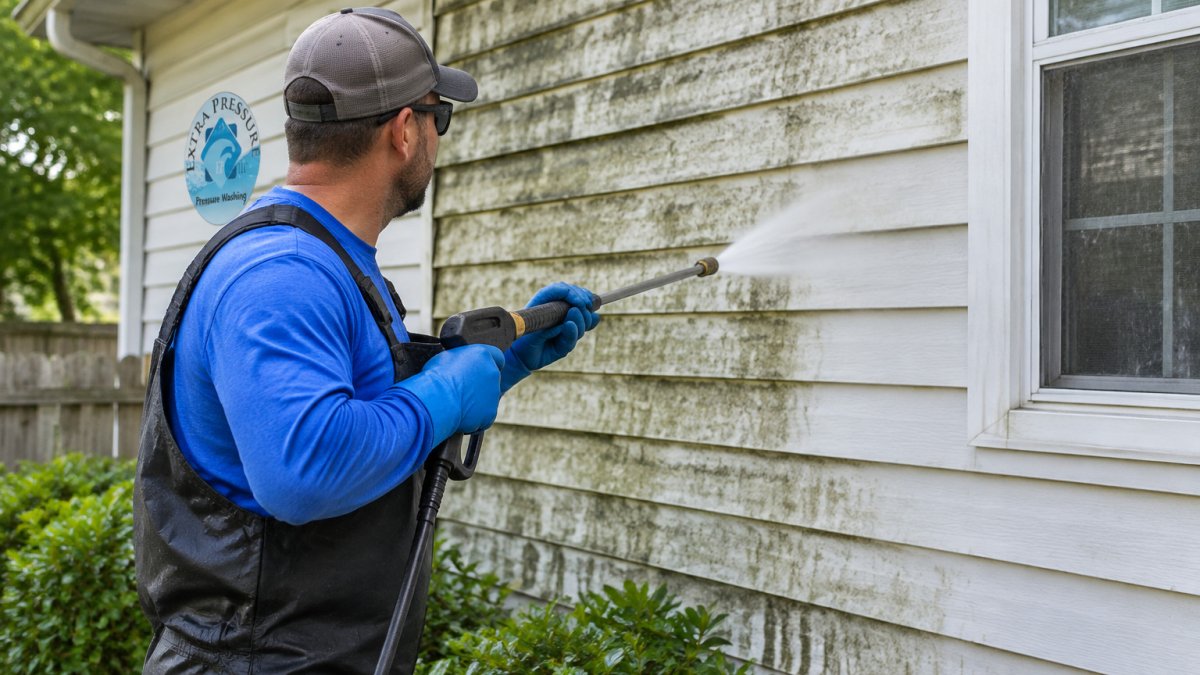
To remove mold from siding safely, first identify whether you have mold, mildew, or algae, since each calls for a different cleaner. Wet the siding from the bottom up, apply a mild cleaner, let it sit for 5 to 10 minutes, scrub gently with a soft brush, and rinse from the top down.
- Mold looks dark and fuzzy, mildew looks flat and powdery, and algae appears as green or blue streaks.
- Wet the siding with a garden hose before applying any cleaner so it does not dry too fast.
- Let the cleaner sit 5 to 10 minutes without letting it dry on the siding.
- Use a soft brush, since stiff brushes can scratch the surface.
- Keep a pressure washer on a low setting, because high pressure can force water behind siding.
Table of Contents
- Identifying Mold, Mildew, and Algae on Your Siding
- Step-by-Step: Cleaning Mold Off Siding Without Damage
- Choosing the Best Mold Remover for Outside Your House and Removing Mildew from Vinyl Siding
- Frequently Asked Questions
Identifying Mold, Mildew, and Algae on Your Siding
Mold, mildew, and algae all look like dark spots on siding, but knowing the difference is the first step to a successful effort to remove mold from siding. Mold tends to be black, green, or gray and feels fuzzy. Once you have identified it, learn how to prevent mold from returning on wood siding. Mildew is usually flat and powdery, often white or light gray. Algae shows up as green or blue-green streaks, usually in shady spots. Knowing which one you have helps you pick the right cleaner.
- Mold: dark, fuzzy patches, often in damp corners
- Mildew: flat, powdery spots that wipe off more easily
- Algae: green or blue streaks, common on north-facing walls
Watch out: Do not mix cleaners until you know what you are treating. Mixing the wrong products can cause harmful fumes.
Step-by-Step: Cleaning Mold Off Siding Without Damage
Start by wetting the siding with a garden hose so the cleaner does not dry too fast. Mix a mild solution of soap and water first, and start with the gentlest cleaner you can before trying anything stronger. Before you try any method, check whether soft washing is safe for vinyl siding.
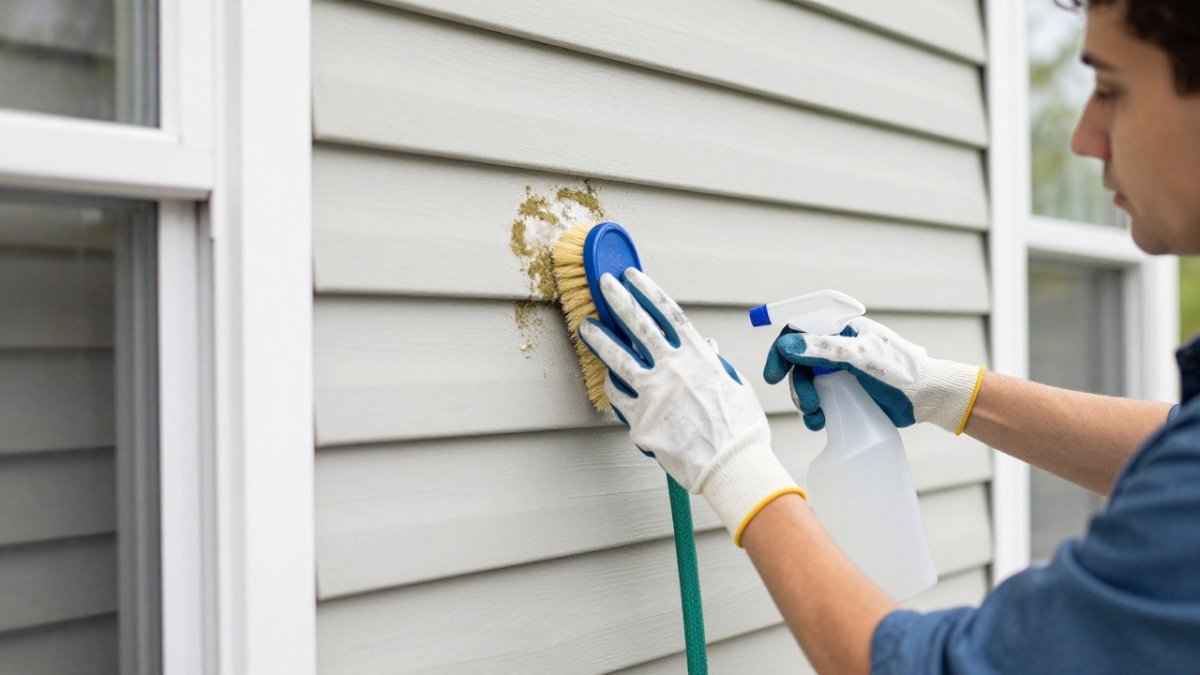
- Wet the siding from the bottom up with a garden hose.
- Apply the cleaner with a spray bottle, working from the bottom up.
- Let it sit for 5 to 10 minutes. Do not let it dry on the siding.
- Scrub gently with a soft brush. Skip stiff brushes that can scratch.
- Rinse thoroughly from the top down.
Keep plants wet before you start, and cover any that are sensitive to cleaners. If you use a pressure washer, keep it on a low setting, since high pressure can force water behind siding and damage it.
The cleaning process comes down to a few steps, each with a timing or setting to follow.
| Step | What to do | Time or setting |
|---|---|---|
| 1. Wet siding | Wet siding from the bottom up with a garden hose | Before applying cleaner |
| 2. Apply cleaner | Spray cleaner from the bottom up | Spray bottle |
| 3. Let it sit | Allow cleaner to work before scrubbing | 5 to 10 minutes |
| 4. Scrub | Scrub gently with a soft brush | Avoid stiff brushes |
| 5. Rinse | Rinse thoroughly from the top down | Until clean |
Choosing the Best Mold Remover for Outside Your House and Removing Mildew from Vinyl Siding
Many homeowners ask which mold remover works best outside a house. Look for products labeled for siding, and check that they are safe for your surface and nearby plants.
Mold remover and mildew remover products work in similar ways. Read the label before you use either one. Follow the mixing directions exactly.
Need help with stubborn mold? Extra Pressure LLC. offers soft washing for delicate surfaces, and our team is licensed and insured. Call us for a same-day estimate.
Frequently Asked Questions
What kills mold on house siding?
A diluted solution of household bleach, white vinegar or a commercial mold remover kills mold on most siding. Bleach works fastest on mold and mildew, while vinegar is gentler on surrounding plants and landscaping. Apply the solution from the bottom up, let it dwell for about 5 to 10 minutes, then scrub lightly with a soft brush and rinse thoroughly with a garden hose. Always test the solution on a small hidden area first to check for discoloration.
Can you use a pressure washer to clean mold off siding?
You can, but use a low-pressure setting and a wide-angle tip. High pressure can chip paint, dent vinyl, force water behind siding panels and drive mold spores deeper. Pair the pressure washer with a cleaning solution rather than relying on water alone, and keep the nozzle moving.
When should you hire a professional to remove mold from siding?
Consider a professional if mold covers a large area, returns after cleaning, or appears alongside rot, soft spots or water intrusion. Mold that keeps coming back often signals moisture problems such as clogged gutters or poor drainage. A professional can also use soft washing techniques that protect delicate surfaces. Extra Pressure LLC. offers licensed and insured soft washing with same-day estimates, so you can schedule an appointment for a quote.
