
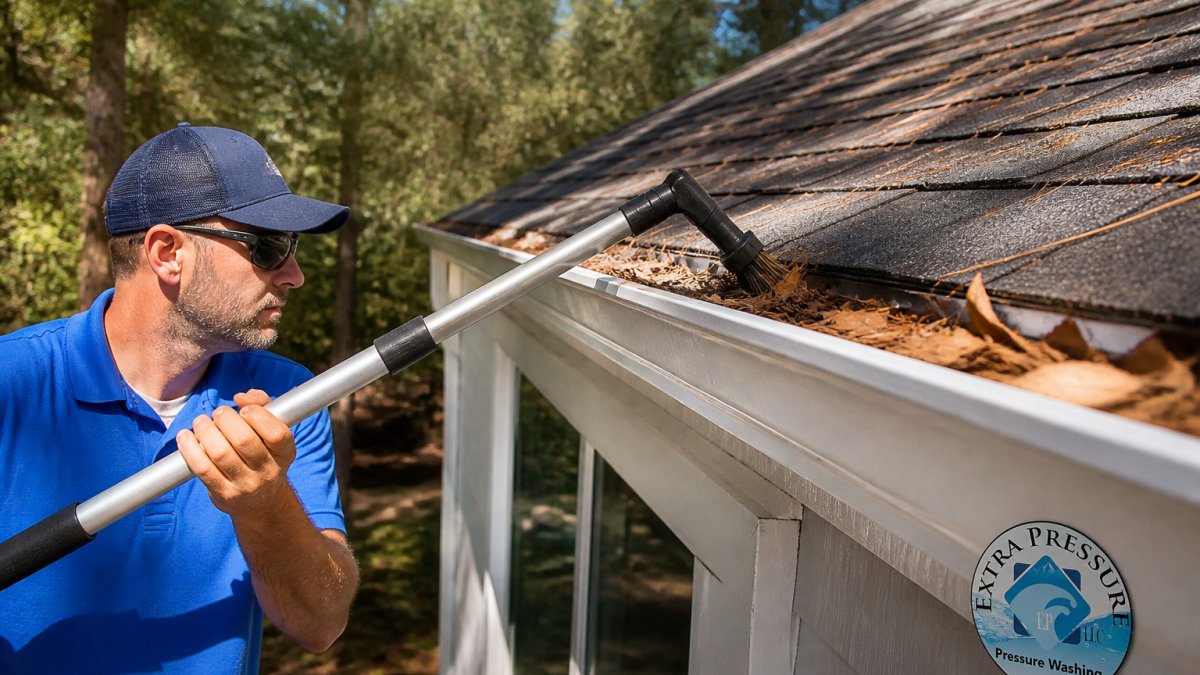
Last Updated: October 25, 2026
Quick Summary
You can prevent gutter clogs without climbing ladders using ground-based tools like telescoping poles, leaf blower attachments, and pressure washers with curved wands. Installing gutter guards reduces debris accumulation, and following a seasonal cleaning schedule keeps water flowing freely and protects your foundation from damage.
- Telescoping poles reach 20 to 30 feet and cost $30 to $100, making them the simplest ground-based gutter cleaning method.
- Pressure washers with curved wands handle wet, packed, or stubborn debris that other ground tools cannot move.
- A seasonal cleaning calendar adjusted to your local leaf-drop and storm patterns prevents clogs more reliably than reactive cleaning.
- Gutter guards reduce cleaning frequency but still require periodic maintenance and replacement every 5 to 10 years.
- Downspout screens at the gutter outlet block large debris and are inexpensive to install and replace.
Table of Contents
- Why Preventing Gutter Clogs Matters More Than Cleaning Them
- Ways to Unclog Gutters From the Ground
- How Often to Clean Gutters for Lasting Prevention
- Gutter Guards to Prevent Clogs: Selection and Maintenance
- How to Keep Downspouts From Clogging
- When to Call a Professional for Gutter Maintenance
- Schedule Your Ground-Level Gutter Inspection Today
- Frequently Asked Questions
Why Preventing Gutter Clogs Matters More Than Cleaning Them
Gutter clogs cause real damage: water backs up, spills over edges, and soaks your foundation, which is why you need to prevent gutter clogs before they start.
The smarter move is prevention: stop debris from piling up and you avoid the damage, mess, and expense of emergency repairs.
Most homeowners think about gutters only when water starts pouring down the side of their house. By then, the damage has already started.
Preventing gutter clogs keeps your home dry, your foundation solid, and your wallet full.
Ways to Unclog Gutters From the Ground
You don’t need a ladder to keep gutters clear. Several ground-based methods work well and keep you safe.
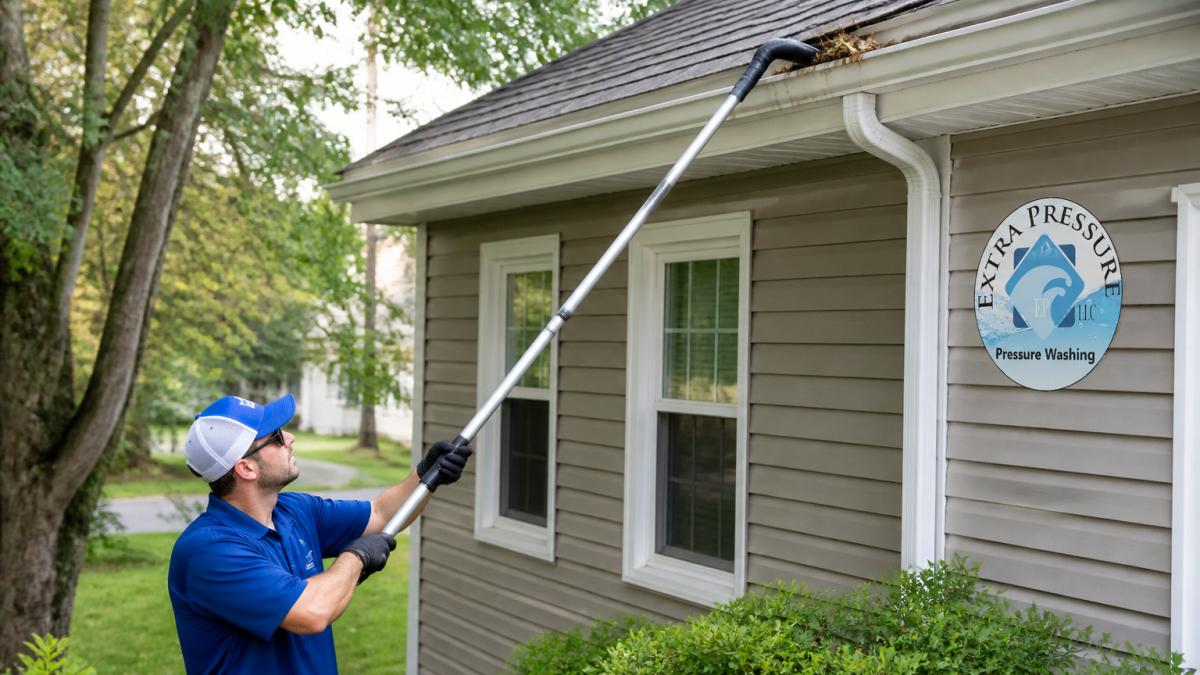
Using Telescoping Poles and Extension Tools
A telescoping pole with a gutter-cleaning attachment is the simplest ground-based tool: extend it, reach the gutter, and scoop out leaves and debris. No ladder needed.
These poles typically reach 20 to 30 feet, covering most single-story homes and the lower gutters on two-story houses.
Key benefits:
- Safe, both feet stay on the ground
- Affordable, poles cost between $30 and $100
- Works on most gutter types
- No electricity or fuel needed
- Easy to store
The main limitation is reach: very tall homes or gutters on steep roof sections may be hard to access from the ground, so other methods work better.
Leaf Blowers With Gutter-Cleaning Attachments
A leaf blower with a curved gutter-cleaning attachment pushes debris out from the ground, directing air along the channel so leaves blow toward a downspout or off the edge.
It works fast on dry leaves; wet leaves stick and resist air pressure, so use it after a few dry days, not right after rain.
Advantages:
- Clears gutters quickly on dry days
- No physical scooping required
- Works on multiple gutter heights with the right pole extension
- Good for light to moderate debris
Drawbacks:
- Wet or packed debris won’t move
- Noise may bother neighbors
- Requires a powerful blower for heavy debris
- Blows debris around your yard
Pressure Washers and Curved Gutter Wands
A pressure washer with a curved gutter wand flushes debris out using water pressure. Stand on the ground, aim the wand along the gutter, and water pushes leaves and dirt toward the downspout.
This handles wet debris, packed leaves, and stubborn buildup other tools can’t move, dislodging material stuck to gutter bottoms.
Why this works well:
- Handles wet or compacted debris
- Cleans downspouts at the same time
- Leaves gutters spotless
- Works on all gutter types
Important caution: High water pressure can damage gutters if aimed incorrectly. If you’re unsure about your gutter material or condition, consider pressure washer accessories designed specifically for gutter cleaning or hire a professional to avoid damage.
Pressure washer equipment costs more than poles or blowers, but results are thorough and long-lasting.
Several ground-based methods work well for preventing clogs without climbing ladders.
| Method | Reach | Cost | Best For |
|---|---|---|---|
| Telescoping pole with attachment | 20 to 30 feet | $30 to $100 | Most single-story and lower gutters |
| Leaf blower with attachment | Multiple heights | Variable | Dry leaves and light to moderate debris |
| Pressure washer with curved wand | Variable | Higher cost | Wet, packed, or stubborn buildup |
How Often to Clean Gutters for Lasting Prevention
Cleaning frequency depends on your surroundings, but the most reliable way to prevent clogs is a calendar rather than reacting to overflow. Trees drop leaves, seeds, and needles on a predictable schedule, and storms add debris in bursts; a month-by-month plan stays ahead of both.
A prevention-first seasonal calendar
Use this as a starting framework and shift the timing to match your local leaf-drop and storm season.
- Late winter (February-March): After the last hard freeze, walk the perimeter and check for sagging sections, ice damage, and loose downspouts. Clear winter debris before spring rains arrive.
- Early spring (March-April): Remove pollen, seed pods, and winter grit; fine material mattes into a layer that holds moisture and seeds new growth. Flush downspouts and confirm water exits at the ground.
- Late spring (May-June): After spring storms, check for shingle granules, twigs, and blown-in debris. Granule buildup is a quiet clog starter because it settles at the gutter bottom and narrows the channel.
- Summer (July-August): Spot-check after any major storm. If nearby trees shed in summer (oaks, sweetgums, some maples), clear seed pods and catkins before they dry and wedge into downspout openings.
- Early fall (September-October): The critical window. Clear gutters before the main leaf drop so the first heavy rain has a clear path, and install or refresh downspout screens now, not after the first backup.
Adjusting the calendar to your roof and trees
- Heavy tree coverage: Move to a 4-to-6-week cadence during fall and spring, and add a post-storm check after any wind event that strips branches.
- Moderate debris: Twice yearly, in late fall and early spring, is usually enough if you also spot-check after major storms.
- Minimal trees nearby: Once yearly in late fall, plus a spring downspout flush, covers most homes.
- Pine and needle trees: Needles slip through many guards and mat into a dense layer. Plan on more frequent checks than a broadleaf-only yard would need.
- Steep or complex rooflines: Debris slides faster into valleys and behind chimneys. Check those specific runs more often than the rest of the system.
Why the calendar beats reactive cleaning
The real benefit of a fixed schedule is early detection. Inspecting every few months spots damage, rust, loose hangers, and shifted sections before they become expensive. You also learn your home’s debris pattern, tightening the calendar where it matters and relaxing it where it doesn’t.
Gutter Guards to Prevent Clogs: Selection and Maintenance
Gutter guards reduce how often you need to clean.
Common types of gutter guards:
Screen guards have a mesh that lets water in but blocks large debris.
Foam guards fit inside the channel: water flows through while leaves stay on top.
Brush guards have bristles that stick up from the gutter.
Choosing the right guard depends on your situation:
- Heavy tree coverage: solid covers work best
- Moderate debris: foam or brush guards are adequate
- Minimal trees: screen guards are cost-effective
- Steep roofs: curved solid covers prevent debris from sliding into gutters
Maintenance of gutter guards:
Guards don’t eliminate cleaning, they reduce it.
The best guard is one that matches your debris load and you’re willing to maintain.
How to Keep Downspouts From Clogging
Downspouts are where gutters fail. Debris clogs the opening, water backs up into the gutter, and your whole system stops working.
Start with prevention. Install downspout screens at the gutter outlet.
Check downspouts every time you clean gutters.
For stubborn blockages, a pressure washer with a curved wand can flush downspouts from above.
Extend downspouts away from your foundation.
Consider a downspout splash guard or rain barrel at the outlet.
When to Call a Professional for Gutter Maintenance
Ground-based methods handle most routine prevention but have real limits. Knowing when to call a professional protects your gutters, roof, and safety. Use these signs as a decision checklist rather than waiting for a full backup.
Signs ground-based methods are not enough
- Persistent overflow after cleaning. If water still spills over the edge after you have cleared the visible debris, the blockage is likely packed sediment or a blocked downspout you cannot reach from the ground.
- Packed sediment in the gutter channel. A thin layer of grit, shingle granules, and rotted leaves can harden at the bottom of the gutter. Poles and blowers skim the surface; the packed layer keeps water from flowing.
- Inaccessible downspouts. Long runs, underground connections, or downspouts routed behind landscaping often need a camera or professional flushing equipment to clear and verify.
- Sagging, separated, or leaking sections. Gutters that pull away from the fascia, leak at seams, or hold standing water need repair, not just cleaning. Continuing to clean a failing system can worsen the damage.
- Ice dams and winter damage. Repeated ice dams, cracked gutter sections, or loose hangers after a freeze are repair issues that ground-level tools cannot fix.
What a professional brings that ground tools cannot
A qualified professional can inspect the full system, including downspout interiors, hanger condition, and pitch; flush and verify flow; identify recurring clogs; and make minor repairs. They also carry the equipment and insurance to work safely at height, the part of the job you’re deliberately avoiding.
How to choose and vet a provider
- Confirm the company is licensed and insured for the work being performed.
- Ask whether the estimate is in writing and whether it covers inspection, cleaning, and downspout flushing.
- Ask how they handle repairs versus cleaning, and whether they will document problem areas with photos.
- Get the scope in writing before work begins so you know what is and is not included.
Learn more about the benefits of professional gutter maintenance and why experts recommend regular service to keep your home protected. Professional maintenance prevents water damage, protects your foundation, and extends the life of your roof and siding.
At Extra Pressure LLC., we offer professional gutter maintenance using state-of-the-art equipment. Our licensed and insured team handles gutters of all types and heights.
Schedule Your Ground-Level Gutter Inspection Today
Preventing gutter clogs starts with knowing your gutters’ condition.
You don’t need to climb to assess your gutters.
If you spot problems or want professional guidance, reach out. Extra Pressure LLC. offers same-day estimates for gutter maintenance and cleaning.
Contact us today to schedule your gutter inspection and prevent the water damage that clogs cause.
Preventing gutter clogs protects your foundation, roof, and home value.
Frequently Asked Questions
What are the best ways to unclog gutters without a ladder?
Telescoping poles with curved scoops, leaf blower attachments, and pressure washers with gutter wands all allow you to prevent gutter clogs and clear debris from the ground. Telescoping poles reach up to 30 feet and let you scoop leaves manually. Leaf blowers push debris out using air pressure. Pressure washers with curved attachments flush blockages using water force. Each method works best for different debris types and gutter configurations. Choose based on your gutter height, the type of debris accumulating, and your comfort level with each tool.
Do gutter guards actually prevent clogs?
Gutter guards reduce clogs significantly by blocking leaves and large debris while allowing water to flow through. Mesh screens, foam inserts, and reverse-curve designs each have trade-offs. Mesh guards stop most leaves but can trap smaller debris. Foam filters require more frequent cleaning. Reverse-curve guards work well in heavy leaf areas but cost more. No guard eliminates maintenance entirely, but quality guards cut cleaning frequency from quarterly to annually or less. Proper installation and occasional inspection ensure they perform as designed.
How often should you clean gutters to prevent clogs?
Most homes need gutter cleaning two to four times per year: spring and fall are critical. Spring cleaning removes winter debris and prepares gutters for heavy spring rains. Fall cleaning prevents winter blockages from leaves. Homes near trees may need quarterly cleaning. Homes with few nearby trees might need only twice yearly. Inspect gutters monthly during heavy leaf-drop seasons. If you install gutter guards, inspection frequency can drop to annually, though occasional debris still accumulates on guard surfaces.
Why do downspouts keep clogging, and how do I stop it?
Downspouts clog when leaves, shingle granules, and compacted debris block water flow from gutters. To prevent downspout clogs, install gutter guards to stop debris before it enters downspouts, clean gutters regularly so debris doesn’t accumulate, and use downspout screens or strainers at the gutter outlet. Extend downspouts at least 4 to 6 feet from the foundation to prevent water pooling that attracts more debris. Inspect downspout outlets seasonally and flush them with a hose to clear partial blockages before they become severe.
