
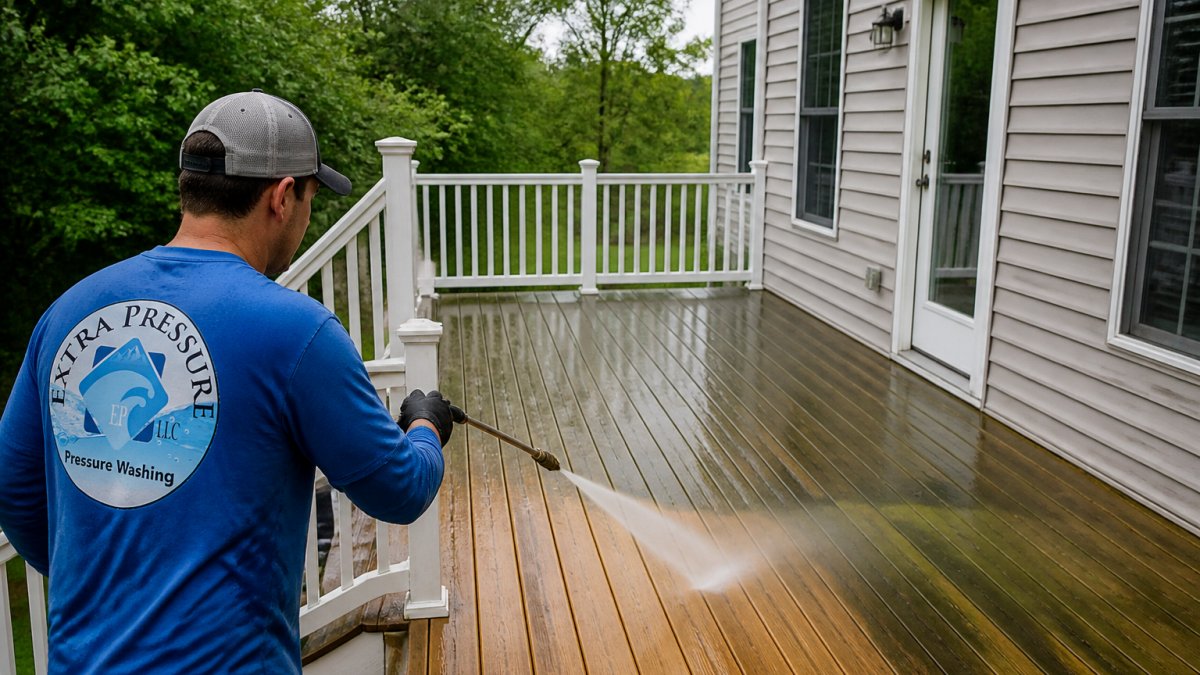
Last Updated: October 26, 2026
Quick Summary
To soft wash deck boards safely, apply a low-pressure cleaning solution that kills mold, mildew, and algae, let it dwell 10 to 15 minutes, then rinse with garden-hose pressure. Keep the surface wet the whole time and never let the cleaner dry, since drying causes bleaching and streaks.
- Match the cleaner to the wood: diluted bleach for pressure-treated pine, oxygen bleach for cedar and redwood.
- Never use bleach-based cleaners on composite decking, as harsh chemicals can void the warranty.
- Scrub with the grain only, since scrubbing across the grain raises fibers and leaves scratches.
- Wait at least 48 to 72 hours after washing before sealing, and longer in humid or shaded conditions.
- Never mix bleach with ammonia or vinegar, because the combination creates dangerous gas.
Table of Contents
- What Soft Washing a Deck Actually Involves
- Soft Washing vs Pressure Washing Deck Surfaces
- Tools, Equipment, and Safety Gear You Need
- The Best Soft Wash Solution for Wood Decks
- Step-by-Step: How to Soft Wash a Deck Safely
- How to Remove Mold From Deck Boards Safely
- The Cost of Professional Deck Soft Washing
- Book a Same-Day Soft Wash Estimate
- Frequently Asked Questions
What Soft Washing a Deck Actually Involves
A soft wash deck cleaning is a low-pressure method that relies on specialized cleaning solutions to kill mold, mildew, and algae, then rinses everything away with gentle water pressure.
Here is the core idea. You are not blasting dirt off the boards. You are killing the living organisms that cause the stains.
Why Low Pressure Protects Wood Fibers
Wood fibers sit close to the surface and hold the wood’s structure together. High pressure tears those fibers loose. The board looks clean for a few weeks, then turns fuzzy and gray.
Low pressure lets the cleaning solution do the work. For a closer look at how the same low-pressure approach works on larger exterior surfaces, see how to clean a commercial building facade safely.
Soft Washing vs Pressure Washing Deck Surfaces
Pressure washing pushes water into the grain at high force, which splinters soft boards and strips the surface layer.
Here is how the two methods compare:
| Factor | Soft Washing | Pressure Washing |
|---|---|---|
| Pressure level | Low, garden-hose range | High, blasts material loose |
| How it cleans | Cleaning solution kills growth | Force pushes dirt away |
| Effect on wood grain | Preserves fibers | Can splinter and fuzz boards |
| Best use on a deck | Wood, composite, painted rails | Concrete, brick, stone |
| Risk of damage | Low when done correctly | High on soft wood |
A common mistake is renting a pressure washer and treating a deck like a driveway. That is how boards get scarred. Save the high pressure for hard surfaces and soft wash anything made of wood.
Tools, Equipment, and Safety Gear You Need
Before you start, gather the right gear. Skipping safety equipment is the fastest way to turn a weekend project into a hospital visit.
Here is what you need:
- Pump sprayer for applying the cleaning solution evenly
- Garden hose with a wide fan nozzle for rinsing
- Soft-bristle or stiff-bristle brush for stubborn spots
Watch out: mixing bleach with ammonia or vinegar creates dangerous gas. Never combine cleaners, and always read the label before you pour.
The Best Soft Wash Solution for Wood Decks
The best soft wash solution for wood decks depends on two things: the stain you are fighting and the species of wood under your feet. Most guides stop at “use bleach for mold.” That advice is incomplete. Sodium hypochlorite will kill mold on a pressure-treated pine deck, but the same mix can strip the natural oils from cedar and redwood and leave them looking bleached and dry.
Match the Cleaner to the Wood Species
- Pressure-treated pine: The most forgiving deck wood. A diluted sodium hypochlorite mix (roughly 1 part household bleach to 3 or 4 parts water, plus a surfactant) is the standard choice for mold, mildew, and algae. Rinse thoroughly and follow with a brightener if the wood looks dull.
- Cedar and redwood: These species contain natural oils and tannins that give them their color. Sodium hypochlorite can pull those oils out and leave a washed-out, fuzzy surface. Start with sodium percarbonate (oxygen bleach) or a dedicated wood cleaner. If you must use a hypochlorite mix on heavy mold, keep the dilution weak and dwell time short, and test a hidden board first.
- Composite decking: Never use bleach-based cleaners on composite. Most manufacturers specify a mild soap or a composite-specific cleaner, and harsh chemicals can void the warranty. Check the board manufacturer’s care guide before you spray anything.
Know What Each Chemical Does
- Sodium hypochlorite (bleach): Kills mold, mildew, and algae at the root and removes organic staining. It is fast and effective but can lighten wood color, dry out fibers, and damage plants if runoff is not managed. Never mix it with ammonia or vinegar, the result is toxic gas.
- Sodium percarbonate (oxygen bleach): A gentler oxidizer that lifts dirt and organic stains without the bleaching effect of chlorine. It is slower-acting and works best with a short dwell and a light scrub. Good for cedar, redwood, and painted surfaces where color retention matters.
- Oxalic acid: A wood brightener that targets tannin and rust stains and restores the natural tone of weathered wood. It is not a stand-alone cleaner, use it after washing to neutralize and brighten.
Dilution and Dwell Time Matter More Than the Product
A common pattern among experienced deck washers is to mix weaker than the label’s maximum and let dwell time do the work. A 1:3 or 1:4 bleach-to-water ratio with a 10- to 15-minute dwell is usually enough for moderate mold on pressure-treated pine. Stronger mixes increase the risk of furring, discoloration, and plant damage without cleaning much faster. Keep the surface wet the entire dwell, if the cleaner dries, it can bleach streaks into the grain.
Never mix cleaners. Bleach plus ammonia or vinegar produces dangerous gas, and combining an acid brightener with bleach can release chlorine gas. Apply one product, rinse it fully, and only then apply the next.
Neutralize and Contain Runoff
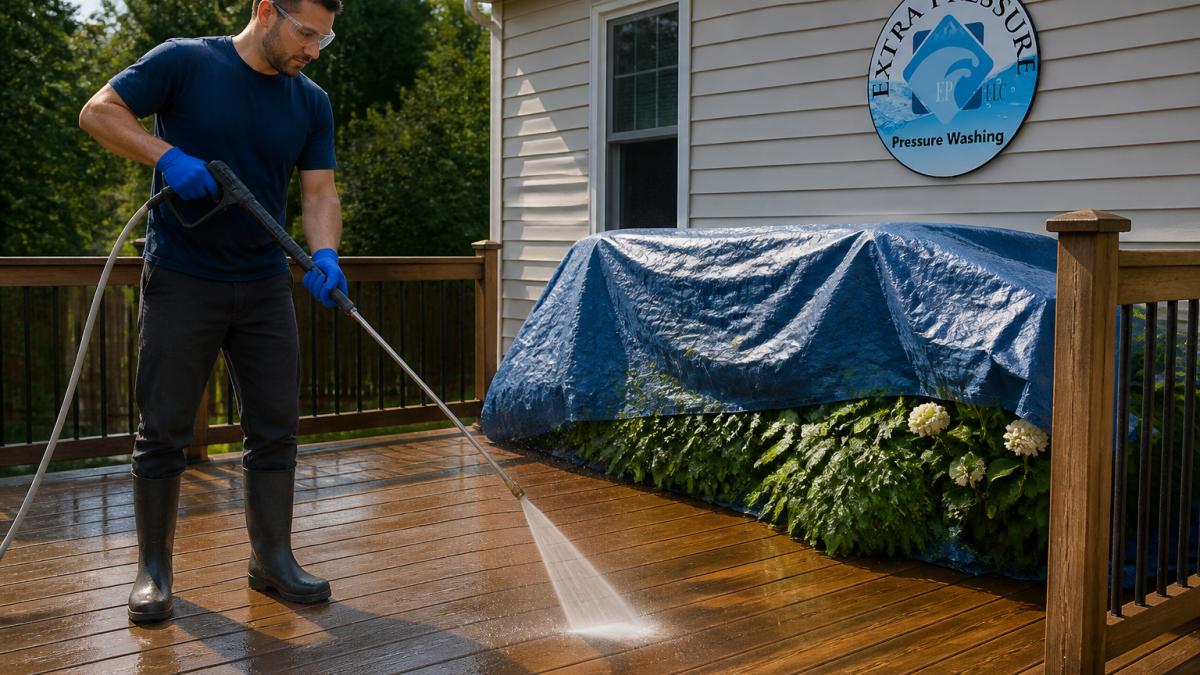
This is the step most guides skip. Bleach and acid runoff can damage soil, grass, and nearby water features. Before you start, pre-wet plants and landscaping with plain water so they absorb clean water first, and cover sensitive beds with plastic sheeting. After rinsing, dilute the runoff area with fresh water. If you use an acid brightener, apply a neutralizing rinse (a baking-soda-and-water mix or a commercial neutralizer) to the deck and the ground around it.
Test every cleaner on a hidden board or a spare piece of the same wood species. Let it dry completely before judging the color, because wet wood hides bleaching and furring.
Step-by-Step: How to Soft Wash a Deck Safely
Here is the full process, from prep to rinse, plus the post-wash steps that determine whether the deck looks better or worse a week later. Follow the order and let each step do its job.
Pre-Soak, Apply, Dwell, and Rinse
- Clear the deck. Move furniture, sweep debris, and cover nearby plants with plastic sheeting. Pre-wet landscaping with plain water so it absorbs clean water before any runoff arrives.
- Pre-soak the wood. Wet the boards with a garden hose so the cleaner spreads evenly and does not dry too fast. Keep the wood damp, not puddled.
- Apply the solution. Spray from the bottom up with a pump sprayer, keeping the mix off your skin. Work in small sections so the cleaner does not dry before you rinse.
- Let it dwell. Give the cleaner 10 to 15 minutes to work. Do not let it dry on the surface, mist the boards with water if they start to dry.
- Scrub stubborn spots. Use a soft- or stiff-bristle brush on heavy growth, working with the grain. Never scrub across the grain, which raises fibers and leaves scratches.
- Rinse thoroughly. Wash from the top down with low pressure until the water runs clear. Rinse the plants and landscaping again with fresh water to dilute any overspray.
Letting the cleaner dry on the wood can bleach the grain and leave streaks. Keep the surface wet the whole time, and never work in direct sun or on hot boards, the cleaner dries too fast and the risk of streaking goes up.
Troubleshooting: Furring, Discoloration, and Raised Grain
Even careful soft washing can leave the wood looking worse before it looks better. Here is what to do when something goes wrong.
- Furring (fuzzy surface): Raised fibers usually mean the wood got too wet, the pressure was too high, or the cleaner was too strong. Let the deck dry completely, then lightly sand with the grain using 80- to 120-grit paper. Do not sand wet wood, it tears the fibers.
- Discoloration or bleaching: Light streaks or a washed-out tone often come from cleaner drying on the surface or from a hypochlorite mix that was too strong for the species. A wood brightener (oxalic acid) can restore tone on many species. Test on a hidden board first, and do not apply brightener to a deck that still has active bleach residue, rinse thoroughly first.
- Dark streaks that return: If mold comes back within weeks, the spores were not fully killed or moisture is still trapped. Improve airflow, fix any gutter or drainage issues, and plan to seal the wood once it is dry.
Wait Before You Seal or Stain
This is the step most homeowners skip, and it is the one that determines how long the clean lasts. Do not seal or stain a deck the same day you wash it. The wood needs to dry thoroughly, and trapped moisture under a sealer leads to peeling, mildew, and a failed finish.
A common pattern is to wait at least 48 to 72 hours after washing before sealing, and longer in humid or shaded conditions.
How to Remove Mold From Deck Boards Safely
Deck maintenance matters here. Shaded, damp boards grow mold faster, so improving airflow and sealing the wood after cleaning helps prevent the return. If you also see dark streaks climbing your shingles, the same growth is likely at work up there. Our guide on how to safely remove black streaks from roof shingles covers the soft wash method for roofs.
The Cost of Professional Deck Soft Washing
Professional soft wash deck pricing depends on deck size, condition, and how much growth has taken hold. A small, lightly soiled deck costs less than a large, heavily stained one that needs extra prep.
Here is what drives the price:
- Square footage of the deck surface
- Level of growth and how long it has been there
- Railings and stairs, which add surface area and time
We do not quote blind numbers. If you want to see what the service includes, take a look at our soft washing services for exterior cleaning.
Book a Same-Day Soft Wash Estimate
A clean deck protects your wood and lifts your whole property’s curb appeal. The longer mold and algae sit on the boards, the deeper they work into the grain.
Extra Pressure LLC is licensed and insured, and we offer same-day estimates.
Ready to stop guessing and get it done right? Book same-day pressure washing service with our team, or request a free estimate and get a clear quote before you commit.
Frequently Asked Questions
Is soft washing safe for all types of deck materials?
Soft washing suits most wood decks, including pressure-treated wood and timber decking, because it relies on low pressure and cleaning solution instead of force. Composite and older, weathered boards should get a spot test first. Avoid high pressure on any wood surface, since it can splinter wood fibers and strip stain. If your boards are soft, rotting, or already peeling, address repairs before any soft wash deck cleaning.
How do I protect my plants when soft washing a deck?
Pre-soak nearby plants and soil with plain water before you apply any cleaning solution, then cover sensitive landscaping with plastic sheeting. Keep chemical runoff away from garden beds by directing rinse water toward a drain or lawn edge. Rinse plants again with a garden hose after the job. Sodium hypochlorite and other cleaning agents can burn foliage, so wetting plants first dilutes any overspray that reaches them.
Can I soft wash a deck myself or should I hire a professional?
A homeowner can handle a small, lightly soiled deck with a pump sprayer, a garden hose, and a mild cleaner. Hire a professional when the deck is large, heavily covered in mildew, has delicate landscaping around it, or sits near siding and windows that need protection. Professionals also carry the protective equipment and know the right dwell time and dilution, which lowers the risk of wood discoloration or chemical damage.
How often should you soft wash a deck to prevent mold growth?
Most decks benefit from a soft wash once a year, ideally in spring before the humid season. Shaded decks or ones under trees may need cleaning every six months, since organic growth returns faster in damp, low-light spots. Pair each wash with a fresh coat of deck sealant once the wood dries, usually after 48 to 72 hours, to slow mildew and algae growth and extend the life of your deck maintenance routine.
Your deck does not have to stay green and streaked. Reach out to Extra Pressure LLC for a same-day estimate, and let our licensed team soft wash your wood the safe way.
