
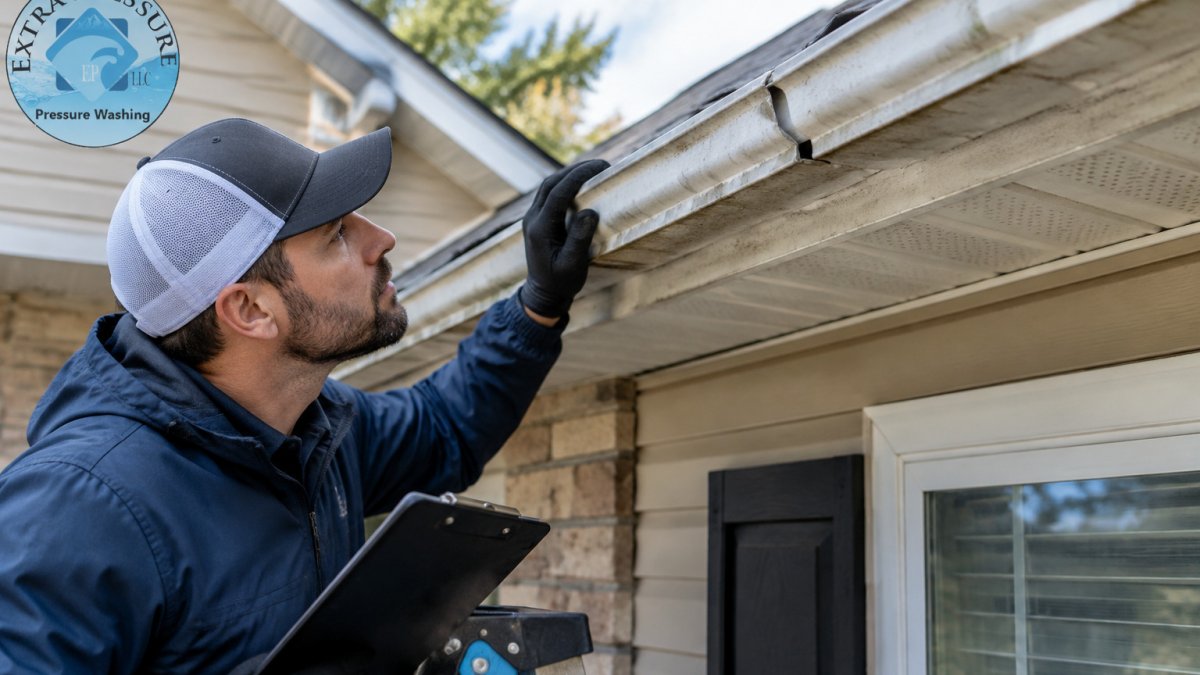
Last Updated: November 19, 2026
Quick Summary
To learn how to inspect gutters for structural damage, start at ground level and walk the perimeter with binoculars, checking alignment, attachment, seams, holes, fascia, soffit, and downspouts. A loose bracket is a gutter problem, but a rotting fascia board behind it is structural trouble.
- Check alignment, attachment, seams, holes, fascia, soffit, and downspouts against the inspection checklist.
- Walk the perimeter at ground level and use binoculars to spot sagging, leaning, and separation without a ladder.
- Fascia rot, soffit stains, wall streaks, foundation cracks, and pooling water signal structural trouble beyond the gutter.
- Tap each downspout; a dull thud means a clog, so run a garden hose to check for overflow.
- Never lean a ladder against a gutter, because the weight bends the hanger and pulls the run loose.
Table of Contents
- Gutter Inspection Checklist: What to Look For
- Signs of Gutter Damage That Point to Structural Trouble
- How to Inspect Downspouts and Gutter Inspection Safety
- Frequently Asked Questions
Gutter Inspection Checklist: What to Look For
Learning how to inspect gutters for structural damage starts with knowing what to check. This guide covers rain gutters, downspouts, hangers, and fascia for signs of failure.
Here is your gutter inspection checklist:
- Alignment: Level, sloping toward downspouts.
- Attachment: Hangers and brackets tight against the fascia.
- Seams and joints: Gaps, rust, or separated end caps.
- Holes and cracks: Small openings grow fast under heavy rain.
- Fascia and soffit: Rot, peeling paint, soft wood, stains, or sagging.
- Downspouts: Connected, clear, and moving water away from the foundation.
Start at ground level. Walk the perimeter and look up, binoculars help spot most sagging, leaning, and separation without a ladder.
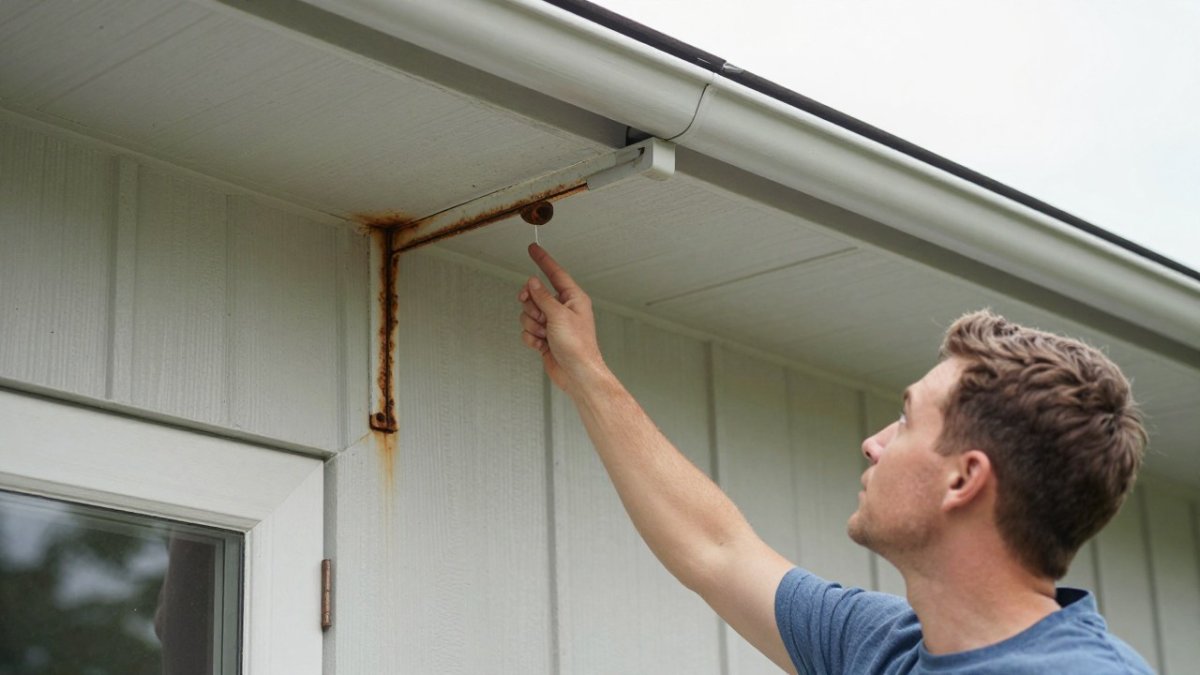
Here is the checklist of gutter components to inspect and what to look for in each.
| Component | What to check |
|---|---|
| Alignment | Level, sloping toward downspouts |
| Attachment | Hangers and brackets tight against the fascia |
| Seams and joints | Gaps, rust, or separated end caps |
| Holes and cracks | Small openings grow fast under heavy rain |
| Fascia and soffit | Rot, peeling paint, soft wood, stains, or sagging |
| Downspouts | Connected, clear, and moving water away from the foundation |
Signs of Gutter Damage That Point to Structural Trouble
Gutter defects stay in the gutter; structural trouble reaches the house. A loose bracket is a gutter problem; a rotting fascia board behind it is structural.
Watch for these signs of gutter damage that go beyond the gutter itself:
- Fascia rot: Soft, dark, or crumbling wood behind the gutter.
- Soffit stains: Water marks or sagging panels under the eaves.
- Wall streaks and foundation cracks: Rust or water lines down walls; new cracks near downspout discharge.
- Water pooling and detached gutters: Standing water near the foundation; gutter pulling away from the roofline.
If you find damage, our guide to gutter cleaning vs gutter repair breaks down both paths, and residential gutter cleaning service costs covers hiring help. Once the gutters are sorted, a soft washing service can clear the algae and grime those overflow stains leave on siding and walkways.
How to Inspect Downspouts and Gutter Inspection Safety
Downspout checks and safety go together. Work from the ground when you can; use a ladder only when necessary, never alone, keeping three points of contact. Stay off the roof in rain, ice, or wind.
Follow these steps:
- Confirm each downspout is attached and connected at the top.
- Check the bottom outlet, water should flow away from the foundation.
- Tap the downspout; a dull thud means a clog.
- Run a garden hose into the gutter and watch for overflow or seam leaks.
- Reconnect or reseal separated joints, and confirm splash blocks move water a few feet out.
Before you climb, our list of essential tools for safe gutter maintenance covers the gear. For clogs, see clearing downspout clogs; a loose downspout may mean you can install a downspout extension yourself. If water has been running down the walls, window washing can remove the streaks left on the glass and frames below.
Watch out: Never lean a ladder against a gutter. The weight bends the hanger and pulls the whole run loose.
Gutter damage rarely stays small. A loose bracket, a soft fascia board, or a clogged downspout can turn into rotted wood and foundation trouble within a season. Extra Pressure LLC. is licensed and insured and handles gutter maintenance across the region, with same-day estimates and soft washing for delicate surfaces. Get started with Extra Pressure LLC. and protect your home before the next storm.
Frequently Asked Questions
Can damaged gutters cause structural damage to a house?
Yes. A failing gutter system sends water against the fascia, soffit, and siding instead of into the downspouts. Over time that moisture rots wood, loosens fasteners, and pools near the foundation, which can lead to cracks and basement seepage. Catching it during a gutter inspection matters, because the gutter itself is usually the cheap fix while the fascia and foundation work is not.
Is it safe to inspect gutters from a ladder?
Only if the ladder is on level ground, set at the correct angle, and you stay off the top two rungs. Gutter inspection safety starts with a ground-level walk-around, which catches sagging, separation, and stains without any climbing. If you need to reach the roofline, hire a licensed and insured crew rather than working alone on a ladder near power lines or wet surfaces.
When should damaged gutters be repaired or replaced?
Loose hangers, a few separated seams, and minor clogs are repair jobs. Rust-through, cracks at multiple joints, sagging along a whole run, or gutters pulling away from rotted fascia point to replacement. A gutter inspection that documents the damage over time gives you the evidence to decide, and it helps a contractor quote the right scope instead of guessing.
