
Table of Contents
- Start With a Simple Daily and Weekly Routine
- Your Restaurant Patio Cleaning Checklist, Step by Step
- How to Clean Outdoor Restaurant Furniture by Material
- Build a Restaurant Patio Maintenance Schedule That Holds Up
- Restaurant Patio Pressure Washing: What to Clean and What to Skip
- Handle Drainage, Slip Prevention, and Surface Safety
- Assign Staff Duties and Keep Maintenance Logs
- Plan Repairs, Replacements, and Seasonal Shutdowns
- Frequently Asked Questions
Last Updated: October 23, 2026
Start With a Simple Daily and Weekly Routine
A clean patio earns its keep. Guests judge an outdoor table before they sit down, and a sticky tabletop or a leaf-filled corner sends them back inside.
The fix is a routine, not a deep clean. Most restaurant patios need three levels of care:
- Daily: wipe tables, sweep floors, empty trash, clear food waste
- Weekly: hose surfaces, scrub chairs, check drains, wipe light fixtures
- Seasonally: deep clean, inspect for damage, plan repairs
That’s the whole system. The rest of this guide fills in the details.
Assign closing staff a five-minute patio sweep before lockup. Crumbs and spills left overnight attract pests and set into surfaces, which turns a quick wipe into a scrubbing job by morning.
Your Restaurant Patio Cleaning Checklist, Step by Step
A restaurant patio cleaning checklist is a written list of daily, weekly, and seasonal tasks that keeps outdoor seating safe and presentable. Print it, post it near the patio door, and have staff initial each item as they finish.
Here is a simple version you can copy today.
Daily tasks (before opening and at close):
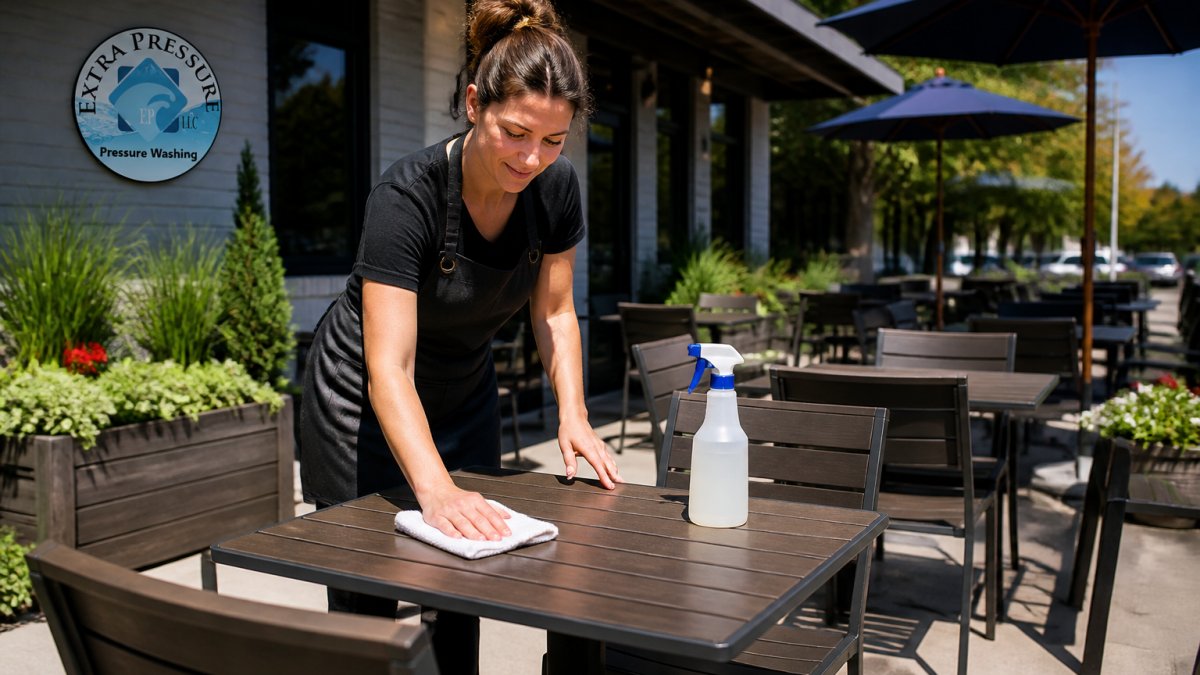
- Wipe every tabletop, including the edges and undersides
- Wipe chair seats, backs, and armrests
- Sweep or blow off the patio floor
- Empty trash cans and replace liners
- Clear food waste and wipe condiment caddies
- Check for standing water near entrances
Weekly tasks:
- Hose down hard surfaces and scrub stubborn spots
- Wash chair cushions and check for mildew
- Clean light fixtures and check bulbs
- Clear debris from drains and gutters
- Wipe down umbrellas, awnings, and shade frames
Seasonal tasks:
- Deep clean all surfaces and furniture
- Inspect for cracks, rust, and loose hardware
- Store or cover items that won’t survive the off-season
How to Clean Outdoor Restaurant Furniture by Material
Cleaning methods change with the material. Blast a powder-coated aluminum chair with the wrong pressure and you’ll chip the finish. Scrub teak like plastic and you’ll raise the grain. The table below gives the short version; the notes after it explain the mechanism so staff know why a method is on the list.
| Material | Best Method | Avoid | Frequency |
|---|---|---|---|
| Powder-coated aluminum | Mild dish soap (a few drops per gallon of water), soft brush, low-pressure rinse under 1,500 psi | High pressure, abrasives, wire brushes | Weekly |
| Wrought iron | Soap and water, dry fully within an hour, touch up rust spots with matching enamel | Standing water, harsh acids, leaving wet | Weekly |
| Teak and hardwood | Mild soap, light scrub with the grain, oil once a year with a penetrating oil | Pressure washing, bleach, soaking | Monthly |
| Plastic and resin | Soap, water, soft cloth | Solvents, hot water above 120°F | Weekly |
| Wicker and rattan | Vacuum with a brush attachment, damp cloth, air dry in shade | Soaking, direct spray, direct sun drying | Monthly |
| Fabric cushions | Spot clean with upholstery cleaner, air dry, rotate cushions weekly | Machine washing unless the tag allows it | As needed |
Why the method matters. Powder coating is a thin polymer shell over aluminum. High pressure gets under a chip and lifts the coating in sheets, which exposes bare metal and starts corrosion. A soft brush and a low-pressure rinse remove food film without breaking that shell. Wrought iron fails from the inside out: water sits in joints and welds, so drying within an hour matters more than the soap you use. Teak and other hardwoods raise grain when soaked, and pressure washing opens the pores so the wood takes on water and grays faster; a light scrub with the grain and an annual penetrating oil keeps the surface sealed.
Supplies to keep on the patio cart. A spray bottle of mild soap solution, a soft-bristle brush, microfiber cloths, a small vacuum with a brush attachment, a rust-touch-up pen that matches your frame color, and a penetrating oil for wood. Keeping these together means staff don’t improvise with whatever is in the kitchen.
Drying and storage. Dry metal and wood fully before stacking or covering. Trapped moisture under a cover is the most common cause of mildew and rust between shifts. In humid weather, leave cushions upright and uncovered until dry rather than stacking them damp.
A common mistake is treating every surface the same. It isn’t faster. It’s how finishes fail early.
Mixing bleach with an acidic cleaner (including many rust removers) releases chlorine gas. Never combine them on a patio, and never store them side by side on the same cart.
Build a Restaurant Patio Maintenance Schedule That Holds Up
Knowing how to maintain restaurant outdoor patio areas starts with a restaurant patio maintenance schedule, a calendar that assigns each cleaning and inspection task to a person, a day, and a season. Without one, work happens only when someone complains.
Build the schedule around your traffic. A patio that seats guests every day needs daily attention. A seasonal patio can lean on weekly and monthly tasks instead.
Map it like this:
- Daily: opening and closing checks, signed off by shift lead
- Weekly: one deep-clean block, usually a slow morning
- Monthly: furniture inspection, drain check, light audit
- Seasonal: full deep clean, repairs, storage or shutdown
Post the schedule where staff can see it. A calendar nobody reads is just decoration.
Restaurant Patio Pressure Washing: What to Clean and What to Skip
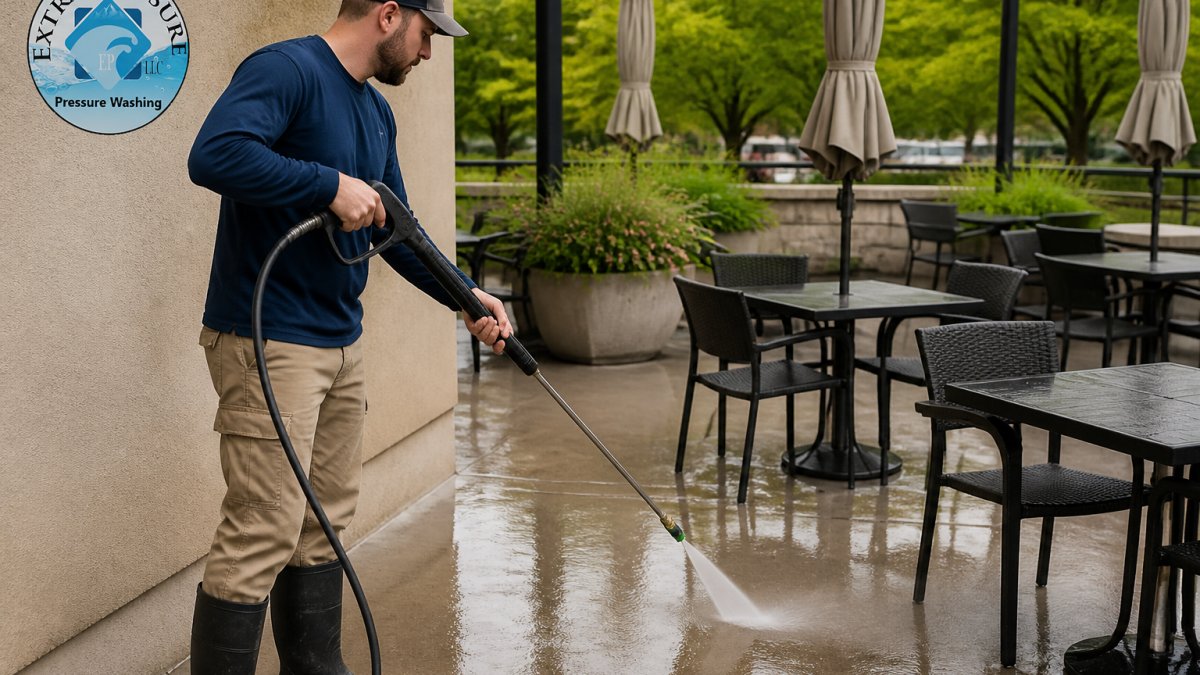
Restaurant patio pressure washing removes grime that soap and a hose can’t touch, but it isn’t safe for every surface. Before the crew arrives, how to prepare your home for professional pressure washing covers the steps to get the patio area ready. Concrete, brick, and stone handle pressure well. Wood, painted finishes, and delicate furniture do not.
Clean these with pressure:
- Concrete floors and walkways
- Brick and stone pavers
- Metal railings and frames
- Trash can exteriors
Skip pressure on these:
- Wood furniture and decking
- Painted or powder-coated surfaces
- Fabric, cushions, and umbrellas
- Loose or cracked pavers
If you’d rather not risk the finish, soft washing cleans with low pressure and specialized solutions for gentler surfaces that can’t take high pressure.
Pressure washing a wood patio or painted furniture can strip the finish and raise the grain. Once that happens, the surface needs sanding and refinishing, which costs far more than a soft wash would have.
Handle Drainage, Slip Prevention, and Surface Safety
Water is the quiet enemy of a patio. It pools near entrances, breeds mildew, and turns smooth concrete into a slip hazard. Drainage and surface care belong in the same conversation, and they need a cadence, not a one-time fix.
Inspect on a schedule. Walk the patio after every heavy rain and once a week in dry weather. Check low spots, the base of downspouts, the seam where the patio meets the building, and the path guests take from the door to the farthest table.
Clear the path water takes. Drains and gutters flow freely only if debris is cleared before rainy season and after every storm. Our guide on preventing gutter overflow and water damage walks through the fixes that keep runoff where it belongs.
Match surface care to the material. Concrete and stone can be pressure washed, but only after cracks and joints are sealed; water forced into a crack widens it and holds moisture.
Reduce slip risk at the source. Patch cracks and reset uneven pavers that hold water. Apply a non-slip treatment to smooth, wet-prone surfaces such as sealed concrete and tile. Keep walkways clear of cords, planters, and loose items.
Watch for algae and mildew. Shaded, damp corners grow algae that feels slick underfoot. Scrub with a stiff brush and a mild soap solution, rinse, and let dry. If algae returns in the same spot within weeks, the underlying issue is drainage or shade, not cleaning.
Log what you find. A simple note of date, location, and condition turns a recurring puddle into a repair ticket. Patterns matter: a drain that clogs every month, a paver that rocks, a downspout that dumps onto a walkway. Fix the pattern, not just the puddle.
Slip-and-fall claims are among the most common liability exposures on a commercial patio. A weekly drainage walk and a written log are the cheapest risk reduction you can put in place.
Assign Staff Duties and Keep Maintenance Logs
Maintenance fails when nobody owns it. Give each task a name, and give each name a checklist.
Split duties like this:
- Servers: wipe tables, clear food waste, reset chairs
- Bussers: sweep floors, empty trash, check under tables
- Shift lead: sign off on the closing checklist
- Manager: review the log weekly, schedule deep cleans and repairs
Keep a simple log. Note the date, the task, who did it, and anything that needs a follow-up. A log turns “I think we cleaned that” into a record you can check. It also spots patterns, like a drain that clogs every month or a chair that keeps wobbling.
A maintenance log is the cheapest inspection tool you have. It shows what’s failing before a guest notices.
Plan Repairs, Replacements, and Seasonal Shutdowns
Every patio item has a lifespan. Catch wear early and you repair it. Ignore it and you replace it.
Watch for these signals:
- Rust spots on metal frames
- Cracks or chips in tabletops
- Wobbly chair legs or loose bolts
- Faded or peeling finishes
- Mildew that returns after cleaning
- Cushions that stay damp
Plan replacements around the season, not in the middle of a busy weekend. When the patio closes for the season, deep clean everything, cover or store furniture, and schedule any pressure washing or window cleaning before reopening. First, check the service areas to confirm your Georgia location is covered. You can schedule a pressure washing or window cleaning appointment for the off-season. If the glass between your dining room and patio has gone cloudy over the season, window washing is worth booking at the same time.
Frequently Asked Questions
How often should restaurant patio furniture be cleaned?
Wipe tables and chairs down daily before service and after each seating. Do a deeper clean weekly, including frames, legs, and cushions. Pressure wash or soft wash hard surfaces monthly during patio season, and more often if your patio sits under trees or near a parking lot. Any furniture near food service or high-touch areas should be sanitized between guests. If you notice mold, mildew, or sticky residue that regular cleaning won’t lift, it’s time for a professional wash rather than another wipe-down.
What should be included in a restaurant patio cleaning checklist?
A workable restaurant patio cleaning checklist covers tables, chairs, and bar tops; floors and drains; umbrellas and shade structures; glass and windows; planters and greenery; trash and food waste removal; pest checks; and lighting. Add a spot for noting damage so repairs get logged. Keep the list short enough that staff can finish it between shifts, and assign each item to a specific role. Checklists only work when someone owns them, so review the list weekly and update it as your patio changes.
What is the best way to clean an outdoor restaurant patio?
Sweep or blow off loose debris first, then wash surfaces with the right method for the material. Concrete and pavers handle pressure washing well, but wood, composite, and painted surfaces need lower pressure or soft washing to avoid damage. Clean furniture by material, clear drains, and finish with glass and lighting. Schedule the heavy work outside service hours so guests never see wet floors or hear equipment. For stubborn organic growth like mold or algae, a professional soft wash is safer than blasting the surface.
How do you prevent mold and mildew on an outdoor patio?
Mold and mildew need moisture and shade, so the fix is airflow and drying time. Clear standing water after rain, keep drains open, and avoid stacking furniture against walls where damp air sits. Wipe down surfaces that stay wet, and wash organic growth before it spreads into grout or seams. Pressure washing or soft washing removes existing growth, but it returns if drainage and ventilation stay poor. Check shaded corners and under planters weekly, since those spots grow mold fastest.
Maintaining a restaurant patio is a routine, not a project. Daily wipes, weekly scrubs, and seasonal deep cleans keep the space safe and inviting. When the grime gets ahead of your staff, Extra Pressure LLC. can help. We’re licensed and insured, we offer same-day estimates, and we use specialized soft washing for delicate surfaces. Get started with Extra Pressure LLC. and give your patio the clean start it deserves.
