
Quick Summary
The core of how to prepare your home for gutter cleaning is clearing the ground, protecting plants and outdoor items, and inspecting the gutters first so existing damage is documented. Schedule the work on a dry day with no wind, and tell the cleaner about any known loose or damaged sections before they start.
- Cover flower beds and shrubs with a tarp or old sheet before work begins.
- Move patio furniture, grills, and planters away from the house and the drip line.
- Walk the perimeter and photograph existing gutter, downspout, and fascia damage before anyone climbs a ladder.
- Point downspout outlets toward a lawn or gravel area, not a patio or driveway.
- Postpone the job if rain has fallen within the past 24 hours or wind gusts are strong.
Table of Contents
- Why Preparation Matters Before Gutter Cleaning
- Gutter Cleaning Tools and Supplies to Gather
- Protecting Landscaping, Patios, and Outdoor Equipment
- Checking Gutters, Downspouts, and Fascia Before the Work Begins
- Choosing a Dry Day and Knowing When to Postpone
- Clearing Gutters From the Ground or With a Garden Hose
- Preparing for a Two-Story House or Hiring a Professional Crew
- Scheduling Your Gutter Cleaning With Extra Pressure LLC.
- Frequently Asked Questions
Why Preparation Matters Before Gutter Cleaning
Gutters do one job: they carry rainwater away from your roof and foundation. When they clog with leaves, twigs, and roof grit, water spills over the edge. That water can soak siding, stain fascia boards, and pool near your foundation.
Learning how to prepare your home for gutter cleaning before the crew or cleaner arrives keeps the day safe and the work fast. It also protects your plants, windows, and outdoor furniture from falling debris and runoff.
What good preparation accomplishes:
- Lets the cleaner reach every section without moving furniture
- Keeps wet debris away from patios, decks, and walkways
- Gives you a record of gutter and roof condition before work begins
- Cuts down on callbacks for missed sections
A common mistake is assuming the cleaner will handle everything. Most crews work faster and more carefully when the ground is clear and the access points are open.
Gutter Cleaning Tools and Supplies to Gather
If you plan to clean the gutters yourself, gather your supplies before the first rung of the ladder. Searching for a missing scoop halfway up a ladder is how people get hurt.
Basic gutter cleaning kit:
- Work gloves rated for sharp metal edges
- Safety glasses and a dust mask
- A gutter scoop or small garden trowel
- A bucket for debris
- A garden hose with a spray nozzle
- A tarp to catch debris on the ground
- A leaf blower, if you plan to blow out dry debris
If you hire a crew, you usually do not need these tools. Ask whether the company supplies its own equipment and whether it includes a flush test at the end.
Watch out: Never climb a ladder with wet gloves or on uneven ground. Use a ladder stabilizer if one is available, and keep both feet on the rungs at all times.
Protecting Landscaping, Patios, and Outdoor Equipment
Gutter debris is wet, heavy, and full of grit. When it lands on plants or hardscape, it can crush stems and stain pavers.
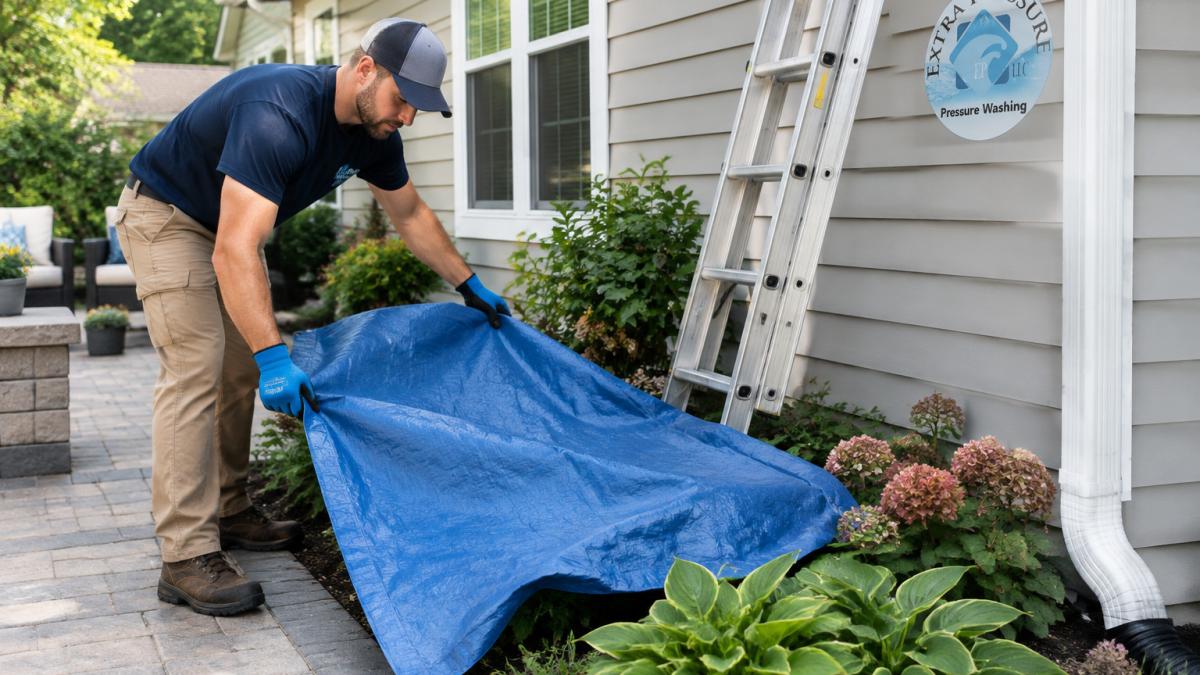
Knowing how to prepare your home for gutter cleaning starts outside: cover flower beds and shrubs with a tarp or old sheet before work begins. Move patio furniture, grills, and potted plants away from the house. Park vehicles away from the drip line.
Protect these areas first:
- Flower beds and shrubs along the foundation
- Patio furniture and outdoor cushions
- Grills, planters, and garden decor
- Driveways and walkways where debris will fall
- Outdoor electrical outlets and light fixtures
Downspout discharge is another concern. Water and sediment will flow out the bottom of the downspout during rinsing. Direct the outlet toward a lawn or gravel area, not a patio or driveway that stains easily.
Gutter debris is wet and heavy, so protect these areas before the cleaner arrives:
| Area | Protection | Note |
|---|---|---|
| Flower beds and shrubs | Tarp or old sheet | Debris can crush stems |
| Patio furniture and grills | Move away from house | Keep clear of the drip line |
| Driveways and walkways | Expect falling debris | Wet debris stains pavers |
| Downspout outlet | Point toward lawn or gravel | Avoid patios and driveways |
Checking Gutters, Downspouts, and Fascia Before the Work Begins
Walk the perimeter before anyone climbs a ladder. This pre-cleaning inspection is the step most homeowners skip, and it is the one that protects you if something goes wrong.
What to look for from the ground:
- Gutter sections that sag, pull away from the fascia, or have visible gaps at the seams
- Rust streaks, peeling paint, or soft spots on fascia boards that suggest rot
- Downspouts that are cracked, dented, or disconnected at the elbows
- Granules from shingles collecting in the gutter channel, which can signal roof wear
- Staining on siding below the gutter line, a sign of chronic overflow
- Sharp metal edges, exposed fasteners, or loose hangers that could catch a glove or a ladder
Document what you find before work begins. Take photos of each side of the house from the ground, plus close-ups of any damage you spot. First, it gives you a baseline so you can tell pre-existing damage from anything that happens during the job. Second, if you hire a crew, you can share the photos ahead of time so they know which sections to handle carefully.
Communicate known issues before the cleaner arrives. If you are hiring, send a short message or make a note at booking that covers:
- Any gutter section that is loose, sagging, or already damaged
- Downspouts that are disconnected or known to clog
- Fragile fascia, old wood, or areas where fasteners are pulling out
- Sections you suspect are clogged but cannot see from the ground
- Any area where the cleaner should avoid putting ladder weight
If a crew arrives with no information and puts a ladder against a soft fascia board, the result is a repair bill nobody planned for.
Pre-cleaning checklist:
- Note any loose or sagging gutter sections
- Check downspouts for cracks or disconnected elbows
- Look for peeling paint or soft spots on fascia
- Photograph each side of the house from the ground
- Photograph any existing damage up close
- Mark any areas where the gutter pulls away from the fascia
- Write down known clogs or slow-draining downspouts
- Share the list and photos with the cleaner before the appointment
Watch out: Do not probe soft fascia or loose gutters with your hands from a ladder. Note the problem from the ground and let the cleaner or a contractor assess it safely.
Choosing a Dry Day and Knowing When to Postpone
Wet gutters are slippery, and wet debris is much heavier. Rain also makes the ladder less stable on soft ground. Plan the work for a dry day with light or no wind.
Early autumn and late spring are common times for gutter cleaning because leaves and debris build up after storms and seasonal changes. Check the forecast a few days ahead.
Postpone the job if:
- Rain has fallen within the past 24 hours
- Wind gusts are strong enough to sway the ladder
- The ground is soft or muddy at the base of the ladder
- Frost or ice covers the roof edge or gutters
- Lightning is in the forecast
Clearing Gutters From the Ground or With a Garden Hose
Not every gutter needs a ladder. Many homeowners clean from the ground using an extension pole with a gutter brush or a hose with a high-pressure wand.
For a single-story house, a telescoping pole and a garden hose often work well. Start at the downspout end and flush debris toward the outlet. Watch the water flow. If water backs up or overflows, the gutter has a clog that needs to be cleared by hand.
Ground-level cleaning steps:
- Set up the pole or hose at the downspout end
- Spray water along the run to loosen debris
- Push or flush debris toward the downspout
- Check that water exits the downspout freely
- Repeat on each section
Pressure settings matter. Too much force can bend aluminum gutters or pull fasteners loose. Start with a gentle spray and increase only if needed.
Preparing for a Two-Story House or Hiring a Professional Crew
Two-story homes need more planning. Ladder height, roof pitch, and access points all change the job, and many homeowners decide to hire a professional for these properties.
Access and parking:
- Clear vehicles from the driveway and from the area where the ladder will be set
- Open gates and side-yard access so the crew can reach the backyard without asking
- Trim back any tree branches or shrubs that block the ladder path or the gutter line
- Confirm where the crew should park and which entrance to use
Pets, children, and people:
- Secure pets indoors or in a closed room before the crew arrives
- Keep children indoors during the work
- Let the crew know if anyone in the household has mobility or hearing limitations
Ground-level items:
- Move patio furniture, grills, planters, and garden decor away from the foundation
- Roll up hoses and put away sprinklers, toys, and tools
- Mark sprinkler heads and landscape lights near the house so they are not stepped on
- Cover or move anything fragile under the drip line
Utilities and water:
- Identify an outdoor water spigot the crew can use for flushing
- Point out any outdoor electrical outlets, security cameras, or lighting near the work area
- Note the location of any buried lines, septic components, or drainage features
Communication:
- Share the pre-cleaning inspection notes and photos from the section above
- Confirm the scope: debris removal, downspout clearing, flush test, and cleanup
- Ask where the crew will direct water and debris during rinsing
- Confirm the cancellation and rescheduling policy for weather
For DIY work on a two-story home, consider these points:
- Use a sturdy extension ladder with a stabilizer, and have a helper hold the base
- Never lean sideways on the ladder; move it instead
- Avoid working near power lines and keep the ladder at least 10 feet from overhead lines
- Stop and call a professional if the roof is steep, the gutters are damaged, or the ground is unstable
- Work in short sessions and keep both feet on the rungs at all times
Cleaning a gutter on a two-story house also means working near upper windows. Wipe down any glass that gets splashed with debris water, and check that window screens are secure before work begins.
Watch out: Never set a ladder on soft ground, mulch, or a slope to reach a second-story gutter.
Scheduling Your Gutter Cleaning With Extra Pressure LLC.
Once you have checked the weather and prepared the property, the next step is booking the service. Extra Pressure LLC. offers licensed and insured gutter maintenance along with pressure washing, soft washing, and window cleaning. Same-day estimates are available, so you can get a clear quote before committing.
Our crews check your gutters, clear debris, and flush each downspout so you can see water flowing freely. Explore our window washing near me service if the glass also needs attention, or review our soft washing near me options for delicate surfaces around your home.
Schedule your gutter cleaning today and let us handle the hard part.
Last Updated: November 6, 2026
Frequently Asked Questions
What should I do before cleaning my gutters?
Start by clearing the area beneath the gutters of furniture, planters, grills, and vehicles so nothing gets soaked or struck by falling debris. Lay down a tarp or drop cloth along the foundation to catch leaves and sludge. Check the weather forecast for a dry day with little wind, and walk the perimeter to note sagging sections, loose brackets, or any signs of leaks. Taking these steps first saves cleanup time and protects your landscaping from debris and rinse water.
Should I move anything before the gutters are cleaned?
Yes. Move patio furniture, potted plants, grills, outdoor decor, and vehicles at least several feet away from the walls below the gutters. Remove or secure wind chimes and hanging items near the eaves. Cover delicate shrubs with a tarp if debris will fall on them. Also move pets and children out of the work zone, since falling leaves and wet sludge can be messy and ladders need a clear setup area.
How do I prepare my home for professional gutter cleaning?
Clear access to the exterior walls by moving vehicles and outdoor items, and make sure the crew can reach the downspout outlets. Tell the crew about any soft landscaping, delicate surfaces, or sagging gutter sections so they can plan accordingly. Keep a gate unlocked and point out any pets.
How long does gutter cleaning take?
Timing depends on the size of the home, the number of stories, how much debris has built up, and whether downspouts need to be flushed. Preparation, such as clearing the work zone in advance, helps keep the job moving. Pricing depends on property size, height, access, and the level of debris, so contact Extra Pressure LLC. for a quote and an accurate timeline for your home.
