
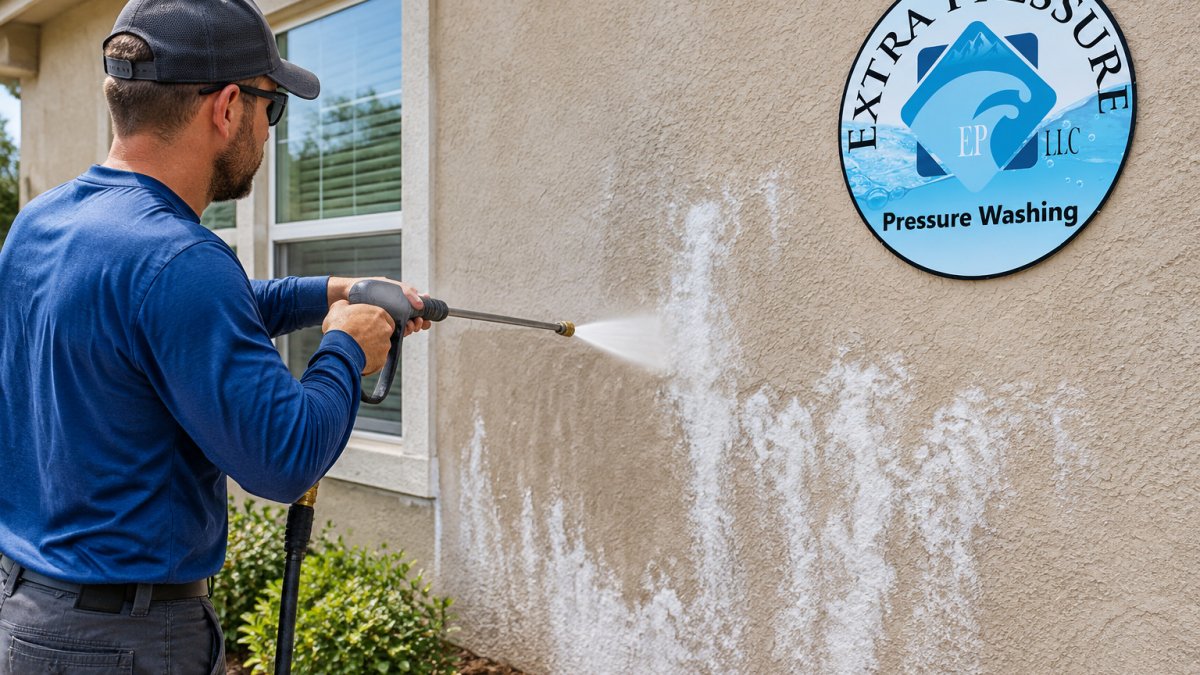
Last Updated: November 22, 2026
Quick Summary
You remove efflorescence from stucco by dry brushing the white powder with a stiff nylon brush, then rinsing with clean water from top down. Clean within 24 to 48 hours of it appearing, before the salt bonds tighter. Never use a pressure washer on stucco.
- Clean efflorescence within 24 to 48 hours of it appearing, before it bonds tighter.
- Dilute white vinegar half and half with water for light, thin efflorescence films.
- Never use a pressure washer on stucco because it drives water in and etches the finish.
- Muriatic acid is a last resort for unpainted, fully cured traditional stucco only.
- Fix leaking gutters, sprinklers, poor drainage and cracks to stop efflorescence returning.
Table of Contents
- How Do You Remove Efflorescence From Stucco?
- Vinegar for Efflorescence: When It Works and When It Doesn’t
- Choosing an Efflorescence Cleaner for Stucco
- Efflorescence Versus Mold on Stucco
- How Do You Prevent Efflorescence From Returning?
- Frequently Asked Questions
How Do You Remove Efflorescence From Stucco?
You remove efflorescence from stucco by dry brushing the white powder, then rinsing with clean water. Start there before trying anything stronger. The Stucco Manufacturers Association’s efflorescence guidance notes that most of it comes off with a dry brush and a water flush.
Efflorescence is a white, powdery salt residue that rises to the surface as moisture moves through stucco and dries. The Technical Services Information Bureau advises cleaning within 24 to 48 hours of it appearing. Wait longer and it bonds tighter.
Here is a common order for removing efflorescence:
- Dry brush the chalky film with a stiff nylon brush
- Rinse with clean water from top down
- Scrub stubborn spots with a soft-to-medium brush
- Try diluted vinegar on light, returning deposits
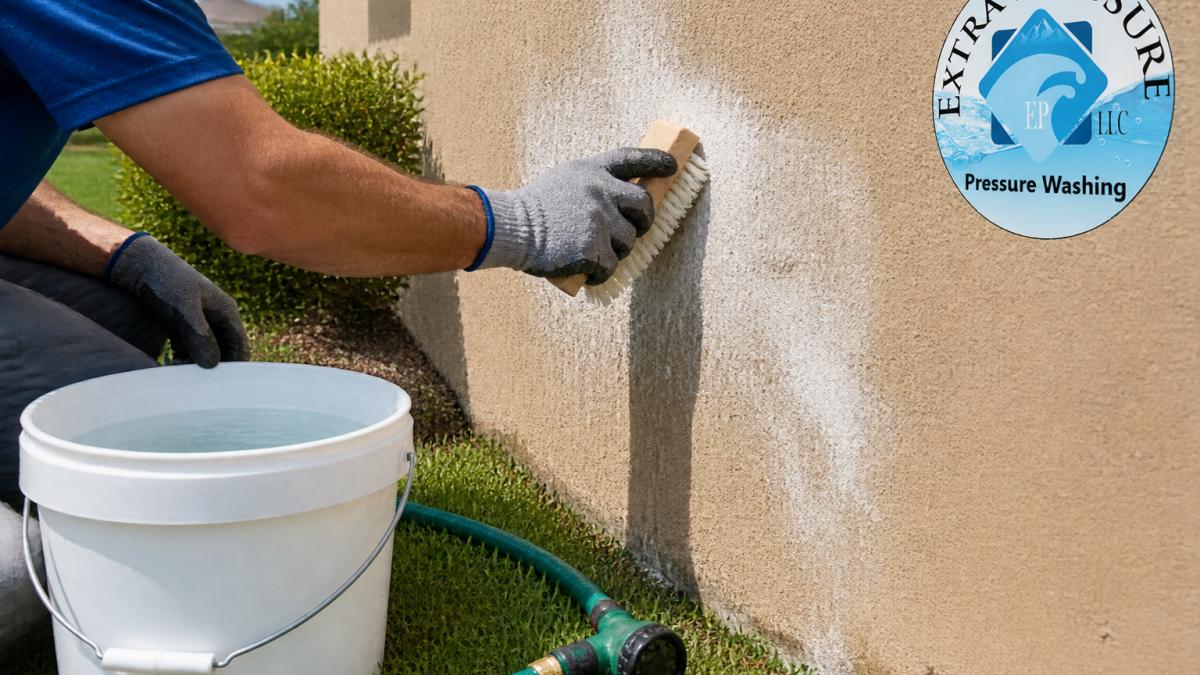
Watch out: never use a pressure washer on stucco, the force drives water in and etches the finish. For other wall stains, see our guide on how to safely clean bird droppings from stucco walls.
Vinegar for Efflorescence: When It Works and When It Doesn’t
Vinegar works on light, thin efflorescence and fails on heavy, crusted deposits. White vinegar diluted half and half with water dissolves surface salts without harming most stucco finishes.
Test a small hidden spot first. Apply with a pump sprayer, let it sit a few minutes, then rinse well. Vinegar is a mild acid, so wear gloves and eye protection. Skip it on colored stucco until you know the finish won’t fade.
Choosing an Efflorescence Cleaner for Stucco
Pick the mildest cleaner that does the job, and step up only when deposits keep coming back. For most homes, a stiff nylon brush and a clean-water flush handle the job. The Construction Masonry & Hardscapes Association still puts dry brushing and clean-water flushing first, and that order matters because every stronger product carries real risk to skin, lungs, plants, and the stucco finish itself.
Work up this ladder, and stop as soon as the deposit is gone:
- Dry brush and clean water. Stiff nylon brush, top-down rinse, repeat after the wall dries. Removes most fresh efflorescence.
- Diluted white vinegar. One part white vinegar to one part water. Effective on thin films. Test first on colored or textured finishes.
- Masonry or efflorescence-specific cleaner. Follow the label dilution exactly. Usually gentler on stucco than generic acids.
- TSP (trisodium phosphate). Use it to cut grease, dirt, or paint chalk before an efflorescence treatment, not as the salt remover itself.
- Muriatic acid. Last resort only, on unpainted, fully cured traditional stucco. Most manufacturers call for 1 part acid to 10 or more parts water. It will etch colored finishes, attack metal trim and flashing, and kill landscaping.
Safety is not optional with any acid or ammonia-based product:
- Wear chemical-splash goggles, nitrile or rubber gloves, long sleeves, and boots. Add an acid-gas respirator for muriatic acid.
- Work outdoors with airflow at your back, never in an enclosed courtyard or against a wall in still air.
- Wet the wall and ground first so runoff is diluted and dust stays down.
- Cover plants, shrubs, and grass with plastic sheeting, and direct rinse water away from soil, storm drains, and pets.
- Never mix acids with bleach, ammonia, or other cleaners. Muriatic acid plus bleach releases chlorine gas; acid plus ammonia releases chloramine gas. Both can send you to the emergency room.
- Add acid to water, never water to acid, and use plastic buckets and sprayers, not metal.
Watch out: if the deposit does not lift after one pass of a labeled masonry cleaner at the label dilution, stop. Repeated acid passes thin the finish and drive salts deeper. Reassess the moisture source before reaching for a stronger product.
If the job looks risky, tall walls, EIFS, colored finishes, or a deposit that keeps returning, hire a pro. Compare professional soft washing costs before you book, and read why insured pressure washing services matter.
Efflorescence Versus Mold on Stucco
Efflorescence is a salt deposit; mold is a living growth. Getting the diagnosis wrong wastes cleaner, damages finishes, and leaves the real problem in place.
The water-drop test. Flick a few drops of clean water on the white patch. Efflorescence is a water-soluble salt; the powder softens, fizzes slightly, and dissolves. Mold and mildew smear instead. Paint failure chalks but does not dissolve, and mineral staining from irrigation or runoff stays put.
The color and texture check. Efflorescence is white to gray-white, powdery, and often blooms in a crystalline or fluffy pattern along mortar joints, cracks, and the base of the wall. Mold shows up as dark green, black, or gray patches, feels slimy or fuzzy, and grows where moisture lingers, shaded north walls, under eaves, behind shrubs.
The recurrence check. If a spot returns after rain and vanishes when the wall dries, it is likely salt. If it spreads, smells musty, or grows in the same damp corner regardless of rain, it is biological.
The finish check. This is where stucco-specific judgment matters:
- Traditional three-coat stucco. Most tolerant of brushing and mild acid. Still test any acid on a hidden spot first.
- Colored or acrylic finish coats. Vinegar and mild masonry cleaners are usually fine at label dilution; muriatic acid will bleach or etch the color, and aggressive scrubbing dulls the texture.
- EIFS (exterior insulation and finish systems). The thin acrylic finish and foam beneath are fragile. Skip acids and pressure washing entirely. Use a soft brush, mild detergent, and low-pressure rinse, and call a qualified EIFS contractor if the deposit is heavy or recurring. Water driven behind EIFS can rot framing and sheathing.
- Painted stucco. Efflorescence under paint pushes the coating off. Clean the salt, then fix the moisture before repainting, or the new coat will blister the same way.
Watch out: if the white patch sits under peeling or blistering paint, the paint is failing, not just the stucco. Cleaning alone will not fix it, the moisture source has to be corrected and the coating repaired.
For mold on nearby wood, see our mold prevention guide.
How Do You Prevent Efflorescence From Returning?
Stop the water and the salt stops coming back. Efflorescence returns when moisture keeps moving through the stucco, so fix the source first.
Check for:
- Leaking gutters and downspouts dumping water at the wall
- Sprinklers hitting the stucco
- Poor drainage at the base
- Cracks letting rain in
A breathable sealer can slow water absorption. Keeping water absorption low is good practice for minimizing efflorescence.
Efflorescence keeps coming back when the moisture source stays hidden. Our team at Extra Pressure LLC is licensed and insured, offers same-day estimates, and uses soft washing built for delicate surfaces like stucco. We find the water problem and clean without damage. Get started with Extra Pressure LLC and stop the white powder for good.
Frequently Asked Questions
Can you just paint over efflorescence on stucco?
Painting over efflorescence traps the salts under the coating, and the deposits usually push through again within a season or two. The salts need to be flushed out and the moisture source addressed first. Keeping water absorption low is good practice for minimizing efflorescence, so fix the water path before any repaint. Clean, rinse, let the wall dry fully, then paint.
Should you use a pressure washer to remove efflorescence from stucco?
High pressure can pit the finish and drive water deeper into the wall, which feeds the salt cycle. Dry brushing followed by a clean-water flush is a gentle approach. If you want mechanical help, use low pressure and a wide fan tip, or hire a soft washing provider that adjusts pressure for delicate surfaces.
What causes efflorescence to keep coming back on stucco?
Recurring deposits mean water is still entering the wall. Soluble salts dissolve in that moisture, migrate to the surface, and crystallize as the water evaporates. Look at gutter overflow, sprinkler spray, poor grading, and cracked sealant around windows. Some efflorescence cannot be fully removed without damaging the finish, so stopping the water source matters more than repeated cleaning.
