Last Updated: November 2, 2026
Quick Summary
Roof cleaning is worth the cost when your roof has visible moss, algae streaks, or heavy debris buildup, and it is not worth it when the surface is simply weathered or stained by age. Professional roof cleaning runs between $296 and $626, while a full roof replacement averages around $9,600.
- Cleaning pays for itself when organic growth is actively eating into your shingles, not as cosmetic upkeep.
- Roof cleaning cost per square foot typically falls between $0.25 and $0.46 for a basic job.
- High-pressure washing strips granules, voids many shingle warranties, and can permanently damage roofs over 15 years old.
- Soft washing is the default safe method for asphalt, metal, tile, and wood roofing surfaces.
- For slate and fragile tile, the answer is often a specialist inspection first.
Table of Contents
- Is Roof Cleaning Worth the Cost? The Short Answer
- What You Actually Get for the Money
- Roof Cleaning Cost Per Square Foot, Explained
- Using a Roof Cleaning Cost Calculator Without Getting Burned
- Does Roof Cleaning Damage Shingles?
- How Often to Clean a Roof
- Matching the Decision to Your Roof Material
- Book a Same-Day Roof Cleaning Estimate
- Frequently Asked Questions
Is Roof Cleaning Worth the Cost? The Short Answer
Roof cleaning is worth the cost when your roof has visible moss, algae streaks, or heavy debris buildup, and it is not worth it when the surface is simply weathered or stained by age. Professional roof cleaning runs between $296 and $626 according to Angi’s roof cleaning cost data, while a full roof replacement averages around $9,600. That gap is the entire argument in one sentence: pay hundreds now, or risk thousands later.
The honest answer depends on what is growing on your roof, not on how old it is. Below, we break down what you actually get for the money, where the real risks sit, and how to decide without guessing.
The short answer: cleaning pays for itself when organic growth is actively eating into your shingles. It does not pay for itself as cosmetic upkeep on a roof that only looks tired.
What You Actually Get for the Money
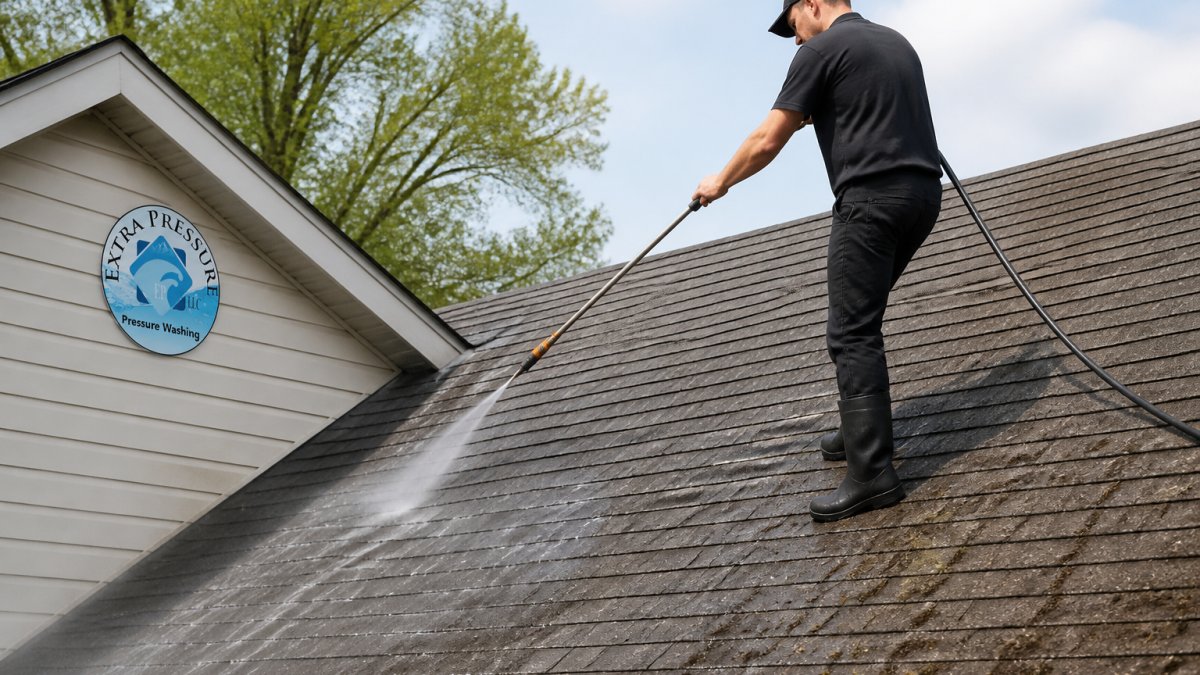
Roof cleaning generally involves removing organic growth from the surface.
The cleaning itself strips moss, algae, and lichen off the surface. If you are comparing exterior cleaning products, see our list of eco-friendly siding cleaners for homeowners. That matters because moss holds moisture against shingles and its roots work under the edges of courses. Algae causes the black streaks most homeowners mistake for dirt.
A technician on the roof can look for lifted flashing, cracked pipe boots, and granule loss that are hard to spot from the ground.
If you are also weighing gutter maintenance, our guide on whether gutter cleaning is worth the cost covers the parallel math for the other half of your roof system.
Benefits That Show Up on the Roof
-
Removes moss and algae that trap moisture against the deck
-
Restores curb appeal before listing a home
-
Clears debris from valleys and behind chimneys
Risks and Drawbacks to Weigh First
Cleaning is not free of downside. Pressure washing at the wrong setting strips granules and voids shingle warranties. Some cleaning solutions can damage landscaping if they are not pre-wetted and rinsed. And on a roof already near the end of its life, cleaning is money spent on a surface that needs replacing.
The most common mistake we see is homeowners hiring the cheapest quote and getting a high-pressure blast that takes years off the roof. Ask what method a provider uses before you ask what they charge.
Roof Cleaning Cost Per Square Foot, Explained
Roof cleaning cost per square foot typically falls between $0.25 and $0.46 for a basic job, based on Homewyse’s cost calculator. Method changes the number: soft washing generally runs $0.15 to $0.60 per square foot, while high-pressure washing runs $0.20 to $0.70, per Cobex Construction Group’s 2026 cost data.
A typical single-story home with a simple gable roof sits at the low end. Two stories, steep pitch, dormers, or heavy tree cover push it up.
| Cost Factor | Effect on Price | Why |
|---|---|---|
| Roof size | Higher | More square footage to treat |
| Roof pitch | Higher | Steep roofs need fall protection |
| Accessibility | Higher | Fences, landscaping, tight lots slow the job |
| Roof material | Varies | Asphalt is straightforward; tile and slate need care |
| Severity of growth | Higher | Heavy moss needs stronger treatment and dwell time |
| Stories | Higher | Ladder and safety setup time increases |
Using a Roof Cleaning Cost Calculator Without Getting Burned
A roof cleaning cost calculator gives you a ballpark, not a quote. The online tools multiply your square footage by a per-foot rate, then stop. They cannot see your pitch, your shade, or the fact that your roof has three dormers and a valley full of moss.
Use a calculator to set expectations, then get a real estimate. Here is how we would read one:
- Enter actual roof footprint, not home square footage
- Add 15-20% if your roof is steep or two stories
- Add for heavy moss or shade on the north side
- Compare the result to a written, itemized estimate
- Confirm whether gutter cleaning and rinsing are included
Watch out: calculators that quote a single flat rate regardless of pitch are usually marketing tools, not estimating tools. If the number looks too clean, it is.
Does Roof Cleaning Damage Shingles?
Roof cleaning can damage shingles when it is done with high pressure or the wrong chemicals. Asphalt shingles lose a small amount of surface granule with any contact, but low-pressure application with a proper cleaning solution removes growth without stripping the mat. The real risk is method, not cleaning itself.
Where Pressure Washing Goes Wrong
High-pressure washing on asphalt shingles blasts granules loose, forces water under course edges, and can crack older, brittle shingles. On a roof more than 15 years old, that damage is often permanent. It also voids many manufacturer warranties, which specify approved cleaning methods. The same force that cleans concrete will etch a shingle surface, and the damage is not always visible from the ground until granules start collecting in gutters and at downspout outlets.
What Soft Washing Does Differently
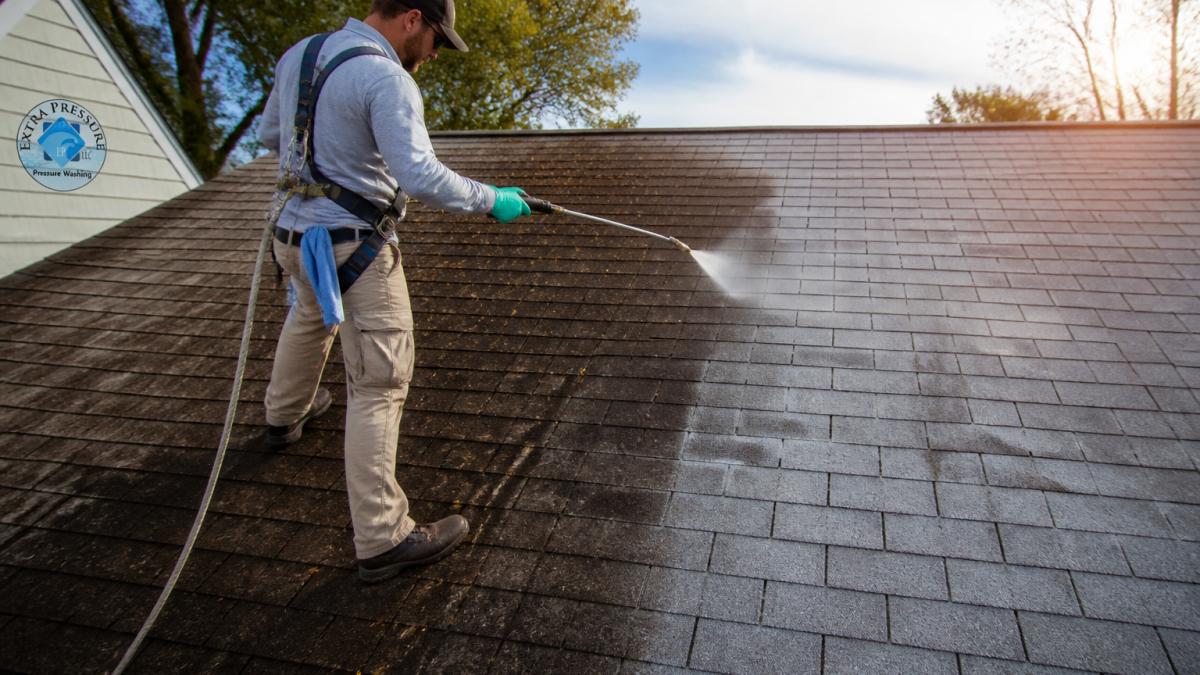
Soft washing generally applies a low-pressure cleaning solution to remove organic growth, then rinses the surface with gentle water pressure.
Safe Methods and Methods to Avoid
- Soft washing (low pressure, approved solution): the default for asphalt, metal, tile, and wood. Safe when the solution is diluted correctly and the surface is pre-wetted and rinsed.
- Chemical treatments: sodium hypochlorite is common and effective, but it can bleach landscaping and stain some metals if it is not managed. Oxygen-based cleaners are gentler but slower. Ask what is being applied and how runoff will be controlled.
- Pressure washing: reserve it for concrete and hardscape, not roofing. On shingles it is a damage risk, and on tile and slate it is a crack risk.
- Abrasive scrubbing or wire brushes: avoid on any roofing surface. They remove granules and scratch painted finishes.
Watch out: a provider who cannot tell you the dilution ratio, the dwell time, and how they protect plants and gutters is guessing. Those three details separate a controlled soft wash from a spray-and-hope job.
Runoff and Landscaping Precautions
Cleaning solution that runs off the roof lands in gutters, flower beds, and lawns. When hiring any roof cleaning provider, ask how they handle runoff, plant protection, and rinsing before booking.
Warranty and Contractor Due Diligence
Many shingle manufacturers specify approved cleaning methods in their warranty terms, and using high pressure or an unapproved chemical can void coverage. Before hiring any provider, confirm they are licensed and insured where your state requires it, ask for a written, itemized estimate, and get the scope in writing. A short list of questions is worth more than a low quote:
- What method will you use on this roof material?
- What solution, at what dilution, and how is runoff managed?
- Are you licensed and insured, and can you provide a certificate?
- Does the estimate include gutter cleaning and a final rinse?
- Will you document the roof’s condition before and after?
How Often to Clean a Roof
Roof cleaning frequency depends on tree cover, shade, and climate, and heavily shaded roofs typically need it more often. Homes under dense oaks or pines often need it more often because debris and shade feed moss growth.
Climate drives the schedule. Humid summers and shaded roof planes grow algae faster than sun-exposed ones.
Matching the Decision to Your Roof Material
The right call depends on what your roof is made of, and this is where most generic guides fall short. Cleaning risk, the approved method, and the price all change with the material. Here is how the decision breaks down roof by roof.
Asphalt shingles: clean it. Moss and algae are the main threat, and soft washing is safe when done correctly.
Metal roofs: clean it, but gently. Streaking is usually cosmetic, but debris trapped at seams and around fasteners holds moisture and can lead to corrosion. Soft washing with a manufacturer-approved solution is the safe route.
Tile roofs: clean it carefully. Tile is durable but brittle under foot, and walking it wrong cracks pieces that are expensive to match. Cleaning is worth it; high pressure is not.
Slate roofs: hire a specialist or leave it alone. Slate is fragile and expensive to repair, and the risk of damage during cleaning often outweighs the benefit.
Wood shakes: clean with caution. Soft washing works, but pressure destroys the grain and opens the wood to rot. Shakes also need to dry thoroughly, so cleaning late in the day or before a wet stretch is a mistake.
Composite and synthetic shakes: follow the manufacturer’s written cleaning instructions. These products often specify a maximum pressure and an approved cleaner, and using the wrong one can void the warranty. Ask the provider to confirm the method in writing before work starts.
A simple rule covers most homes: the more fragile and expensive the material, the more the decision shifts from “is cleaning worth it” to “who is qualified to clean it.” For asphalt, the answer is usually yes.
If you are unsure which category you fall into, you can request a same-day estimate. You can also browse services offering free estimates in Fannin County to book one.
Book a Same-Day Roof Cleaning Estimate
The decision comes down to condition. If you can see moss, black streaks, or debris piled in valleys, cleaning may be worth considering. If the roof is simply old and worn, put the money toward replacement instead.
Extra Pressure LLC is licensed and insured and offers soft washing for delicate surfaces, with same-day estimates. Our soft washing uses low-pressure methods suited to delicate surfaces.
Contact Extra Pressure LLC to schedule an appointment.
Frequently Asked Questions
How much should I pay for roof cleaning?
Roof cleaning prices vary with roof size, pitch, accessibility, and the cleaning method. For a quote specific to your home, contact Extra Pressure LLC. Get a written estimate before work starts.
Is roof cleaning worth the cost per square foot?
It depends on what is growing on the roof. Cleaning pays off when moss, algae, or heavy debris is trapping moisture against the shingles. If the roof is already near the end of its lifespan, cleaning is cosmetic and the money may be better saved toward replacement.
Does roof cleaning damage shingles?
High-pressure washing can. It can strip granules, force water under shingle edges, and void manufacturer warranties. Soft washing uses low pressure and a cleaning solution to kill organic growth at the root, which is the safer method for asphalt shingles. Ask any contractor which method they plan to use and confirm they are licensed and insured before they get on your roof.
How often should a roof be cleaned?
Most homes need roof cleaning every one to three years. Roofs under heavy shade, in humid climates, or surrounded by trees usually need it closer to every year, since moss and algae return faster. Check your roof each spring for black streaks, green growth, or debris buildup. If you see them spreading, schedule cleaning before the growth works under the shingle edges.
Cleaning a roof is one of those jobs where the method matters more than the price. If you have moss spreading across a north-facing slope or black streaks running down to your gutters, the next step is simple: get a written estimate that names the method, and compare it against a replacement quote. Call Extra Pressure LLC for same-day estimates, licensed and insured soft washing, and a clear answer on whether your roof needs cleaning or replacing.
