Last Updated: October 29, 2026
Quick Summary
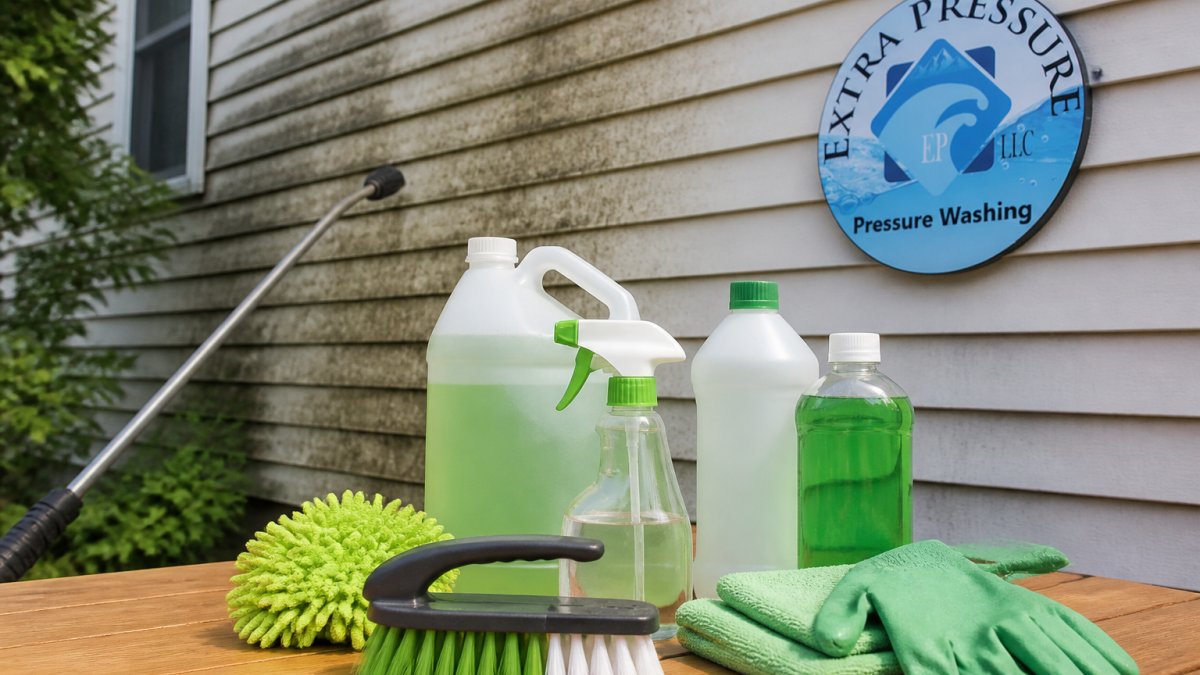
The best eco-friendly siding cleaners are oxygen-bleach concentrates for mildew and algae, plant-based detergents for general grime, and ready-to-use low-pressure formulas for spot jobs. Choose a chlorine-free, biodegradable formula matched to your siding, and always follow the label dilution ratio.
- Oxygen-bleach concentrate costs about $8-$15 per whole-house wash and suits vinyl, painted wood, fiber cement, and masonry.
- Plant-based detergent costs roughly $5-$10 per wash and works on all siding, including cedar.
- Let oxygen-bleach solution dwell 10 to 15 minutes and keep it wet so it doesn’t dry into chalky residue.
- Never mix an oxygen-bleach cleaner with vinegar or other acids, which can release harmful gases.
- Book a professional soft wash when mildew returns within weeks or growth covers more than a few patches.
Table of Contents
- What Makes a Siding Cleaner Eco-Friendly
- Best Eco-Friendly Siding Cleaners Compared
- How to Remove Mildew From Siding Without Harsh Chemicals
- Choosing an Eco-Friendly Vinyl Siding Cleaner
- Pressure Washer Soap for House Siding: What to Look For
- How to Clean House Siding Without a Pressure Washer
- Protecting Plants, Pets, and Runoff During a Wash
- When to Book a Soft Wash Instead
- Frequently Asked Questions
What Makes a Siding Cleaner Eco-Friendly
An eco-friendly siding cleaner is a formulation that removes dirt, algae, and mildew while limiting harm to plants, pets, waterways, and the people applying it.
Most “green” claims on a bottle mean very little on their own. “Natural” isn’t regulated. “Non-toxic” has no legal definition for cleaning products. What you can actually verify is biodegradability, the absence of chlorine bleach, and a label that lists ingredients rather than hiding behind marketing language.
That distinction matters because siding sits close to soil, gutters, and storm drains. For more on the value of regular cleaning, see why you should pressure wash your house annually. Whatever you spray ends up somewhere.
Reading the Label: What the Claims Actually Mean
Biodegradable means the ingredients break down through natural processes over time. It says nothing about how fast, or whether the breakdown products are harmless.
Chlorine-free and bleach-free mean the formula skips sodium hypochlorite. That’s the harsh oxidizer behind most fast mildew kill, and it’s also what scorches plants and discolors certain metals.
Oxygen bleach, or sodium percarbonate, is the common substitute. It releases oxygen when mixed with water and lifts organic stains more gently.
Plant-friendly and pet-safe are marketing terms. Treat them as a signal to check the ingredient list, not as a guarantee.
One more thing most guides skip: dilution ratio is where eco-claims fall apart. A concentrated product applied too strong is no gentler than a harsh one. Follow the label.
Best Eco-Friendly Siding Cleaners Compared
Eco-friendly siding cleaners generally fall into a few groups: oxygen-bleach concentrates for organic growth, plant-based detergents for general grime, and ready-to-use low-pressure formulas for small jobs. The right pick depends on your siding material and what you’re removing.
Here’s how the categories stack up on the criteria that actually matter:
| Cleaner Type | Active Ingredient | Best For | Siding Compatibility | Dilution | Approx. Coverage per Concentrate | Application Method | Cost per Cleaning (Est.) | Watch Out For |
|---|---|---|---|---|---|---|---|---|
| Oxygen-bleach concentrate | Sodium percarbonate | Mildew, algae, green stains | Vinyl, painted wood, fiber cement, masonry | 1 scoop per gallon (follow label) | 1 lb makes ~16 gallons of solution | Pump sprayer or downstream injector | $8-$15 per whole-house wash | Needs dwell time; can leave residue if it dries |
| Plant-based detergent | Surfactants from plant oils | Dirt, pollen, light grime | All siding, including cedar | 1-2 oz per gallon | 32 oz makes ~16-32 gallons | Garden hose or pump sprayer | $5-$10 per wash | Weak on live growth; may need scrubbing |
| Vinegar and water mix | Acetic acid (5%) | Small touch-ups | Vinyl, painted wood (test first) | 1:1 with water | N/A (mix as needed) | Spray bottle | Under $2 per spot treatment | Not for large areas; can affect some finishes |
| Ready-to-use low-pressure formula | Varies (often oxygen-based) | Spot cleaning | Most siding | None | 1 gallon covers ~200-300 sq ft | Hose-end sprayer | $15-$25 per cleaning | Costs more per use; limited coverage |
| Soft-wash solution applied by pro | Proprietary (often chlorine-free) | Heavy growth, whole house | All siding | Pro-mixed | Whole house | Soft-wash equipment | $300-$600 per house | Requires equipment and expertise |
A common mistake is buying a concentrate and then mixing it stronger than the label says. That burns through product faster and defeats the point of choosing a gentle formula.
For whole-house jobs on vinyl or painted wood, an oxygen-bleach concentrate gives the best balance of results and safety. For routine maintenance between deeper washes, a plant-based detergent handles dust and pollen without touching your landscaping.
Before buying, check the label for siding compatibility and dilution instructions. A product that lists vinyl, wood, and painted surfaces explicitly is safer than one with vague claims.
How to Remove Mildew From Siding Without Harsh Chemicals
The safest way to remove mildew from siding is an oxygen-bleach solution applied at low pressure, left to dwell, then rinsed thoroughly.
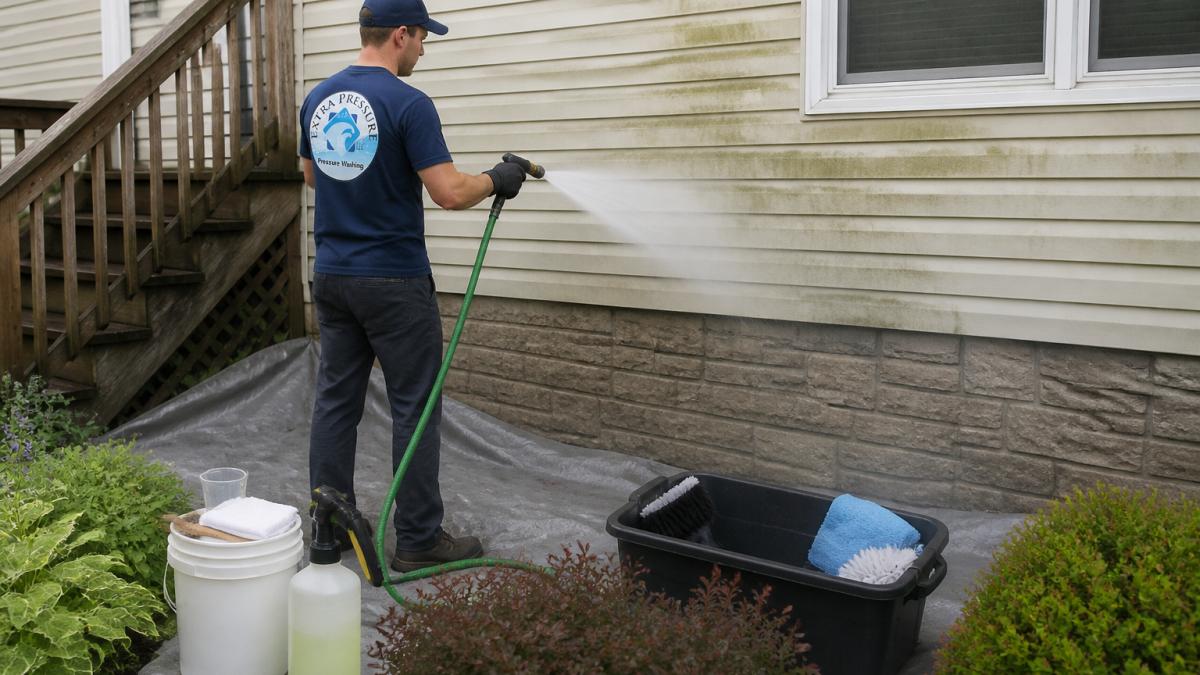
Here’s the process we’d follow:
- Mix oxygen bleach per the label, usually a scoop per gallon of warm water
- Wet down plants and soil around the wall first
- Apply from the bottom up so cleaner doesn’t streak down clean siding
- Let it sit 10 to 15 minutes, keeping it wet
- Scrub stubborn patches with a soft brush
- Rinse top down with plain water
- Rinse the ground and plants again
Watch out: letting the solution dry on the siding leaves a chalky residue that’s harder to remove than the mildew was. Work in shade or on a cloudy day.
Once the mildew is gone, keeping it gone is its own task. Our guide on how to prevent mold regrowth on home exterior covers the steps to keep it from returning.
Choosing an Eco-Friendly Vinyl Siding Cleaner
Vinyl is the most forgiving siding for gentle cleaners, which makes it the easiest place to start.
For an eco-friendly vinyl siding cleaner, look for a pH-neutral or mildly alkaline formula. Avoid anything labeled as a degreaser unless you’re spot-treating near a grill or vent.
But “eco-friendly” on a vinyl cleaner label deserves scrutiny. Here’s how to verify the claims:
- Biodegradability: Look for a statement that the product meets OECD 301 or ASTM D5864 standards for ready biodegradability. Without a standard cited, “biodegradable” is a marketing word.
- Aquatic toxicity: Check for a low aquatic toxicity rating (e.g., “harmful to aquatic life” warnings). A truly eco-friendly formula will have a favorable profile, often indicated by an EPA Safer Choice label.
- Chlorine-free: Confirm the absence of sodium hypochlorite. Oxygen bleach (sodium percarbonate) is the common substitute and is gentler on vinyl and plants.
- Ingredient disclosure: A label that lists active ingredients (even generically, like “surfactants”) is more trustworthy than one that hides behind “proprietary blend.”
Test any new product on a hidden section first. Spray a small patch, wait a few minutes, and check for discoloration before committing to the whole wall.
Vinyl siding has weep holes along the bottom edge. Rinse downward and keep spray out of them, or water can get behind the panels.
For a deeper dive into safe cleaning methods for vinyl and other materials, see our guide on how to soft wash a wooden deck without causing damage for pressure and dwell-time principles that apply to vinyl as well.
Never mix an oxygen-bleach cleaner with vinegar or other acids; the combination can release harmful gases. Always use products separately and rinse between applications.
Pressure Washer Soap for House Siding: What to Look For
Pressure washer soap for house siding should be a low-foaming, siding-safe detergent designed for a downstream injector, not a car-wash soap or a degreaser. The wrong soap clogs the injector or strips paint.
Look for three things on the label:
- Siding compatibility listed explicitly, including vinyl, wood, and painted surfaces
- Dilution ratio for downstream injection, often around 1:10 or weaker
- Rinse instructions that specify plain water and no residue
Water pressure matters more than most people expect. Even with a gentle soap, a narrow high-pressure tip can force water behind siding panels or etch wood grain. Use a wide fan tip and keep the nozzle moving.
If you’re not sure the soap is safe, mix a small batch and test it on a scrap piece of siding or an inconspicuous corner before you commit.
How to Clean House Siding Without a Pressure Washer
You can clean house siding without a pressure washer using a garden hose, a pump sprayer, and a soft-bristle brush. It takes longer, but it’s the safest option for older siding, cedar, and painted surfaces.
The method is straightforward. Mix your cleaner in a pump sprayer, wet the wall, apply from the bottom up, let it dwell, scrub lightly, and rinse with a hose.
This approach works well on small homes, single walls, and touch-ups. It’s less practical for a full two-story house, where reaching the upper sections safely becomes the real constraint.
For deeper technique on wood and composite surfaces, our article on how to soft wash a wooden deck without causing damage walks through the pressure and dwell-time rules that protect the material.
Protecting Plants, Pets, and Runoff During a Wash
Runoff is the part of exterior cleaning most homeowners never think about, and it’s where eco-friendly products earn their name.
Cover or pre-wet vegetation before you start. A quick rinse before and after protects leaves from overspray and dilutes anything that reaches the soil.
Storm drains are the other concern. Never let wash water run directly into a drain; that water carries dirt, cleaner, and organic matter straight to local waterways.
EPA guidance on managing wash water and runoff outlines why this matters for household cleaning projects.
Wear gloves and eye protection when mixing concentrates, and keep the label handy in case of contact. Product safety starts with reading the instructions you were probably tempted to skip.
When to Book a Soft Wash Instead
Book a professional soft wash when the growth covers large areas, when your siding is delicate, or when the job requires heights and equipment you shouldn’t handle yourself. Soft washing uses low pressure and specialized solutions to clean safely, which is exactly what older siding and heavy mildew need.
Signs it’s time to call someone:
- Mildew returns within weeks of your own cleaning
- The growth covers more than a few patches
- Your siding is cedar, painted wood, or older vinyl
- The house is two stories or more
- You have delicate landscaping close to the walls
Extra Pressure provides licensed and insured soft washing with same-day estimates, using low-pressure methods built for delicate surfaces. You can also browse roof washers near me to find a local service. You can go straight to Soft Washing to request a quote.
Frequently Asked Questions
What is the safest eco-friendly cleaner for vinyl siding?
Look for a chlorine-free, biodegradable concentrate labeled for vinyl. Oxygen-bleach formulas and plant-based surfactants break down organic growth without the caustic burn risk of sodium hypochlorite. Check that the label lists vinyl as a compatible surface and gives a dilution ratio, then test a small hidden section first. Rinse thoroughly and keep runoff away from storm drains.
Are biodegradable siding cleaners safe for plants and pets?
Biodegradable means the product breaks down over time, not that it is harmless on contact. Pre-wet plants, cover sensitive shrubs, and rinse foliage within 30 minutes of application. Keep pets and children off treated surfaces until the siding is dry. Any cleaner that reaches storm drains can affect waterways, so direct runoff onto grass or gravel where it can filter.
Can you clean house siding without a pressure washer?
Yes. A garden hose, a soft-bristle brush on an extension pole, and a diluted eco-friendly cleaner handle most dirt, algae, and mildew on vinyl and painted wood. Work bottom to top, scrub in sections, and rinse top to bottom. This low-pressure method is the safer choice for older siding, cedar, and any surface where a pressure washer could force water behind the cladding.
How do you remove mildew from siding without harsh chemicals?
Mix an oxygen-bleach or plant-based siding cleaner at the label dilution, apply from the bottom up, and let it dwell 10 to 15 minutes. Scrub stubborn green stains with a soft brush, then rinse thoroughly. Mildew returns when moisture lingers, so clear gutters, trim vegetation back from the wall, and repeat the wash each season to keep growth from settling in again.
The real test of an eco-friendly siding cleaner isn’t the label, it’s whether the growth stays gone and your plants survive the process. That’s a judgment call most homeowners make once and then hand off. Extra Pressure offers licensed and insured soft washing, same-day estimates, and specialized low-pressure methods for delicate siding, so you get a clean exterior without the guesswork or the damage. Get started with Extra Pressure and restore your home’s curb appeal safely.
