
Last Updated: October 30, 2026
Quick Summary
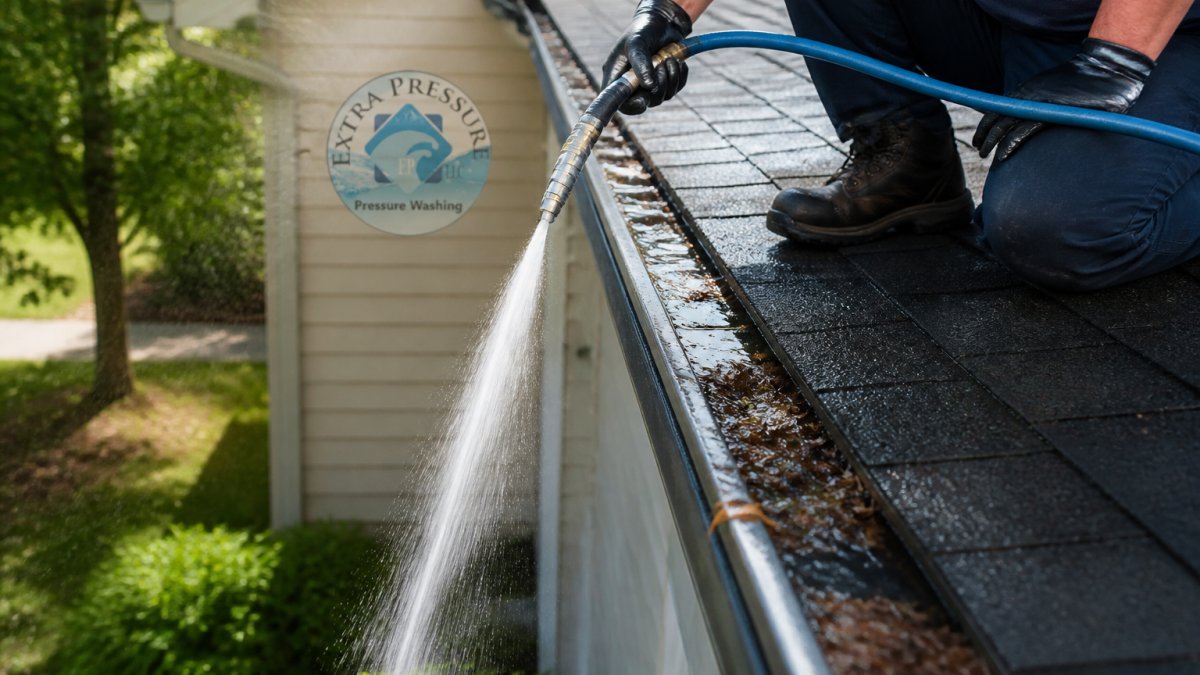
Flush gutters from the far end toward the downspout, using a focused but gentle stream and working in short sections a few feet at a time. Check the hangers by hand first, since water weight can pull a loose run down, and clear the outlet area before you start. Run water through each section twice, then confirm a strong, steady flow at the downspout outlet.
- Most homes need gutters cleaned twice a year, once in late spring and once after the leaves drop.
- Pull out leaves and twigs by hand first, because a gutter packed with wet debris just turns to mud.
- Keep the nozzle below the top edge of the gutter and angled down the channel.
- A dull thud instead of a hollow ring when tapping the downspout means a clog sits at that spot.
- Never flush a gutter when the temperature is at or below freezing, since trapped water can crack it.
Table of Contents
- Why Gutters Overflow and What a Garden Hose Can Fix
- What You Need Before You Flush Gutters
- Step-by-Step: How Do You Flush Gutters With a Garden Hose?
- Choosing a Gutter Cleaning Hose Attachment and Spray Nozzle
- How to Unclog a Downspout With a Garden Hose
- How Often to Clean Gutters and When to Skip the Hose
- Schedule a Gutter Maintenance Appointment
- Frequently Asked Questions
Why Gutters Overflow and What a Garden Hose Can Fix
A garden hose clears the mess a gutter actually collects: leaves, twigs, shingle grit, and mud.
The first camp is simple blockage.
The second camp is structural.
A hose handles soft, loose debris sitting in an otherwise sound gutter: water pressure pushes it toward the downspout and out.
Watch out: flushing a gutter that has already pulled loose from the fascia can send the whole run crashing down.
What You Need Before You Flush Gutters
The right gear for this job is short and cheap. You do not need a pressure washer, and using one on gutters is a good way to crack seams and bend hangers.
Gather these first:
- Garden hose long enough to reach the far end of the run
- Spray nozzle with an adjustable pattern, set to a focused stream
- Extension wand or hose guide if you plan to stay on the ground
Two things matter more than the gear list. First, stable footing, wet grass, sloped ground, and loose gravel cause more ladder accidents than anything else on this job. Second, a spray pattern you control: a wide fan soaks the siding and ground, while a narrow stream moves debris without splashing back.
If you are not comfortable on a ladder, the ground-level route is the smarter play.
Step-by-Step: How Do You Flush Gutters With a Garden Hose?
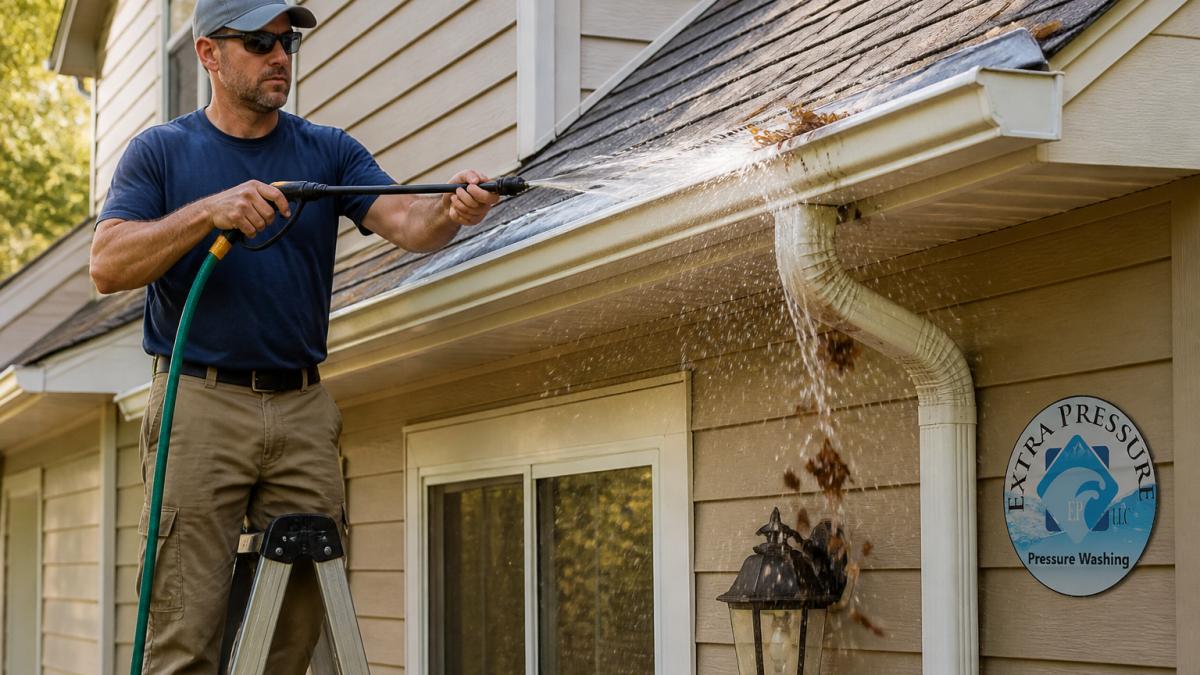
Flush gutters from the far end toward the downspout, using a focused stream and working in short sections. That single rule prevents most of the mess and most of the damage. Here is how the full process runs.
Step 1: Set Up for a Controlled Flush
Before water touches the gutter, do a two-minute setup that prevents most problems:
- Test the spray on the ground. Point the nozzle at a driveway or bare soil and adjust to a focused but gentle stream. A hard, narrow jet can dent thin aluminum and work seams loose; a soft fan soaks siding. You want a pencil-thin stream with enough force to move leaves but not enough to splash back.
- Check the gutter by hand. Walk the run and feel the hangers. If the gutter moves freely or has pulled away from the fascia, stop, water weight will finish the job. Fix the mounting first.
- Clear the outlet area. Make sure the downspout outlet is open and water has somewhere to go. If it discharges onto a walkway or against the foundation, redirect it with a splash block or short leader.
Never flush a gutter that is already sagging or loose. The added water weight can pull the whole run down. Check the hangers by hand before you add water.
Step 2: Remove Loose Debris Before You Flush
Clear the big stuff first. A gutter packed with wet leaves will not flush, it will just turn into mud.
Pull out handfuls of leaves and twigs by hand and drop them in a bucket. If the debris is dry and light, a leaf blower on low is faster.
Once the bulk is out, run a light stream of water down the channel.
Step 3: Flush From the Far End Toward the Downspout
Start at the end of the run farthest from the downspout. Point the stream down the channel and push debris ahead of the water, not behind it.
Work in short pushes, a few feet at a time, letting the water carry grit to the outlet before moving up.
Watch the water line. If water starts to back up behind your stream, you are pushing too much debris too fast or the outlet is partly blocked.
Keep the nozzle below the top edge of the gutter and angled down the channel. Blasting water upward or sideways forces it under shingles and behind the fascia, where it can rot wood and stain siding.
Step 4: Verify Flow and Clear Blockages
Watch the downspout outlet while you flush. A steady, strong flow means the run is clear. A trickle, a gurgle, or nothing at all means a clog sits between the gutter and the ground.
If flow drops, stop flushing and find the blockage. It is usually at the gutter outlet, the top of the downspout, or an elbow.
Run water through each section twice, the second pass rinses away grit the first loosened.
Step 5: Inspect and Rinse the Exterior
After the flush, walk the run and check for:
- Standing water in the channel, which signals a low spot or a partial clog.
- Leaks at seams and corners, which show up as drips on the fascia or siding.
- Sagging sections that hold water after the flow stops.
A final low-pressure rinse down the outside of the gutter and fascia clears the dirty water that splashed during flushing. Keep the spray off windows and vents.
Choosing a Gutter Cleaning Hose Attachment and Spray Nozzle
A gutter cleaning hose attachment does two jobs: it extends your reach and it controls the spray. The right one lets you clean from the ground instead of balancing on a ladder.
Here is how the common options compare:
| Attachment | Best For | Reach | Control |
|---|---|---|---|
| Adjustable spray nozzle | Close-up work from a ladder | Short | High |
| Extension wand | Ground-level cleaning on one-story homes | Medium to long | Medium |
| Hose guide or cleaning carriage | Keeping the hose in the channel | Medium | Medium |
| Telescoping pole nozzle | Two-story rooflines from the ground | Long | Lower |
The adjustable spray nozzle is the workhorse. Set it to a narrow stream for pushing debris and a wider pattern for rinsing the channel.
The spray pattern matters. A hard, narrow jet can dent thin aluminum, while a focused but gentle stream moves debris without the risk.
If your home is two stories or the roofline is steep, use a telescoping pole from the ground and skip the ladder entirely.
How to Unclog a Downspout With a Garden Hose
A slow-draining gutter is not always a clogged downspout. Before you feed a hose into the pipe, diagnose which problem you have, the fix is different for each.
Diagnose: Clogged Downspout or Slow Gutter?
Run a gentle stream into the gutter near the outlet and watch the downspout exit:
- Strong flow at the outlet, but water stands in the channel: the downspout is clear and the gutter has a low spot or partial blockage upstream. Flush the channel again from the high end.
- No flow or a trickle at the outlet, and water backs up in the gutter: the clog is in the downspout, the outlet, or an elbow.
- Water spills over the gutter edge before reaching the outlet: debris is piled between your stream and the outlet. Clear that section by hand first.
A quick tap test helps confirm. Tap the downspout with your hand from top to bottom. A dull thud instead of a hollow ring means a clog sits at that spot.
Clear the Clog Safely
Try these steps in order, starting gentle:
- Run water from the top and watch the bottom outlet. No flow means the clog is holding.
- Feed the hose up from the bottom and work it past the blockage; water pressure pushes the clog out the top. Use a low, gentle stream, high pressure against a stubborn clog can pop a seam or split an elbow.
- Work the clog loose from the top if the hose will not pass from below. Push water down in short bursts and let it drain between bursts.
- Use a plumber’s snake if the hose still will not pass. A short auger handles most leaf and nest clogs without stressing the pipe.
- Recheck flow with a full stream. A strong, steady exit means the downspout is clear.
Never ram a hose hard against a stubborn clog. Forcing it can split an elbow or pop a seam, turning a simple clog into a repair. If it will not budge, work from the top or call a pro.
When to Stop and Call a Pro
Some downspout problems are beyond a garden hose:
- The downspout runs into an underground drain. Flushing hard can overload the drain line or push debris deeper. Stop and have the line inspected.
- The clog will not clear after two attempts from both ends. A buried clog or a collapsed section needs a camera and a snake.
- The downspout is loose, dented, or separated at a joint. Fix the pipe before flushing, or water will leak behind the siding.
Once flow returns, flush the full run again from the high end to confirm the whole system is moving water the way it should.
How Often to Clean Gutters and When to Skip the Hose
Most homes need gutters cleaned twice a year, once in late spring and once after the leaves drop in fall. Homes under heavy tree cover need it more often, sometimes every three months.
The hose is the wrong tool in a few situations:
- The gutter is packed with wet, heavy debris. Scoop it out first, or the hose just makes mud.
- The hangers are loose or the gutter is sagging. Fix the mounting before adding water weight.
- The temperature is at or below freezing. Water in the channel can freeze and crack the gutter.
Not sure whether the job is worth doing yourself?
Schedule a Gutter Maintenance Appointment
Some gutter jobs are a Saturday project. Others need a pro with the right gear and the right insurance. Why hire insured pressure washing services explains the reassurance before you book.
Extra Pressure LLC provides licensed and insured gutter maintenance and exterior cleaning, with state-of-the-art equipment and same-day estimates. We also offer window washing and soft washing for delicate surfaces.
If you are still comparing options, find a professional pressure washing company to hire.
Get started with Extra Pressure LLC and put your gutter maintenance on a schedule that keeps water moving where it should.
Frequently Asked Questions
What is the easiest way to clean gutters?
The easiest method is to remove loose debris by hand or with a leaf blower first, then flush the gutters with a garden hose from the far end toward the downspout. A hose with an extension wand lets you reach the roofline from the ground or a stable ladder. For heavily clogged gutters or multi-story homes, hiring a licensed and insured professional is safer and faster than working at height.
Can you clean gutters from the ground with a hose?
Yes, you can clean gutters from the ground using a garden hose fitted with an extension wand or a gutter-cleaning attachment. Stand on stable footing, keep the hose angled so water flows toward the downspout, and avoid overreaching. Ground-level cleaning works best for single-story homes with light debris. If gutters are packed with leaves or the downspout is clogged, you may need to clear the blockage by hand or call a professional.
How do you know if a gutter downspout is clogged?
A clogged downspout shows these signs: water overflows the gutter edge instead of flowing out the bottom, the downspout feels heavy or makes a sloshing sound, or water backs up at the gutter outlet. You can test flow by running a garden hose into the downspout from the top. If water doesn’t exit the bottom, use a hose with a spray nozzle to flush the clog from the top down or from the bottom up.
When should you avoid flushing gutters with a garden hose?
Avoid flushing gutters with a garden hose during freezing temperatures, when the roof is wet or slippery, or if you cannot safely reach the gutter from stable footing. Skip the hose if gutters are packed with heavy debris that a hose won’t clear, or if you see sagging, separated seams, or loose fasteners. In those cases, call a licensed and insured gutter maintenance professional to inspect and repair the system before cleaning.
