

Last Updated: October 31, 2026
Quick Summary
Use this checklist for pre-listing home inspection repairs to sort findings into three tiers: fix safety items first, stop active water damage second, and treat cosmetic items as marketing spend. Work top to bottom through exterior, roof, and drainage items, then interior systems, before deciding whether to repair or credit each defect.
- Clogged gutters are the most common exterior finding and the most preventable, so clear them before listing.
- Safety items like detectors, covers, handrails, and GFCI outlets are usually the cheapest line items and weigh most with buyers.
- Fix a defect if the buyer’s inspector will flag it again; credit cosmetic or preference-driven items instead.
- Never let a contractor skip a permit on electrical, plumbing, or structural work, since unpermitted work is a disclosure item in most states.
- Keep a repair file with dates, contractor license numbers, receipts, warranties, and before-and-after photos.
Table of Contents
- Start With a Pre-Listing Inspection, Not Guesswork
- The Checklist for Pre-Listing Inspection Repairs: Exterior, Roof, and Drainage
- Common Home Inspection Repairs Inside the House
- What to Fix Before Selling a House: Prioritize by Safety, Severity, and Cost
- Repair or Credit: A Decision Framework for Sellers
- Your Home Inspection Checklist for Sellers: Documentation and Disclosure
- The Curb Appeal Checklist for Selling a House
- Schedule Your Pre-Listing Exterior Cleaning
- Frequently Asked Questions
Start With a Pre-Listing Inspection, Not Guesswork
A pre-listing inspection is a paid home inspection a seller orders before going on the market.
Here’s the hard truth most sellers learn too late: the buyer’s inspector is not on your side. They are paid to find defects, and they will.
The checklist below groups repairs the way inspectors report them: exterior and drainage, interior systems, then prioritization. Work top to bottom and you will walk into negotiations with fewer surprises.
The Checklist for Pre-Listing Inspection Repairs: Exterior, Roof, and Drainage
Exterior problems get the harshest write-ups because buyers can see them from the driveway. Inspectors note roof condition, gutter function, drainage away from the foundation, and vegetation touching the structure. That last item surprises sellers: InterNACHI’s inspection standards treat tree limbs and shrub contact as reportable conditions.
Start your repair checklist here:
- Walk the roof edge with binoculars and note missing, lifted, or curling shingles.
- Check flashing around chimneys, vents, and skylights for gaps or rust.
- Confirm gutters are attached, clear, and pitched toward downspouts.
- Verify downspouts discharge several feet from the foundation, not into it.
- Trim vegetation back from siding and rooflines.
- Look for soil that slopes toward the house instead of away.
Roof, Gutters, and Downspouts
Clogged gutters are the most common exterior finding, and the most preventable. Full gutters overflow, and that water lands at the foundation. Inspectors flag fascia stains and soil erosion as evidence.
If you are weighing whether to pay for cleaning or repairs, our guide on whether gutter cleaning is worth the cost breaks down the math. Here is how to flush gutters safely with a garden hose.
Watch out: never lean a ladder against a gutter trough itself. The hanger brackets bend, and a bent run is a repair, not a cleaning.
Doors, Windows, Seals, and Weatherstripping
Doors and windows fail quietly. Inspectors test operation, look for cracked glass, and check weatherstripping and seals for gaps. Fogged double-pane glass means a failed seal, and buyers notice.
- Open and close every window and exterior door.
- Replace torn weatherstripping at thresholds and jambs.
- Re-caulk around frames where paint has cracked.
Grime on glass and frames reads as neglect. Our window cleaning services guide covers cost and frequency if you want them professionally cleared before photos.
Common Home Inspection Repairs Inside the House
Interior findings rarely kill a deal alone, but they add up fast in a buyer’s mind. Inspectors test outlets, run fixtures, check the HVAC, and operate appliances, each item becomes a negotiation point.
Your interior repair checklist:
- Test every outlet and switch, and replace dead bulbs.
- Install missing receptacle covers and note any outlet that feels warm.
- Test smoke and carbon monoxide detectors, then replace batteries.
- Run every sink, tub, and shower and look for slow drains or leaks.
- Check under sinks for water stains and corrosion.
- Replace HVAC air filters and confirm the system heats and cools.
- Run each appliance through a full cycle.
Electrical Outlets, Switches, and Lighting
Electrical findings carry outsized weight because they signal safety. Inspectors look for ungrounded outlets, missing covers, and non-working fixtures. Fix the cheap items first: covers, bulbs, and detector batteries cost little and clear whole report lines.
Plumbing Fixtures, Drains, and HVAC Systems
Plumbing leaks leave evidence. Inspectors check supply lines, drain connections, and water pressure, then examine the HVAC system and filters. A slow drain is a clog; a stain under the sink is a leak. Both are simple fixes that look expensive on paper.
What to Fix Before Selling a House: Prioritize by Safety, Severity, and Cost
Not every finding deserves your money. The sellers who lose leverage are the ones who either fix everything or fix nothing. The sellers who win sort findings into three tiers before they call a single contractor.
| Priority | Examples | Action | Typical timing |
|---|---|---|---|
| Safety first | Exposed wiring, gas leaks, missing smoke/CO detectors, handrail failures, blocked dryer vents | Fix before listing, no exceptions | Days to 2 weeks |
| Active damage | Roof leaks, plumbing leaks, wood rot, drainage into foundation, failed window seals | Fix or credit, decide before photos | 1 to 4 weeks |
| Cosmetic and minor | Scuffs, dead bulbs, worn caulk, dirty siding, sticking doors | Clean or touch up yourself | A weekend |
Safety items are non-negotiable because they are the findings most likely to appear in the buyer’s report and trigger a renegotiation or walk-away. Active damage worsens while you wait, a slow supply-line leak becomes a subfloor repair, and a clogged downspout becomes a foundation crack.
Sort findings by mechanism, not by room
Inspectors report by system, but sellers should triage by what the defect does over time. Use this three-question sort on every line of the report:
- Does it threaten safety or code compliance? Smoke and carbon monoxide detectors, GFCI protection in kitchens and baths, handrails on stairs, and dryer venting fall here. These are rarely expensive, but a buyer’s inspector will flag them again.
- Is it actively damaging the house? Water is the common thread: roof flashing, supply and drain lines, window seals, and grading that slopes toward the foundation. A stain under a sink is a leak; a fogged double-pane window is a failed seal that will worsen.
- Is it cosmetic or preference-driven? Paint, caulk, scuffs, and dated fixtures, items where a credit often serves the seller better than a repair, because the buyer may want them done differently.
Trade-by-trade: what needs a licensed professional
Most sellers can handle cosmetic and minor items themselves. The line to respect is the one drawn by licensing and permit rules, which vary by state and municipality, confirm with your local building department before you decide to DIY.
- Electrical: Replacing covers, bulbs, and detector batteries is homeowner work. Adding circuits, replacing a panel, or correcting ungrounded outlets requires a licensed electrician in most jurisdictions, and the work usually needs a permit.
- Plumbing: A dripping faucet or a loose supply connection is a reasonable DIY fix. Replacing a water heater, rerouting supply lines, or repairing a drain line under a slab is licensed-plumber work.
- Roofing: Patching a shingle is a weekend job for a confident homeowner. Flashing repair, valley work, and anything above a one-story walkable pitch belongs to a licensed roofer, and roof work is the trade most likely to void a warranty if done improperly.
Never let a contractor talk you out of a permit on electrical, plumbing, or structural work. Unpermitted work is a disclosure item in most states and a common reason buyers walk.
Cost and timing context
Repair costs vary widely by region, home age, and access, so get written estimates from licensed professionals before budgeting. Safety items, detectors, covers, handrails, GFCI outlets, are usually the cheapest line items and the ones buyers weight most heavily. Active water damage is where budgets blow up: a supply-line leak may be a small plumbing bill, while the subfloor it soaked can run into the thousands.
Fix safety items first, stop active water damage second, and treat cosmetic items as marketing spend. The order matters more than the total budget.
Repair or Credit: A Decision Framework for Sellers
Fix it or credit the buyer? It depends on three things: whether the defect will reappear in the buyer’s inspection, whether the cost is predictable, and whether the buyer has strong preferences about how the work is done. Use the questions below as a decision tree, not a slogan.
The three-question decision tree
- Will the buyer’s inspector flag this again? If yes, fix it. A repaired defect drops out of the negotiation; a disclosed-but-unfixed defect becomes a bargaining chip.
- Is the cost predictable? If yes, fix it and keep the receipt. Predictable repairs, detectors, GFCI outlets, caulk, a supply-line connection, are cheap to close out and remove an objection entirely.
- Does the buyer have strong preferences here? If yes, credit it. Cosmetic choices, paint color, flooring, fixture style, are where a credit serves both sides, because the buyer will likely redo the work anyway.
Trade-by-trade: repair or credit
- Roof: Repair if the defect is localized (flashing, a few shingles) and the roof has remaining service life. Credit if the roof is near end of life, because a buyer will price a full replacement into the offer regardless of a patch.
- HVAC: Repair if the system is functional and the issue is a component (capacitor, blower, thermostat). Credit if the system is at or past its expected service life, since the buyer will assume replacement.
- Plumbing: Repair active leaks and slow drains, cheap, predictable, and they reappear in every inspection. Credit only for cosmetic fixture preferences.
Credits are simpler, but fixed repairs remove the objection entirely. A repaired roof does not reappear in negotiation. A credit does, and it often gets renegotiated at the appraisal.
How credits interact with appraisal and disclosure
A credit reduces the buyer’s net cost, but it does not change the home’s condition, and the appraiser will still see the defect. If an appraiser would flag it as a condition issue, a repair is usually the safer path. A credit also does not erase your obligation to disclose a known material defect in most states, confirm the rule with your real estate agent or attorney, because requirements vary by jurisdiction.
Document the decision either way
Whichever path you choose, build a repair file that a buyer’s agent can review:
- Date and description of each repair or credit
- Contractor name, license number, and permit number where applicable
- Invoices, receipts, and warranty documents
Repair what reappears in inspection and what threatens safety. Credit what is cosmetic or preference-driven. Document both, because paperwork is what turns a repaired defect into a trust signal instead of a negotiation point.
Your Home Inspection Checklist for Sellers: Documentation and Disclosure
Paperwork wins negotiations. Keep every receipt, invoice, and warranty from repairs, and photograph the work before and after. Your home inspection checklist for sellers is only as strong as the records behind it.
Disclosure rules vary by state, so confirm your obligations with your real estate agent or attorney before you list. As a general practice, disclose known material defects in writing, even ones you repaired.
Keep a simple repair file:
- Date and description of each repair
- Contractor name and license number
- Receipts and warranty documents
The Curb Appeal Checklist for Selling a House
Buyers form an opinion before they reach the front door. Exterior cleaning is one of the most visible ways to change that first impression, and it pairs naturally with your repair list.
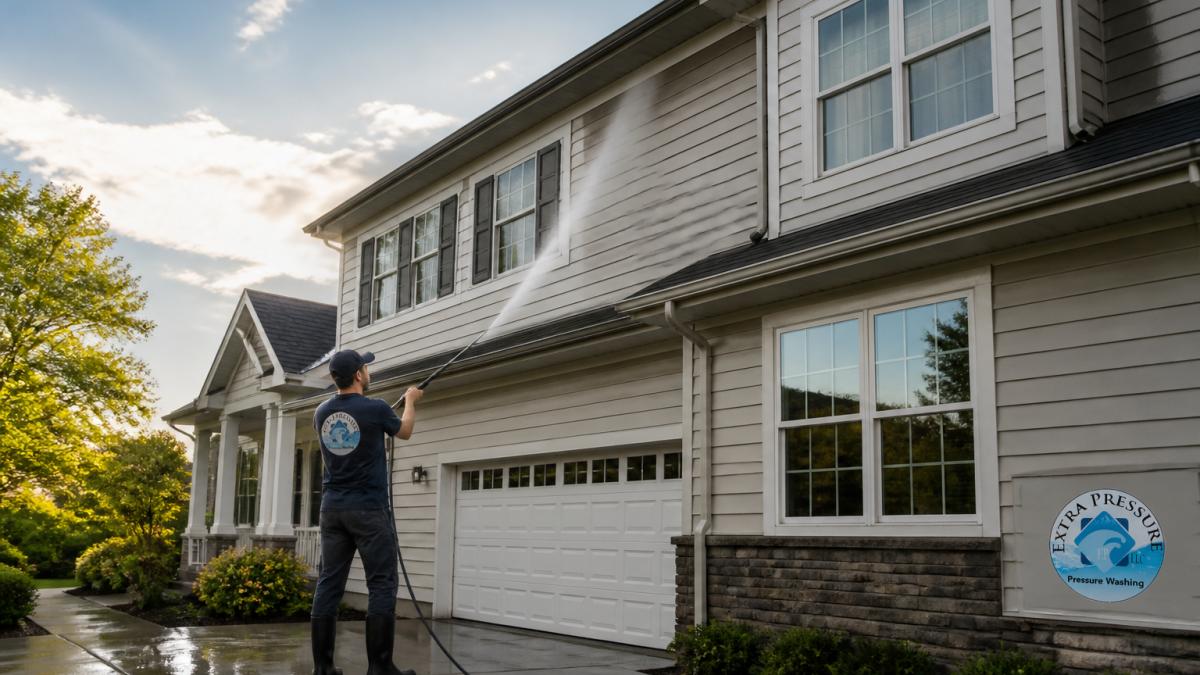
Work this curb appeal checklist for selling a house:
- Wash siding, walkways, and driveway.
- Clear gutters and rinse fascia.
- Clean windows inside and out.
- Scrub the front door and polish hardware.
- Trim shrubs and edge beds.
- Remove yard clutter and hose reels.
If you are budgeting for exterior washing, our average cost to soft wash a house guide covers the price factors and surface types that drive quotes.
Schedule Your Pre-Listing Exterior Cleaning
The hardest part of this process is not the checklist. It is the timing. Repairs, cleaning, photos, and listing dates all compete for the same few weeks, and exterior work is the piece most sellers try to squeeze in last.
That is where we come in. Learn how to prevent mold regrowth on home exterior after your wash.
Get started with Extra Pressure LLC and put a cleaner exterior in front of every buyer.
Frequently Asked Questions
Do sellers have to fix everything on a home inspection report?
No. A home inspection report is a negotiation tool, not a mandatory repair order. Sellers typically address safety issues, active leaks, and structural problems, then negotiate the rest through credits or price adjustments. Your pre-listing inspection repairs should focus on items that would scare off buyers or fail an appraisal, such as a failing roof, exposed wiring, or a leaking water heater. Cosmetic items usually stay as-is or become a small credit.
What are the most common home inspection repairs found during an inspection?
The most frequent findings are roof and gutter problems, missing or damaged downspouts, worn weatherstripping around doors and windows, loose outlets and missing receptacle covers, slow sink drains, and dirty HVAC air filters. Smoke and carbon monoxide detectors that do not work also show up often. Most of these are inexpensive to fix before listing and prevent a buyer from using them as leverage in negotiations.
Should I clean the exterior before a pre-listing inspection?
Yes. Dirt, mold, and organic growth on siding, gutters, and fascia read as neglect to both inspectors and buyers.
What should I disclose if I decide not to make a repair?
Disclose any known material defect, even if you choose not to fix it. Most state seller disclosure forms require you to report known issues with the roof, plumbing, electrical, HVAC, and water intrusion. Keep repair receipts and inspection reports on hand for the buyer. Hiding a known defect can lead to liability after closing, while a clear disclosure with a repair credit often closes faster than a surprise finding mid-escrow.
